Jutaan pelancong seperti dari Singapura yang mengunjungi Eropah perlu melalui pemeriksaan keselamatan secara online dan membayar 5 euro (S$7.60) sebelum ketibaan mereka. Ini sekiranya rancangan EU untuk mengetatkan kawalannya terhadap para pengunjung asing yang tidak memerlukan visa, diluluskan.
Sistem itu, yang disarankan oleh Suruhanjaya Eksekutif Eropah hari ini (16 Nov), akan memeriksa dokumen-dokumen pengenalan dan maklumat tempat tinggal pengunjung menerusi pelbagai pangkalan data keselamatan dan jenayah Kesatuan Eropah (EU).
Diberi nama ETIAS, sistem itu juga bertujuan menangani kebimbangan rakyat Eropah berhubung rancangan memperluas perjalanan tanpa visa ke dua negara jiran, iaitu Turki dan Ukraine. ETIAS juga akan dikenakan ke atas para pengunjung dari negara-negara bukan EU di Balkan seperti Albania dan Serbia.
SERUPA DENGAN SISTEM ESTA DI AMERIKA SYARIKAT
Serupa dengan sistem ESTA Amerika Syarikat (AS), sistem ETIAS akan menjejas rakyat dari 60 negara yang boleh mengunjungi 26 negara di Eropah yang tidak memerlukan pasport bagi perjalanan singkat tanpa perlu memohon visa terlebih dahulu, termasuk rakyat Amerika, Jepun dan bergantung kepada aturan yang ditetapkan London untuk keluar dari EU – mungkin rakyat Britain juga.
Sistem ESTA Amerika, yang sah selama dua tahun, berharga AS$14 (S$20) manakala sistem yang serupa di Kanada, eTA, yang sah selama lima tahun berharga AS$5.21 (S$7.40).
Menyusuli serangan ISIS ke atas Perancis dan Belgium dan kekecohan berkaitan ketibaan ratusan pendatang dan pelarian di Greece, eksekutif itu berharap pemeriksaan sedemikian akan menutup kelemahan-kelemahan di sempadan terhadap anggota militan, penjenayah dan pendatang-pendatang haram pada masa akan datang.
“Keutamaan kami adalah memastikan keselamatan sempadan dan rakyat kami. ETIAS akan menutupi jurang maklumat menerusi silang pemeriksaan maklumat para pengunjung yang tidak menggunakan visa dengan semua sistem-sistem yang lain,” kata Timbalan Ketua Suruhanjaya, Naib Presiden Pertama Frans Timmermans.
“Dalam pada itu, ETIAS lebih mudah, cepat, murah dan berkesan,” tambah beliau lagi.
TUNGGU LAMPU HIJAU PARLIMEN EROPAH
Skim tersebut kini memerlukan kelulusan daripada pemerintah dan Parlimen Eropah.
Ia adalah sistem yang diharapkan dapat dibiayai sendiri menerusi yuran permohonan.
Suruhanjaya itu menganggarkan kos penubuhannya adalah sekitar 200 juta euro manakala kos penyenggaraannya 85 juta euro.
Tujuannya adalah untuk memberikan kebanyakan pengunjung, dalam masa beberapa minit online, pelepasan bagi seberapa banyak perjalanan sepanjang tempoh lima tahun.
Sekalipun begitu ia boleh dibatalkan pada bila-bila masa jika terdapat sebarang keprihatinan.
Mereka yang menolak sistem tersebut boleh membuat rayuan.
Para pegawai EU berharap ia dapat dilaksanakan setelah diluluskan menjelang awal dekad seterusnya.
The High Court has quashed a moneylender’s bid to bankrupt a debtor who had borrowed $350,000 on an annual interest rate of 240 per cent – a ruling that could cause ripples in the moneylending industry.
Mr Ang Boon Kim, sole proprietor of ABK Leasing, had applied to bankrupt company director Goh Meng Leong, who in 2014 took out two unsecured loans totalling $350,000. Despite having paid back $700,000 – twice the principal sum – in instalments between December 2014 and September last year, Mr Goh still owed nearly $900,000.
That meant his initial $350,000 loan had grown to $1.6 million, including around $1.25 million in interest and late fees.
Mr Goh had agreed to interest of 240 per cent a year or 20 per cent monthly, with late interest at the same rate and a late fee of $10,000 every time payment was missed.
At issue in court was whether the moneylender could treat Mr Goh’s repayments as settling the interest first, rather than the principal borrowed. If so, the principal sum would continue to incur the 240 per cent interest. The court can also intervene if the interest is excessive and the deal is substantially unfair.
Assistant Registrar Jacqueline Lee set aside the bankruptcy application in the closed-door session and ordered Mr Ang to pay $1,500 in costs to Mr Goh.
It is understood she considered, among other things, that Mr Goh’s repayments should first be applied towards reducing the principal sum, and not just to satisfy the interest due.
ABK Leasing declined comment.
Both men had inked the contract before changes to the Moneylenders Act took effect on Oct 1 last year. The changes limit the maximum interest rate moneylenders can charge to 4 per cent a month, regardless of the borrower’s income.
Before then, such loan terms as the ones for Mr Goh were allowed for borrowers earning at least $30,000 a year. His maximum loan amount was also unlimited as his declared annual income of $599,250 was above the stipulated $120,000 threshold, according to papers filed through East Asia Law.
The loans were on “open monthly” terms, meaning the borrower could keep the loan open by opting to pay only the interest.
But Mr Goh’s lawyer, Mr Sarbrinder Singh of Sanders Law, pointed out that his client had already paid about $700,000 which went towards the payment of the $350,000 principal sum and the interest. He said ABK was wrong in claiming it was used only towards interest due.
He argued it was not for Mr Ang to unilaterally decide which payments were used to settle the principal sum and which for interest.
He urged the court to set aside the deal as the 240 per cent interest rates were “exorbitant”and the contract was ” unconscionable”.
Mr Goh, 36, who shuttles between Singapore and London for his business in electronic recycling, said he was relieved, having had to sell his HDB flat to settle the payments.
Kenapa ramai diantara Muslimin jijik dengan sesiapa yang bergambar dengan Netanyahu?
Kerana kita sering diajar oleh ulama kita serta ibu-bapa kita berhati-hati dengan siapa kita berkawan. Kita selalu di nasihatkan berhati-hati siapakah yang kita dampingi dan siapa kita jadikan kawan akrab. Benarlah kata-kata S. Ali r.a. – Jika kamu mahu tahu budi-pekerti seseorang itu, lihat lah kepada siapa dia berkawan.
Ulama dahulu sungguh berjaga-jaga elakkan diri daripada bersekongkol dengan orang-orang yang tidak elok budi-pekertinya malah mereka berhati-hati tidak mahu sedikit pun dikaitkan dengan sesiapa yang tidak baik lagi-lagi dengan mereka-mereka yang akhlaknya buruk atau tidak beradab. Wallahu’alam!
Of the changes to the elected presidency passed by Parliament last week, the one to reserve an election for a particular racial group is the most contentious.
With that change to the Constitution, a presidential election will be reserved for a particular racial group if no one from that group has been president for five terms in a row. That means in the course of six presidential terms, there should be at least one Chinese, one Malay, plus one president from the Indian and other minority communities.
Candidates in the reserved elections will meet the same criteria as those running in open elections.
Other changes include stricter qualifying criteria for presidential candidates and more powers for an expanded Council of Presidential Advisers.
The changes have several implications. First, Singapore will, after a 46-year wait, see a Malay president in the next election provided there are qualified candidates. The Republic’s first president Yusof Ishak was Malay and held the post from 1965, when Singapore became independent, to 1970, when he died in office. Before that, he was Yang di-Pertuan Negara (Head of State) from 1959, the year Singapore achieved self-rule from the British.
With the Prime Minister’s announcement that the next presidential election, due next year, will be reserved for Malays, President Tony Tan Keng Yam will not be able to run for a second term. He has since confirmed that he will not be standing again. There will also be no repeat of the fierce contest between four candidates – all of them Chinese men – seen in 2011. That turned out to be a close fight between Dr Tony Tan and Dr Tan Cheng Bock, who obtained 35.2 per cent and 34.85 per cent of votes respectively. The changes to the Constitution passed last week effectively deny Dr Tan Cheng Bock the chance to take part in the next election and that has raised questions about the timing of the amendment.
Under changes to the elected presidency passed by Parliament last week, a presidential election will be reserved for a particular racial group if no one from that group has been president for five terms in a row. Candidates in reserved elections will meet the same criteria as those in open elections. ST PHOTO: STEPHANIE YEOW
Another big concern is what these changes will mean for Singapore’s founding principles of meritocracy and equality. These principles tell us that leaders should be assessed based on their capabilities, and not race, family or social status. Would not the changes passed last week be a blow to Singapore’s meritocracy and instead entrench race-based politics? That is the basis of some people’s opposition.
But even within the Malay/ Muslim community, there is a diversity of views. Some consider the Government’s plan as tokenism, akin to letting Malays win a runners-up medal since no one from the community is capable of competing in an open and fair election against other ethnic groups. On the other hand, there are Malays who embrace the amendments with open arms. They have long regarded the late Mr Yusof as a symbol of pride and cannot wait to see another president emerge from the community. Whatever the shortcomings, the amendments passed ensure that the sanctity and prestige of the elected presidency are not compromised, through the provision of several safeguards. The first is a higher bar for candidates such that only capable individuals need apply. There are no exceptions and minorities have to meet the same strict qualifying criteria.
The second safeguard is that since the next election is reserved for Malays, Malay candidates who want to win must drum up support among all Singaporeans, regardless of their race or religion. He or she cannot campaign solely on a platform of Malay interests but must instead seek to represent Singapore’s multicultural and secular values.
Mr Yusof exemplified these values. In the 1940s and 1950s, he was managing editor of Utusan Melayu – a popular Malay language newspaper which advocated for the upliftment of the Malays. Yet, he championed the interests of all races throughout his presidency, earning praise from all racial groups.
As a nation, we must hold fast to a vision of a Singapore that is race-blind. Recent polls, however, show that we have not quite achieved that yet. At the same time, there is a risk that if there is no president from a particular racial group for a long time, the issue could be politicised should some claim that discrimination is at play. Therefore, there is a need to intervene to ensure multiracial representation in the years before our ideal of a race-blind nation is realised.
Some countries introduce affirmative action to level the playing field for all races. While Singapore has made huge strides in fair treatment of minorities, we have to be upfront and admit that the system has never been a perfect meritocracy. Instead, it has always been an “abridged” one. Nonetheless, it is this abridged meritocracy that has ensured minority representation in our parliamentary democracy, which also stabilises race relations in the country. Thus, applying it to the elected presidency scheme is not unprecedented and has its merits.
Questions about how a race-based election will affect our meritocracy will persist. However, on a broader trajectory, reserving the next presidential election for Malays is in my view a necessary form of tokenism to develop trust among the races.
After a break of more than four decades, it is timely to elect a Malay president and give him or her a chance to represent all Singaporeans, just as Mr Yusof did during his tenure in the 1960s.
But even as we do so, we must not lose sight of our principles that guide us to elect our leaders based on their capabilities.
The writer, Norshahril Saat, is a fellow at the Iseas – Yusof Ishak Institute. He is the author of Yusof Ishak: Singapore’s First President.
State media say two soldiers and six attackers died in clashes after an ambush on troops, which led to air support being called in.
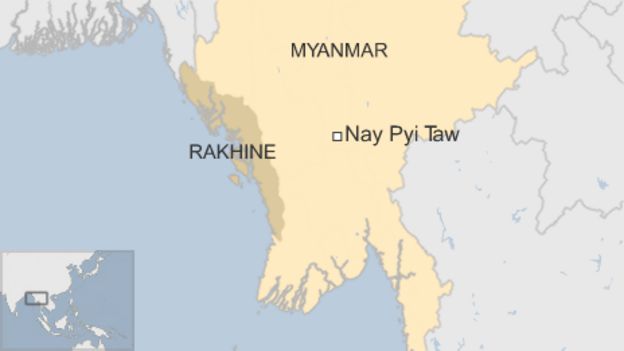
There are reports of villages burning in the northern region of Rakhine.
Photos released by Human Rights Watch seem to show charred villages, with the group reporting 430 burnt buildings.
The satellite photos were taken between 22 October and 10 November, following reports of fighting and civilians fleeing last month.
Rohingya activists say the government is trying systematically to drive the Muslim minority from their villages.
Attacking the Rohingya is a popular move for the military, the BBC’s Jonah Fisher reports from Myanmar’s largest city, Yangon.
They are disliked by many, if not most, Burmese who consider them illegal immigrants from Bangladesh, our correspondent says.
Media barred
The latest outbreak in fighting was triggered by an attack on three police checkpoints just over a month ago.
The Burmese government is not allowing independent journalists into Rakhine, so it is impossible to verify claims about the scale of the fighting.
According to the latest official statement on Saturday, troops were ambushed and then clashed several times with armed men, presumably Rohingya Muslims, equipped with guns, knives and spears.
At one point, when faced by about 500 men, the soldiers called in air support and two helicopter gunships fired on the Rohingya village.
Brad Adams, the Asia director for Human Rights Watch, said the new photos showed “widespread destruction” that was “greater than we first thought”.
“Burmese authorities should promptly establish a UN-assisted investigation as a first step toward ensuring justice and security for the victims,” he said.
The government – led by Aung San Suu Kyi – talks of “clearance operations” as part of the search for the attackers.