Category: Politik

  • SDP Mohd Isa Memorial Service 8 March 2014


    mohd-isa

    The SDP will hold a memorial service for Mohd Isa who passed away in January this year. The service will honour the memory of a long-time leader of the party who toiled quietly behind the scenes to bring democracy to our country.

    The service will allow colleagues and friends to remember Isa and to say a proper goodbye to a cherished member of the SDP family.

    The occasion will also be used to launch the Mohd Isa Bursary Award where, as the name suggests, we will award bursaries to students who come from poorer family backgrounds.

    It is the SDP’s belief that education can, and must, be used to level up society. Students who are needy are often at a disadvantage when it comes to the schools they attend and the resources that are available to them for their education. The SDP will do our part to make our society more equal, starting by assisting poorer students with financial awards.

    As a more comprehensive strategy to help in this leveling up, the SDP will be publishing our alternative education policy in the near future. Our present education system is skewed towards the elite which has created an unhealthy state of affairs in this country.

    In the paper, the party will present concrete proposals to remedy this problem as well as prepare our future generations to not just to survive but excel in a rapidly changing global community.

    The award is appropriately named after Isa who has always emphasised the importance of making our education system a means for the poorer sections of our population to compete fairly.

    Details of the award will be announced at the memorial service which is open to members of the public. Join us to honour a father, friend, and forever-proud Singapore Democrat.

    Event: Mohd Isa Memorial Service
     Date: 8 March 2014, Saturday
     Time: 7:30pm
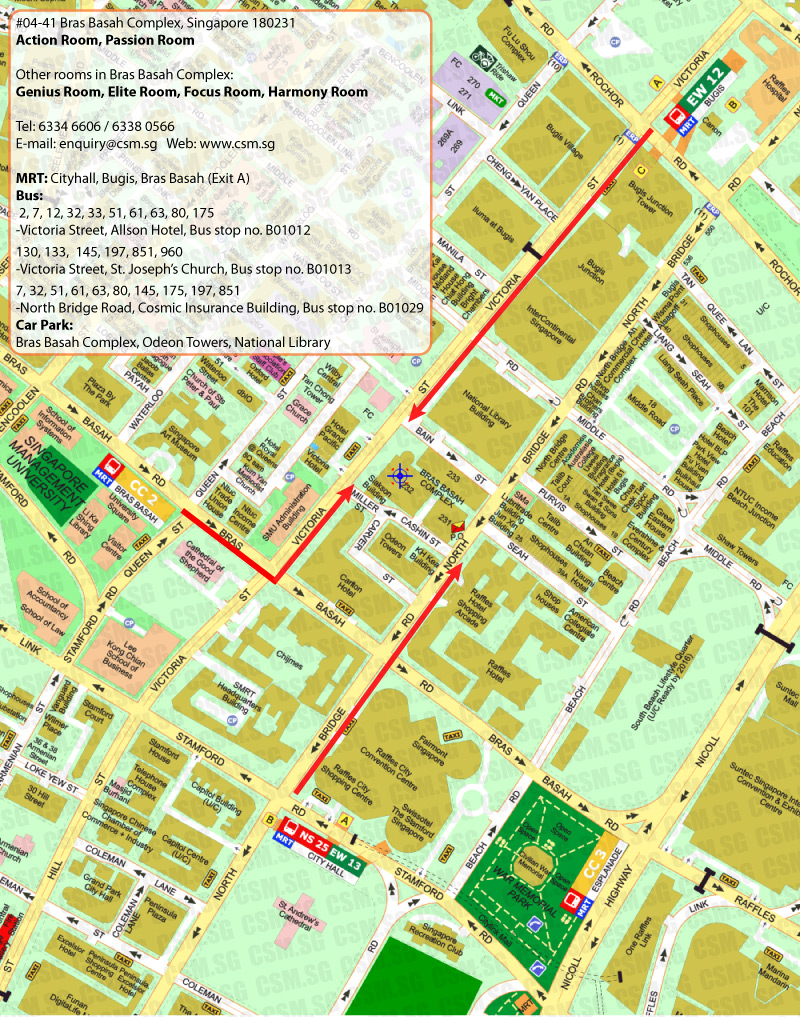
     Venue: Chinese Success Media, Bras Basah Complex (location map)
    All are welcome.

    Source: Singapore Democratic Party


    Also read:

    Dalam Kenangan – Mohd Isa bin Abdul Aziz

  • Mantan Anggota Parlimen Ariff Suradi Meninggal Dunia

    AL-FATEHAH.

    ariff suradi


    MANTAN anggota parlimen Parti Tindakan Raykat (PAP) Haji Mohamed Ariff Suradi meninggal dunia pagi tadi di Hospital Besar Singapura pada usia 84 tahun.

    ariffsuradi2

    Beliau meninggalkan lima orang anak, 16 cucu dan dua cicit.

    Allahyarham Haji Mohamed Ariff merupakan generasi pertama pemimpin Melayu PAP yang mencipta sejarah dalam Pilihan Raya Umum 1963 apabila beliau memenangi kawasan undi Kampong Kembangan, ketika itu kubu kuat parti Umno Singapura.

    ariffsuradi3

    Haji Mohamed Ariff memenangi pilihan raya bagi kawasan undi Kampong Kembangan pada 1968 dan 1972. Allahyarham merupakan pemimpin kesatuan sekerja sebelum menceburi bidang politik.

    Beliau mendapat pendidikan Melayu di Sekolah Tanglin Tinggi dan Kota Raja; berpendidikan Inggeris di sekolah Inggeris di Monks’s Hill dan Victoria.

    Sumber: Berita Harian Singapura

  • UMNO now plays ‘Muslim Card’, Focus on Religious Divide

    allahbanned

    A former US ambassador to Malaysia sounds the alarm

    Like other friends of Malaysia overseas, I have followed the controversy over the use of the word ‘Allah’ with interest, but also with great concern. For I believe that this issue, if left unchecked, has the potential to tear Malaysia and the dream of ‘Bangsa Malaysia’ apart.

    While there are racial and religious issues in every society, what makes the situation in Malaysia different is that it is the government that has condoned and even provoked these tensions for its own political purposes.

    For years, UMNO justified its existence by saying that the Malays are under threat, and that only UMNO could defend “the Malay race”.

    After the 13th general election, in which UMNO candidates received only 30 percent of the national vote – and in which BN as a whole got only 47 percent – it had two choices. It could broaden its appeal or it could narrow it by trying to appeal to the PAS voter base, for whom religion rather than race is a more important concern.

    Unfortunately, UMNO chose the latter course and started to play the ‘Muslim’ card. Now, according to the government and UMNO, it is not just Malays, it is also Islam that is under threat. As for the ‘Malay’ card, UMNO increasingly has gone to the extreme, pandering to extreme racist elements, starting with PERKASA.

    The irony of the “Malays/Islam under threat” claim, of course, is that in Malaysia, both Malays and Muslims are the majority. And UMNO controls the government. So how can the Malay race and the Muslim religion in Malaysia be under threat?

    To UMNO’s leadership, it doesn’t matter. There is no need to explain. They just speak and offer no evidence, and use their propaganda instruments – Bernama, RTM, Utusan Malaysia, the New Straits Times, etc – to spread the word.

    From an international perspective, they also make assertions that are totally out of line with Islamic thinking and practice in the rest of the world.

    Think about it – Malaysia is the only country in the world that ignores history and linguistics and dares to ban non-Muslims from uttering the word ‘Allah’. Like Humpty Dumpty, the Malaysian government stands alone – and claims for itself the right to decide what words mean and what words people may read, write, think, and speak.

    How can Prime Minister Najib Razak, his government, and its supporters justify their actions, when no one else in the Islamic world agrees with them? When Islamic scholars like Reza Aslan say, “We are laughing at you,” how do they respond?

    They don’t. Because they don’t know what to say. They seem to be living on their own planet.

    Actions, not just words

    But it is not just what Najib and his government say, it also is what they have done.

    • It is the government that seized more than 20,000 Bibles in 2009.
    • It is the government that banned the use of the word ‘Allah’ in Catholic weekly The Herald.

    • It is the government’s Police Force that joined the recent raid on the Bible Society of Malaysia, confiscating over 300 bibles without a search warrant.

    • It is the government’s religious affairs department, JAKIM, that directed mosques throughout Malaysia to say, without citing any evidence, that Islam is “under threat,” that Christians and Jews are “enemies of Islam,” and that Christians are responsible for turning Muslims against each other and tricking them into losing their rights.

    • It is Najib’s cabinet that stood silently by and decided not to enforce its 10-point plan to restore religious peace and harmony in the nation.

    • It is the government that refused to take any action after the leader of PERKASA called for the burning bibles.

    There is no greater example of uniformed assertions than former PM Dr Mahathir Mohamad’s recent claim that Christians have “no right” to use the word ‘Allah’. Because he is Mahathir, he just says it, and he expects everyone to agree.

    As the saying goes, everyone is entitled to their own opinions, but not to their own facts. In this case, history and the facts are not on Mahathir’s side. Mahathir is totally, 100 percent, wrong.

    The word ‘Allah’ was used by Arabic-speaking Christians for centuries before the birth of the Prophet and the rise of Islam. Indeed, archaeologists have found an Arabic-language Christian Bible (the Mt Sinai Arabic Codex 151), that is nearly 1,300 years old, in which God is called ‘Allah’.

    Indeed, someone might ask what right Muslims have to say the word ‘Allah’, when it was used first by Christians? Who is violating whose rights?

    The answer is simple – even though Jews and Christians used it first, they would never deny Muslims the right to say the word ‘Allah’. Because while over the years, men and women have practiced and interpreted our religions in different ways, in the end we all worship the same God – the God of Abraham, the Creator of the Universe.

    So here is the question. In the entire Islamic world, why is it only in Malaysia that people claim that uttering or writing the word ‘Allah’ is the exclusive right of Muslims? Why is it only in Malaysia, and nowhere elsewhere in the world, that some Muslims say they will be “confused” if other people – Christians – use the word ‘Allah’ when they worship inside their own churches, or when they read the Bible in the privacy of their own homes?

    What makes Muslim Malaysians different from the other 1.5 billion Muslims in the rest of the world? I would like Malaysian advocates of the ‘Allah’ ban to explain this, not to me (a Christian), but to explain it to the rest of the Islamic world.

    Dangers of ‘quick research’

    The senior judge in the Allah appeal, Mohamed Apandi Ali, wrote in his opinion that through his “quick research” on the history of the language of the Bible, “it is clear that the word ‘Allah’ does not appear even once as the name of God or even of a man in the Hebrew scriptures. The name ‘Allah’ does not appear even once in either the Old or New Testament.

    “There is no such word at all in the Greek New Testament. In the Bible world, God has always been known as ‘Yahweh’, or by the contraction ‘Yah’. That being the historical fact, it can be concluded that the word or name ‘Allah’ is not an integral part of the faith and practice of Christianity.”

    Justice Apandi’s judgment clearly shows the dangers of “quick research.” He should have spent a little more time on the web. But because he refers to how the word ‘God’ is expressed in Hebrew, Greek, and Arabic, he has raised the important issue of language and the words that we use in different languages to refer to God.

    How many languages are there in the world? The Christian Bible has been translated in whole or part into an astonishing 2,817 languages, according to the Wycliffe Bible Translator, a UK organisation. The complete Bible is available in 513 languages, including Arabic and Malay.

    Both the Arabic and Malay Bibles use the word ‘Allah’ to refer to God. In the case of Arabic, it has been so for at least 1,300 years, and in the case of Malay, which “borrowed” the word ‘Allah’ from Arabic, for at least 300.

    Even so, Justice Apandi ignored both history and language when he claimed that the Arabic and Malay language word for God – Allah – belongs exclusively to Muslims. That is because Jews and Christians used the word ‘Allah’ before the Prophet was even born.

    Judge Apandi also was wrong when he said that the Jews have always referred to God as ‘Yahweh’. My own “quick research” on Wikipedia, which must have lasted 15 seconds longer than the learned judge’s, shows that the Hebrew Bible uses many names for God.

    While Yahweh is indeed the most common expression, two others are ‘Elah’ and ‘Eloah’. They both sound very similar to ‘Allah’ and there is a reason for that. Just as Jews, Christians, and Muslims all believe in the God of Abraham, the Hebrew, Aramaic, and Arab languages are all related to each other.

    Most scholars say that Jesus spoke Aramaic, not Hebrew. And when Jesus spoke of God, he said, “Ellah.” That sounds remarkably very similar to the Arabic ‘Allah’. And it should, because Aramaic and Arab are what linguists call “cognates.”

    As word of Judaism and Christianity spread into the Arabian Peninsula, ‘Allah’ became the Arabic language name for the God of Abraham. The word ‘Allah’ was used first by Arab Christians and Mizrahi Jews, and only later by the Prophet and Muslims.

    UMNO

    Sorry, Justice Apandi. Sorry, Mahathir. Sorry, Najib and UMNO.

    If anyone owns the “trademark” on the word ‘Allah’, it is the Christians, who first spread the word of the God of Abraham into the Arabian peninsula, and who first used the word ‘Allah’. But here is the point – no Christian Malaysian insists and no Arabic-speaking Christian insists that the word ‘Allah’ belongs exclusively to them.

    So the burden of proof therefore is on any Malaysian who ignores history, language, and the facts – and who ignores what the rest of the Islamic world is doing – and simply asserts that only Muslim Malaysians may use the word ‘Allah’.

    John R. Malott served as US Ambassador to Malaysia from 1995 to 1998. He contributed this to the Malaysian website Malaysiakini.

    Source: MalaysiaKini

  • BREAKING: People’s Association Gets Adverse Ratings from Auditors

    57D2F54B97B16658289AC9051ED

    Yesterday (19 Feb), Minister for National Development Khaw Boon Wan requested Finance Minister Tharman Shanmugaratnam to direct the Auditor-General to conduct an audit of the opposition-run Aljunied-Hougang-Punggol East Town Council’s (AHPETC) financial accounts.

    AHPETC’s auditor, Foo Kon Tan Grant Thornton LLP, had earlier submitted a “disclaimer of opinion” on AHPETC’s FY2012-13 financial statements, raising 13 issues of concern over the town council’s accounts.

    Earlier, on 14 February 2014, the Ministry of National Development (MND) said that the auditor’s disclaimer of opinion “is more severe than a qualified opinion” [Link].

    In yesterday’s statement, the PAP government said that the observations in the auditor’s report “raise serious questions about the reliability and accuracy of AHPETC’s financial and accounting systems”.

    “This is the second year that the Auditor has submitted a disclaimer of opinion on AHPETC’sFinancial Statements. Moreover the Auditor has raised several more issues of pressing concern this year, compared to last year. AHPETC’s Auditor’s Report and Financial Statements are cause for serious concern.”

    As it turns out, auditors have been giving an “adverse opinion” on the financial reports from the People’s Association (PA) for several years now.

    PA oversees all the grassroots activities in Singapore. It is a statutory board under the Ministry of Community Development, Youth and Sports (MCCY). The Chairman of PA is none other than PM Lee Hsien Loong himself.

    According to ACRA, there are a few types of audit opinions. A “disclaimer of opinion” means the auditor is unable to express an opinion on the financial statements but an “adverse opinion” means qualification of the financial report is not adequate to disclose the misleading or incomplete nature of the financial statements [Link]:

    Types of Audit Opinion Explanation
    Unqualified Opinion The auditor “concludes that the financial statements give a true and fair view or are presented fairly, in all material respects, in accordance with the applicable financial reporting framework.”
    Emphasis of matter (EOM) This is to “highlight a matter affecting the financial statements which is included in a note to the financial statements that more extensively discusses the matter. The addition of such an emphasis of matter paragraph does not affect the auditor’s opinion.”
    Qualified Opinion* This is expressed when the “auditor concludes that an unqualified opinion cannot be expressed but that the effect of any disagreement with management, or limitation on scope is not so material and pervasive as to require an adverse opinion or a disclaimer of opinion.”
    Disclaimer of Opinion* It is expressed when the “possible effect of a limitation on scope is so material and pervasive that the auditor has not been able to obtain sufficient appropriate audit evidence and accordingly is unable to express an opinion on the financial statements.”
    Adverse Opinion* It is expressed when the “effect of a disagreement is so material and pervasive to the financial statements that the auditor concludes that a qualification of the report is not adequate to disclose the misleading or incomplete nature of the financial statements.”

    TRE has gone through PA’s financial reports on its website and found the following:

    FY2007 (07/08) [Link]

    For FY2007, PA did not include the financial statements of grassroots organizations (GROs) operating under itself. The auditor could not “assess the financial impact to the financial statements of the Association arising from the non-inclusion of the financial statements of theGROs”. As such, the auditor gave an “adverse opinion” against PA because its financial statements “[did] not present fairly” the state of affairs of the Association:

    pa1-640x457


    (published by PricewaterhouseCoopers, 15 Sep 2009)

    FY2009 (09/10) [Link]

    In FY2009, a new auditor, KPMG LLP, took over the audit of PA. The new auditor said, “We do not have sufficient information to assess the financial impact to the financial statements of the Association arising from the non-inclusion of the financial statements of the GROs.” As such, the new auditor also gave an “adverse opinion”:

    pa3-640x246


    (published by KPMG LLP, 15 Jul 2010)

    Then, the format for the online version of PA’s financial reports for the next 3 years (FY2010 – 2012) changed [a href=”http://www.pa.gov.sg/about-us/annual-reports.html”>Link].

    The public could no longer see the detailed opinions of the auditors. PA only published the “financial highlights” in these 3 reports. In other words, the financial reports became just financial summaries:

    TRE then went down to the National Library to attempt to get printed copies of PA’s financial reports but the librarian was not able to find printed copies for the last 3 FYs (FY2010 – 2012). The library only has printed copies up to FY2009. The librarian told TRE to refer to the online versions instead.

    Not giving up, TRE did a further extensive online search and managed to find an online version of PA’s FY2010 financial report. This copy was found on the Parliament website:

    FY2010 (10/11) [Link]

    Comparing this with the online version on PA’s website [Link], they are essentially the sameexcept that the one found on the Parliament website discloses the detailed opinion of the auditor at the end:

    pa5-640x433

    (published by KPMG LLP, 15 Jul 2011)

    Again, the auditor could only give an “adverse opinion” for PA’s FY2010 financial report because the auditor “[did] not have sufficient information to assess the financial impact to the financial statements of the Association arising from the non-inclusion of the financial statements of the GROs.”

    The relationship of PA and PAP is very close. Mr Lee Kuan Yew once proudly said that the Chinese have been sending teams of officials to learn from Singapore for years:

    They discover that the People’s Action Party has only a small office in Bedok. But everywhere they go, they see the PAP – in the RCs (residents’ committees),CCCs (citizens’ consultative committees), and the CCs (community clubs).

    The operating expenditure of PA is huge. According to its latest financial report (FY2012), PA’s operating expenditure for the year increased by $46 million to $483 million. Government grants which are taxpayers’ money given to PA amounted to $434 million in FY2012:

    Capture30

    Dr Ernest Kan, President of the Institute of Singapore Chartered Accountants (ISCA) and Pasir RisPunggol grassroots leader, had earlier agreed with MND that the audit findings on AHPETC are “serious” (‘President of ISCA: AHPETC’s audit report ‘serious’‘). It is not known what Dr Kan has to say about PA’s audit findings which have garnered “adverse opinions” from auditors.

    It is also not known if the Acting Minister for Culture, Community and Youth (MCCY), Lawrence Wong, will request Finance Minister Tharman Shanmugaratnam to direct the Auditor-General to conduct an audit of PA’s financial accounts, since PA comes under MCCY.

    Source: http://www.tremeritus.com/2014/02/20/breaking-auditors-give-adverse-ratings-to-pas-financial-reports/

  • Johor wants to review price of raw water

    waterissue

    JOHOR BAHARU: The Johor state government has asked that the issue of the price of raw water supplied to Singapore becomes part of the agenda for discussions in the forth-coming joint meeting between the two
    countries.

    Chairman of the State Public Works, Rural and Regional Development Committee Datuk Ir Hasni Mohammad said Johor wanted the talks on the price of raw water supplied to Singapore to begin immediately.

    “I hope that if there are talks between Malaysia and Singapore, the issue on the review of the price of raw water is included in the agenda. I hope we can begin discussions to work out the next step.

    “The talks should begin immediately,” he told Bernama in an interview here, Tuesday.

    According to agreements signed in 1961 and 1962, Singapore’s Public Utilities Board (PUB) would buy raw water from Johor at the rate of three sen every 1,000 gallons.

    Singapore on the other hand would sell treated water to Johor at the price of 50 sen for every 1,000 gallons.

    According to Hasni, Johor sells 250 million liters of raw water to Singapore every day and bought back two percent of that or five million liters in the form of treated water.

    The treated water from Singapore is supplied to residents in parts of Johor Baharu as well as Pontian and Kota Tinggi.

    He said the raw water was the right of the state government and not the federal government or the National Water Services Commission (SPAN). Which was why the state wanted the price to be renegotiated.

    “We have long been in a losing position when we sell raw water to Singapore at three sen (for 1,000 gallons),” he said, adding that the price of treated water sold to Syarikat Air Johor (SAJ) and Melaka was too high.

    He believed the good relations that existed between Kuala Lumpur and Singapore would result in a positive outcome on the price of raw water supplied to Singapore.

    “I do not believe that the Singapore government will reject it outright. We hope that the discussions will benefit both parties,” Hasni said. He believed that the discussions would flow smoothly between Malaysia and Singapore and not based on “one country exploiting another.”

    “The talks should be balanced, there cannot be one side that feels pressured,” he said, adding that he understood the water agreement between the two countries could be reviewed.

    Regarding the new price requested by Johor for the raw water supplied to Singapore, he said the federal government had said that a fair price would be 60 sen per 1,000 gallons.

    However, he added, if Singapore raised the price of treated water from 50 sen for 1,000 gallons, it was likely that Johor would increase the price of raw water.

    “If Singapore raised the price of its treated water from 50 sen to RM5.00, we may not increase to 60 sen, but perhaps higher than that,” Hasni said.

    Source: Bernama, MYT