Category: Singapuraku

  • Lui Tuck Yew: Drop In Oil Price Could See Decrease In Public Transport Fares

    Lui Tuck Yew: Drop In Oil Price Could See Decrease In Public Transport Fares

    The drop in energy prices seen in 2014 could translate to a reduction in public transport fares in the next fare review exercise at the end of the year.

    Based on available data for 2014, the fare adjustment could be “in the region of negative one per cent”, said Transport Minister Lui Tuck Yew in Parliament on Monday (Jan 19), in response to a question on the fall in oil prices.

    MP Gan Thiam Poh had asked, with regard to the ongoing 2014 fare review exercise, whether the Public Transport Council would consider a reduction of transport fares, as a result of the fall in oil prices since June 2014.

    However, Mr Lui noted that the ongoing fare review exercise, which started in November 2014, looks at changes in indices for 2013.

    “We will have to leave it to the Public Transport Council to assess the public transport operators’ applications for fare increase, the fare adjustment quantum as given by the formula and the affordability of public transport for Singaporeans, amongst other things, and decide on the fare adjustment,” the minister said.

    The fare formula is pegged to changes in the core consumer price index, wage index and energy index over the preceding year. This reflects the operating cost structure of public transport operators, said Mr Lui.

    The core consumer price index and wage index account for 40 per cent of the formula each. The energy index component, which accounts for energy and fuel costs, makes up 20 per cent.

    In the ongoing 2014 exercise, the value of the energy index component was negative 12.6 per cent – due to lower energy prices in 2013 – but the core consumer price index went up by 1.7 per cent, while the wage index saw an increase of 4.3 per cent.

    The fare adjustment quantum yielded by the formula would have been negative 0.6 per cent for the 2014 fare review exercise. However, the previous fare review exercise had announced a fare increase of 6.6 per cent in two steps.

    A 3.2 per cent hike was introduced in April last year, with the 3.4 per cent increase to be carried over to the ongoing review. Mr Lui explained that is why there is a 2.8 per cent fare adjustment quantum for the ongoing fare review exercise.

    The next fare review exercise is set to take place towards the end of 2015 and is based on data for the full year of 2014.


    Source: www.channelnewsasia.com

  • Bill On Limits To Public Drinking Islanwide Tabled In Parliament

    Bill On Limits To Public Drinking Islanwide Tabled In Parliament

    Following concerns raised in recent years by some Members of Parliament over alcohol-induced disamenities in their constituencies, the Government has set in motion plans to impose a ban on boozing in public spaces and retail sales of alcohol islandwide between 10.30pm and 7am daily.

    The Liquor Control (Supply and Consumption) Bill tabled yesterday also proposes to give the Minister for Home Affairs powers to impose even stricter curbs on the supply and consumption of alcohol in areas with “significant risk of public disorder associated with excessive consumption of liquor”. For a start, parts of Little India — where alcohol-related curtailments have been in place after the December 2013 riot, which would have expired in March — and Geylang could be declared as these so-called Liquor Control Zones.

    If the law is passed, drinking after 10.30pm can continue only at home, at approved events or at licensed establishments, such as bars, restaurants and coffee shops. Infringements are punishable with a fine of up to S$1,000 for a first-time offender, while jail of up to three months and a fine not exceeding S$2,000 can be imposed on repeat offenders.

    Retailers can apply to sell take-away alcohol until later, but these will be assessed on a case-by-case basis. Organisers of events in public places may also apply for the restriction to be lifted for “a specific place and time”.

    The proposed laws are expected to be passed within the first half of this year.

    How strict the alcohol restrictions for Liquor Control Zones could be under the proposed law was not detailed, but the Ministry of Home Affairs (MHA) said these will be substantially similar to those that have been implemented in Little India under the Public Order (Additional Temporary Measures) Act.

    For instance, public drinking is barred on weekends, public holidays and the eve of public holidays in Little India. Takeaway sales are also illegal from 8pm to 6am on weekends, public holidays and the eve of public holidays. The police are also given powers to ban a person for a spell from the area.

    In designating Liquor Control Zones, the minister may consider factors including incidents of crime in or near the area — whether or not these incidents are related to liquor consumption — as well as the fact that violence has occurred in the area and stricter regulations will probably prevent or reduce violence there.

    In a press release, the MHA said the start time of 10.30pm is aligned with the closing time of most businesses in residential areas and it is the time by which most community events, including getai concerts during the Seventh Lunar Month, end.

    The restriction will apply for the whole of Singapore so there is no confusion in terms of compliance and enforcement, the MHA said. It will also minimise the displacement of problems from one area to another, it added.

    The ministry started reviewing liquor control measures since September 2012, after public feedback on law and order concerns and disamenities from over-drinking.

    When it first announced its intention to impose tighter rules, the ministry said its aim was to reduce public nuisance and mitigate law and order concerns arising from liquor consumption by groups at public places.

    Noting that intoxicated drinkers act violently or create public nuisances such as littering and vomiting, the MHA had also singled out the availability of cheap liquor at shops in the vicinity as contributing significantly to the problem.

    The Bill comes after strong support expressed in public consultation exercises and discussions for measures to better manage retail sale hours for takeaway liquor and the consumption of liquor in public places, it said.

    In June, the Government had asked for public feedback on four models of drinking controls practised in other jurisdictions that it was studying, ranging from as strict as a blanket ban to a laissez-faire approach where the police step in to seize alcohol only when there are complaints.

    The other two approaches lying in the middle of this scale are restricting alcohol consumption in specific places, or during certain times.

    The authorities said curbs on take-away sales and public consumption have been in force for some time in some cities, while others had stricter policies than those proposed here.

    “In developing the Bill, the ministry also considered factors such as making it easy for members of the public to understand the new measures to facilitate compliance and enforcement of the new regulations,” the MHA said.

    News of the proposed law was quickly met with contrasting reactions from the public and a cautious response from industry players, ranging from supermarkets to suppliers.

    While some welcomed the proposed measures, others felt they went too far in controlling the behaviour of drinkers.

    Meanwhile, supermarkets and alcohol suppliers, including NTUC FairPrice and Diageo, said addressing “relevant social issues” need not result in denying responsible consumers the convenience of buying liquor for home consumption after 10.30pm.


    Source: www.todayonline.com

  • Nippon Paint SEA Founder Named Richest Person In Singapore

    Nippon Paint SEA Founder Named Richest Person In Singapore

    Mr Goh Cheng Liang, founder of Nippon Paint South-East Asia Group (Nipsea), is the Republic’s richest man with a US$8.2 billion (S$10.8 billion) fortune, according to a Bloomberg report published on Monday (Jan 19).

    Mr Goh, 87, and Osaka-based Nippon Paint Holdings jointly own Nipsea, with the billionaire recently boosting his stake in Nippon Paint to 39 per cent, making him the largest shareholder in Nipsea, Bloomberg reported. His stake in the joint venture is held through his Singapore-based investment company, Wuthelam Holdings.

    Mr Goh set up his first paint shop in 1955 in Singapore, and later became a distributor for Nippon Paint. In 1962, the Japanese company established a paint manufacturing plant in the city-state in 1962, the report said.

    Nipsea now operates in 15 Asian countries and is Asia’s biggest paintmaker. His son Goh Hup Jin, 61, has headed the company since the 1980s, according to Bloomberg.

    Mr Goh’s wealth puts him ahead of Mr Wee Cho Yaw, the largest shareholder of Singapore’s United Overseas Bank and the city’s second richest with a US$6.9 billion fortune. Mdm Tan Kim Choo, the widow of late property tycoon Ng Teng Fong, follows with a US$4.9 billion fortune. Her sons Philip and Robert Ng have fortunes of US$4.6 billion and US$4.5 billion, respectively, the report said.


    Source: www.channelnewsasia.com

  • Top 10 Highest Paying Jobs In Singapore

    Top 10 Highest Paying Jobs In Singapore

    “Choose a job you love, and you will never have to work a day in your life.” —  some guy on the internet who may or may not be Confucius.

    Well, thanks maybe-Confucius, but not all of us have the luxury of being paid to do what we enjoy.

    For some people (okay, most people), money is what they look for in our job. Because money is more important that any form of job satisfaction.

    Which is why we need lists like these. We’ve checked out the Ministry of Manpower’soccupational wage table last updated in June 2014. Source for your next career move here:

    10. Commodities Derivatives Broker (Median Monthly Wage: $10,000)

    leo-wolf-of-wall-street

    Source

    A commodity broker traditionally buys and sells goods such as oil, grains, or even coffee. A commodities derivatives broker, on the other hand, trades a variety of assets, such as shares and bonds. Potential employers include investment banks, financial clearing houses, and even international stock exchanges.

    With great power comes great responsibility. Accordingly, this job comes with Spider-Man levels of stress and responsibility. Commodity brokers also often have to work long hours, but it’s all good, because opportunities for promotion are aplenty, along with good salaries, and high bonuses. Just be prepared to slog it out for a least a while.

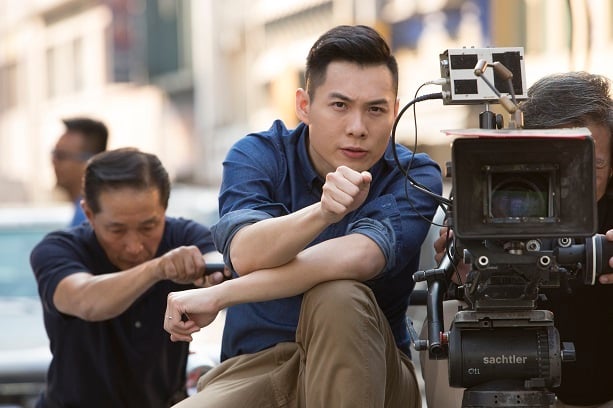
    9. Company Director ($11,800)
    Anthony-Chen-TigerBeer_Singapore_09032014_HKStreet_-354
    Source

    This is probably one of the harder jobs to just pick up. A company director refers to individuals who have been either voted or appointed to a board of directors, and is responsible for the design and execution of the company’s corporate policy.

    Directors do not have to originally be employees of the company, and can sit on more than one board at any time. Which means these people pick up their salary from two or three different places. Pretty cool right.

    8. General Practitioner / Physician ($12,547)

    drhouseoops

    Source

    Turns out that guy you always go to for MCs is doing very well for himself, thank you very much. No such thing as Monday Blues for GPs, as they welcome lines of people queuing up for that precious slip of work-prevention paper.

    Being a doctor isn’t really that difficult. All you need are top notch grades to enter medical school (at least all As), minimum of five years of undergraduate study (along with enough money to fund said education), and be accredited with the relevant bodies before actually being able to whip out that trusty stethoscope and pump-action blood pressure monitor.

    7. Chief Operating Officer (COO) / General Manager ($13,135)

    nick_fury_director_of_s_h_i_e_l_d_wallpaper_by_anyayuy-d7arv3u

    Source

    A COO is typically the second-in-command to the Chief Executive Officer, and is in charge of day-to-day operations. A General Manager is responsible for managing profits and costs of the company. We’re not quite sure why these two rather different job scopes are bundled together.

    But we expect individuals who have the opportunity to rise to either position to have the ability, experience, and gumption to fulfill their roles with aplomb. Experience pays.

    6. University Lecturer ($13,684)

    tumblr_inline_mla31nLw791qz4rgp

    Source

    We have to admit, this one caught us a little by surprise. Who would have thought university lecturing is such a viable form of income? Turns out relentless research and occasionally ticking off the resident smart mouth is worth the trouble. Of course, lecturers come in many forms. The lucky students get the ones who actually want to teach over doing research.

    Potential university lecturers are typically required to have a Masters in their chosen field, but a Bachelor’s Degree may sometimes suffice.

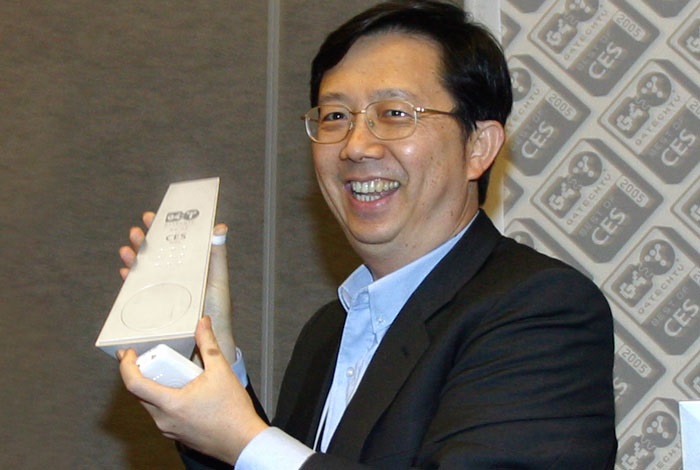
    5. Chief Executive Officer (CEO) / Managing Director ($17,962)
    s09

    Source

    That’s right, the head honcho in most conglomerates comes in at only fifth in the list. Of course, the pay structure for CEOs can range wildly depending on company size, but being a CEO seems like a pretty safe bet to earn some serious moolah. Holders of an MBA generally have an advantage, but possessing a Master’s in the related industry is also useful.

    A CEO’s responsibilities are defined by the board, but should possess some level of leadership qualities, foresight, and be an effective communicator. Interested individuals may want to check out WikiHow’s guide to be a CEO, but we’re pretty sure this tutorial is hardly exhaustive.

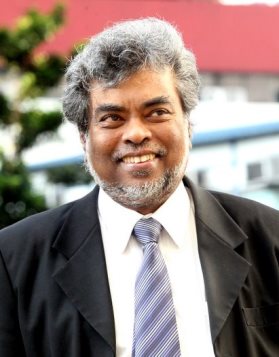
    4. Advocate / Solicitor ($18,333)
    Subhas_Anandan_lawyer

    Source

    Unlike in other countries, lawyers in Singapore are part of what is known as a fused profession, where they are able to perform the duties of both an advocate or solicitor. An advocate speaks on behalf (“advocates”) of a client, and presents arguments and cases in the place of the client. A solicitor, on the other hand, are trained in all areas of the law.

    We’re pretty sure TV’s favourite occupation is also one of the coolest, if only because you get to cut off somebody in the middle of their sentence with a loud “OBJECTION” and getting to use words like “subpoena” and “impermissible”. Also, hot paralegals are a thing. Probably.

    Lawyers who are neither advocates nor solicitors are unfortunately not included in this entry, and can expect to bring home less than their colleagues.

    3. Specialist Medical Practitioner ($23,085)

    1487759_792642510761771_638116745_o

    Source

    There’s a reason why those specialists charge so much just to look at. They have spent ridiculous amounts of time to get to that tiny white office and large lab coat. After medical school — which takes a minimum  of five years — hopefuls have to further their education and undergo a multi-year residency in their chosen field before being able to register in Singapore as a specialist. The entire process can take anything from seven to nine years.

    If you’re lucky, you might become known as the ‘son of Punggol’!

    2. Minister ($91,666)

    HdnNy

    Source

    The gap between the top two paying positions and the rest is HUGE – a whopping $70,000.

    One sure-fire way to be a minister is to sign on with either the Army, Navy, or Air Force. Don’t believe us? Let’s take a look at current ministers who were once served in the military.

    • Brigadier General Tan Chuan-Jin : Minister for Manpower
    • Rear-Admiral Lui Tuck Yew (Former Chief of Navy): Minister for Transport
    • Rear-Admiral Teo Chee Hean (Former Chief of Navy): Deputy Prime Minister, Co-ordinating Minister for National Security, Minister of Home Affairs
    • Major General Chan Chun Sing (Former Chief of Army): Minister for Social and Family Development

    4 ministers of a 17-member Cabinet is actually a pretty decent ratio. Of course, just because they previously held high positions in fatigues doesn’t mean they’re actually competent ministers. We’ll just let you decide.

    Getting into higher positions can in the military can also lead to better job prospects in Government-linked organizations as well. Just ask SMRT CEO Desmond Kuek (Former Chief of Defence Force) and S-League CEO Lim Chin (Former Chief of Artillery).

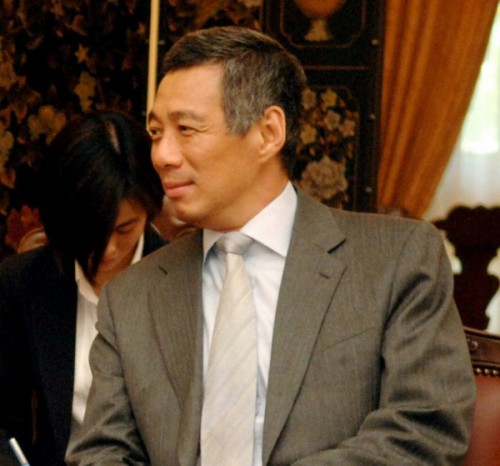
    1. Prime Minister ($183,333)
    060603-N-0696M-382

    Source

    With an annual salary of $2.2 million, Singapore’s Prime Minister (PM) comfortably eclipses the combined salaries of the next 5 highest paid world leaders, including US President Barack Obama. This works out to a monthly salary of about $183,333, which means the PM can buy a BTO flat every two months.

    Also, current Prime Minister Lee Hsien Loong happens to be a former Brigadier General in the Singapore Army, and is yet another soldier who made the jump to politics.

    Haters of the PM’s high salary should note that he actually accepted a 36% pay cut in 2012, so he’s actually working hard on it ok.

    At the end of the day, we’d all probably prefer doing something we enjoy. Unfortunately, not all of us have the opportunity to do so. Maybe the one thing that we actually enjoy is popping bubble wrap. How can that possibly be monetised? And so, banking is the natural option instead. Monetary or family constraints can force some to opt for that soul-sucking, higher-paying gig. Perfectly understandable. All we ask for is that this year, think less about the money, and more about the ones you’re earning the money for.


    Source: http://mustsharenews.com

  • Pelajar Madrasah Al Arabiah Al Islamiah Nurul Iffah Baharudin Cemerlang Di Peringkat GCE ‘O’

    Pelajar Madrasah Al Arabiah Al Islamiah Nurul Iffah Baharudin Cemerlang Di Peringkat GCE ‘O’

    LIMA tahun lalu, Nurul Iffah Baharudin muncul sebagai pelajar terbaik Madrasah Al-Arabiah Al-Islamiah bagi Peperiksaan Tamat Sekolah Rendah (PSLE) dengan agregat 244 mata.

    Tahun ini, beliau mengulangi pencapaian cemerlangnya dengan menjadi pelajar terbaik madrasahnya bagi Peperiksaan Sijil Am Pelajaran (GCE) Peringkat ‘O’.

    Anak sulung lima beradik itu meraih gred enam mata bagi L1R4 (untuk kemasukan ke politeknik) dengan lapan kepujian.

    Nurul Iffah, 16 tahun, mendapat gred A1 bagi Matematik, Bahasa Arab, Sains Gabungan, Bahasa Melayu dan Pengetahuan Agama Islam (IRK) serta gred A2 bagi Bahasa Inggeris, Matematik Tambahan dan Geografi.

    Keputusan cemerlang itu adalah hasil ketekunannya mengulang kaji pelajaran selama tiga jam setiap malam bukan setakat dari awal tahun lalu malah dari sejak memulakan pengajian di sekolah menengah.

    “Saya pastikan saya mengulang kaji pelajaran secara konsisten.

    “Saya akan pastikan saya belajar setiap hari dari 7 hingga 10 malam. Saya akan turut mengikut jadual pembelajaran ini pada hujung minggu kecuali jika saya tiada di rumah,” kata anak pasangan pembantu juruukur dan suri rumah itu.

    Nurul Iffah, yang mendapat tempat pertama di dalam kelas bagi setiap peperiksaan sejak menengah satu berkata beliau tidak meletak apa-apa sasaran bagi peperiksaannya namun berharap melakukan yang terbaik agar dapat memasuki politeknik.

    Beliau ingin melanjutkan pengajian dalam bidang perakaunan atau sains kerana meminati Matematik dan Sains.

    Nurul Iffah, yang mengikuti kelas tuisyen bagi mata pelajaran Bahasa Arab, berkata ramai orang, terutama ibu bapanya, menjangka beliau akan mengulangi kejayaan yang diraih dalam PSLE dan muncul sebagai pelajar terbaik madrasahnya sekali lagi.

    “Tahun lalu, pelajar terbaik dari Madrasah Al-Arabiah Al-Islamiah, yang juga pelajar madrasah paling cemerlang, mendapat gred A1 dalam lapan mata pelajaran. Ibu bapa saya menggalakkan saya cuba mendapat keputusan serupa. Saya tidak berasa tertekan sebaliknya menganggap ia satu motivasi,” katanya.

    Nurul Iffah kini bekerja sebagai pembantu guru tadika sementara menunggu keputusan kemasukan ke politeknik.

    Beliau bercita-cita menjadi guru sekolah menengah dan mengajar mata pelajaran Matematik atau Sains kelak.


    Source: http://beritaharian.sg

deneme bonusu