Category: Singapuraku

  • SAF Finally Accepts Malay Muslim Soldiers Into Armour Formation

    SAF Finally Accepts Malay Muslim Soldiers Into Armour Formation

    Dear editor

    I came across a series of photos posted by The Singapore Army Facebook page and I am glad to see a Malay soldier PTE Mohammad Jumadi who was awarded the best matador gunner in 42 Singapore Armoured Regiment (42SAR).

    Finally, our Malay brothers are accepted in the Armour formation.

    For the uninitiated, the Singapore Armour formation do not have Malay soldiers since its inception in 1968 for unspoken reasons. The formation uses armoured vehicles such as tanks and armoured carriers to spearhead advance movements and hold key objectives during times of war. From what I heard from my enciks, there were discomfort in the region after the AMX-13 tanks were first revealed during National Day Parade in 1969 but it was a source of pride among Singaporeans and assuring for those who chose to stay in the young nation. Our leaders then don’t have a choice, Singapore was a punching bag and her survival was at stake.

    But Singapore is turning 50 this year and she was built on the foundation of mutual trust, respect and harmony among difference races. Singaporeans are highly educated, well-travelled and most are able to understand Singapore’s stability doesn’t come easy. With social media, Singaporeans could see the mistrust among different races in first world liberal nations where white cops held bias against non-whites.

    I cannot deny there was mistrust towards Malays in the very early years of the SAF. It is impossible for me to understand the sense of injustice, discrimination and prejudice my Malay friends felt when they realized they were barred from certain “more sensitive” roles in the armed forces. I am a minority so sometimes I do feel some discrimination in the society but I never felt discriminated in the SAF because I’ve seen Indian Colonels and Sikh BGs around.

    Except for the very tiny segment of the Malay community (Thank to the misguided JI, ISIS and terrorism sympathizers), I am 100% certain our Malay Singaporeans are loyal to Singapore and they will put the country above blood ties, religious ties and fight to their death to defend the country like any Singaporeans would.

    Sanjay A

    Source: www.allsingaporestuff.com

  • Senarai 10 Negara Terkaya Di Dunia

    Senarai 10 Negara Terkaya Di Dunia

    Tabung Kewangan Antarabangsa (IMF) adalah sebuah organisasi antarabangsa yang menyelia sistem kewangan dunia mengikut polisi makroekonomi sesebuah negara.

    IMF mengambil kira kadar pertukaran asing dan imbangan pembayaran sesebuah negara semasa menentukan keluaran dalam negara kasar (KDNK).

    Kadar kekayaan sesebuah negara itu boleh diukur menerusi KDNK yang merangkumi pendekatan produk, pendapatan dan perbelanjaan.

    Berdasarkan data perbandingan populasi yang diperoleh daripada IMF pada 15 Jun 2015, ketahui 10 negara yang dianggap paling kaya di dunia.

    10 – Hong Kong

    Semenjak tahun 70-an, Hong Kong beransur menjadi penghubung kepada dunia dan negara China. Selama beberapa dekad, negara yang mempunyai populasi 7 juta orang ini berkembang menjadi pusat dagangan paling popular di dunia.

    Cukai yang rendah dan sistem perdagangan bebas menjadikan Hong Kong masyhur sebagai hab perdagangan utama global serta pusat kewangan paling penting selepas New York dan London.

    9 – Switzerland

    Laporan Daya Saing Global (GCR) menyatakan Switzerland sebagai yang negara yang paling berdaya saing di dunia. Sebahagian besar ekonomi negara yang ditubuhkan pada tahun 1300 ini dipacu oleh industri berkaitan bahan kimia, farmaseutikal dan kesihatan, mesin dan lain-lain.

    Selain itu, pelbagai jenama bertaraf dunia berasal dari Switzerland seperti Nestlé, Swatch, Adecco, Zurich Financial Services, Credit Suisse dan lain-lain.

    8 – San Marino

    Negara Eropah ini kurang mendapat perhatian dunia. Terpencil dikelilingi Itali, struktur ekonomi San Marino sebahagian besar bergantung pada sektor kewangan, perindustrian, perkhidmatan dan pelancongan.

    San Marino mempunyai keadaan ekonomi yang sangat stabil dan kadar pengangguran antara terendah di benua Eropah. Satu-satunya negara di dunia di mana jumlah kenderaan melebihi penduduk.

    7 – Emiriah Arab Bersatu

    Emiriah Arab Bersatu (UAE) adalah sebuah negara persekutuan merangkumi tujuh emiriah iaitu Abu Dhabi, Ajman, Dubai, Fujairah, Ras al-Khaimah, Sharjah dan Umm al-Quwain.

    Presiden pertama UAE, Sheikh Zayed menyelia pembangunan negara lantas memacu hasil minyak untuk penjagaan kesihatan, pendidikan dan infrastruktur.

    Petroleum dan gas asli menyumbang kepada kekayaan UAE. Simpanan petrol dan gas aslinya masing-masing adalah yang ketujuh dan ke-17 terbesar di dunia.

    6 – Norway

    Norway merupakan salah sebuah negara dengan kerajaan tertua di dunia. Ia ditubuhkan sekitar 1,100 tahun lalu dan sehingga kini mengekalkan pemerintahan monarki.

    Norway kaya dengan bekalan petroleum, gas asli, mineral, kayu balak, makanan laut, air tawar dan kuasa hidro. Industri petroleum sahaja menyumbang sekitar satu perempat daripada keluaran dalam negara kasar negara.

    5 – Kuwait

    Meskipun mempunyai jumlah penduduk seramai 4.1 juta, hanya 1.2 juta adalah warga Kuwait manakala 2.8 juta yang lainnya adalah ekspatriat. Bank Dunia mengiktiraf Kuwait sebagai sebuah negara dengan ekonomi yang berpendapatan tinggi.

    Petroleum sahaja menyumbang hampir separuh dari keluaran dalam negara kasar. Petroleum dan baja merupakan dua sektor utama yang memonopoli ekonomi Kuwait. Mata wangnya, iaitu Dinar adalah unit mata wang dengan nilai paling tinggi di dunia.

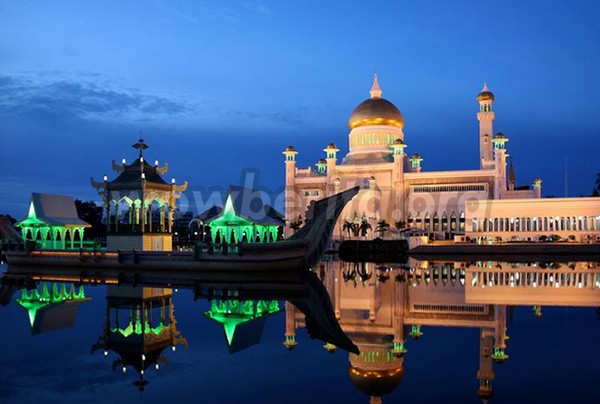
    4 – Brunei

    Pertumbuhan ekonomi sekitar tahun 1990-an hingga 2000, membawa perubahan kepada Brunei sehingga menjadi sebuah negara perindustrian. Purata peningkatannya adalah 56 peratus bagi tahun 1999 hingga 2008 sahaja.

    Sektor petroleum dan gas asli menjana kekayaan negara yang mencapai kemerdekaan dari United Kingdom pada 1 Januari 1984 ini. IMF turut menyatakan bahawa hutang Brunei berada di kadar kosong peratus daripada KDNK negaranya.

    3 – Singapura

    Selain menjadi salah satu hab perdagangan utama dunia, Singapura merupakan pusat kewangan keempat terbesar dan salah satu daripada dua pelabuhan kontena paling sibuk di dunia.

    Ekonomi global Singapura yang pelbagai tertumpu pada sektor perdagangan, terutamanya perkilangan yang menyumbang kira-kira 30 peratus daripada KDNK Singapura.

    Negara yang terletak di selatan Semenanjung Malaysia ini juga menduduki kedudukan yang tinggi bagi taraf hidup, pendidikan, penjagaan kesihatan serta daya saing ekonomi.

    2 – Luxembourg

    Walaupun dilihat sebagai sebuah negara yang kecil dan dilitupi hutan Ardennes yang padat, ekonomi maju Luxembourg berjaya meletakkan negara Eropah ini di tangga kedua terkaya di dunia.

    Ekonomi stabil dan berpendapatan tinggi Luxembourg didominasi oleh perindustrian besi sehingga 1960-an. Sejak beberapa dekad lalu, sektor kewangan mula mengambil alih sehingga menjadikan Luxembourg pusat pelaburan kedua terbesar di dunia selepas Amerika Syarikat.

    1 – Qatar

    Negara yang terletak di semenanjung Arab ini muncul sebagai negara terkaya dengan hasil keluaran dalam negara kasar tertinggi di dunia. Penduduk Qatar tidak perlu membayar cukai pendapatan kerana taraf kehidupan yang tinggi.

    Negara berpendapatan tinggi ini mempunyai ekonomi yang maju disokong oleh simpanan gas asli ketiga terbesar di dunia. Selain itu simpanan minyaknya melebihi 25 bilion tong. Pada tahun 2012 sahaja, simpanan minyak Qatar menyumbang lebih 13 peratus daripada sumber keperluan global.


    Source: http://wowberita.org

  • 8 Indonesians Confess To Hijacking Malaysian-Registered Tanker Orkim Harmony

    8 Indonesians Confess To Hijacking Malaysian-Registered Tanker Orkim Harmony

    PETALING JAYA (THE STAR/ASIA NEWS NETWORK) – The eight suspects in the hijacking of Malaysian oil tanker MT Okim Harmony have confessed to the crime.

    Malaysian Maritime Enforcement Agency deputy director-general (operations) Maritime Vice-Admiral Ahmad Puzi Ab Kahar confirmed that the suspects, who are all Indonesian nationals, had made the confession to the Vietnamese authorities.

    Datuk Ahmad Puzi added that they were closely monitoring the situation, but declined to comment further.

    The eight were arrested in Vietnamese waters near Tho Chu Island after they reportedly fled the MT Orkim Harmony in a rescue boat at 8.30pm on Thursday.

    Before that, they had directed the Navy to move its ships about five nautical miles (9km) from the MT Orkim Harmony, threatening to harm the crew.

    The vanishing act was only found out at about 1am on Friday when the captain of the seized oil tanker contacted the KD Terengganu.

    The ship’s captain did not inform the navy immediately of their escape as the pirates threatened to harm his family if he did so.

    The tanker – owned by Magna Meridian Sdn Bhd and carrying 6,000 tonnes of petrol worth RM21 million (S$7.5 million) belonging to Petronas – had been reported missing since June 11 while on its way from Malacca to Kuantan Port, Pahang.

    The vessel that was reported to be adrift in Cambodian waters then suddenly changed course to the east towards Natuna Island, Indonesia.

    It had also been repainted and renamed ‘Kim Harmon’ by the pirates.

    The oil tanker with 21 crew members arrived at Kuantan Port on Saturday morning.

    One of its crew members, an Indonesian cook, was flown by helicopter to Universiti Sains Malaysia Hospital on Friday for treatment after he was shot in the thigh.


    Source: www.straitstimes.com

  • Clarke Quay Quieter After Alcohol Laws

    Clarke Quay Quieter After Alcohol Laws

    For years, Read Bridge in Clarke Quay was a weekend magnet for late-night revellers, filled to the railings with hundreds of young people having drinks on the cheap.

    Now, the scene is hardly recognisable, 21/2 months after new laws restricting public consumption of alcohol kicked in.

    When The Sunday Times visited after 11pm last Saturday, there were only about 50 people lining the bridge, compared to more than 300 in the past, and most were not drinking.

    The few who were did so discreetly, sipping from plain cups or hiding the bottles and cans of alcohol in plastic bags.

    At nearby Robertson Quay, gathering places around popular nightclub Zouk were quieter, with far fewer people loitering and drinking.

    Both locations also had far less litter, a stark contrast from the past when empty liquor bottles, beer cans and vomit were the bane of cleaners.

    Mr Tan Yong Hong, a 64-year-old who picks up cans on the bridge, said he used to be able to collect 10kg worth a night. Now, it is barely half that.

    Under the Liquor Control (Supply and Consumption) Act, which came into force on April 1, drinking in public is banned from 10.30pm to 7am. Retail outlets also cannot sell takeaway alcohol during those hours.

    The price of being caught drinking is a fine of up to $1,000. Repeat offenders face a fine of up to $2,000, and the possibility of a maximum three months in jail. Shops found selling alcohol during the hours of the ban can be fined up to $10,000.

    Residents and retailers The Sunday Times spoke to were pleased with the changed environment.

    Businesswoman Jung Jungyoon, who lives at Centennia Suites near Zouk, said the Robertson Quay area is much cleaner and a lot less noisy.

    “I used to be bothered by the noise, and the smell of vomit. I could see some people just lying on pavements,” said the 34-year-old. “I’m pretty happy about the atmosphere now, it’s a big difference.”

    A resident of Rivergate condominium, who did not want to be named, said the situation has “definitely improved” though she still spots young people drinking during the prohibited hours.

    The alcohol restrictions have benefited clubs in the area, with Zouk saying it has seen a slight increase in alcohol sales during the earlier hours of its opening.

    There has also been a marked decrease in rowdiness and drunken behaviour outside, and even inside, the clubs.

    Attica’s general manager Roberto Gagliardi said: “Clarke Quay’s ambience may be a bit down, but there is less disorder… and fewer customers arriving drunk.”

    Mr Saravana G., manager of wine bar Verre at Robertson Quay, said: “Drinkers would leave rubbish, get drunk and start shouting. They would also use the toilet in my bar. It was very unpleasant. I had to call the police several times before.

    “Now the drinking crowd outside is all but gone.”

    For non-drinkers, Read Bridge has become a more welcoming place. Musician Helmizar Kamal complained that the place used to be dirty and that it was very hard to find a place to sit. “Now it’s a lot more peaceful and I’ll come here more often,” said the 25-year-old.

    But there are some who miss the “vibrancy” of the past.

    A 29-year-old construction engineer, who wanted to be known as Victor, said: “I don’t enjoy this area as much now. We can’t come here and drink with our friends after work any more.”

    Account manager Luke Brandon, 24, added: “It’s not as fun. We now have to travel to a friend’s place in some inconvenient area (to drink), then travel again to a club. We are usually sober by then. It’s a bummer, but I don’t want to get fined.”


    Source: www.straitstimes.com

  • Malaysian Workers Use Spiderman Shortcut At Causeway To Beat Jam Into Singapore

    Malaysian Workers Use Spiderman Shortcut At Causeway To Beat Jam Into Singapore

    JOHOR BARU (Sin Chew Daily/Asia News Network) – To beat the perennial jam on Johor Causeway, many Malaysians have come up with a risky solution.

    They take the short cut along the rail line from Lido Beach along the Straits of Johor to avoid the traffic jam, and then climb up to the Causeway and walk their way to the other end.

    These Malaysian workers making the daily commutes to Singapore have somehow managed to evade the Malaysian immigration checkpoint.

    It is understood that this short cut is quite popular among commuters around 7am to 8am morning rush hours, and the same route is taken during the evening rush hours between 7pm and 8pm when they return from Singapore.

    A reader tipped off Sin Chew Daily that such “Spiderman” acts were common during morning rush hours.

    He said he has already got used to seeing people climb up from the rail line, over the large water pipes onto the Causeway.

    Sin Chew Daily’s reporting team checked out the shortcut, and found that it was very much in use by some impatient commuters.

    These “Spidermen” are believed to have gained access to the shrubs beside the Causeway from the beach on the left just across the road from the JB police headquarters.

    They later walk along the rail line beside the Causeway until the point nearest to the Causeway road surface, where they will climb up to the Causeway from the water pipes.

    Our reporting team found a well-trod path in the midst of the shrubs beside the Causeway believed to have been used by the commuters over the years.

    Malaysian Railway KTM Southern Region manager Omar Nazari Othman told Sin Chew Daily he was unaware of the practice as he had not received any report or complaint so far.

    He said KTM could not do anything even if a person was found walking along the rail line.

    “I will probe this matter and will send people there to check. We will report to the police if we find anyone doing things that will damage the rail line.”

    A construction worker at a nearby site confirmed that he had seen people taking this route.

    In order to have a hands-on experience with this short cut, our reporting team decided to take the shortcut themselves.

    But when our reporter was about to climb up to the rail line, he was instantly stopped by someone claiming to be a KTM employee.

    He told Sin Chew Daily KTM had no enforcement power and could not take any legal action against violators of KTM properties, adding that all they could do was to stop people from taking the shortcut.

    A check by The Straits Times with the Singapore immigration authority’s website shows that those coming into Singapore need a passport, a valid visa, and a embarkation or disembarkation card.


    Source: www.straitstimes.com

deneme bonusu