The body of a 52-year-old Singaporean was found off a highway in Bukit Kayu Hitam, Kedah, on Sunday morning.
At least 13 slash wounds were found on the man’s forehead, the back of his head, and arms.
The slash wounds on the victim’s head were so deep that his skull was visible and his head was almost hacked in half, reported Kwong Wah Daily.
Malaysian police discovered the body at 9.30am in a bushy area off the North-South Expressway near the Malaysia-Thailand border after receiving a tip-off from a member of the public.
The body was sent to Sultanah Bahiyah Hospital in Alor Setar, Kedah, for a post-mortem.
Kedah Criminal Investigation Department (CID) chief, Assistant Commissioner Mohd Nashir Ya, told the New Straits Times (NST) that the man died from multiple knife wounds.
Police believe that the man, who was wearing a long sleeved shirt and trousers, died between six and 12 hours before he was found, reported NST.
Lianhe Wanbao reported that two police dogs and 30 policemen, including CID and forensics officers, were activated to comb the scene.
A cigarette box was also found at the scene and taken away for investigation. Aside from a mobile phone and a bunch of keys, no personal identification documents were found on the man’s body, reported The Star Online. Through the phone’s contents, police identified the dead man as a Singaporean Chinese, according to Lianhe Wanbao.
A police spokesman told Lianhe Wanbao that the victim’s family had been contacted and they identified the body yesterday afternoon.
Even though the victim is a Singaporean, police said the man had been staying in Hat Yai – a southern Thailand city near the Malaysian border – for many years.
The case is being investigated under the Penal Code for murder and no one has been arrested yet.
An elderly man had a close shave with death when a huge slab of concrete crashed down on his bed just moments after he got up.
He suffered a cut and bad bruising when the slab grazed his right upper arm.
Mr Geebian Lye, 69, and his wife were in their upstairs bedroom when they heard strange clicking sounds from the ceiling of their double-storey house at 31, Geylang Lorong 32, last Thursday.
His wife, in her 60s, managed to get of the room but Mr Lye had only got off his bed when bricks and concrete crashed through the false ceiling.
”I was stunned. It was a miracle that I survived,” he said.
A condominium was under construction next to their house. The Building Construction Authority (BCA) has since revoked the permit for construction works at the condo.
A construction supervisor from ABM Construction, which is building the condominium, said that it was an accident and was ”no big deal”.
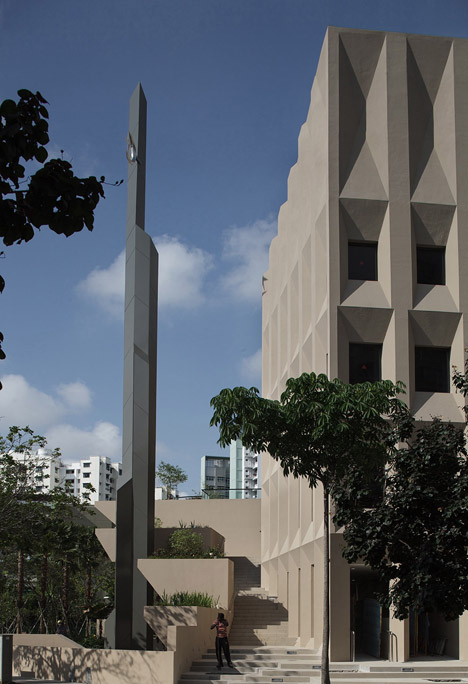
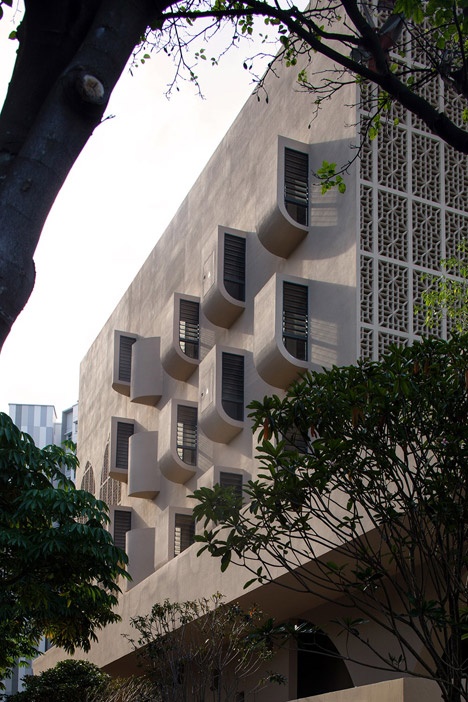
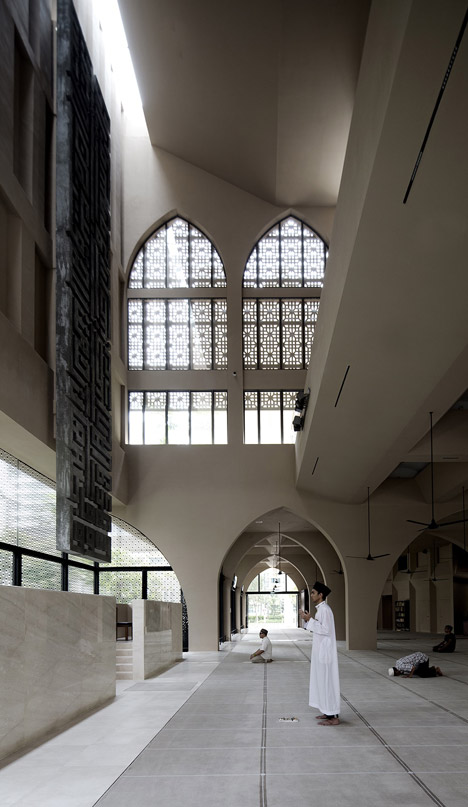
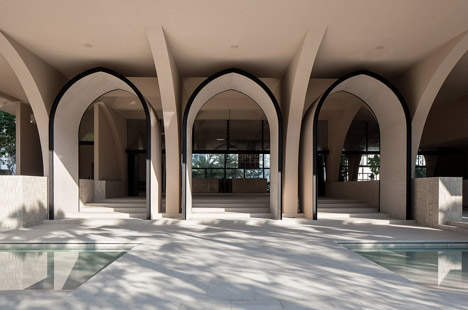
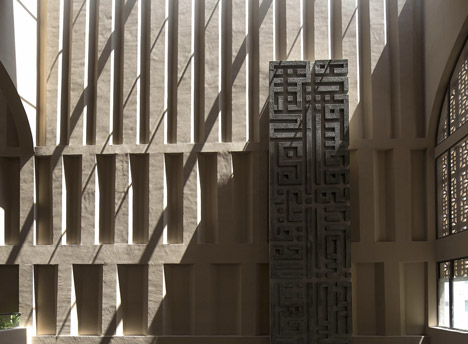
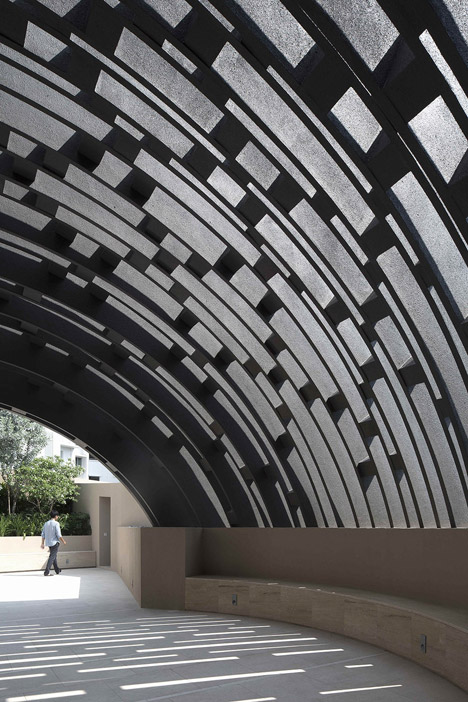
Singapore studio Formwerkz Architects took references from traditional Islamic design to create the intricately patterned and moulded surfaces of this mosque.
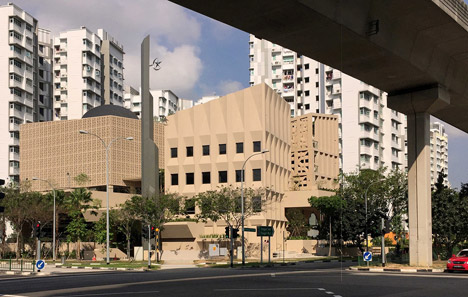
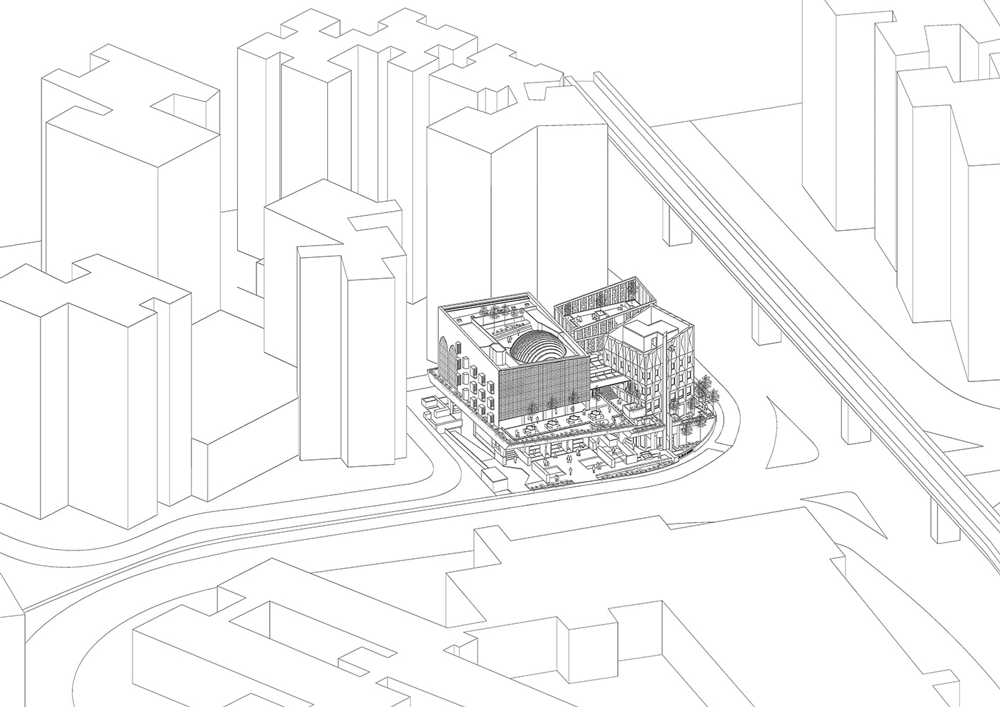
The Al-Islah Mosque by Formwerkz Architects caters for the Muslim population of Punggol, a densely populated neighbourhood in north-east Singapore.
The area is currently undergoing significant redevelopment, with the Singapore Institute of Technology due to relocate to a new campus near a waterfront park by LOOK Architects and high-rise housing being erected to accommodate the rising population.
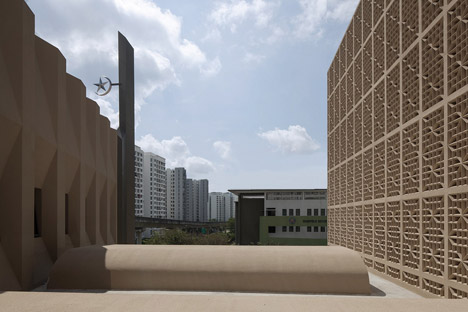
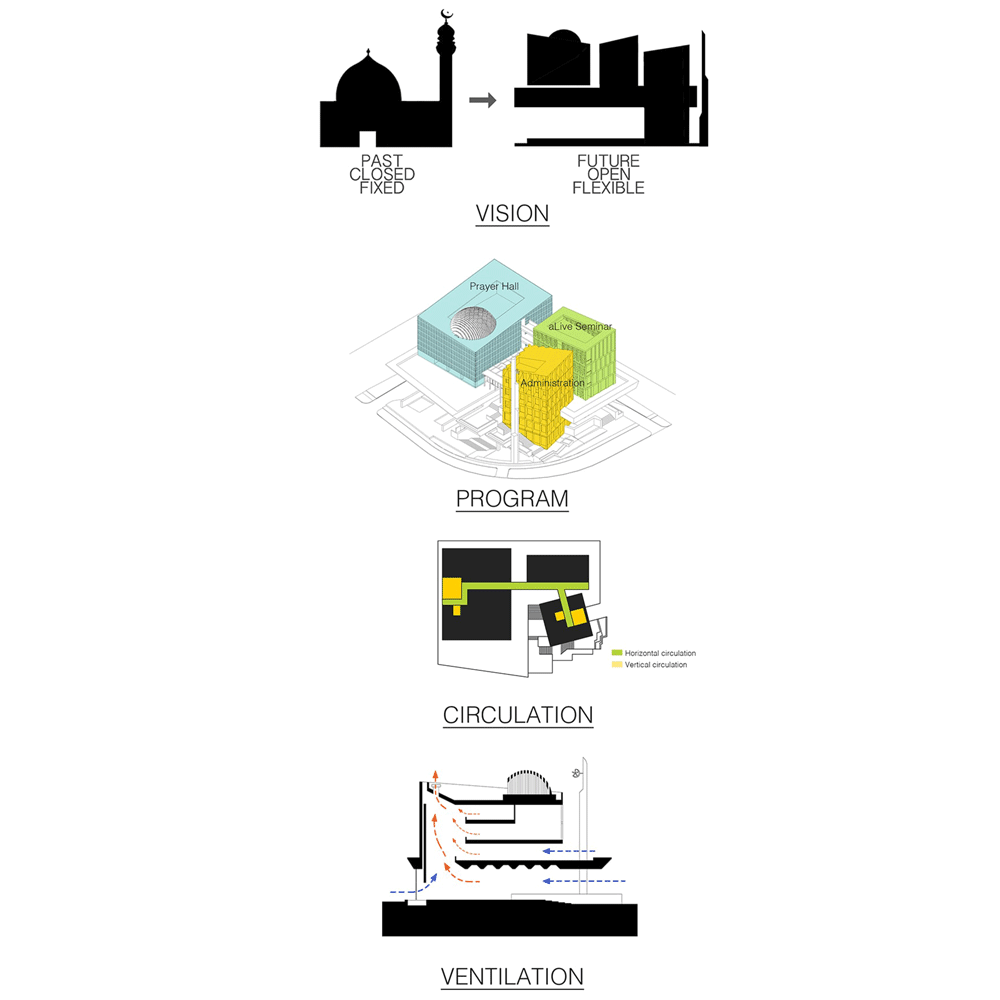
The mosque is segmented into three volumes – a prayer hall, an Islamic education centre and an administration block – to give the structure a more domestic scale within the built-up area.
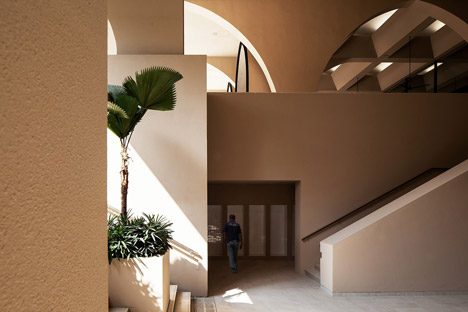
These blocks are linked by a series of elevated and landscaped terraces that are open to the public.
“The new mosque aspires to be a model of openness, reflective of contemporary Islamic aspirations in Singapore,” said architect Alan Tay. “This ambition for the openness posed much challenges in view of the tight site and its proximity to the neighbouring flats.”
“Physical porosity allows a visual connection to the neighbourhood and extends its spatial field beyond its boundary but poses the issues of sanctity and threshold expected of a mosque.”
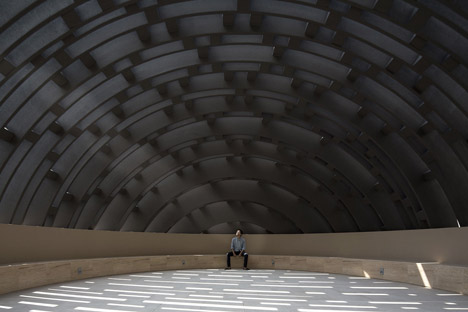
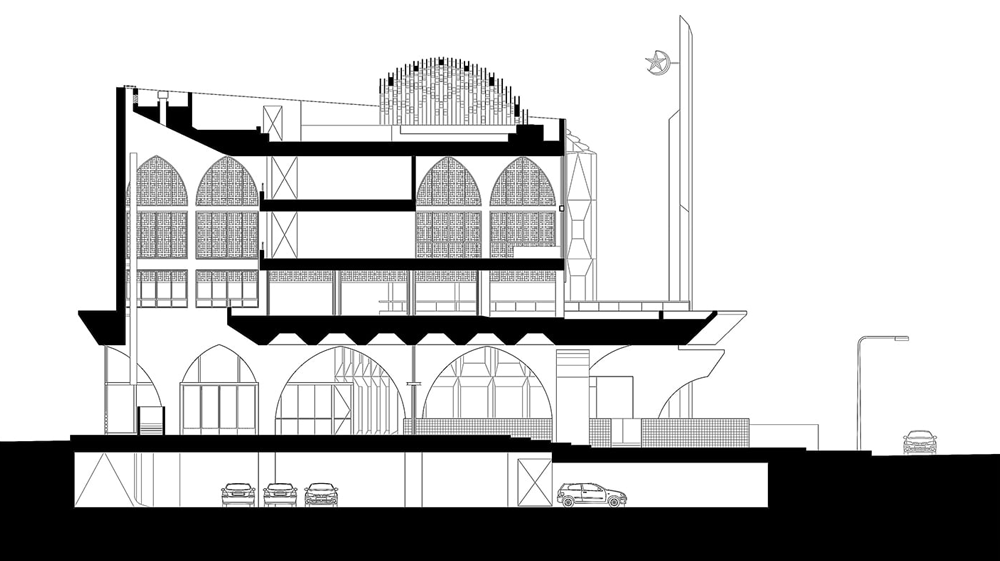
Latticed screens form walls and the dome over the prayer hall, to enhance the feeling openness while also providing ventilation and natural lighting for the spaces within.
The reinforced concrete structures are covered with sand-coloured textured paint. Elements such as the dome, arched doorways and a slender minaret are picked out in dark grey paintwork.
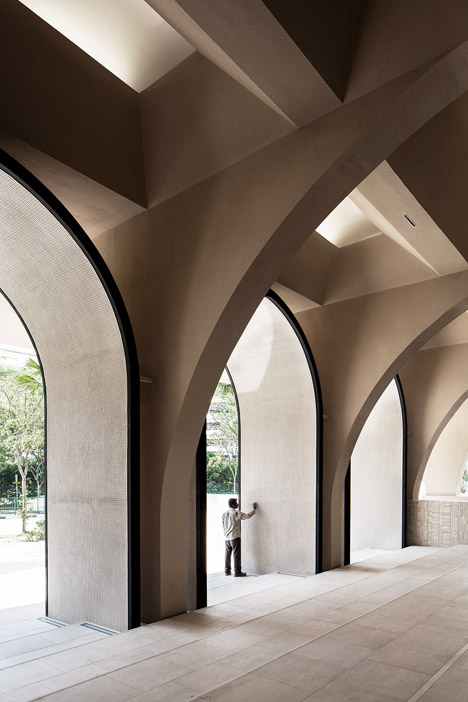
“The basic arabesque pattern and arches are influenced by traditional Islamic forms,” explained studio co-founder Alan Tay. “The arches are designed to allow a wider span in the prayer hall and cantilever in the main entrance foyer.”
The 3,700-square-metre mosque can accommodate up to 4,500 worshippers at any one time, with service areas including an underground car park all designed to be used as extensions of a domed prayer hall.
The prayer hall has open sides that allow the congregation to spill into adjacent spaces during peak worship times. These areas are shielded from the weather by a large overhanging canopy.
“In peak periods, most of the floor space – with the exception of bathrooms, admin space and service rooms – is utilised for prayer,” Tay told Dezeen. “Corridors, classrooms, roof terraces and even the basement car park double up as prayer spaces.”
“With no boundary walls and minimum enclosing wall, the worship hall is visually and physically accessible on all sides, blurring the distinction between the mosque premise and the street,” he added.
A senior staff sergeant inspector who used the police computer system to do an unauthorised search for his brother-in-law’s girlfriend was sentenced to the maximum fine of $10,000 on Wednesday .
Kang Wei Chian, 40, had pleaded guilty to two of seven charges of computer misuse at Police Cantonment Complex in May last year.
The policeman with 22 years’ of good service had logged into the Frontline Officers’ Computerised System (Focus) to search for a unit in Tanglin Halt Road which his brother-in-law and his girlfriend wanted to buy.
They suspected that the unit might have been subjected to harassment from an unlicensed moneylender.
After doing a search and determining that there were no hits against the unit, Kang informed the girlfriend of his brother-in-law, that it was safe to buy.
Focus, which is under the Ministry of Home Affairs, allows police officers to lodge reports and carry out online searches for details of reports lodged by members of the public.
It also contains, among other things, personal information of complainants, victims and witnesses.
All police officers know that the system can be used only for official purposes.
Kang’s offences came to light in July last year after a supervisory audit check on Focus revealed several unauthorised screenings done by Kang.
The prosecution had sought four weeks’ jail for Kang, but his lawyer Daniel Atticus Xu had urged the court to impose a high fine or a short detention order.
District Judge John Ng said on Wednesday he was satisfied that what Kang had done was a “foolish act” rather than abuse of his power for nefarious activities.
“So I am satisfied that a custodial sentence is not necessary in this case,” he said.
The judge noted that there have been similar cases in the past where a non-jail sentence was imposed but a heavy fine.
“I am sure other police officers will be warned by what has happened today…what has happened to you. Unfortunately, you tried to help your wife.. and now your wife has abandoned you,” he said.
Kang, who has been suspended from duty, is undergoing divorce proceedings.
He could have been fined up to $5,000 and jailed for up to two years on each charge.