Tag: affordable

  • Fairprice The First And Only Retailer Offering Tesco Products In Singapore

    Fairprice The First And Only Retailer Offering Tesco Products In Singapore

    Consumers here do not need to travel  to the United Kingdom to get their hands on products from British food retailer Tesco.

    Local supermarket chain FairPrice is offering over 400 Tesco products at close to 60 of its outlets and at its online store, under a partnership with Tesco officially announced on Wednesday (July 26). It is the first and only retailer offering Tesco products in Singapore.

    FairPrice starting introducing  a small range of Tesco products two years ago and is doubling the range of products and the number of outlets which offer the brand.

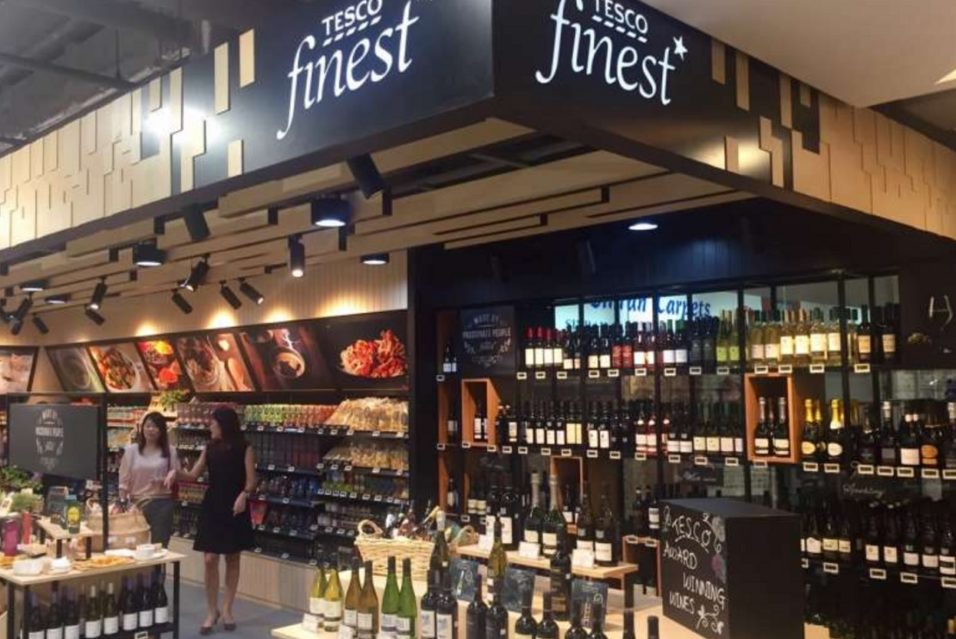
    The expanded range includes Tesco finest – the premium version of the brand – with products such as Fair Trade certified coffee, authentic Italian pasta from the Italian city Gragano, traditional British biscuits and a large selection of quality wines.

    FairPrice chief executive Seah Kian Peng said the partnership with Tesco “will help boost our ongoing efforts in catering to the changing lifestyles and tastes of our customers”.

    Chief executive of Tesco in Asia Tony Hoggett said: “With FairPrice’s local expertise and Tesco’s track record of sourcing great quality products from around the world at affordable prices, we are confident that together we can offer unrivalled quality and value to shoppers in Singapore.”

    FairPrice also launched a new “store-in-store” concept at its FairPrice Finest outlet at Bukit Timah Plaza.

    A space within the outlet has been set aside as a Tesco finest store, featuring about 150 specially curated Tesco products exclusive to the outlet, including the widest selection of Tesco wines available in Singapore.

    FairPrice will  expand its range of Tesco products to include a greater variety of packaged and chilled food.

    Besides Tesco, FairPrice also carries products by other international retailers including American retailer Costco’s house brand Kirkland and European food retailer Delhaize.


    Source: http://www.straitstimes.com

  • HDB CPF Scheme A Scam?

    HDB CPF Scheme A Scam?

    Once upon a time, when HDB was first started in the 1960s, flats were really sold at close to cost and followed the model of true subsidized housing. In the 1970s, flats were sold on a cost basis, in other words with no mark up by the HDB. You could buy a 3-room flat for as little as $7,000 and 5-room flats were $30,000 apiece.

    In the 1980s, HDB started to include land cost in the pricing, for what reason no one knows as HDB dwellers do not own the underlying land. Prices then went as high as $140,000 for an executive flat. In the 1990s and 2000s, we saw the start of the sharp rise in prices when HDB added “market” price of land valuation to its construction cost, resulting in above $400,000 for the price of new flats today. We will examine the reason for this later.

    In the first couple of decades of the HDB’s existence, you also had to sell the flats back to HDB at the price that you bought from them, if you decided to change residence. This prevented speculation from profit taking on the flats. At its peak, with a population under 2 million, the HDB was building as many as 30,000-40,000 units a year. These were the golden days when HDB was truly affordable.

    The HDB’s formula was very simple. Acquire land from private owners for a fraction of the cost using the Land Acquisitions Act which restricted what the government was liable to pay in compensation to the land owners (my readings have indicated 25 cents on the dollar), then rezone the land to allow for higher density. Tender out the construction of the blocks with the winning companies using cheap labour (usually Thai or Bangladeshi workers), cheap material, and all financed by cheap money from the CPF. On top of this, architectural costs were minimized (they can add up to 10% of a project’s cost) by using the same cookie cutter designs.

    Cheap Land + Cheap Labour + Cheap Materials + Cheap Architectural Costs + Cheap Financing = An affordable Dwelling … as long as the savings were passed on to the end user.

    Fast forward to the 1980s, and the PAP realized that it had a serious problem on its hands. This was the growing mountain of CPF funds under administration. When CPF originally started in 1955, the contribution rate (total) was as little as 10%. Now look at how high it is. Coupled with the higher average incomes over the decades, this higher contribution rate has given rise to hundreds of billions of dollars that the government collects in CPF contributions every year.

    Over the last 5 years, CPF contributions have averaged $22 billion and the amounts are trending higher. These contributions represent a liability to the government, i.e. they have to pay it back to the contributors when the latter retire. Many have suspected the PAP is not interested whatsoever in releasing these billions of dollars to Singaporeans and that they have already used these funds to fund their GLCs, Temasek Holdings, etc. and in many cases have lost substantial amounts of money.

    Can you sense the con?

    So, the question became, “How do we, the government, minimize our liability in the form of CPF, and at the same time increase our investing assets in the form of the 2 sovereign wealth funds?”

    So, some scholar came up with a brilliant idea. What if we decoupled the HDB’s buy back at cost scheme for flats – resulting in an immediate price increase – and then using this price increase as an excuse, we artificially raise the prices of HDB flats drastically. At the same time, we allow the use of CPF not only for the down-payment, but also for monthly payments on the flats, thereby depleting the flat dweller’s CPF account and dramatically reducing the government’s CPF liability exposure.

    So, how it works is that now, HDB has raised its pricing to way beyond what it costs to build a flat. A flat that costs perhaps $150,000 to build is now “sold” for $450,000. The extra $300,000 is profit that goes to the government. Imagine that you are the buyer of such a flat. You use 20% for the down-payment straight from your CPF OA account. That’s $90,000 out of your CPF account right away. And you take a bank loan for $360,000 at 2.5% amortized over 25 years, that’s $1,613 per month in payment. Let’s say that like most Singaporeans, you take the monthly loan payment out of your CPF. After 10 years, you have paid $193,500 in interest and principal. Remember, this is $193,500 that you won’t have any more in your CPF. It has gone to the government which used an overvalued flat to extract it from you. And don’t forget too that the original $90,000 down-payment is also not available, meaning in the first 10 years, you have used up $283,500 from your retirement savings on a flat that is not yours, a flat that you are only renting for 99 years from HDB!!!

    Worst of all, after the first 10 years, you still owe $242,000 on the original purchase price. In one fell swoop, the government has now successfully transferred 75% of your current and future retirement funds into a 99-year prepaid rental flat that you don’t own, thereby reducing their liability to you and at the same time selling you an expensive trinket. How devious is that?

    But wait, you say, I can always sell my flat when I retire and use the money from the sale to fund my retirement. This is the lie that the PAP tells, and let’s examine it.

    a) Well, if you sell your flat, where are you going to live? If you bought your flat 25 years ago for $150,000 and sold it today for $600,000, where will you reside? You can downsize to a smaller flat, but even that will cost you upwards of $300,000. So, what do you net out after you buy a replacement flat? Remember, you have to live in a flat until you die, as nursing homes according to certain Ministers are too expensive unless you relocate to Johor. And forget about renting too. It’s very expensive and will rapidly deplete the capital gains you have made from the above transaction. Don’t forget too that CPF has fixed it such that you can only use your CPF for the monthly payments on a HDB 99-year prepaid rental flat, but does not allow you to use it on monthly short term rent (12 months or so). If you retire and sell your flat, and decide to rent, you must pay for the rent after tax and from non-CPF sources of funds. Which means you can’t do so or you have to go back to work. It’s then a waiting game until you get to the age when you can withdraw all your CPF. So, if you do downsize to a smaller flat, the amount that you net out will not be much, and probably not enough to fund retirement for you and your spouse.

    b) Consider too what happens when your flat gets older. Some banks are not giving loans for flats that are older than 25 years. HDB themselves severely restrict loans for flats that are 34 years and older. This means that when you want to “monetize” or sell your flat for the purpose of funding your retirement, you will find that many potential buyers cannot get a satisfactory bank loan, or even a bank loan at all, to buy it from you. This will result in your flat being less desirable to buyers and hence it will command a lower price than what you had thought possible. In addition, you are dependent on the prevailing housing market conditions. Housing moves in cycles. If you are selling during a downturn, you will get less for it. If you want to wait till the market comes back up, then you have to postpone your retirement. You have therefore been placed in a position where you have to speculate on real estate and where there is no certainty at all what amount your retirement fund will be. This is the opposite of a prudent pension or retirement fund. A prudent retirement fund is one where you know exactly how much money is inside so you can budget and plan for your retirement. This is not possible if you have to rely on the value of your HDB flat at a certain point in time in the distant future.

    c) Selling your HDB flat to fund your retirement is possible if you bought it 30 years ago. Today’s new flats can cost $400,000 plus and a resale flat easily exceeds $600,000. Exactly how much does it have to appreciate as it gets older for you to make a sizeable capital gain from its sale into retirement? You pretty much have to sell it for over a $1 million to fund retirement. What are the odds that a 30-year old flat will sell for $1 million when the time comes?

    Cornered and nowhere to run

    How successful has this manoeuvre been? Consider that CPF withdrawals are roughly 50% of CPF contributions. This is over $10 billion a year on average being withdrawn. The vast majority of that goes towards funding HDB-related purposes. A retirement fund should only be drawn on when you retire. What the government has made you do is something that no prudent financial planner would advise. They have made you pay for your current expenses such as housing-related expenses with your retirement fund. In addition, the PAP has closed all possible loopholes, hence channeling people like lemmings into this “legal con game”.

    For example, by offering a rate of only 2.5% on your CPF (in earlier years it was as low as 1%), your CPF is being eroded at an alarming rate. This is because the inflation rate is much higher than 2.5%, and is in fact double digits in some years. If the inflation rate was 6% per annum, you have lost 3.5% on real purchasing power. Put another way, if you have $100,000 today in your CPF, 20 years from now, your $100,000 would be able to purchase only $70,000 worth of goods and services. So what choice do you have? If you leave your money in the CPF account, you are guaranteed a loss due to the effects of inflation being higher than what CPF pays you in interest.

    So, the PAP wants you to put it into an HDB flat so that at least you have some chance of a capital gain down the road. If CPF paid 10% interest on OA, who would want to withdraw it to buy a flat? Yet, Temasek claims to be earning 17% returns on these same CPF funds that they use to invest. Surely, it’s not unreasonable to give to the original funders 10% return? Singapore bond yields are typically 2.5% over bank deposit rates, and some GLCs like Keppel Corp have long bonds yielding over 5%. Why can’t CPF pay at least these rates?

    And now the government is making it harder and harder for people to access their CPF. They are moving the age limit higher and floating trial balloons about annuities, all in the name of preventing Singaporeans from accessing what’s left of their CPF that has not been pilfered to the HDB.

    Yet another clever device centres on the fact that HDB has no intention of honouring its 99-year lease agreement. In the first place, the flats are not built to last 99 years. So, before the 99 years are up, HDB fully intends to relocate you to another estate into a new flat at a much higher market rate than the one you previously owned. Who knows, you might have been mortgage-free vis-a-vis the old flat but now you have to start with a new mortgage again. In addition, terms in the lease contract enables HDB to transfer ownership cost such as property taxes, upgrading costs, conservancy fees to you, the tenant, thereby further depleting your CPF account.

    Conclusion

    The end result is that in all likelihood in excess of $100 billion has been channeled out of CPF into the government coffers through the sale of a rental agreement for 99 years. Singaporeans literally have nothing to show for it. If this doesn’t make it one of the biggest swindles of all time, then I don’t know what does. This is not some greedy Wall Street wolf doing the fleecing here, but a government using legislature, boldfaced lies and obfuscation to con a gullible populace into buying into a pipe dream.

    BD

    Submitted by TRE reader.


    Source: www.tremeritus.com

  • HDB Operated With S$1.93 Billion Deficit in 2013

    HDB Operated With S$1.93 Billion Deficit in 2013

    The Housing Board’s deficit more than doubled in the last financial year, as building continues on the record number of new flats launched since 2011.

    In the year ended March 31, it incurred a $1.93 billion deficit on home ownership alone, according to its annual report released on Wednesday.

    The take-up rate of the Special CPF Housing Grant has also spiked since it was enhanced to make more households eligible in July 2013, said the HDB in a separate statement. This grant is given to eligible first-timer citizen families who are applying to buy a 2-room, 3-room or 4-room flat in a non-mature estate and who are able to meet the eligibility conditions under the scheme.

    Last year’s home ownership deficit was 2.7 times that of the previous financial year.

    The rise is mainly because the HDB has more projects on the go, after three years of ramped-up Build-to-Order launches. There were 86,298 flats under construction in the last financial year, up from 72,737 the year before.

    The HDB thus had to make a larger provision for foreseeable loss under its operating expenses. This is the difference between the estimated development costs and the selling price of flats. It accounted for most of the home ownership deficit last year.

    The overall net deficit before government grant and taxation was $1.97 billion, up from $797 million the year before.

    The HDB also introduced several policy changes in the last financial year, for which it gave updates on Wednesday.

    One such change was the July 2013 enhancement of the Special CPF Housing Grant, first introduced in March 2011. The income ceiling was raised and it was extended to four-room flats, making more middle-income households eligible.

    As of the end of October this year, the grant has benefited about 10,500 households – of whom 8,700 took it up after the change.

    The HDB also introduced measures to cater to various groups of flat buyers. Singles were allowed to buy new two-room flats in July 2013. As of the end of October this year, 3,700 have booked a unit.

    Large Three-Generation flats, meant for multi-generation families, were also introduced in the September 2013 BTO exercise. More than 500 have been launched, and as of October, 340 households have booked a unit.


    Source: www.straitstimes.com

  • Are HDB Flats Affordable For Low-Income Singaporeans?

    Are HDB Flats Affordable For Low-Income Singaporeans?

    Can a Singaporean who earns $850 a month afford to buy a Housing Board flat?

    Mr Mohammad Charlie Jasni says yes.

    The odd-job labourer earns that amount, and he and his family will be moving into a new two-room HDB flat in Punggol by the end of the year.

    He had successfully balloted for the 45sq m build-to-order unit in August 2009.

    It cost $99,220, but because he earns less than $5,000 a month, he qualifies for a government housing grant that gives him $40,000 to offset the flat’s price.

    This means he has $59,220 left to pay, which he will do using his Central Provident Fund (CPF) savings.

    He and his wife already have about $40,000 in their CPF accounts, and this will grow as he continues to work.

    Based on HDB’s calculations, he needs to pay a monthly housing instalment of $83 over 30 years.

    ‘By paying the $83 out of my CPF, it means I have that little more for daily expenses,’ said Mr Charlie, 33.

    He is currently living with his wife and two children in a two-room rental flat in Beo Crescent. They pay $44 a month for that flat.

    They are excited about their upcoming home and are already discussing renovation ideas and shopping for furniture.

    ‘It is good to have a home of our own,’ he said.

    Mr Charlie’s story puts a face to a statistic that has been debated in the last week.

    In Parliament last Thursday, Deputy Prime Minister Tharman Shanmugaratnam revealed that ‘a family with $1,000 income can now, through our housing subsidies, purchase a small flat’.

    He was responding to Workers’ Party member Gerald Giam’s comments about Singaporeans being unable to afford a flat.

    The minister’s remarks sparked off much discussion in both cyberspace and coffee shops alike. Some wondered how $1,000 could buy anyone a flat, given that sum was hardly enough to support a family’s daily living expenses.

    The next day, National Development Minister Khaw Boon Wan explained that Mr Tharman was referring to a new two-room flat.

    He added that the subsidised price of such flats was about $100,000 if the applicant was a first-time buyer. He would also be entitled to housing grants of up to $60,000.

    The net selling price would thus be $40,000, and the monthly mortgage payment can be fully paid from his CPF contribution, Mr Khaw said.

    In response to queries from The Straits Times, the HDB said it was unable to say how many households earning $1,000 a month own two-room flats. But it pointed to how that it has two schemes that target low-income, first-time buyers.

    The Additional CPF Housing Grant Scheme (AHG) benefits households whose income is not more than $5,000 a month. The maximum grant quantum is now $40,000, and it benefits 8,000 households every year, said the HDB.

    The Special CPF Housing Grant (SHG) is given to first-timer families earning up to $2,250 a month to buy a small flat. Those earning $1,500 or less get a $20,000 grant. SHG is over and above regular housing subsidies and the AHG.

    The HDB estimated that about 700 tenants currently renting flats under the Public Rental Scheme can benefit from the SHG if they decide to buy a flat. To date, the scheme has benefited 53 households who have bought two-room flats.

    The HDB also gave The Straits Times five recent case studies of households with monthly income of about $1,000 who bought two-room flats. Four managed to buy new flats with the help of both housing grants. The fifth used only AHG as SHG had not been implemented when he bought his flat.

    Out of the five families, three were rental tenants who have bought a new flat without taking any loan because they used the housing grant and their own CPF savings. The other two were families currently living with relatives who have bought new flats using both grants and their CPF savings.

    In one case, a couple who lived in a rental flat bought a new flat in Bukit Panjang. At the point of applying for a flat, their monthly income was $900.

    The flat cost $106,350. They got the maximum total housing grant of $60,000 – $40,000 AHG and $20,000 SHG. This, together with their CPF savings, meant they did not have to take any loan.

    In another case, a man and his mother bought a new flat in Sengkang for $117,750. They got $60,000 in grants, and took a 17-year loan with a monthly instalment of $131.

    Schemes to help with expenses

    THE Straits Times visited five blocks of two-room flats in the Woodlands and Ghim Moh areas this week and spoke to people in over 30 homes.

    Most of the residents there were renting their units.

    Of the four who owned their flats, one had downgraded from a four-room unit, while three others had downgraded after selling their previous flat in the Selective En Bloc Redevelopment Scheme.

    Among those renting, many were in their 60s and 70s and retired. They said they do not have much in their CPF or bank accounts, which is why they cannot buy their own units.

    Madam Tan Chui Eng, in her 70s, and her husband, Mr Teo Kim Wee, in his 80s, said they have been living in a two-room rental flat in Ghim Moh for six years.

    Most of the money in their CPF accounts has been used for medical expenses, they said. They have three daughters who pay their monthly rental of $61 and utility bills. ‘Of course, we would like to buy our own flat, but we cannot afford it,’ said Madam Tan in Teochew.

    MPs said that with grants and other assistance schemes, households earning $1,000 should be able to afford a two-room flat.

    Mr Vikram Nair, an MP for Sembawang GRC, said he knows of such households who rely on CPF contributions to finance their purchases.

    As to whether $1,000 is enough for a family to survive, he said there are public assistance schemes, such as GST vouchers and Workfare Bonus, which can help low-income families cope with daily needs.

    Mr Liang Eng Hwa, MP for Holland-Bukit Timah GRC, said regardless of whether they buy a flat, low-income households have little cash on hand. But rather than use cash to pay rent, ‘why not use the CPF to pay for a flat?’

    ‘The cash they save by not paying rent may not be much, but still it gives them that little more for daily expenditure,’ he added.

    For odd-job labourer Mr Charlie, every bit saved helps to pay for living expenses. His wife does part-time administrative work.

    He did not think he could afford a flat ‘but when HDB re-introduced two-room flats again, I felt that perhaps I could afford one’.

    In 2006, HDB resumed construction of two-room flats after 20 years, to give more housing options to low-income households.

    He decided to wait a bit because he wanted to build up his CPF account first. Now that he has bought a home, he feels the pressure of maintaining his CPF account so that the flat can be paid off.

    ‘Some companies are cutting back on manpower and I’m scared that I may lose my job,’ he said.

    But he does not regret buying the unit. He hopes to pass the flat – or a bigger one should they ever upgrade – to his children.

    How he pays for his flat

    Monthly income: $850

    Total household CPF: $40,000

    Cost of build-to-order flat in Punggol: $99,220

    Additional CPF Housing Grant Scheme: $40,000

    Remaining cost of flat: $59,220 ($99,220 less $40,000)

    Estimated monthly instalment for payment: $83 for 30 years

    Deduction from CPF: $83

    Cash outlay: $0

    _________________________________________________

    Housing help for low-income families

    THE Housing Board (HDB) offers two grants to low-income families so they can buy their own flats:


    • Additional CPF Housing Grant Scheme (AHG)


    THIS was introduced in 2006 to help lower-income Singaporean families buy their first HDB flat. It is targeted at households with incomes of not more than $5,000 a month.

    The size of the grant is based on the applicant’s average gross monthly household income. The grant varies between $5,000 and $40,000. Households earning $1,500 or less a month will get $40,000.

    AHG is an additional subsidy over and above the regular market subsidy and CPF Housing Grant. Both new and resale flat buyers are eligible for AHG.

    It offsets the purchase price of the flat, thereby further reducing the loan a flat buyer needs to take. It is estimated to benefit 8,000 households a year.


    • The Special CPF Housing Grant (SHG)


    THIS was introduced last year as an additional grant for first-timer low-income families earning up to $2,250 a month, so they can buy a small flat from the HDB.

    The SHG is given out over and above regular housing subsidies and the AHG. Households earning $1,500 or less a month will get $20,000 in SHG. About 700 tenants currently renting flats under the Public Rental Scheme can benefit from the SHG if they choose to buy a flat.


    Source: http://www.stproperty.sg