Tag: Agama

  • Memalukan Kalau Ustaz Perut Buncit; Mufti Mahu Asatizah Amalkan Gaya Hidup Sihat

    Memalukan Kalau Ustaz Perut Buncit; Mufti Mahu Asatizah Amalkan Gaya Hidup Sihat

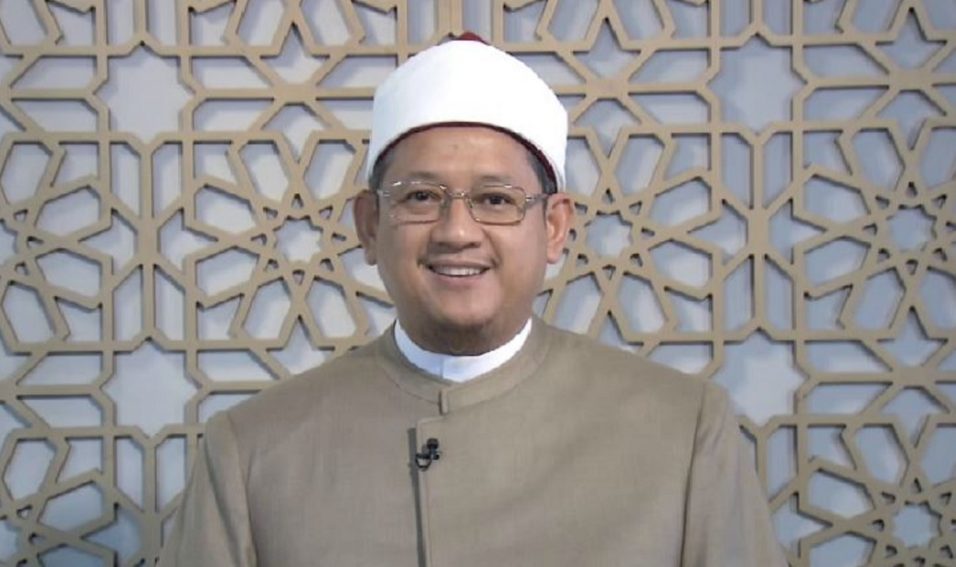
    Mufti Negara Dr Mohd Fatris Bakaram menyeru para asatizah supaya memberikan perhatian kepada kesihatan mereka dan mengamalkan gaya hidup sihat.

    Ini kerana ia bukan saja dituntut oleh agama malah ia juga diperlukan dalam golongan agamawan itu menjalankan tugas dakwah mereka.

    Sebagai ‘penghulu’ kepada para asatizah Singapura, Mufti Dr Fatris berkata, beliau mahu melihat “golongan asatizah khususnya” memberikan perhatian kepada kesihatan dan mengamalkan gaya hidup sihat.

    Menurut Mufti Fatris, ini penting bagi mereka demi melaksanakan tugas dan mengajak masyarakat untuk mengamalkan ajaran Islam, yang juga termasuk aspek menjaga kesihatan.

    Dr Fatris menyuarakan pandangan demikian dalam satu wawancara eksklusif bersama BERITAMediacorp.

    KALAU ADA USTAZ YANG PERUTNYA BUNCIT…

    Dr Fatris memberitahu BERITAMediacorp beliau pernah disentap dengan satu persoalan berkaitan kesihatan, yang diajukan kepadanya.

    “Saya agak tersentak apabila diberitahu salah seorang daripada ketua saya dahulu bila bertugas di Majlis Ugama Islam Singapura (MUIS), yang (kini) telah bersara. (Beliau) mengatakan bahawa satu perkara yang sangat memalukan, (adalah) kalau ada ustaz yang perutnya buncit.

    “Jadi saya bila dengar begitu saya rasa iya tak iya juga. Macam mana kita ini (golongan) ustaz, kita mengajak masyarakat untuk melaksanakan agama, dan antara ajaran agama adalah untuk menjaga kesihatan. Tapi kalau ada di kalangan ustaz pula yang perutnya buncit, sangat memalukan. Saya pegang itu. Sesuatu yang menyentap saya,” kongsi Dr Fatris.

    GAYA HIDUP SIHAT, ‘JIHAD’ BAGI ASATIZAH

    Lantaran itu, Dr Fatris menguatkan azamnya untuk mendisiplinkan diri, mengubah gaya hidup supaya dapat mengelakkan penyakit-penyakit serius. Ini tentu sekali boleh dicontohi golongan asatizah yang akan mendidik dan membentuk generasi seterusnya, yang akan menitikberatkan gaya hidup sihat.

    Meskipun demikian, untuk mengubah gaya hidup mungkin satu ‘jihad’ bagi para asatizah. Menurut Dr Fatris, melalui pengalaman peribadinya, ia bukanlah sesuatu yang mudah.

    “Bila jadi Mufti, bila jadi Ustaz ini, khusus sekali bila datang musim, contoh musim Maulid Nabi, musim Ramadan. Kita mendapat undangan yang banyak, majlis yang banyak dan dalam setiap majlis dan undangan itu pastinya hidangan-hidangan yang dihidangkan juga adalah dalam kategori biasa itu adalah beriani, air-air manis. Jadi itu kena jaga dan saya cuba,” beliau secara terus terang memberitahu BERITAMediacorp.

    Kini, dalam usahanya untuk terus memastikan kesihatan dijaga, Dr Fatris memilih untuk berjalan pantas sama ada bersama isteri atau beberapa lagi rakan asatizah.

    “Kalau bulan Ramadan agak kurang saya berjalan,” jelas Mufti.

    “Tetapi sekarang sedang mengembalikan rutin yang lama, seminggu dalam tiga atau empat kali, sekali jalan dalam 45 minit, satu jam, satu jam lebih sedikit,” kongsi Dr Fatris.

    Beliau menambah, sekali-kala apabila ada kesempatan, beliau akan bermain badminton bersama dengan kakitangan MUIS.

    BERITAMediacorp juga mendapat tahu bahawa antara tempat-tempat yang sekarang dijadikan ‘tapak senaman’ oleh Mufti dan rakan-rakannya ialah di kawasan MacRitchie.

    KENCING MANIS “KRISIS KESIHATAN” BAGI ORANG MELAYU

    Seruan Dr Fatris agar para asatizah memberi perhatian kepada aspek kesihatan, senaman dan gaya hidup sihat itu disuarakan sedang Perdana Menteri Lee Hsien Loong juga mengajak rakyat supaya memerangi isu kencing manis.

    Masyarakat Melayu nampaknya lebih terpukul dengan isu ini apabila PM Lee mendedahkan bahawa kencing manis adalah “krisis kesihatan” bagi masyarakat Melayu. Ini kerana 50 peratus anggota masyarakat Melayu yang berusia lebih 60 tahun menghidap penyakit kencing manis.

    Jika dibandingkan dengan kaum lain, 25 peratus daripada orang Cina berusia lebih 60 tahun menghidap kencing manis. Masyarakat India lebih kritikal dengan 60 peratus dalam golongan usia itu menghidap penyakit tersebut.

    Secara keseluruhannya sebagai satu masyarakat, 17 peratus orang Melayu di Singapura menghidap kencing manis, dedah PM Lee lagi menyuarakan keprihatinannya. Satu sebabnya adalah masalah kegemukan, satu masalah yang lebih ketara di kalangan masyarakat Melayu.

    ORAK LANGKAH ‘UBAH’ DAN ‘KURANGKAN’

    Untuk dijadikan teladan, Dr Fatris tidak bersembunyi untuk menceritakan tentang pengalaman dirinya sendiri, yang lama menghidap penyakit gout.

    “Kemudian satu peringkat, doktor beri amaran, bahawa kadar gula saya sudah sampai, kata orang itu, ‘borderline’ untuk saya jaga. Pada waktu itu saya rasakan, saya ini masih pada peringkat umur yang sepatutnya menikmati tahap kecergasan yang tinggi,” cerita beliau semasa ditemui di pejabatnya.

    Lantas apa yang Mufti Negara itu lakukan?

    “Jadi saya ubah gaya pemakanan saya, diet, minuman, makanan yang banyak bergula saya kurangkan,” tegas Dr Fatris.


    Source: http://berita.mediacorp.sg
  • How Malays Define Malayness? Well Truth Is Its Very Confusing And Inconsistent

    How Malays Define Malayness? Well Truth Is Its Very Confusing And Inconsistent

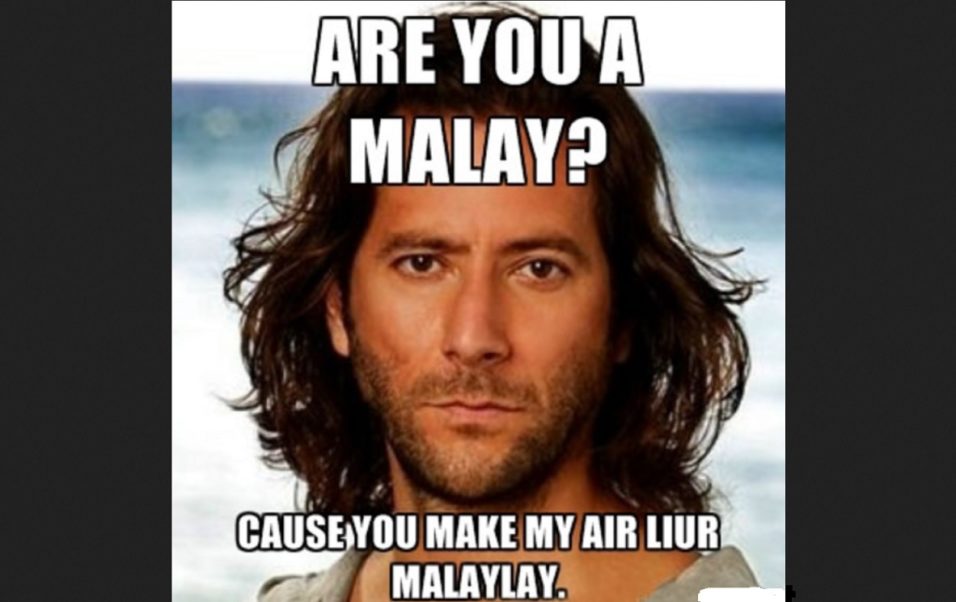
    So how does one define who is or isn’t Malay? Having actually researched this for my thesis for the past two years, please let me share with ya’ll SOME of what I’ve learned.

    How Malays define Malayness has always been head-scratchingly confusing to those who are not Malay and even to us who identify as Malay in Singapore, it’s blatantly inconsistent. It is something of a pet passion of mine, probably because people keep assuming I’m chinese. Also, why is Malayness confusing? This is because there are actually competing definitions of Malayness. Dr. David Tantow identifies three which can be found in Sg:

    1) there is the Islamic ummah, which basically imagines ALL Muslims in the Malay archipelago regardless of ethnicity as being part of the larger Malay community (basically, it’s: you are Arab? Pakistani? Well, hello, welcome, cuz as long as you Muslim, you my bro). Apparently, This emerged as kind of an identity-based counter to Western imperialism and colonialism in the 19th and early 20th centuries but which has now gotten a pretty bad rep because talk about a southeast Asian caliphate now (which is what this definition alludes to) and people will be like, eh, don’t become Isis leh, I call police.

    2) Then, for the second, we have Malayness defined by cultural signifiers and codes, where we talk about people who practise Malay customs (adat), speak the Malay language (Bahasa), and practise Islam (agama). These three thingies form the basis of whether someone is either Malay (Melayu) or if that person has “enter (has become) Malay” (masuk Melayu). What confuses people about THIS definition is that it does NOT take genetic heritage into account. Basically, it’s: oh, you have Pakistani parents? But you now speak Malay, love motorcycles, know how to eat nasi ambeng, and go Friday prayers? Then we same-same Melayu lah bro.

    3) The third definition is the one Mendaki and the gahmen loves cuz it’s the simplest one; using parentage/ancestry or “genetic and territorial qualifiers”. It’s really just, oh, your father is Malay, your mother is Malay, then two plus two equals four cikgu. It’s the most exclusive kind of Malayness but also one that people who are not Malay are least confused by. Also, can anyone spell “administrative convenience”?
    (Source: www.tandfonline.com/doi/abs/10.1080/13639811.2012.725553)

    4) THEN, as if these three ways of defining Malayness is not enough, we’ve not even touched on the fact that “Malay” also refers to an umbrella term for “the Malay races”, which is when we further divide Malays up into whether they are Minang, or Bawean (Boyan), or Javanese, or Bugis, even Filipinos and Orang Asli,etc, etc, oh so many many, many of which have their own languages, customs, even religious practices, some of whom are chill with being called Malay and others who are less chill because of reasons. All of them are represented in singapore so JOY.

    5) THEN, as if I don’t have a migraine already, not only are all these different ways of defining Malays competing with each other, they are COEXISTING in some kind of strange equilibrium because, you know, we Malays don’t have enough problems in our lives. It’s why some of us say, Wah, this Marican cannot Bahasa Melayu, is he really Melayu (second definition)? Then with Khan, whom no one has criticised for not being able to speak Malay, people are like, eh, he Pakistani ancestry means he’s not Malay right (third definition).

    6) THIS EQUILIBRIUM SHIFTS, because Malays cannot duduk diam-diam, between each other but also internally within the three definitions as well. For example, increased religiosity in recent decades means many Malays absolutely require someone to be Muslim to be considered Malay while others like the 1960s Malay nationalists placed a premium on customs and heritage. Before that, there was also the phrase “Bahasa jiwa bangsa” (language is the soul of a nation) which was a huge draw for the malay intelligentsia because they ardently believe that MALAY LIT IS MORE LIT THAN YOUR ROKOK. It’s only really with the (racist) British system of colonial administration, and later on with the (rac-Er-problematic) CMIO system that the third definition really became much more dominant in the lives of Malays in sg. All in all, these shifting lines evolve to adhere to historical and cultural changes.

    7) So, really, what I am trying to say is defining who is Malay and how has been one long historical ?&$?? that has resulted in the inconsistency many people are now seeing in how the Malay community is treating the candidates. ALSO, AND MOST IMPORTANTLY, it has resulted in me extending my MA Programme by one semester, WHICH LIKE WAHLAO NI MELAYUNESS MAKAN MELAYU KE PE, incidentally. Now, with this development in the Presidential Election, this headache is finally going to be passed on to, as it usually happens here, a committee. I’m kinda looking forward to what they’re gonna say. For research purposes. Of course, they could just use the simplest, most boring way which is the third, genetically defined one, which will disqualify Khan. But this would leave us with Marican who many Malays would like to instinctively disqualify because of the second definition.

    Of course, likely, both will be disqualified because of the 500 million dollar in whatever equity rule, neatly avoiding this headache, which will mean, happily, that this migraine will continue, resulting in more MC days for my Malay brethren and me.

    Disclaimer: While Malay identity is important to my thesis, it’s not the main subject I am investigating for my research project. As such, what I know is limited and no doubt incomplete. So please feel free to add in any gaps or correct any inaccuracies as you spot them.


    Source: Hidhir Razak

  • NLB To Immediately Remove Series Of Malay Language Books From Junior Non-Fiction Section For Carrying Offensive Content

    NLB To Immediately Remove Series Of Malay Language Books From Junior Non-Fiction Section For Carrying Offensive Content

    The National Library Board (NLB) will be withdrawing a series of Malay language books from its libraries “immediately”, after concerns about their contents were raised.

    The books belong to a series published in Malaysia in 2013 called Agama, Tamadun Dan Arkeologi (Religion, Civilisation And Archeology). They focus on different civilisations and religions.

    There are eight books in the series, and a check of NLB’s online catalogue showed that there were about 30 copies of each book in the libraries. At press time, six copies were on loan.

    One of the books has, on its cover, children wearing yarmulkes, smiling as they hold machine guns.

    In it, there are declarations of how the third world war will “start in the Middle East between Israel and the neighbouring countries, which are the Arab states”.

    The books were first discovered by a local Twitter user, who posted photos of the books on Sunday. The account has since been deleted, after criticism from other users.

    The New Paper found these books in the junior non-fiction section of the Bishan Public Library on Tuesday.

    Some of the statements indicated that in one religion, people used to view their daughters on the same level as servants, and that their fathers held the right to sell them.

    Another volume describes how one religion believes that “plague, hell, poison, snakes and fire are all better than women”.

    In response to TNP’s queries, an NLB spokesman said: “While NLB will do our best to ensure that our collection does not cause offence, we are unable to vet every single title before putting the books on the shelves.

    “We take the feedback on the Agama, Tamadun Dan Arkeologi seriously and will withdraw the books immediately.

    “NLB will call upon the Library Consultative Panel (LCP) to review the series.”

    The LCP is an independent panel set up to provide recommendations to NLB on its review of library materials, including those submitted by members of the public.

    After parts of the series were read to him, Mr Muhammed Faiz, president of the Muslim Converts’ Association of Singapore (Darul Arqam), said the contents are “worrying”.

    Mr Faiz told TNP: “I think it is careless to have such things available, especially if it was found in the junior section.

    “If (youth) don’t seek clarification, then it will form a certain mindset. It could create dangerous impressions.”

    The books have also been reported to the Ministry of Home Affairs (Moha) in Malaysia by a Malaysian, Mr Inbaraj Suppiah.

    Speaking to TNP, he said he made the report as he felt the books promoted prejudice.

    He said: “The content looks shady.

    “They should investigate, because usually Moha is very strict with such publications.”

    In a Twitter reply to Mr Inbaraj, Moha said the complaint had been forwarded “to the relevant division for further action”.

    Venerable Seck Kwang Phing, president of Singapore Buddhist Federation and a council member of the Inter-Religious Organisation (IRO), said easy access to the books is “dangerous”.

    He said: “We can’t upset our racial and religious harmony. If anybody can just use it or spread it, we may find that people can be misinformed with this dangerous content.”

    Ven Seck called for stricter vetting of such books by experts from different religions to verify the facts and make sure there is no misunderstanding.

    The NLB spokesman said its collection caters to readers “of diverse interests and age groups”.

    “NLB excludes materials that denigrate any racial or religious groups, or which promote intolerance or violence,” he added.


    Source: www.tnp.sg

  • Muslims Honouring Your Mother On Mother’s Day; Better Than Not Doing On Every Other Day

    Muslims Honouring Your Mother On Mother’s Day; Better Than Not Doing On Every Other Day

    Sambut Hari Ibu?

    Katanya dalam Islam boleh sambut hari2 dan bila2, tak perlu nak ikut2 orang kafir?

    Ada awak sambut hari ibu utk ibu awak hari2 atau seminggu sekali atau sebulan sekali, ada?

    Memuliakan ibu bukan hanya ajaran orang ‘Orang Kafir’ sebaliknya ia merupakan ajaran Islam.

    Kalau hari2 tak buat, seminggu sekalipun tak buat, sebulan sekalipun tak buat, kenapa pula setahun sekali jadi haram?

    Tidak semua perkara yg diamalkan oleh adat orang bukan Islam itu Haram.

    Adat tidak kira adat apa bangsa sekalipun selama mana tidak bertentangan dengan ajaran Islam maka hukumnya adalah
    Harus.

    Melainkan adat tersebut ada kaitan dengan aqidah agama atau kepercayaan agama lain maka barulah jatuh hukum Haram.


    Source: Abdul Rahman Mohamed

  • Ahmadiyya Response To MUIS

    Ahmadiyya Response To MUIS

    On the 2 May 2017, Yahoo News Singapore published an article titled “Behind the belief: The Ahmadis of Singapore’.

    Yahoo interviewed Ali who is one of about 280 active members of the Ahmadiyya Muslim Mission in Singapore, based in a mosque along Onan Road. These believers claim that the Ahmadiyya movement is a branch of Islam, with one key difference: while it accepts the divinity of Prophet Muhammad, it does not believe that he is the last messenger of Allah. Ahmadis look to their founder Mirza Ghulam Ahmad, a 19th century religious leader from the Punjab, as the prophesied Mahdi, or redeemer of Islam.

    Mainstream Muslims in Singapore and around the world do not consider the Ahmadis to be their co-religionists. The Islamic Religious Council of Singapore, or MUIS, issued a fatwa (ruling) in 1969 declaring Mirza Ghulam to be “not only a kafir (unbeliever) who is murtad (a Muslim who has rejected Islam), his teachings are misleading and could lead people astray from the real teachings of Islam”.

    Read more about the article by Yahoo here.

    Response to MUIS fatwa against Ahmadiyya

    “MUIS or MUIS fatwa (edict) committee issued a fatwa (edict) dating back to 23 June 1969 declaring the Founder of the Ahmadiyya Community, Hadhrat Mirza Ghulam Ahmad (on whom be peace) who claimed to be the Promised Messiah of the later days, ‘not only a kafir (disbeliever) who is murtad (apostate), his teachings are misleading and could lead people astray from the real teachings of Islam’, God forbid!”

    Some of the extracts from their 17 paged response:

    The full response can be found here or http://ahmadiyya.org.sg/response-to-muis-fatwa-against-qadiani-ahmadiyya/


    Another believer when prompted, replied emphatically, “Yeah, of course. Very thankful, we are quite fortunate. Our government is…very particular that we should not instigate or use religion to incite others. Otherwise, we could not have (this building).”


    Rilek1Corner

    Sources: https://sg.news.yahoo.com and http://ahmadiyya.org.sg