Tag: art

  • Jual Tahi Pada Harga Tinggi

    Jual Tahi Pada Harga Tinggi

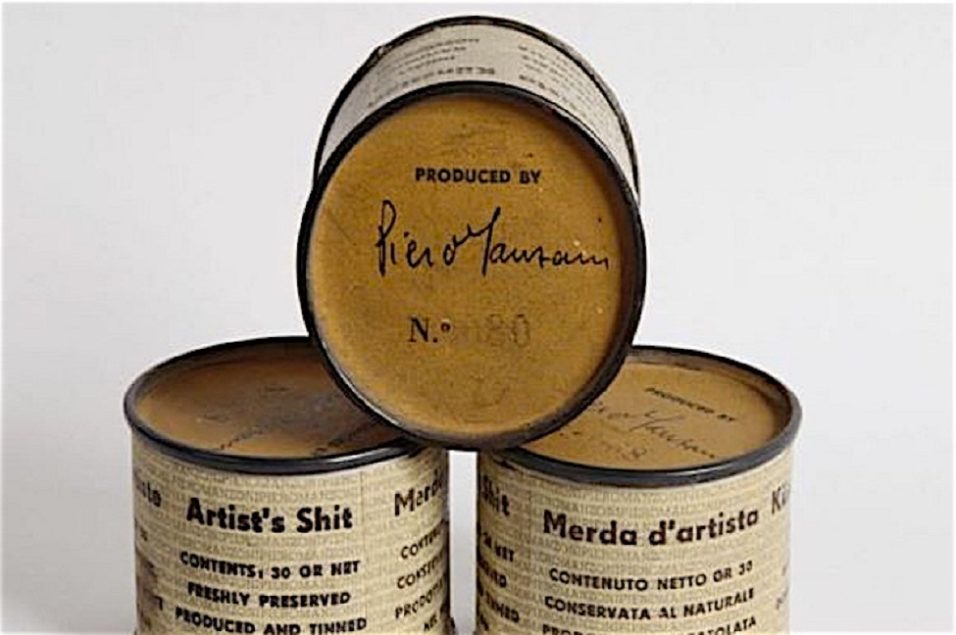
    Tak pernah terlintas di fikiran bahawa najis manusia boleh dijadikan hasil seni walaupun ia kedengaran agak ‘menggelikan’. Seorang pemilik ‘seni tahi’ mencipta koleksi najisnya dalam tin seberat 30 gram (g) dan ia mengandungi najis penggiat seni warga Itali, Piero Manzoni. Pengumpul koleksi ‘seni tahi’ sanggup membelinya pada harga tinggi hingga mencecah ribuan Dollar hanya kerana ingin mengumpul koleksi tahi.

    Idea itu tercetus daripada Piero Manzoni yang menyimpan najisnya ke dalam tin pada tahun 1961 dan dia tidak menjangka idea berkenaan dapat memberikan pulangan yang lumayan. Sebuah galeri seni bernama Tate di London telah membeli satu tin Manzoni dengan harga £22,350 pada tahun 2007. Walaupun koleksi ‘seni tahi’ ini agak pelik, namun koleksi tahi Manzoni sebanyak 90 tin kini mencecah AS$300,000 satu tin. Untuk pengetahuan anda, satu tin yang ke-54 dijual pada harga £182,50.

  • The Artist Behind The Golden Stairs: Is It Possible To Draw A Line Between Art And Vandalism?

    The Artist Behind The Golden Stairs: Is It Possible To Draw A Line Between Art And Vandalism?

    The artist Priyageetha Dia responded on her Facebook:

    Someone asked why would I do something stupid like that? Well yes, stupid it may seem to you. Was it done out of impulse? No. Is it because you Indian that’s why you like gold so much? *smacks forehead.

    This work has been on my mind for the past one month and I was definitely apprehensive on realising it until two days ago. The process was an invigorating one though I was apprehensive of the consequences I may face. At the end of the 5-hour long hushed deed, the intervention of the gold finally reverberated against the ever lifeless and grey architecture on the 20th floor of my block.

    My practice deals with spaces that negotiate concepts on the sacred, secular and the profane. As such, I am intrigued with spaces that I have inhabited over the course of 25 years as a HDB dweller and thus it has prompted me to intervene away from the household and into public spaces. But what constitutes public and private space? How does that apply along with the sacred etc.? And why gold? I would love to list down the conceptual reasoning of what the work is about but wouldn’t it make the work seem less interesting then?

    So, is it possible to draw a line between art and vandalism? I consider this work as art and not vandalism. Though one would say about the legal system and its regulations but I do believe I did not deface anything, what I did was to enhance the space and my surroundings. This work provokes. Provokes in all sense we are used to living the standard way of life, and all of a sudden something as glaring as gold negotiates the space. My work does not seek to obliterate a public space; vandalism in all sense has no respect for another individual.

    I do know the social responsibility of an artist (though I don’t consider myself an artist yet, cause it’s too much of an honorific term). I didn’t intend to please the public with my work but it was definitely a sense of satisfaction for me. After practising arts under the academy for almost 3 years, I needed to break away from that zone. What better way to make art and have it on display beyond the white cube.

    Source: Facebook

  • Town Council Says HDB Staircase Covered In Gold Foil ‘Not Permissible’

    Town Council Says HDB Staircase Covered In Gold Foil ‘Not Permissible’

    The Jalan Besar Town Council is reaching out to an arts student who covered the 20th floor staircase of a Jalan Rajah flat with gold foil to explore future collaboration, although it made clear what she did was “unauthorised” and “not permissible”.

    Responding to queries from TODAY, a spokesman said the town council wants to “explore ways in which we may be able to work together” as it is “supportive of efforts by the community to enhance our living environment”.

    Ms Priyageetha Dia, who is studying fine arts at Lasalle College of the Arts, had earlier identified herself on Facebook as the person behind the “golden staircase” at Block 103 Jalan Rajah.

    “We appreciate Ms Priyageetha Dia’s desire to enhance her surrounding space,” said the spokesman. “Under the Town Council’s (Common Property and Open Spaces) By-laws, however, this constitutes an unauthorised act and is thus not permissible.”

    Set in the public area near her unit, Ms Dia said the artwork exists to question “what constitutes public and private spaces” and if it is “possible to draw a line between art and vandalism”.

    She said she came up with the idea a month ago, but only executed it on Sunday (March 5) despite being apprehensive of the consequences she might face. The “hush deed” took five hours.

    Aware that she was treading a thin line between art and vandalism, Ms Dia asserted that she “did not deface anything”.

    “What I did was to enhance the space and my surroundings,” said Ms Dia, who lives on the 20th floor. “This work provokes. Provokes in all sense (as) we are used to living the standard way of life, and all of a sudden something as glaring as gold negotiates the space. My work does not seek to obliterate a public space; vandalism in all sense has no respect for another individual.”


    Source: Today

  • Ismail Kassim: A Tribute To Iskandar Jalil

    Ismail Kassim: A Tribute To Iskandar Jalil

    From the Land of the Rising Sun, a fitting recognition of Iskandar’s contribution to the world of pottery. Congratulations. Two nights ago he received the Order of the Rising Sun Gold Rays with Rosette by the Japanese Ambassador to Singapore.

    Although the potter lives practically a stone’s throw from my sister’s place in Kembangan where my father also lives and I know his younger brother, Rahim, we never met until I joined a 12 day tour of Iran organized by friends from campus days.

    It was on the long dusty bus ride from Tehran to Kermanshah that I finally came face to face with the potter in the flesh – Iskandar Jalil, small-built, short, wiry and tanned, but warm and down-to-earth.

    Early next morning I saw him standing by the bus, dressed in a thin cotton T-shirt, track pants, sneakers, while others were holding tight to their jackets, as the cold spring winds swirled around us.

    ‘’Doesn’t he feel the cold?’’ I casually asked his wife, Saleha. She replied: ‘’He is always like that, quite immune to the cold.’’ I told myself that this potter might have been an Eskimo in his previous life.

    A few days later, while touring the ruins of Persepolis – once the capital of the mighty Persian Empire – I noticed the care that he took taking shots from his small but upmarket Sony digital camera, often giving instructions to Saleha on how to pose or how to take shots of him.

    I asked him on his photography and he let me view images from his camera; I would see the touch of professionalism reflected in the tightness of the composition and the attention given to perspective. In Malay, you say: ‘’ada standard lah.’’ (high standard )

    Next, I noticed he always had a tightly packed haversack on his back from which he often drew out a big, thick, black dairy-like notebook, to write. I was curious and on one occasion peeped over his shoulder; in big bold letters he was writing down the name of the place in addition to sketching the entrance. They took up almost the entire page.

    I told myself these are signs of ‘’a big heart and a bold spirit.’’

    On the second last day as the bus was taking us back to Tehran from Isfahan, except for the potter, the rest of us were slumped against our seat, a little weary and possibly a little home-sick.

    Iskandar, born in 1940 and could be considered as our ‘’abang ’’ (elder brother) was going round tirelessly from seat to seat with his big black notebook.

    Finally, he came to me and handing over his book, said: ‘’Ismail, can I have your name, address, e-mail and phone numbers.’’

    He was the only one in our party who did it.

    Toward the end of Iran tour, I told Saleha that I had heard much talk about their newly renovated home. The result was an open invitation for tea.

    After much procrastination, I finally asked Jailani who was also on the tour to arrange. He too needed a little prodding, before he rang up and that was how he and I, and his wife, Aminahton, ended up being graciously treated to a tour of the house.

    All I could remember is the minimalist-style, hardly any furniture except for basic wooden stuff and lots of artefacts from his travels and pots, big and small, in varying patterns, scattered all over.

    When it was time to say good-bye, the potter took out two small bowls from the cupboard – one dark black, the other light tan – and placed them on the table before us. He then took one in each hand, raised it to eye level and then threw them on the floor with some force.

    They landed with a loud thud, rolled a little and then remained still, intact. He picked them up and placed them on the table and asked us to examine the bowls.

    We were stunned, speechless. Incredible, there was not even a whiff of a hairline crack. ‘’They are almost unbreakable – a matter of heating technique,’’ he said.

    Added the potter: ‘’Take one each. Decide who wants what.’’

    I gestured to Jailani and he slowly reached out for the light one. I was happy to take the dark one. So unexpected, so generous, and I felt a little overwhelmed.

    Today, the bowl is prominently displayed in my study, perched securely on the topmost shelf above my writing table, flanked by a Sufi book and a Qigong book.

    Note: This is an extract from a longer piece, titled – My friend, Iskandar the great potter – that I wrote in 2011 and posted on my now defunct Nohardfeelings blog at WordPress..
    A gift from Iskandar

    A gift from Iskandar


    Source: Ismail Kassim