Tag: Aung San Suu Kyi

  • Myanmar, Bangladesh Bersetuju Mulakan Rundingan Mengenai Pelarian Rohingya

    Myanmar, Bangladesh Bersetuju Mulakan Rundingan Mengenai Pelarian Rohingya

    Myanmar bersetuju untuk memulakan rundingan dengan Bangladesh berhubung 65,000 Muslim Rohingya yang melarikan diri dari wilayah Rakhine di Myanmar sejak serangan-serangan dilancarkan ke atas tiga pondok kawalan dekat sempadan yang memisahkan kedua-dua negara itu tiga bulan yang lalu.

    Demikian menurut seorang pegawai kanan Myanmar pada Khamis (12 Jan).

    Pemimpin Myanmar Aung San Suu Kyi mengerahkan seorang utusan khas ke Dhaka minggu ini untuk memulihkan hubungan antara kedua-dua negara jiran itu, yang menyifatkan kaum Rohingya sebagai bukan masalah negara masing-masing.

    Perdana Menteri Bangladesh Sheikh Hasina memberitahu Timbalan Menteri Ehwal Luar Kyaw Tin pada Rabu (11 Jan) bahawa Myanmar harus mengambil semula kesemua “warga Myanmar” di Bangladesh, menurut jurucakap Bangladesh.

    Aye Aye Soe, ketua pengarah kementerian ehwal luar Myanmar, berkata kedua-dua negara itu akan memulakan rundingan mengenai “proses pengenalan dan pengesahan”.

    “Jika mereka mendapati bahawa mereka berasal dari Myanmar, mereka akan dihantar balik ke negara asal mereka pada masa yang sesuai,” jelasnya, sambil menambah bahawa “tiada garis masa” bagi rundingan tersebut.

    Persetujuan itu adalah satu petanda baik yang jarang-jarang berlaku dalam hubungan kedua-dua negara itu, yang sering dirumitkan dengan seramai 500,000 orang Rohingya yang tinggal di Bangladesh selepas melarikan diri dari penindasan selama berpuluh-puluh tahun di Myanmar.

    Pertubuhan Bangsa-Bangsa Bersatu turut menyatakan bahawa lagi 65,000 orang Rohingya sudah melarikan diri dari Rakhine ke Bangladesh sejak serangan-serangan yang meragut nyawa sembilan pegawai polis di sempadan Myanmar pada 9 Oktober.

    Para penduduk dan pelarian berkata bahawa askar dan polis membelasah, menyerang secara seksual dan melakukan pembunuhan secara beramai-ramai, serta sewenang-wenangnya memberkas para penduduk kampung dan membakar rumah mereka.

    Myanmar bagaimanapun menolak keras dakwaan tersebut.

    Source: BERITAMEDIACORP
  • ‘There Are No Homes Left’: Rohingya Tell Of Rape, Fire And Death in Myanmar

    ‘There Are No Homes Left’: Rohingya Tell Of Rape, Fire And Death in Myanmar

    When the Myanmar military closed in on the village of Pwint Phyu Chaung, everyone had a few seconds to make a choice.

    Noor Ankis, 25, chose to remain in her house, where she was told to kneel to be beaten, she said, until soldiers led her to the place where women were raped. Rashida Begum, 22, chose to plunge with her three children into a deep, swift-running creek, only to watch as her baby daughter slipped from her grasp.

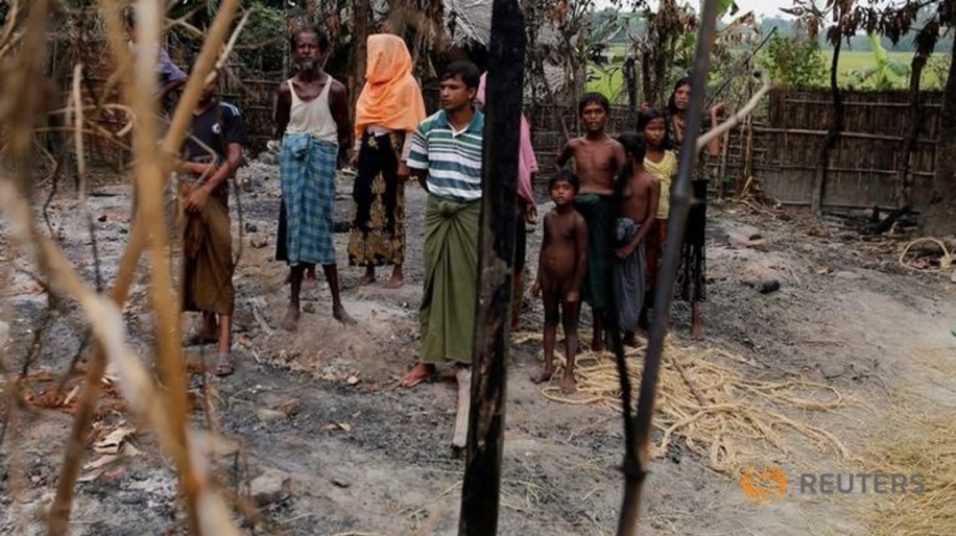
    Sufayat Ullah, 20, also chose the creek. He stayed in the water for two days and finally emerged to find that soldiers had set his family home on fire, leaving his mother, father and two brothers to asphyxiate inside.

    These accounts and others, given over the last few days by refugees who fled Myanmar and are now living in Bangladesh, shed light on the violence that has unfolded in Myanmar in recent months as security forces there carry out a brutal counterinsurgency campaign.

    Their stories, though impossible to confirm independently, generally align with reports by human rights organizations that the military entered villages in northern Rakhine State shooting at random, set houses on fire with rocket launchers, and systematically raped girls and women. At least 1,500 homes were razed, according to an analysis of satellite images by Human Rights Watch.

    The campaign, which has moved south in recent weeks, seems likely to continue until Myanmar’s government is satisfied that it has fully disarmed the militancy that has arisen among the Rohingya, a Muslim ethnic group that has been persecuted for decades in majority-Buddhist Myanmar.

    “There is a risk that we haven’t seen the worst of this yet,” said Matthew Smith of Fortify Rights, a nongovernmental organization focusing on human rights in Southeast Asia. “We’re not sure what the state security forces will do next, but we do know attacks on civilians are continuing.”

    A commission appointed by Myanmar’s government last week denied allegations that its military was committing genocide in the villages, which have been closed to Western journalists and human rights investigators. Officials have said Rohingya forces are setting fire to their own houses and have denied most charges of human rights abuses, with the exception of a beating that was captured on video. Myanmar’s leader, Daw Aung San Suu Kyi, the recipient of a Nobel Peace Prize, has been criticized for failing to respond more forcefully to the violence.

    The military campaign, which the government describes as a “clearing” operation, has largely targeted civilians, human rights groups say. It has sent an estimated 65,000 Rohingya fleeing across the border to Bangladesh, according to the International Organization for Migration.

    “They started coming in like the tide,” said Dudu Miah, a Rohingya refugee who is chairman of the management committee at the Leda refugee camp, near the border with Myanmar. “They were acting crazy. They were a mess. They were saying, ‘They’ve killed my father, they’ve killed my mother, they’ve beaten me up.’ They were in disarray.”

    Soldiers were attacking villages just across the Naf River, which separates Myanmar from Bangladesh, so close that Bangladeshis could see columns of smoke rise from burning villages on the other side, said Nazir Ahmed, the imam of a mosque that caters to Rohingyas.

    He said it was true that some Rohingya, enraged by years of mistreatment by Myanmar forces, had organized themselves into a crude militant force, but that Myanmar had dramatically exaggerated its proportions and seriousness.

    Rohingyas are “frustrated, and they are picking up sticks and making a call to defend themselves,” he said. “Now, if they find a farmer who has a machete at home, they say, ‘You are engaged in terrorism.’”

    An analysis released last month by the International Crisis Group took a serious view of the new militant group, which it says is financed and organized by Rohingya émigrés in Saudi Arabia. Further violence, it warned, could accelerate radicalization among the Rohingya, who could become willing instruments of transnational jihadist groups.

    Muhammad Shafiq, who is in his mid-20s, said he was at home with his family when he heard gunfire. Soldiers in camouflage banged on the door, then shot at it, he said. When he let them in, he said, “they took the women away, and lined up the men.”

    Mr. Shafiq said that when a soldier grabbed his sister’s hand, he lunged at him, fearful the soldier intended to rape her, and was beaten so severely that the soldiers left him for dead. Later, he bolted with one of his children and was grazed by a soldier’s bullet on his elbow. He crawled for an hour on his hands and knees through a rice field, then watched, from a safe vantage point, as troops set fire to what remained of Kyet Yoepin.

    “There are no homes left,” he said. “Everything is burned.”

    Jannatul Mawa, 25, who is from the same village, said she crawled toward the next village overnight, passing the shadowy forms of dead and wounded neighbors.

    “Some were shot, some were killed with a blade,” she said. “Wherever they could find people, they were killing them.”

    Dozens more families are from Pwint Phyu Chaung, which was near the site of a clash between militants and soldiers on Nov. 12.

    According to Amnesty International, the militants scattered into neighboring villages. When army troops followed them, several hundred men from Pwint Phyu Chaung resisted, using crude weapons like farm implements and knives, the report said. A Myanmar army lieutenant colonel was shot dead, and the troops called in air support from two attack helicopters.

    Mumtaz Begum, 40, said she was awakened at dawn when security forces approached the village from both sides and began searching for adult men in each house.

    She said she and her daughter were told to kneel down outside their home with their hands over their heads and were beaten with bamboo clubs.

    She said her 10-year-old son was shot through the leg, her daughter’s husband was arrested, and her own husband was one of dozens of men and boys in the village who were killed by soldiers armed with guns or machetes that night. Villagers, she said, “laid the bodies down in a line in the mosque and counted them.”

    Ms. Begum’s daughter, Noor Ankis, 25, said the next morning soldiers went from house to house looking for young women.

    “They grouped the women together and brought them to one place,” she said. “The ones they liked they raped. It was just the girls and the military, no one else was there.”

    She said the idea of trying to escape flickered through her head, but she was overcome by fatalism. “I felt there was no point in being alive,” she said.

    Ms. Ankis pulled her head scarf low, for a moment, removing a tear. She said she had been thinking about her husband.

    “I think about how he took care of me after we got married,” she said. “How will I see him again?”

    Sufayat Ullah, 20, a madrasa student, said that he was home with his family on the morning of the attack and that the first thing he registered was the sound of gunfire. He realized quickly, he said, that he could only survive by escaping. “When they found people close by, they attacked them with machetes,” he said. “If they were far away, they shot them.”

    Mr. Ullah ran from the house and bolted for the creek at the edge of town, and he dived in, swimming as far as he could. He said he spent much of the next two days underwater, finally scrambling onto the bank near a neighboring village. Only then did he learn that his mother, father and two brothers had burned to death inside the family house.

    “I feel no peace,” he said, covering his face with his hands and weeping. “They killed my father and mother. What is left for me in this world?”

    Source: nytimes

  • Myanmar detains cops over Rohingya abuse video

    Myanmar detains cops over Rohingya abuse video

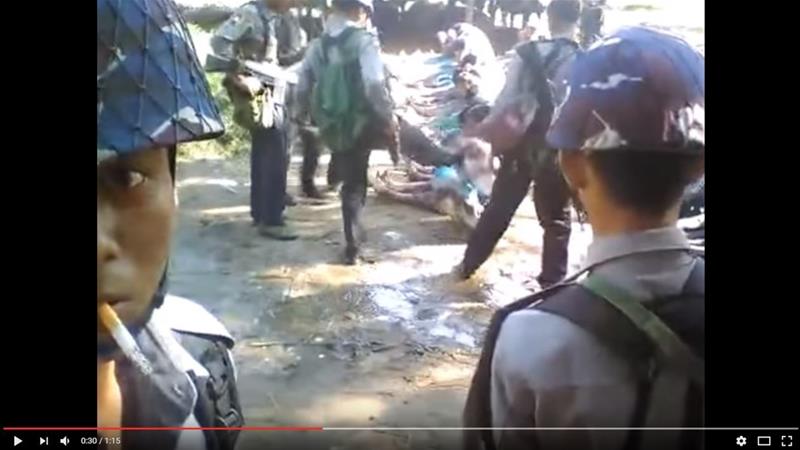
    YANGON • Myanmar’s government yesterday said it has detained several police officers over a video apparently showing Rohingya civilians being beaten, a rare admission that the authorities may have carried out abuses against the Muslim minority.

    Tens of thousands of people from the persecuted ethnic group – loathed by many of Myanmar’s Buddhist majority – have fled a military operation in Rakhine province launched after attacks on police posts in October.

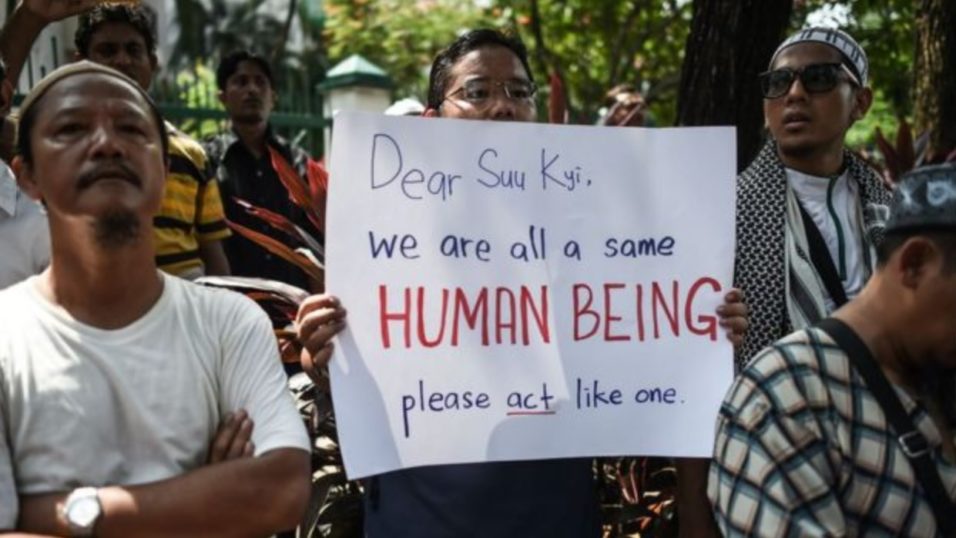
    Bangladesh says some 50,000 Rohingya have crossed its borders over the past two months. Many have brought harrowing accounts of rape, murder and arson at the hands of Myanmar’s security forces. Their stories have raised global alarm and galvanised protests against Myanmar’s de facto leader, Ms Aung San Suu Kyi, who has been accused of not doing enough to help the Rohingya.

    Her government has said troops are hunting militants behind deadly raids on police border posts, denying claims of atrocities and launching a dogged information campaign against reports of abuse.

    However, the authorities yesterday pledged to take action “against police officers who allegedly beat villagers during area clearance operations on Nov 5 in Kotankauk village”.

    Ms Suu Kyi’s office named four officers who were involved in the operation, including constable Zaw Myo Htike, who filmed the “selfie-style” video.

    “Those who (were) initially identified were detained,” it said in a statement. “Further investigations are being carried out to expose other police officers who beat villagers in the operation.”

    Dozens of videos have emerged apparently showing security forces abusing Rohingya, but this is the first time the government has said it will take action over them.

    The footage shows police hitting a young boy on the head as he walks to where dozens of villagers are seated in rows on the ground, hands behind their heads. Three officers then start attacking one of the men, beating him with a stick and kicking him repeatedly in the face.

    A Rohingya activist contacted by Agence France-Presse said the footage had been verified by a refugee from the nearby camp, Shilkhali.

    Around 600 people have been detained since the military operation, according to state media, including six who have died in police custody.

    Buddhist-majority Myanmar has long discriminated against the stateless Rohingya, who rights groups say are among the most persecuted people in the world.

    More than 120,000 have been trapped in squalid displacement camps since violence erupted in 2012 in Rakhine, where they are denied citizenship, access to healthcare and education.

    More than a dozen Nobel laureates wrote to the UN Security Council last week urging action to stop the “human tragedy amounting to ethnic cleansing and crimes against humanity” in northern Rakhine.

    Last month, UN rights commissioner Zeid Ra’ad Al Hussein criticised the government’s “callous” handling of the crisis, describing it as “a lesson in how to make a bad situation worse”.

    Under Myanmar’s junta-era Constitution, Ms Suu Kyi’s civilian administration has limited power over the army, which maintains control of the defence, home and border ministries.


    Source: The Straits Times

  • International Crisis Group: Rohingyas Involved In Attack On Border Guards Headed With People With Links To Pakistan And Saudi Arabia

    International Crisis Group: Rohingyas Involved In Attack On Border Guards Headed With People With Links To Pakistan And Saudi Arabia

    A group of Rohingya Muslims that attacked Myanmar border guards in October is headed by people with links to Saudi Arabia and Pakistan, the International Crisis Group (ICG) said on Thursday, citing members of the group.

    The coordinated attacks on Oct. 9 killed nine policemen and sparked a crackdown by security forces in the Muslim-majority northern sector of Rakhine State in the country’s northwest.

    At least 86 people have been killed, according to state media, and the United Nations has estimated 27,000 members of the largely stateless Rohingya minority have fled across the border to Bangladesh.

    Predominantly Buddhist Myanmar’s government, led by Nobel Peace Prize winner Aung San Suu Kyi, blamed Rohingyas supported by foreign militants for the Oct. 9 attacks, but has issued scant additional information about the assailants it called “terrorists.”

    A group calling itself Harakah al-Yakin claimed responsibility for the attacks in video statements and the Brussels-based ICG said it had interviewed four members of the group in Rakhine State and two outside Myanmar, as well as individuals in contact with members via messaging apps.

    The Harakah al-Yakin, or Faith Movement, was formed after communal violence in 2012 in which more than 100 people were killed and about 140,000 displaced in Rakhine State, most of them Rohingya, the group said.

    Rohingya who have fought in other conflicts, as well as Pakistanis or Afghans, gave clandestine training to villagers in northern Rakhine over two years ahead of the attacks, it said.

    “It included weapons use, guerrilla tactics and, HaY members and trainees report, a particular focus on explosives and IEDs,” the group said, referring to improvised explosive devices.

    It identified Harakah al-Yakin’s leader, who has appeared prominently in a series of nine videos posted online, as Ata Ullah, born in Karachi, Pakistan, to a Rohingya migrant father before moving as a child to Mecca in Saudi Arabia.

    “Though not confirmed, there are indications he went to Pakistan and possibly elsewhere, and that he received practical training in modern guerrilla warfare,” the group said. It noted that Ata Ullah was one of 20 Rohingya from Saudi Arabia leading the group’s operations in Rakhine State.

    Separately, a committee of 20 senior Rohingya emigres oversees the group, which has headquarters in Mecca, the ICG said.

    U.S. State Department spokesman John Kirby said in a news briefing on Thursday that the United States was aware of the report and reviewing it, but declined to comment further.

    Groups like Islamic State and al Qaeda in the Indian Subcontinent have referred to the plight of the Rohingya in their material, and the battlefield experience of at least some of the Rohingya fighters implied links to international militants, the ICG said.

    However, ICG said the group has notably not engaged in attacks on the civilian Buddhist population in Rakhine. Harakah al-Yakin’s statements to date indicate its main goals are to end the persecution of the Rohingya in Myanmar and secure the minority’s citizenship status.

    “It is possible, however, that its objectives could evolve, given its appeals to religious legitimacy and links to international jihadist groups, so it is essential that government efforts do not focus only or primarily on military approaches, but also address underlying community grievances and suffering,” the ICG said.


    Source: www.reuters.com

  • Myanmar Calls ASEAN Talks Over Rohingya

    Myanmar Calls ASEAN Talks Over Rohingya

    [YANGON] Myanmar has called an emergency Asean meeting to discuss the Rohingya crisis, a diplomat said Monday, as regional tensions deepen over a bloody military crackdown on the country’s Muslim minority.

    More than 20,000 Rohingya have flooded into Bangladesh over the past two months, fleeing a military campaign in Myanmar’s western Rakhine state.

    Their stories of mass rape and murder at the hands of security forces have galvanised protests in Muslim nations around the region, with Buddhist-majority Myanmar facing diplomatic pressure from its neighbours.

    Last week Malaysian Prime Minister Najib Razak lashed out at Myanmar’s de facto leader Aung San Suu Kyi for allowing “genocide” on her watch, speaking before thousands of angry protesters in Kuala Lumpur.

    Myanmar, which has vehemently denied the accusations, responded by angrily summoning Malaysia’s ambassador and banning its workers from going to the country.

    A diplomatic source in the Philippines confirmed Myanmar had invited them for an emergency Asean meeting to discuss “the Rohingya issue”.

    The source declined to give more details on the meeting, which the Nikkei reported would be held in Yangon on Dec 19. Myanmar officials could not be reached for comment.

    The bloodshed presents the biggest challenge to Nobel Peace prize winner Ms Suu Kyi since her party won the country’s first democratic elections in a generation last year.

    Last week the UN’s special adviser on Myanmar criticised her handling of the crisis, saying it had “caused frustration locally and disappointment internationally”.

    Ms Suu Kyi also held talks over Rakhine with the foreign minister of Indonesia, after cancelling a visit to the country in November following protests and an attempted attack on the Myanmar embassy.

    State media report almost 100 people have been killed – 17 soldiers and 76 suspects – in the army operation in Rakhine that followed deadly raids on police border posts on Oct 9.

    That includes six suspects who died during interrogations, the Global New Light of Myanmar said on Saturday, out of some 575 people who have been detained.

    Advocacy groups put the death toll in the hundreds, but foreign journalists and independent investigators have been barred from visiting the area to verify the figures.

    With the crisis showing no sign of abating, the government over the weekend extended a 7.00pm to 6.00am curfew across the locked-down area for another two months.


    Source: www.businesstimes.com.sg