Tag: Dr Chee Soon Juan

  • Chee Soon Juan: Taking Us Over The Cliff

    Chee Soon Juan: Taking Us Over The Cliff

    HERE’S A SENTENCE that risks boring you to tears if only because you’ve read it so often: Technological advancement is taking place so rapidly that entire industries, not just jobs, are going under.

    But before you roll your eyes and yawn, understand this: Unless you’re the guy sitting at the top of the system that makes the rules and I mean at the very top your posterior is going to be the one closest to that boot marked ‘RETRENCHMENT’.

    Focus for a minute: Uber is going with driverless taxis, Deliveroo is looking to using drones to make its food deliveries, and MacDonald’s is experimenting with automation to let customers create their own burgers. Property agents, stock brokers, receptionists, cashiers and sales assistants are becoming surplus to requirements as buyers and sellers directly transact their business through the Internet.

    Even higher-end professionals like accountants, lawyers and medical professionals are not in the safe zone: Sophisticated tax software will eliminate the need for accountants, court cases can be fought with the employment of artificial intelligence in place of attorneys, and surgeons replaced with robots which can carry out intricate operations at lower costs.

    The discussion is not whether workers are replaceable but how rapidly the process is taking place. In 1998, the Kodak Co. employed nearly 150,000 workers. Today, Facebook, managing how we share photographs through Instagram, has only 10,000 employees – about 7% of what Kodak used to employ. In the 1970s, the American communications giant AT&T had 750,000 employees under its belt. Today, Google dwarfs it in market value but hires only 55,000 people.[1]

    The way things are trending, huge swathes of the population are going to be rendered workless resulting in an increasingly jobless economy. When that time comes (and it’ll be sooner than you think), the idea of a Universal Basic Income would have to be contemplated. But that is a discussion for another occasion. (In the meantime, read Alex Au’s discussion on this topic here.)

    Not only is the world changing, the pace is also quickening. Today’s Google, it’s executives fret, could become tomorrow’s ‘there once was this giant corporation’ story if the company does not constantly innovate.

    Progress is driven by the obsession to develop new technology – an obsession embedded in the cultures of advanced economies where freedom of thought fuels debate and creative destruction.

    Falling behind

    Think about it. Now think about Singapore.

    We are neither productive nor innovative; we make nothing that the world wants to buy. Yes, we’retops when it comes to using technology but that’s not what is going to make us competitive. The fact that we – to adopt the commonly used slang – suck at inventing new technology is what is going to be our undoing.

    We’re falling behind and, with each passing year, going to fall even further behind if nothing changes.

    What can we do? More immediately, what should we not continue to do? For one thing, let’s stop cobbling together committees made up of establishment folks, conducting discussions in PAP echo-chambers and writing fanciful reports that say much but achieve little.

    ​It was the Economic Review Committee in 2003, the Economic Strategies Committee in 2010 and the Committee for Future Economy in 2017. Each one liberally employed buzzwords like ‘innovation’ and ‘entrepreneurship’ and ‘knowledge economy’ as if merely repeating them will magically transform our economy.

    The groupthink meant that what’s really needed to cultivate an innovative culture – one, dumping the state-dominated economic model, two, reforming the media, and, three, revamping the painfully out-dated education system – were not examined.

    Whistling past the graveyard

    On the first point: In an economy whose domestic sector is overwhelmed by Government-linked companies (GLCs), how are entrepreneurs going to emerge?

    The sector comprises several hundred conglomerates and their subsidiaries and employs tens of thousands of workers. But surveys tell us that GLC executives do not possess the requisite leadership skills especially when it comes to taking risks and motivating workers.[2] Is it any wonder then that our labour productivity grows sideways?

    To top it off, the overall performance of the sector is largely inscrutable, that is, until they go bust (Neptune Orient Lines) or come close to it (Keppel Corp and SembMarine).

    The argument that GLCs are a viable and necessary part of the corporate landscape is borne more out of the PAP’s autistic pronouncements than hard evidence. The case for Temsek Holdings to divest its portfolio has never been more pressing.

    Yet, the government’s strategy seems to be one of whistling past the graveyard.

    A secret formula?

    The mass media is another area in need of a desperate makeover. The PAP is, however, betting the farm that it can transform Singapore into a society on the cutting edge of research and innovation while clinging onto 1960s standards of state censorship and citizen intimidation.

    Maybe it knows the secret formula to squaring this circle. But with ministers telling us that flooding on our roads is a once-in-50-years phenomenon, we shouldn’t hold our breaths.

    If we are going to nourish creativity, we must upgrade minds. If we are going to upgrade minds, we must discard state control of the media. We must encourage open exchange of ideas, intelligent debate, free expression and questioning minds.

    How long more are we going to delude ourselves and deny the fact that the most innovative societies are also the most open and democratic ones?

    (The third area that needs reform is our education system which I discuss here and will not repeat in this essay.)

    There is a steep price to pay if these reforms are not undertaken soon. Even if a political epiphany miraculously descends upon the PAP today and its leaders awake to implement the much-needed changes, it would take another generation for results to actualise.

    Yet, where there should be urgency, only calm pervades. It is, tragically, the calm of a sedated populace, and it is in this state that we will walk over the cliff with the PAP.

    1. People get ready: The fight against a jobless economy and a citizenless democracy, Robert W McChesney and John Nichols, 2016, Nation Books, New York.
    2. 40% of S’pore workers rate their bosses low: study, The Business Times, 1 October 2004


    Source: www.cheesoonjuan.com
  • For Singapore’s Future Survival, Multi-Party System Must Replace One-Party Rule

    For Singapore’s Future Survival, Multi-Party System Must Replace One-Party Rule

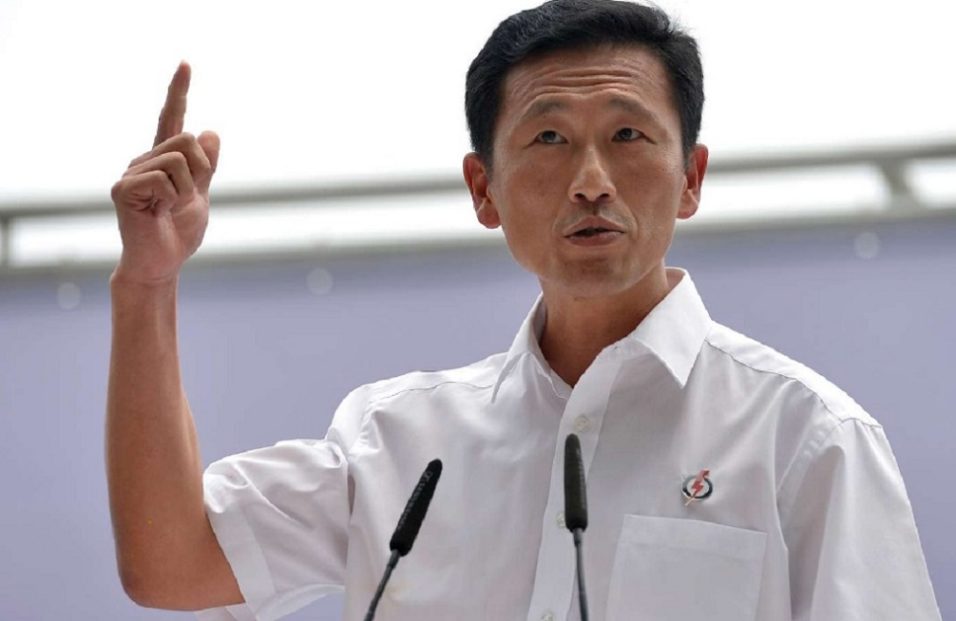
    Education Minister (Higher Education and Skills) Ong Ye Kung’s suggestion that the PAP’s continued one-party rule is the best course for Singapore’s future is at complete odds with reality.

    It is precisely the lack of a democratic, checks-and-balance system that has gotten the country into the current sorry state of affairs in the first place. More worryingly, it clouds the out-look for our nation’s future.

    For example, it is the PAP’s self-interested and unchecked policy of importing excessive numbers of foreign workers that has caused Singaporeans much pain and hardship.

    Jobs of locals have been displaced and wages depressed because of the mass and sudden influx of foreigners. The cost of living for citizens have also increased as a result while productivity growth has remained at near zero percent.

    There is no mistaking that the policy has lowered the quality of life for our people, harmed the overall economy and made it difficult for our nation to progress.

    But bringing in foreigners has allowed the ministers to engineer high-GDP growth through the collection of foreign workers’ levies, housing expenses, GST, etc. As ministers peg their pay to GDP growth, they have rewarded themselves handsomely with annual salaries to the tune of millions of dollars.

    All this could take place because there was no opposition in Parliament to keep the PAP in check. The party did as it pleased leading to the dangerous situation in which Singapore finds itself today.

    Another horrendous situation that Singaporeans are stuck with is the retention of our CPF money. It is the unchecked one-party rule that has allowed the PAP to blatantly rescind its promise to return us our CPF savings in full. This has resulted in retirees left out in the cold with little or no income.

    Without political opposition, the PAP is also able to immerse itself in the commercial sector leading Singapore to become one of the most, according to the Crony-Capitalism Index, cronyistic economies in the world.

    The government’s domination of the domestic commercial sector through unproductive GLCs has stifled the growth of the private entrepreneurial sector and the development of an innovative culture – areas that Singapore depends on for its future economic survival.

    It has also led to the crushing of workers’ rights, allowing GLCs like the Surbana Jurong to terminate its workers without accountability.

    It is frightening that at this juncture of Singapore’s development and with a rapidly changing world we face, PAP ministers like Ong Ye Kung still cling on to the out-dated and reality-free view that a one-party rule is the way forward.

    Singaporeans must awaken to the fact that without a vibrant and democratic society where open exchange of ideas and freedom of expression are valued, the future of Singapore is bleak. For the sake of our nation, the PAP’s one-party rule must end.


    Source: http://yoursdp.org

  • Chee Soon Juan: Singaporeans – A People Cut Adrift

    Chee Soon Juan: Singaporeans – A People Cut Adrift

    I STOOD ON the balcony of the school block and surveyed the campus of the Anglo-Chinese School at Barker Road. I had not been back there since I graduated some four decades ago (I was accompanying Shaw Hur to buy his textbooks during the year-end break as he prepared for secondary school).

    I searched for a familiar landmark – any familiar landmark – of the place I had spent ten years of my school life. I couldn’t. Every inch of the grounds had been razed and, in its place, new buildings erected.

    Gone were the open spaces and lawns (more like sandy patches from our constant trampling) that afforded students the space to play before and in between classes. And play we did: football, marbles, spider-catching, chatekkuti-kuti, hantam bola… We invented our own games and laid down our own rules. We found our own fun – lots of it. And when you sat quietly in the afternoons, you could hear the crickets chirp.

    My mind returned to the present and it dawned on me how much the multi-storey buildings, squished up against one another, resembled the HDB jungle. The school field, where many a scrape and bruise was inflicted, was missing, replaced by a carpark that shouldered a swimming pool above. A boarding school for foreign students was even jammed into the premises. Every square foot of real estate was manicured, exquisitely engineered for maximum capacity.

    What does all this do for (or to) students? Sure, the AV equipment was state of the art, the auditorium outfitted with cinema-like plushness, and the driveways pristinely landscaped. But how does the environment facilitate play? How do students find their own leisure? Where do they go to do that? Yes they are studying, but are they learning?

    If all this sounds depressingly familiar, that’s because the campus reminds us of the country itself. The island is blanketed with residential blocks built ever closer and stacked up ever higher. It teems with inhabitants, the number of which this city has never seen.

    But fast as it was, construction on the island was always one step behind a burgeoning population whose explosive growth, ignited by lax immigration laws, meant that the infrastructure would be overtaxed.

    With the mass influx of foreigners came the escalation of the cost of living. At the same time, wages for the locals were put under downward pressure. Retrenchments and unemployment have risen. Leisure has become a scarcity and where there was once spacious greenery, there is now only bodies and concrete. Stress and work-related psychological disorders, as one might expect, run high. For the average Singaporean, the quality of life has deteriorated.

    That wasn’t all. The school’s wholesale makeover also meant that there was little I could relate to my son. There was nothing to share with him about how I grew up in a place in which he was now going to grow up. The past-present dislocation was as rude as it was complete.

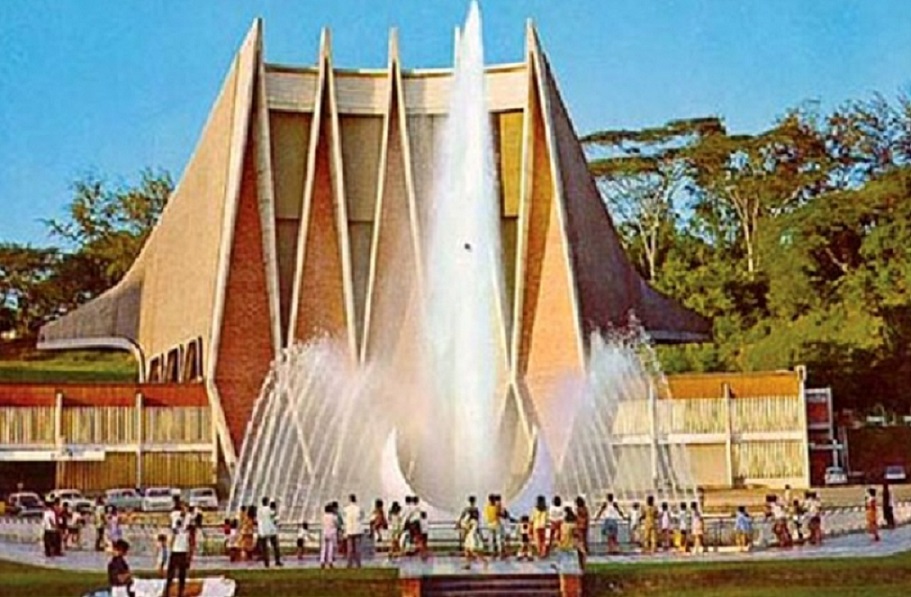
    Again, the situation is evocative of present-day Singapore. Anything and everything that served to remind us of days gone by – the National Theatre (photo above), Bugis Street, Satay Club, the National Library, Kallang Park – have been demolished and replaced by shopping centres, expressways and golf courses.

    When the break between past and present is so abrupt and comprehensive, we become unmoored from our own history. What, then, binds us to our roots? Need it be said that an undeveloped sense of belonging erodes our national identity?

    But can this country, one may be tempted to ask, afford to indulge in idle reminiscence? Why hanker for a past that would have impeded economic progress?

    These are wrong questions to ask. Progress and the retention of our collective past don’t have to be mutually exclusive; national development can proceed even as we preserve our history. What is needed to achieve a seemly balance are enlightened and dedicated planners. Japan and Europe, to cite but two examples, have done admirably in pushing the boundaries of modernisation while retaining their proud traditions and heritage.

    If we insist on hanging a price-tag on everything, as this country’s officialdom is wont to do, then what value do we put on places that tell the story of where we came from or where we’ve been? What amount of money do we place on Singaporeans emigrating because they don’t know what being Singaporean is anymore? What price do we figure for citizens living disengaged lives, tethered together only by that national creed that ‘No one owes us a living’ or its variant ‘What’s in it for me’?

    Even if we accept that nostalgic sentimentality has no place in the kind of hard-nosed pragmatic thinking needed for economc success, it is entirely appropriate to question what all the upheaval and change has brought us. A more genteel and less stressful lifestyle? A sustainable economic structure that ensures financial security for our retirees? A future that promises hope and opportunity for our youth? A system that can still deliver the Singapore Dream for our workers?

    When we cast our eyes ahead and see only ominous clouds, what conjures even more disquiet is to look behind and see that we’ve been cut adrift.


    Source: www.cheesoonjuan.com

  • Chee Soon Juan: Deadly Mishaps A Poor Reflection Of Government

    Chee Soon Juan: Deadly Mishaps A Poor Reflection Of Government

    The recent past has seen several deadly mishaps that leads one to question the quality of our workforce and, more importantly, its leadership.

    Just this morning, we learnt of an SMRT bus driver taking the bus over an empty field when he thought no one was looking and got it stuck in the mud.

    Other incidents involving bus drivers were not so amusing. A 29-year-old woman was killed when she was struck by an SBS Transit bus in Toh Tuck Avenue. An elderly pedestrian died after a bus ran him over at Toa Payoh. A visitor from Britain was fatally hit by a bus while he was crossing the road at Upper Cross Street. An SMRT bus driver ran over and killed a 60-year-old woman at Yishun.

    Then, a slab of concrete installed as a sunshade collapsed in Tampines. It was a stroke of good fortune that it did not topple and kill anyone.

    Two shelter walkways were hit by crane-lorries in Bukit Batok, one of them toppled over with the base-plates of the shelter ripped from the ground. Luckily, no one was injured.

    Several lift breakdowns resulted in severe injuries to passengers and even caused the death of an elderly man.

    Two young MRT maintenance workers were killed at the Pasir Ris station when safety procedures broke down.


    Source: Chee Soon Juan 徐顺全

  • SDP: Elected Presidency Reforms A Distraction From Real Democratic Reforms

    SDP: Elected Presidency Reforms A Distraction From Real Democratic Reforms

    In 1993 when the government introduced the Elected Presidency (EP) bill, it gave a grand vision of how system was evolving into a more democratic one where there would be greater checks and balance.

    Then prime minister Goh Chok Tong even said that “In introducing this Bill, the present Government, is in fact, clipping its own wings. Once the constitutional amendment is effected, this Government will have some of its powers checked.”

    The truth was not quite as noble. Instead, many saw the move as Mr Lee Kuan Yew ensuring that Mr Goh, as the new prime minister, would not run off with the horse, so to speak. Following the introduction of the scheme, the late Ong Teng Cheong then became Singapore’s president from 1993-1999.

    Mr Ong actually believed Mr Goh that the EP was formulated to clip the Government’s wings. During his tenure, President Ong famously asked for the state’s accounts to be made known to him, to which he was told that the information would take 52 man-years to compile. Towards the end of his term, Mr Ong publicly complained of his “long list of problems” with the Government. He also announced that he would not seek a second term.

    Which was just as well because PM Goh revealed that although Mr Ong had sought a second term, the Government could not support his bid. Mr S R Nathan was chosen instead.

    Before he left office, however, Mr Ong told the public that some cabinet ministers and civil servants had treated his office as a “nuisance” and that the government had indicated that it did not need his approval in using the reserves to fight the Asian financial crisis that occurred in 1997.

    The very public spat prompted Mr Lee Kuan Yew to step in, upbraiding everyone for harbouring illusions about the powers of the presidency. He slapped down Mr Goh’s statement about the government clipping its own wings: “No, if you’ve to clip the wings, then you are in for trouble, you cannot govern…I cannot remember it but I would not have used that phrase because the executive powers of the Government should not be clipped.”

    Then in 2004, Mr Lee Hsien Loong introduced legislation to bypass the president when it came to the transfer of reserves to GLCs and statutory boards (see here), making the EP even more meaningless.

    The government is in the midst of reviewing the Constitution to pave the way for a president from the minority race. Only the very naive will fail to see the move for what it is – to ensure that the PAP’s candidate ascends to the office. The EP scheme degenerates into a deeper and bigger political farce.

    It is clear that the PAP has absolutely no intention of allowing its powers to be scrutinised and checked by anyone. Together with schemes like the Nominated Member of Parliament (NMP) and the Non-constituency Member of Parliament (NCMP), the Elected Presidency serves only to create the illusion of democracy in Singapore.

    What we need is a genuine democratic system where all political parties can openly and fairly contest for seats in elections overseen by an independent elections commission, where the mass media is not monopolised by the PAP, and where the civil liberties of the people are not curtailed.

    Only then can we hope to check the government and truly protect our reserves.


    Source: http://yoursdp.org