Tag: eligible

  • The Road To Presidency: Who Is ‘Madam President’ Halimah Yacob?

    The Road To Presidency: Who Is ‘Madam President’ Halimah Yacob?

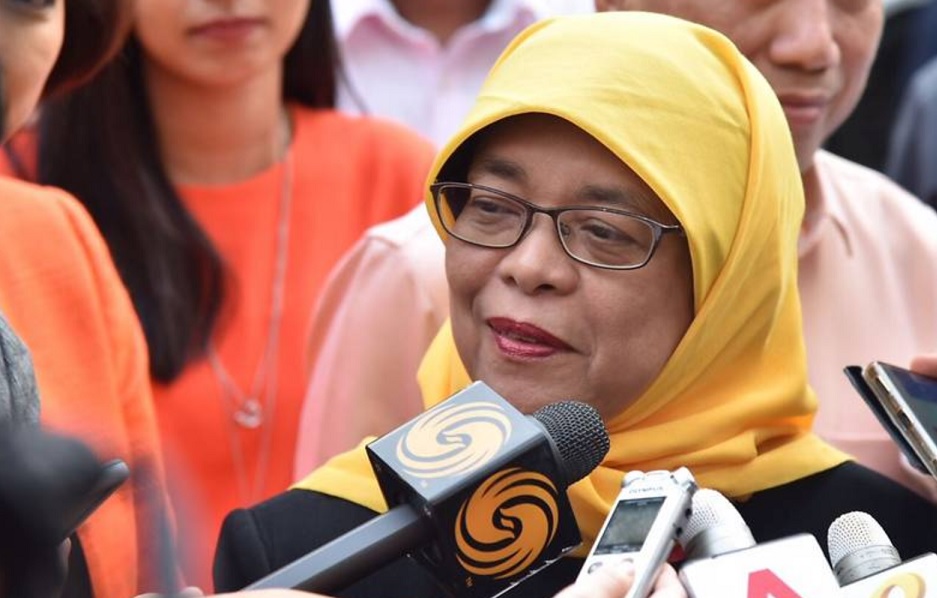
    Madam Halimah Yacob is set to become Singapore’s first female President after she submits her nomination papers on Wednesday (Sep 13).

    She is the only one of three prospective candidates to receive a certificate of eligibility for this year’s Presidential Election, which is reserved for the Malay community. Two other presidential hopefuls, Mr Mohamed Salleh Marican and Mr Farid Khan, had their applications to stand for the election turned down on Monday as both did not meet a requirement for private-sector candidates to helm companies with at least S$500 million in shareholders’ equity.

    The 63-year-old will be Singapore’s first female President and the first Malay head of state in more than 47 years, breaking barriers yet again after being elected as the first female Speaker of Parliament in 2013.

    The youngest of five children, Mdm Halimah was just eight years old when her father, a watchman, died. Her mother became the sole breadwinner, helping out at a food stall before dawn till late at night.

    “From the age of 10, my hours outside of school were spent being my mother’s assistant: cleaning, washing, clearing tables and serving customers, and I am a better person for it,” Mdm Halimah wrote in her bio on her website. “I have experienced poverty firsthand and know how debilitating it can be as you struggle to survive, to put food on the table and also grapple with the uncertainty of the future on a daily basis. It limits your choices but also tempers your determination to succeed.”

    In Secondary 2, she was nearly kicked out of Singapore Chinese Girls’ School for missing too many classes.

    “That was one of the worst moments of my life. But I told myself, ‘Stop wallowing in self-pity, pick yourself up and move on,’” Mdm Halimah told Channel NewsAsia in an interview last month.

    She later went on to attend Tanjong Katong Girls’ School and graduated from the University of Singapore with a law degree, subsequently obtaining her Master of Laws at the National University of Singapore.

    Her career began in 1978 with the National Trades Union Congress, where she served in various roles for the next three decades, eventually rising to become the labour movement’s deputy secretary-general.

    She entered politics at the urging of then-Prime Minister Goh Chok Tong in 2001, and was elected Member of Parliament (MP) for the Jurong Group Representation Constituency (GRC). Ten years later, she was given the portfolio of Minister of State for the then-Ministry of Community Development, Youth and Sports.

    Prior to announcing her intention to run as President last month, Mdm Halimah was serving as both Speaker of Parliament and MP for Marsiling-Yew Tee GRC – both roles she has since relinquished.

    Over the years, she has advocated for women’s rights, spoke up on senior citizens and mental health issues, and served as patron to associations such as Club HEAL and PPIS (Singapore Muslim Women’s Association).

    The decision to run for the highest office of the land did not come easy: The mother of five told Channel NewsAsia her children initially had reservations about being in the public eye.

    However, they and her husband – her university sweetheart Mohamed Abdullah – gave their support after some discussion.

    Since her bid for presidency was made known, Mdm Halimah has repeatedly denied allegations that she may lack independence due to her close ties to the People’s Action Party.

    “It is a gross disservice … even (among) those who continue to hold party colours, if they put the interest of people behind party colours,” she said at a press conference last month, citing times when she disagreed with the Government both as a trade unionist and as an MP.

    She also said on Monday that her commitment to serve Singaporeans was not affected by the fact that there is no election. “I promise to do the best that I can to serve the people of Singapore and that doesn’t change whether there is an election or no election … My passion and commitment to serve the people of Singapore remains the same.”

    Mdm Halimah has said that as President, she hopes Singaporeans will work together with her to build a stronger Singapore. One of the President’s roles is to act as a unifying force, she said.

    “The process may be a reserved election but the President is for everyone, for all communities – regardless of race and religion.”


    Source: http://www.channelnewsasia.com
  • Tan Cheng Bock’s Constitutional Challenge Dismissed By High Court

    Tan Cheng Bock’s Constitutional Challenge Dismissed By High Court

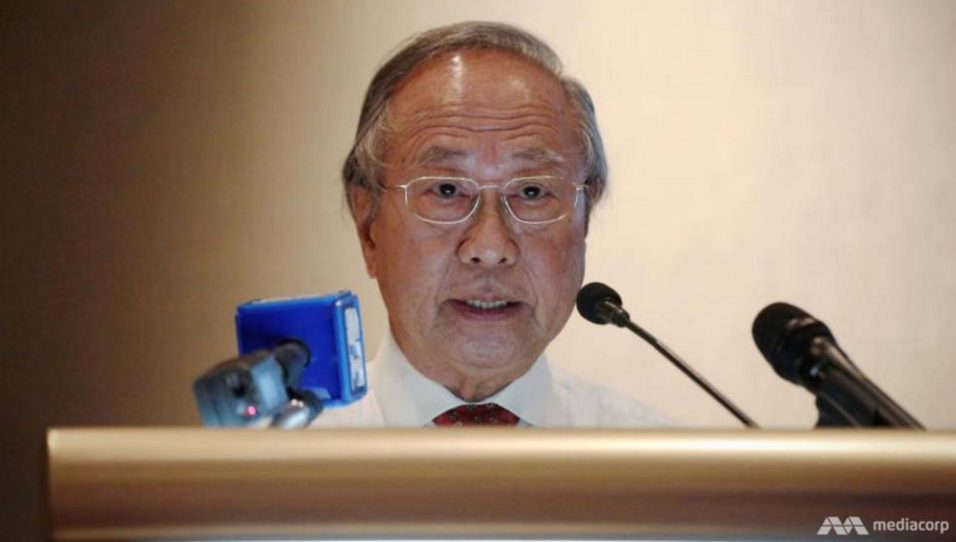
    The High Court has dismissed former presidential hopeful Tan Cheng Bock’s application contesting the legitimacy of the upcoming reserved Presidential Election (PE).

    Justice Quentin Loh’s decision on Friday (Jul 7) in favour of the Government maintains the status quo – that only Malay candidates are eligible to stand in the next PE, due in September.

    Dr Tan has until next Wednesday to file a notice of appeal.

    Dr Tan, a Member of Parliament for 26 years (1980–2006), ran unsuccessfully for President in 2011. In March 2016, he announced his intention to run again, but amendments to the Constitution passed late last year have precluded him from doing so.

    Dr Tan filed an application in May challenging the basis of the Government’s decision to reserve the next PE for Malay candidates and called for the September election to be an “open” one.

    Under new rules, if there is not a President from a particular racial community for five consecutive terms, then the next term will be reserved for a President from that community.

    DR TAN’S CHALLENGE TO PARLIAMENT’S “UNCONSTITUTIONAL” DECISIONS

    In an affidavit before the High Court, Dr Tan questioned the Government’s decision to count President Wee Kim Wee as Singapore’s first elected President.

    President Wee was appointed in 1985 by the Government of the day.

    The Elected Presidency as we know it – where Singaporeans vote for their President – was legislated in 1991, in the middle of President Wee’s second term.

    Dr Tan, who was represented by Senior Counsel Chelva Retnam Rajah, argued that the decision to count five terms from President Wee’s was “unconstitutional”.

    The first popularly elected President was Ong Teng Cheong, Dr Tan said, and if the Government had started counting from President Ong’s term, this year’s PE would not have to be a reserved one.

    Dr Tan also argued that only the terms of Presidents elected by Singaporeans to serve six-year terms should be counted. President Wee was not popularly elected, and served two terms of four years.

    PARLIAMENT’S DECISION A “POLICY” ONE, OUT OF COURT’S HANDS: JUDGE

    In a 68-page judgement released on Friday (Jul 7), Justice Loh agreed with the AGC that “nothing” in the Constitution limits Parliament’s power to “start the count from the term of office of a popularly elected President”.

    “(The Constitution) is both a duty-imposing and power-conferring rule. It expressly imposes a duty on Parliament to specify (the first elected President) and implicitly gives Parliament the power to do so,” Justice Loh said.

    The Constitution also “does not only refer to Presidents elected by the citizens of Singapore for terms of six years”, the judge said. It could also refer to Presidents, like President Wee Kim Wee, who were elected by Parliament for four-year terms, he added.

    The “plain language” of the Constitution “only refers to the person who holds the ‘office of the President’ without any words to draw a distinction between Presidents who were elected by Parliament, and those who were elected by citizens”, Judge Loh said.

    “Ultimately, since (the Constitution) does not fetter Parliament’s power … Parliament’s choice of (the first elected President) is a policy decision which falls outside the remit of the courts.”

    DR TAN “SELFISHLY” TRYING TO “UNDERMINE” MULTIRACIAL PRESIDENCY

    In court documents obtained by Channel NewsAsia, the Attorney-General’s Chambers accused Dr Tan of “running a case that is entirely self-serving”.

    “(Dr Tan) is advancing a strained interpretation of the Constitution so that he can apply to stand as a candidate in the coming (PE).

    “His motives are purely selfish and he has shown no regard for the principle of multiracial representation which Parliament intended to safeguard,” Deputy Attorney-General (DAG) Hri Kumar Nair said.

    In written submissions to the High Court, DAG Nair defended the Government’s decision to count President Wee Singapore’s first elected President.

    The Constitution “does not impose any requirement on which President, or which category of Presidents the Legislature must choose or choose from”, he said.

    DAG Nair added the Legislature has powers “to end the hiatus for any community sooner rather than later”, and that Dr Tan’s bid “undermines the longstanding imperative for multiracial representation in the office of the President, which the reserved election framework seeks to safeguard”.

    NO DIFFERENCE WHETHER PRESIDENT IS ELECTED BY PARLIAMENT OR BY THE PEOPLE: JUDGE

    Apparently in agreement with the AGC, Justice Loh said: “In my judgement, the recent constitutional amendments reflect a re-emphasis on the President’s unifying role and the conviction that, in order for the President to fulfil that role, that office must reflect the multi-racial character of our country.

    “From the perspective of ensuring multi-racial representation in the Presidency in view of the President’s symbolic role, it makes no difference whether the President was elected by the electorate or by Parliament. In either case, the President’s capacity to symbolise Singapore is undercut if the occupants of the office do not reflect our multi-racial composition.”


    Source: CNA