Tag: ethnic

  • Najib Razak: Although My Father Or Grandfather Isn’t From Kerala, I Am Known As The Father Of Indian Development

    Najib Razak: Although My Father Or Grandfather Isn’t From Kerala, I Am Known As The Father Of Indian Development

    In what may be another attempt to court ethnic minority voters, Malaysian Prime Minister Najib Razak has declared himself a champion of development for the Indian community. He highlighted that he insisted on appointing a senior civil servant to head the Customs Department, despite objections to the candidate’s ethnicity.

    Addressing the Malaysian Indian Congress (MIC) general assembly yesterday, the Prime Minister said: “Although my father or grandfather isn’t from Kerala, I am known as the father of Indian development.”

    It was a sarcastic broadside against his mentor turned critic Dr Mahathir Mohamad, who is now chairman of the opposition Pakatan Harapan coalition. The former premier’s lineage includes ancestors from the southern Indian state.

    Mr Najib told the 2,000 MIC delegates that the opposition is merely trying to confuse people by labelling Malaysia a failed state.

    “The question is, what have they (the opposition) done for the Indians compared with what BN (Barisan Nasional) has done, more so after I took over the leadership of the country from Abdullah Badawi,” he said.

    “With his (Mr Abdullah’s) permission, I initiated (a) Cabinet committee on Indian affairs to further develop the Indian community because I realised that without intervention and political will, Indians would be neglected, marginalised and left behind.” The MIC is a component party of the ruling BN coalition.

    Mr Najib said he also prioritised Indians in the selection of the new director-general of Customs. “I do not mind telling you, even the appointment of the new director-general of Customs was difficult. I received petitions not to pick an Indian for the post,” he recounted.

    “I said no, he (Mr T Subromaniam) deserves the post because he is the most senior. I stood my ground.”

    In March, Mr Subromaniam was appointed to head the department. His appointment came despite grassroots efforts to petition for the post to go to a Malay candidate.

    However, some Indian community leaders were sceptical about Mr Najib’s comments. “When he held many important posts in the government prior to becoming the prime minister, what has he done for the Indians? Basically nothing,” said Mr A Rajaretinam, president of Malaysian Indian group Rapat.

    The Premier is believed to have been wooing the Chinese and Indian minorities, fuelling speculation that the general election could be held later this year.

    In July, Mr Najib said the government will study a request from the Indian-Muslim community to be recognised as Bumiputera. Earlier this month, he said he wanted to see a “stronger Chinese representation in the BN government”.


    Source: http://www.todayonline.com
  • Myanmar detains cops over Rohingya abuse video

    Myanmar detains cops over Rohingya abuse video

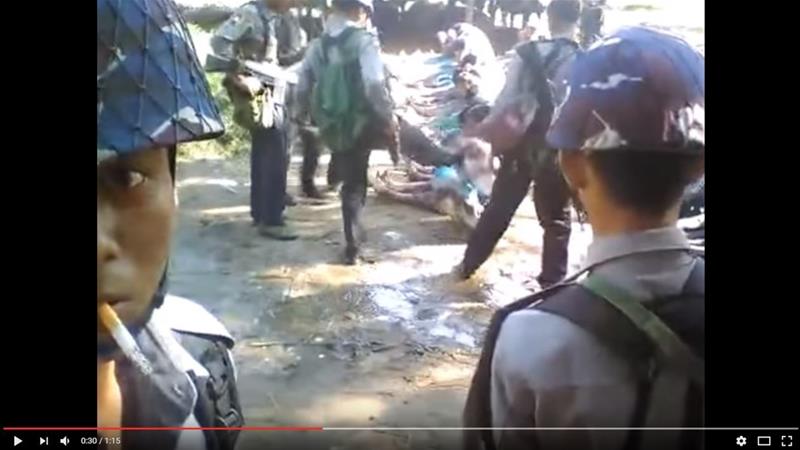
    YANGON • Myanmar’s government yesterday said it has detained several police officers over a video apparently showing Rohingya civilians being beaten, a rare admission that the authorities may have carried out abuses against the Muslim minority.

    Tens of thousands of people from the persecuted ethnic group – loathed by many of Myanmar’s Buddhist majority – have fled a military operation in Rakhine province launched after attacks on police posts in October.

    Bangladesh says some 50,000 Rohingya have crossed its borders over the past two months. Many have brought harrowing accounts of rape, murder and arson at the hands of Myanmar’s security forces. Their stories have raised global alarm and galvanised protests against Myanmar’s de facto leader, Ms Aung San Suu Kyi, who has been accused of not doing enough to help the Rohingya.

    Her government has said troops are hunting militants behind deadly raids on police border posts, denying claims of atrocities and launching a dogged information campaign against reports of abuse.

    However, the authorities yesterday pledged to take action “against police officers who allegedly beat villagers during area clearance operations on Nov 5 in Kotankauk village”.

    Ms Suu Kyi’s office named four officers who were involved in the operation, including constable Zaw Myo Htike, who filmed the “selfie-style” video.

    “Those who (were) initially identified were detained,” it said in a statement. “Further investigations are being carried out to expose other police officers who beat villagers in the operation.”

    Dozens of videos have emerged apparently showing security forces abusing Rohingya, but this is the first time the government has said it will take action over them.

    The footage shows police hitting a young boy on the head as he walks to where dozens of villagers are seated in rows on the ground, hands behind their heads. Three officers then start attacking one of the men, beating him with a stick and kicking him repeatedly in the face.

    A Rohingya activist contacted by Agence France-Presse said the footage had been verified by a refugee from the nearby camp, Shilkhali.

    Around 600 people have been detained since the military operation, according to state media, including six who have died in police custody.

    Buddhist-majority Myanmar has long discriminated against the stateless Rohingya, who rights groups say are among the most persecuted people in the world.

    More than 120,000 have been trapped in squalid displacement camps since violence erupted in 2012 in Rakhine, where they are denied citizenship, access to healthcare and education.

    More than a dozen Nobel laureates wrote to the UN Security Council last week urging action to stop the “human tragedy amounting to ethnic cleansing and crimes against humanity” in northern Rakhine.

    Last month, UN rights commissioner Zeid Ra’ad Al Hussein criticised the government’s “callous” handling of the crisis, describing it as “a lesson in how to make a bad situation worse”.

    Under Myanmar’s junta-era Constitution, Ms Suu Kyi’s civilian administration has limited power over the army, which maintains control of the defence, home and border ministries.


    Source: The Straits Times