Tag: fish

  • Science Backs Islam’s Logic Of Eating Halal Meat Instead Of Haram

    Science Backs Islam’s Logic Of Eating Halal Meat Instead Of Haram

    Islam, considered to be the perfect religion, has always provided reasons for the dos and don’ts in its properties. Just as science backs Islam’s logic of declaring pig haram and how praying 5 times a day helps a person stay healthier, there is also a specious logic behind eating halal meat (where the animal is slaughtered) instead of chopping its head off directly, which makes it haram.
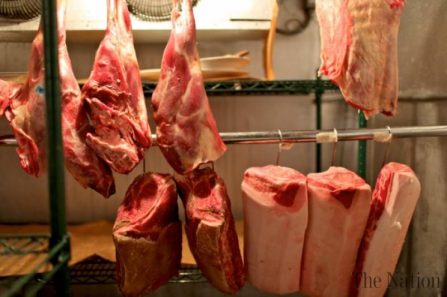
    Source: thenation.com

    Source: thenation.com

    Muslims all over the world abstain from eating meat that has been slaughtered in a haram manner, or through mechanical slaughter. Here’s how science backs the logic with proper reasoning.

    WHAT MAKES MEAT HALAL OR HARAM?

    Haram slaughter

    Source: Muslimvillage.com

    The blood that does not drain out of the animal’s body, contaminated the meat completely, be it in a chicken, cow or a goat. This clotted blood ruins the freshness of the meat and becomes the cause for multiple illnesses when the humans eat it.

    The butchers, who slaughter the animal in a haram way, which is also known as the ‘Jhatka’ – chop the head off the animal completely, especially a chicken. This results in discretion of the brain and heart; which makes the heart stops pumping and beating blood in a jiffy. With no driving force left to push the blood out of the body, the blood stagnates in the veins and arteries, contaminating the blood and causing it to affect the meat.

    Science proves that blood is the most capable medium of bacterial growth. This contaminated meat makes the human body more vulnerable to infections and considerable pain in the joints, due to the rising uric acid level in the blood.

    WHY MUSLIMS PREFER HALAL MEAT AND ITS PROPER WAY

    Halal slaughter

    Source: gettyimages.com

    Muslim butchers who serve Halal meat do not chop the animals head off. Instead, the main jugular vein of the animal is cut, which holds the venous blood in high pressure. Due to the cut, the blood is directed out of the animal’s body, which is connected to the atrium of the heart without any irregularity.

    This method of slaughtering the animal preserves the link between heart and brain of the animal, allowing the animal to breathe out naturally. With this method, the heart keeps pumping until all the blood from the body is drained out and only meat is left, without any contamination, leaving the meat pure and Halal.

    THE FAMOUS QUESTION OF WHY FISH IS CONSIDERED HALAL WITHOUT BEING SLAUGHTERED
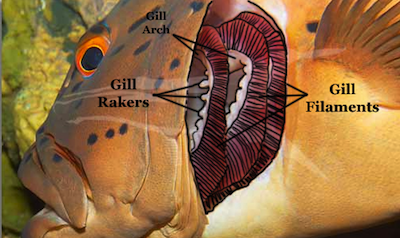
    Epiglottis of fish

    Source: shmoop.com

    Many non-Muslims have asked this question, that why the fish has been declared Halal without being slaughtered. The answer too, lies in science.

    Allah Almighty created everything in perfect balance. The moment the fish is taken out of the water, the entire blood of the fish redirects and moves into a part called the epiglottis, which is in its mouth – draining the blood from the whole body and leaving the meat pure and Halal.

    Thus, Science too backs Islam’s logic of heating Halal meat instead of Haram.

    BY: S.K PAKISTAN


    Source: Parhlo

  • My Indonesian Maid Fried My Pet Luohan For Dinner

    My Indonesian Maid Fried My Pet Luohan For Dinner

    Recently I employed a new Indonesian domestic helper to help out with my hectic housework. I called her to use the fresh fish at home and fry it for dinner tonight.

    To my shock when I reached home, I saw my pet Luo Han fish fried and on the dinner plate. I am angry but I cannot blame my domestic helper because maybe my instructions was not clear enough to her.

    Should I be upset with myself or my helper? Sigh.

    Zhi Chun
    A.S.S. Contributor

    Source: www.allsingaporestuff.com

  • Majority Of Fish Consumed In Singapore Not Responsibly Caught: WWF

    Majority Of Fish Consumed In Singapore Not Responsibly Caught: WWF

    Singaporeans need to make better consumption choices as three out of four common fish species consumed here are not responsibly caught, the World Wildlife Fund (WWF) said on Tuesday (Oct 4).

    Fish varieties like the Indian threadfin (commonly known as ngoh hur) used in fish porridge, silver pomfret and the yellowbanded scad (also known as ikan kuning) used in nasi lemak are among those which Singaporean consumers should stop eating, the conservation group said.

    A new seafood guide launched by WWF lists these fish species and others commonly used in local dishes as “avoid”.

    “Without collective and decisive action, these popular fish could disappear from Singapore’s menus within our lifetime,” it said.

    Singaporeans are one of the biggest consumers of seafood in the world, with each person consuming about 22kg of seafood a year, compared to the global average of 20kg, the conservation group said.

    “We are squandering one of our greatest natural resources by failing to manage our fish stocks sensibly,” said WWF-Singapore CEO Elaine Tan. “The seafood guide empowers everyone in the supply chain to make conscious choices that prevent the further exploitation of fish stocks.”

    On Tuesday, WWF also launched the Responsible Seafood Group, consisting of organisations such as seafood supplier Global Ocean Link and luxury hotel Marina Bay Sands which have committed to responsible sourcing standards.

    Marina Bay Sands’ Executive Director of Sustainability Kevin Teng said: “Since 2014, we have eliminated sharks fin from the restaurants we own and operate. At that time, we also started serving selected seafood sourced from suppliers that fish or farm responsibly, based on global seafood standards.”


    Source: ChannelNewsAsia

  • AVA Investigating Fish Deaths in Pasir Ris

    AVA Investigating Fish Deaths in Pasir Ris

    SINGAPORE — Amid higher plankton levels, some fish farmers off Pasir Ris have seen their fish die in recent days and the Agri-Food and Veterinary Authority (AVA) is analysing samples to determine the cause of death.

    The AVA said some fish deaths were reported by farmers in the East Johor Straits between Wednesday and Saturday. This came after the authority alerted the coastal fish farmers to elevated plankton levels in the area last Monday and Tuesday for them to take precautions.

    Plankton are microorganisms and plankton bloom occurs when one species of the drifting marine organisms predominates over others and multiplies quickly, said the AVA. This can be triggered by unpredictable weather, a higher concentration of nutrients in the seawater and poor water exchange between the high and low tides, a spokesperson said.

    The AVA did not provide an indication of the scale of deaths so far, but said it has been visiting the coastal fish farms since the farmers’ reports. The visits are to “ascertain the situation, offer advice to the farmers to mitigate the situation and collect fish samples from the affected farms for analysis on the cause of mortality”.

    It will continue to monitor and work closely with the farmers, an AVA spokesperson added.

    Blogger and environmentalist Ria Tan reported seeing dead fish, both wild and farmed, at Pasir Ris on Saturday. In a post on her Wild Shores website yesterday, Ms Tan noted that some algal blooms are harmful and said it was important to find out the exact cause of fish deaths this time.

    The latest deaths occurred a year after farmers lost more than 160 tonnes of fish and suffered individual losses of up to several hundred thousand dollars.

    Last year’s episode was due to plankton bloom and low levels of dissolved oxygen, said the AVA, which offered an assistance package to affected farmers.


    Source: www.todayonline.com

  • Shortage Of Fish And Vegetables Due To Monsoon In Malaysia Results In Price Hike In Singapore

    Shortage Of Fish And Vegetables Due To Monsoon In Malaysia Results In Price Hike In Singapore

    The monsoon season in Malaysia has led to a shortage of fish and vegetables, and the repercussions are being felt in Singapore.

    Vendors in local markets said that the shortage of fish from Malaysia has led to an increase in prices – from an average of S$4 per kilogramme to S$7 per kilogramme.

    Fish seller Leung Teng Foo said: “The supply has decreased by 30 per cent in the past few days. Fewer fishermen are heading out to fish due to strong winds and heavy rain. So there are fewer fish.”

    The vendors believe that the Malaysian government is worried that it might not be able to meet the domestic demand for fish and is cutting down on fish exports.

    Vegetables are also affected. Said vegetables seller Annie Woo: “Heavy rains would cause vegetables to rot. We don’t sell rotten vegetables in Singapore. Nobody wants to buy them.” To meet the shortage, vegetable sellers are selling more produce from China, Hong Kong and Taiwan.

    However, vegetables from Malaysia seem to have greater appeal among consumers. “Vegetables from Malaysia are cheaper,” said a consumer. “I am used to eating vegetables from Malaysia. So I tend to buy vegetables from Malaysia,” said another.

    But the impact of the shortage has been softened by a drop in demand, due to the holiday season when many Singaporeans travel overseas. This has helped to dampen the rise in food prices.


    Source: www.channelnewsasia.com