Tag: foreigners

  • Mount Kinabalu Nudists Charged In Sabah Court

    Mount Kinabalu Nudists Charged In Sabah Court

    Four Western tourists accused of being part of a group who posed nude at the top of Malaysia’s Mount Kinabalu have appeared in court in Sabah state.

    Authorities said the two Canadians, a Briton and a Dutchman may be charged with causing public nuisance.

    Mt Kinabalu was hit by a magnitude 6.0 earthquake last Friday which left 18 people dead, including children.

    A senior minister last week said the tourists had angered the spirits of the mountain, which is considered sacred.

    Six people sought

    Ranau district police chief Mohd Farhan Lee Abdullah confirmed to the BBC that the authorities had arrested a British woman at Tawau airport in Sabah on Tuesday.

    The two Canadians, who are siblings, and the Dutchman turned themselves in to police on the same day.

    Their lawyer, Ronny Cham, told the BBC’s Jennifer Pak that he had requested the four be held apart from other detainees in order to ensure their safety.

    Malaysian lights up candles at a candlelight vigil for the victims of the earthquake in Kota Kinabalu, Malaysia on Monday, 8 June 2015
    A candle-lit vigil was held on Tuesday for the victims of the Mount Kinabalu earthquake

    The group appeared in court on Wednesday to have their remand extended, according to Malaysian newspaper The Star. They will now be held until Saturday while police continue their investigation.

    Jalaluddin Abdul Rahman, Sabah’s police commissioner, was quoted by AFP news agency as saying that the authorities may charge them with causing a public nuisance.

    He said they were still looking for six other tourists from the same group “and we will catch them”.

    The father of the British tourist who has been arrested, Eleanor Hawkins from the English city of Derby, said he was extremely worried about her. “I have got every faith in [Malaysia’s] judicial system. I just hope they don’t make an example of them,” Tim Hawkins told the Guardian newspaper.

    ‘Disrespect’

    The group of 10 foreigners had allegedly stripped naked and posed for pictures on 30 May. They were also said to have urinated on the mountain.

    The Muslim-majority country is socially conservative, and Mount Kinabalu is also considered sacred by Sabah’s Kadazan Dusun tribe.

    Pictures posted on social media angered many in Malaysia, but public sentiment intensified after the quake.

    line

    Why is Kinabalu sacred?

    Malaysias Mount Kinabalu is seen among mists from the Timpohon gate check point a day after the earthquake in Kundasang, a town in the district of Ranau on 6 June 2015
    • Sabah’s Kadazan Dusun tribe believe the mountain houses the spirits of their dead ancestors.
    • The name Kinabalu is derived from the tribe’s phrase “Aki Nabalu”, which means resting place of the dead.
    • Climbers are told by guides, many of whom are Kadazan Dusun, to treat the mountain with respect and to refrain from shouting, screaming or cursing at it.
    • Every December the tribe conducts a ritual called the Monolob to appease the spirits and allow climbers to continue visiting the mountain.
    • A priestess, called a Bobolian, makes an offering of seven white chickens accompanied by seven chicken eggs, betel nuts, tobacco, limestone powder, and betel plant leaves. The Bobolian leads a chant and the chickens are then slaughtered, cooked, and given to the ceremony participants.
    • In the past, this ceremony was conducted before every ascent, and climbers used the cooked meat as rations for their journey.
    line

    Last weekend, Sabah’s deputy chief minister, Joseph Pairin Kitingan, had linked the earthquake to the tourists’ act. He said the tragedy was a “confirmation” that they had showed “disrespect” to the mountain.

    Sabah’s tourism minister, Masidi Manjun, said later that this idea was “misconstrued”, but added that the tourists’ actions “were against the people of the largest tribe in Sabah”.

    Some officials have demanded that the foreigners be tried in a native court for flouting local customs.

    Mr Masidi said on Wednesday that searchers had found the bodies of the last two missing people.

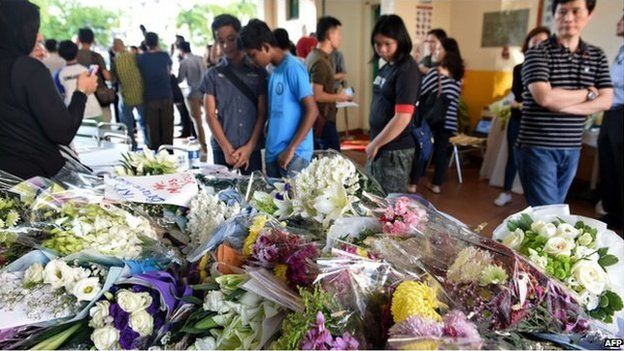
    People look at bouquets of flowers in memory of the victims from an earthquake on Malaysia"s Mount Kinabalu, placed on a table at the Tanjong Katong Primary School in Singapore on 7 June 2015
    Mourners left tributes to primary school victims in Singapore over the weekend

    Singapore’s education ministry identified the two bodies as pupil Navdeep Singh Jaryal Raj Kumar and teacher Mohammad Ghazi Bin Mohamed.

    They were part of a group from Tanjong Katong Primary School who were climbing the mountain with guides when the earthquake struck. Seven pupils, two teachers and a guide were killed.

    Others killed included Malaysians and citizens from China, Japan and the Philippines.


    Source: www.bbc.com

  • More Foreign Nurses Hired To Provide Home Care

    More Foreign Nurses Hired To Provide Home Care

    Ms Swaroopa Rani holds a diploma in nursing and has worked for more than 10 years in hospitals in India, even starting up one in a rural village in Pondicherry.

    But since last year, the 34-year-old mother of two has been working in a Singapore household on a work permit – the same pass as a maid.

    “A nurse is a nurse anywhere,” she said. “Whether in hospital or in home care, I hope to do my profession justice.”

    Instead of many patients a day, she sees just one – Mr Goh Chong Huat, 95, a cardiac patient who also had gallstones and had to live with a catheter to drain urine.

    He used to be in and out of hospital every month, but has not had to be hospitalised since Ms Rani started caring for him at his home near Bedok. She changed his diet and he is no longer dependent on a catheter.

    “No one likes to stay in a hospital for a long time. At home he is more comfortable and he can do what he likes,” she told The Straits Times.

    Ms Rani, who works with Active Global Specialised Caregivers, is one of a growing number of qualified foreign nurses in Singapore caring for patients outside of hospitals and nursing homes.

    At least two companies began specialising in this service in the past two years, and existing ones say demand is growing.

    Mrs Susan Ng, director of Sue Private Nurses Agency, which has been offering the service since 1990, said she gets more than 10 new enquiries a month.

    Dr Dana Elliott Srither, chief executive of Optinuum Health Services, said that since bringing in foreign nurses early last year, he has received more enquiries than the company can handle.

    The benefits are clear: Home care allows patients to stay in a familiar environment.

    “A person can avoid going to a nursing home and age in his own place,” said Ms Yorelle Kalika, chief executive of Active Global Specialised Caregivers, which has brought in more than 150 nurses.

    Affordability is another reason for the growing demand. Foreign home nurses are paid between $600 and $1,000 a month, depending on their qualifications.

    This is higher than the $500 average salary of a maid, but far less than the salary of a local nurse, who may earn $6,000 a month doing 12-hour shifts in a patient’s home, said Mrs Ng.

    It can also be lower than nursing home fees, which range from $1,200 to $3,500 a month before government subsidies for households below an income cap.

    The home nurses come from countries such as the Philippines, Indonesia, India and Sri Lanka.

    There are no official figures on the number of foreign nurses working on foreign domestic worker work permits, but industry estimates suggest there are at least 250. Their job scope may include taking patients through exercises, dressing their wounds, monitoring vital signs, and bathing and feeding them.

    “We say no if the family asks if she can also take care of the kids. That would distract the caregiver and short-change the patient,” said Ms Kalika.

    For retired architect Chuah Yet Lian, 88, employing a home nurse through Sue Private Nurses Agency has allowed him to play a role in caring for his wife, a stroke patient, for the past 15 years.

    “I don’t want her to go to a nursing home because she can’t speak and tell you what she wants,” he said.

    “I think it’s safer to get someone to look after her at home. I can look after her sometimes.”

    There are also benefits for the nurses. Ms Rani said she likes the security of working in a home and not having to spend on food and lodging.

    “I want to save some money for my family and for a nursing degree,” she said.


    Source: www.straitstimes.com

  • Are Culturally Insensitive New Citizens The Cause Of Disharmony In Singapore?

    Are Culturally Insensitive New Citizens The Cause Of Disharmony In Singapore?

    by Wan Dan Liao, Straight Times

    A dispute broke out between a Malay family and their new neighbour in Marine Terrace last week over the aroma of Malay cuisines.

    The petrified Malay family, who declined to be named, showed ST the police report they filed. Their neighbour who moved in last November had repeatedly asked the Malay family to stop cooking Malay food as it was “smelly”. These requests escalated into police reports and complaints with National Environment Agency. To protect themselves, the Malay family filed a police report against their culturally insensitive neighbour.

    Conflicts which rose from cultural differences and misunderstandings are not uncommon in Singapore. In 2012, A senior staff from NTUC of Malaysian origin fled to Australia after making an insensitive remark against the Malay community. Similarly, in 2011, Singaporeans were shocked to know of a Singaporean Indian family who had troubles with their new PRC neighbours who vehemently objected to the smell of curry.

    ST sought the views of Singaporeans who are not aware of such conflicts. Mr Hui Jiao Tu, a Chinese Singaporean who converted to Islam after marrying his Malay-Muslim girlfriend of 5-months told ST he felt blessed after knowing her.

    “The Chinese girls I dated last time expect me to drive BMW or cooper to fetch them”, Mr Hui lamented, “They won’t date guys who earn less than $5,000 [a month]. They don’t want to have children also, to be honest, they can’t cook, do house work and their figure is not great either!”

    “After I met my wife, I finally know what is love” Mr Hui beamed “She happy I ride my super 4 to fetch her after school from Simei, everyday excited to have children, willing to cook and happy to be full time housewife after she graduated. She is a great cook you know! Her family very united and supported us!”

    When ST asked Mr Hui the secret to a successful mixed marriage, Mr Hui smiled, “Cast away your stereotype of people or friends from other nationalities or races. Look at them objectively and you will see the beauty in them.”

    Source: www.allsingaporestuff.com

  • Jobless Breadwinner With Master’s Degree Wants All EPs To Stop Immediately For PMET Vacancies

    Jobless Breadwinner With Master’s Degree Wants All EPs To Stop Immediately For PMET Vacancies

    Transitioning: First of all, thanks for allowing us to interview you online and can you provide us with some background information about yourself?

    Patrick: I am a Singaporean PMET with many years of IT experience. I have a wife and a two-year-old child.

    We live in our HDB flat and trying hard to have a happy life.

    Growing up in Singapore was much more better times that it is now.

    Looking at how things are now, I am often worried about how it will be when our child grows up.

    I am usually an optimistic person and consider myself quite intelligent and solving problems.

    However, this is one problem that I am quite frustrated about as I can’t seem to find the solution.

    Transitioning: What was  your last occupation and you have told me that you were unemployed for a few months, can you tell us more about this and  also  your job search experience?

    Patrick: My last job was as a permanent employee with an IT MNC where I was in charge of implementing large scale IT projects. However, after my last project was successfully completed, I was retrenched as part of their global restructuring program. They did acknowledge that I was a good performer and that it was not due to my performance but due to the Global restructuring.

    I had put in a lot of effort and time during my project and sacrificed my family time for the sake of the company success. I had been putting in 16-17 hours daily for more than 6 months and sometimes on Saturdays too.

    As a result the project was a success. However, shortly thereafter, I was retrenched.

    Therefore for the first couple of months after my retrenchment, I spent a lot of time with my family to make up for the earlier time lost.

    I started looking with more vigour since January this year and have submitted hundreds of applications for relevant jobs.

    I did have a handful of interviews, but they were all unsuccessful.

    I found that employers themselves aren’t sure of what they want to do. For example, some employers interview, but do not take any action for months or put the position on hold.

    Others have said that they decided to hire/promote internally or the worst is they give absolutely no update at all.

    Transitioning: You have told me that you are currently jobless for more than six months, what did you do in order to survive? Did you also approach the CDC for assistance?

    Patrick: Luckily I have been good at saving all these days, and am now eating into my savings. Hopefully, I can find a job before my savings finish. I have not approached CDC for financial or other help.

    Transitioning: Did you attend any interviews  during the past few  months  and why do you think you are unsuccessful so far?

    Patrick: Yes, I have attended interviews, but as mentioned, the companies themselves aren’t sure what they want to do and end up not selecting any candidate. I have also lowered my expectation to below market standards, and agencies question me why so low.

    I do not think that I am being choosy in terms of salary, location of even workload. However, I do have a strong feeling that employers are spoilt for chose and they are the ones who are being choosy these days.

    I think the basic reason is that employers are being choosy.

    Transitioning: Tell us abit more about what you have learnt from your jobless experience and how it has impacted your family.

    Patrick: Jobless experience is not very good. It does affect the family life and causes unnecessary friction as both husband and wife are worried about the future.

    As the sole breadwinner, I am constantly under pressure to provide for my family and to keep the roof over our head.  It is very frustrating to apply for jobs in Singapore.

    There seems to be nothing much that anyone can do. I have approached many people and seeking help from them. But no luck. My only avenue is job portals and job agents. Both are not much help.

    There are some good points as well to being jobless, in that I get to spend more time with my child and help my wife with the household chores. I also enjoy a little gardening, going to the library to catch up on my reading and sometimes if its not too hot I go to the nearby park to fly my kite.

    Transitioning: What do you think you could have done to shorten the unemployment period?

    Patrick: I have no idea. If i did, I would have done it already and not be unemployed for so long.

    Transitioning: Do you think that Singapore is now a more difficult place to make a living?

    Patrick: Yes, its very difficult for Singaporeans to make a living in Singapore. Its quite ironic that we find it difficult in our own home whereas newcomers seem to have it easier.

    Transitioning: What do you think the government can do to alleviate the current employment situation?

    Patrick: Immediate (should start by July):

    1. Stop issuing all EP’s for PMET jobs immediately.
    2. Enforce a rule that makes it necessary for employers to look at the unemployed Singaporeans first.
    3. Start a database of all unemployed PMET’s in Singapore that the employers can tap on for immediate hire.
    4. For those employers who are looking for a specific skill, WDA can provide free/subsidised training for the candidates who come close to the requirement but missing one or two skills. Employer could also provide OJT for such candidates.
    5. Provide clear & transparent statistics on unemployed PMETs to the general public. The statistics could include things like Age, Gender, Race, Qualification, Duration of Unemployment (1-3months, 3-6 months, 6-9 months >1 year, >2 years). I believe right now if you are unemployed more than 6 months you are considered”retried”. Currently the statistics says that Singapore unemployment rate is 1.9%. I don’t think this takes into consideration people who are jobless for more than 6 months. I feel that the unemployment rate might be much higher. Lets be transparent about how many are really unemployed.

    Long term (should start by Jan 2016):

    What should happen is that employers should have to demonstrate that there is a shortage of the specific skills/PMET in Singapore and so needs to hire from overseas. The EP should only be given after a 3-6 months of exhaustive search locally. Exhaustive mean that they should keep all records of those people they interviewed and have a clearly detailed report on why that person was not suitable.

    Their search should not be limited to job agents and job websites, but they should also work with WDA, MOM etc to find suitable locals. Companies can only apply for EP if such a skill is not found locally (SG/PR). MOM needs to review the report made by the employer and cross check with the candidates, WDA and job agents to ensure the authenticity of the report. During the review if a suitable local candidate is found then the employer will not get an EP approval.

    We should also have an absolute limit to the number of EP’s per year, just like the US does with its H1B. So for example if Singapore adds 50K PMET jobs annually, then only about 10-15K EP’s will be set aside for that year. Once the EP’s finish, no more EP for that year. Try next year!

    Employers need to plan their future needs properly and those who are good planners will not face issues even if they need to wait 6 months for foreign hires/EP. These days, employers tend to be short sighted and not able to plan properly at all. They are too spoilt and need to be reined in by controlling the EP’s! This will also increase the chances of local talent to get employment.

    Transitioning: Many people have blame foreigners for competing jobs with us, what is your view on this?

    Patrick: When I was employed, we used to often invite friends and family over to our home for dinner. These days we have completely stopped as we are trying to cut down on our costs. To me, its the same at the national level. When you have unemployed people in your own home, you should not be inviting others to come in. It’s like you have hungry mouths to feed in your home and you invite outsiders for dinner.

    I don’t blame the foreigners, they are coming in because we let them in/invite them. Its a policy and implementation issue. There is no policy that forces employers to hire locals first (guideline is not a policy/law its just a suggestion, not compulsory); so employers will do whatever they are allowed to in order to maximise their profits.

    We locals are losing out to corporates who just want to save some money. We lose out as we are not protected by our own people.

    Transitioning: Lastly, whats your advice for those who are still jobless and feeling down?

    Patrick: My basic advise is to stay strong, don’t give up. You probably heard this a million times, but its true, its hope that keeps us going. We need to keep the hope. Sometimes we feel like the situation is hopeless, and nothing can be done etc. Every morning I wake up with new hope, that maybe something will happen today. Every evening I go to bed angry and frustrated that nothing happened. But I wake up again next morning and I try something a little different.

    Its like we’re trapped in this maze, in order to get out, we must 1. Not give up. 2. Keep trying different paths. You WILL get out of this mess.

    That what I am hoping for myself and I hope for you too.

    Editor’s note: any employer keen to review Patrick’s resume please let us know by emailing [email protected].


    Source: www.transitioning.org

  • Gilbert Goh: Join The Income Inequality Forum on 30th May At Bras Basah Complex!

    Gilbert Goh: Join The Income Inequality Forum on 30th May At Bras Basah Complex!

    Come and support our Income Inequality forum this coming Saturday 30 May from 230pm to 5pm at 04-41 Bras Basah Complex.

    We face a crisis situation now whereby our income growth lags behind that of inflation for the past decade. Our cost of living is also at the world’s highest this year.

    More than 200,000 Singaporeans still earn $1000 and below a month putting them very close to the poverty line.

    Yet, we have the highest number of millionaires in the world exaceberating the income gap we have between the have’s and the have not’s.

    A high income gap not only inhibits social mobility but also encourages social class division and strife.

    Come and hear our four keynote speakers Mr Osman Sulaiman, Ms Fatimah Akhtar, Mr Roy Ngerng Yi Ling and Mr Goh Meng Seng expound on the topic with some PMETs giving short accounts of what they face in the job market.

    Email [email protected] for a seat.

    Singaporeans supporting Singaporeans.


    Source: Gilbert Goh