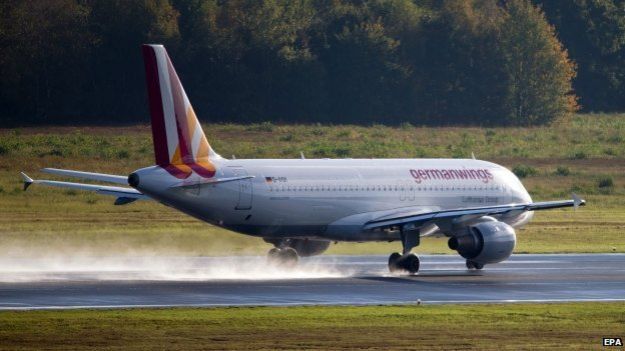
PARIS — As officials struggled Wednesday to explain why a jet with 150 people on board crashed in relatively clear skies, an investigator said evidence from a cockpit voice recorder indicated one pilot left the cockpit before the plane’s descent and was unable to get back in.
A senior military official involved in the investigation described “very smooth, very cool” conversation between the pilots during the early part of the flight from Barcelona to Düsseldorf. Then the audio indicated that one of the pilots left the cockpit and could not re-enter.
“The guy outside is knocking lightly on the door and there is no answer,” the investigator said. “And then he hits the door stronger and no answer. There is never an answer.”
He said, “You can hear he is trying to smash the door down.”
While the audio seemed to give some insight into the circumstances leading up to the Germanwings crash on Tuesday morning, it also left many questions unanswered.
“We don’t know yet the reason why one of the guys went out,” said the official, who requested anonymity because the investigation is continuing. “But what is sure is that at the very end of the flight, the other pilot is alone and does not open the door.”
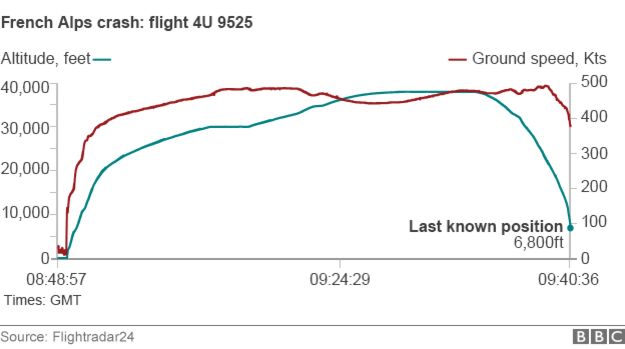
The data from the voice recorder seems only to deepen the mystery surrounding the crash and provides no indication of the condition or activity of the pilot who remained in the cockpit. The descent from 38,000 feet over about 10 minutes was alarming but still gradual enough to indicate that the twin-engine Airbus A320 had not been damaged catastrophically. At no point during the descent was there any communication from the cockpit to air traffic controllers or any other signal of an emergency.
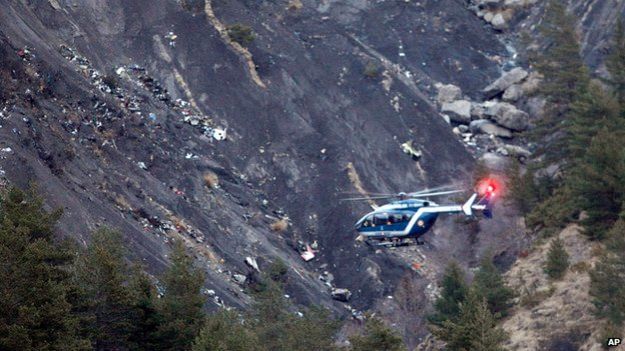
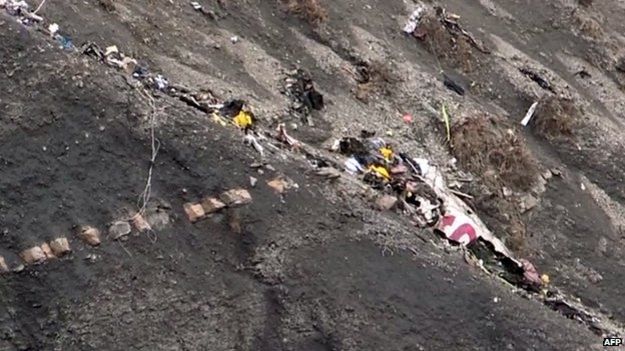
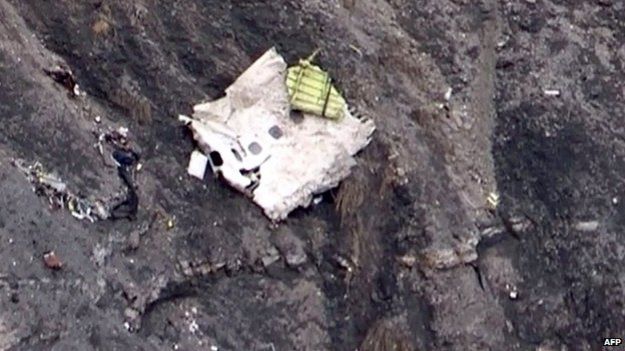
When the plane plowed into craggy mountains northeast of Nice, it was traveling with enough speed that it was all but pulverized, killing the 144 passengers and crew of six and leaving few clues.
The French aviation authorities have made public very little, officially, about the nature of the information that has been recovered from the audio recording, and it was not clear whether it was partial or complete. France’s Bureau of Investigations and Analyses confirmed only that human voices and other cockpit sounds had been detected and would be subjected to detailed analysis.
Asked about the new evidence revealed in the cockpit recordings, Martine del Bono, a bureau spokeswoman, declined to comment. “Our teams continue to work on analyzing the CVR,” she said, referring to the cockpit voice recorder. “As soon as we have accurate information we intend to hold a press conference.”
Meanwhile, prosecutors in Marseille, who have been tasked with a separate criminal inquiry into the crash, could not immediately be reached for comment. Brice Robin, the Marseille prosecutor, was due to meet Thursday morning with the families of the crash victims.
At the crash site, a senior official working on the investigation said, workers found the casing of the plane’s other black box, the flight data recorder, but the memory card containing data on the plane’s altitude, speed, location and condition was not inside, apparently having been thrown loose or destroyed by the impact.
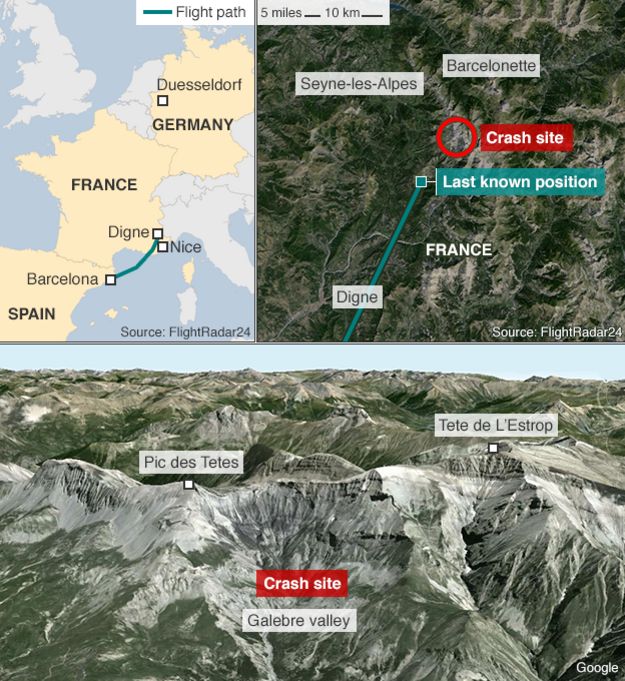
Rémi Jouty, the director of the French Bureau of Investigations and Analyses, said at a news conference that the plane took off at around 10 a.m. local time from Barcelona and that the last message sent from the pilot to air traffic controllers had been at 10:30 a.m., which indicated that the plane was proceeding on course.
But minutes later, the plane inexplicably began to descend, Mr. Jouty said. At 10:40 and 47 seconds, the plane reported its last radar position, at an altitude of 6,175 feet. “The radar could follow the plane until the point of impact,” he said.
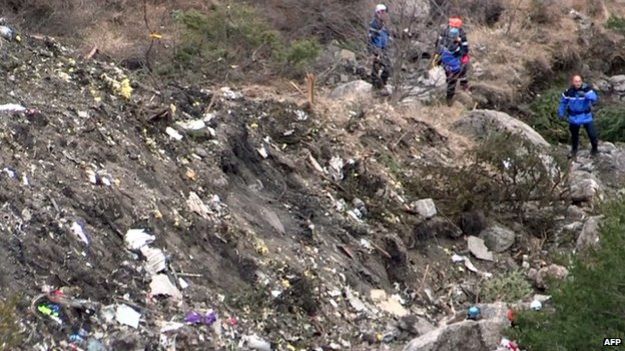
Mr. Jouty said the plane slammed into a mountainside and disintegrated, scattering debris over a wide area, and making it difficult to analyze what had happened.
It often takes months or even years to determine the causes of plane crashes, but a little more than a year after the disappearance of a Malaysian airlines jetliner that has never been found, the loss of the Germanwings flight is shaping up to be particularly perplexing to investigators.
One of the main questions outstanding is why the pilots did not communicate with air traffic controllers as the plane began its unusual descent, suggesting that either the pilots or the plane’s automated systems may have been trying to maintain control of the aircraft as it lost altitude.

Among the theories that have been put forward by air safety analysts not involved in the investigation is the possibility that a pilot could have been incapacitated by a sudden event such as a fire or a drop in cabin pressure.
A senior French official involved in the investigation, who spoke on the condition of anonymity, said that the lack of communication from the pilots during the plane’s descent was disturbing, and that the possibility that their silence was deliberate could not be ruled out.
“I don’t like it,” said the French official, who cautioned that his initial analysis was based on the very limited information currently available. “To me, it seems very weird: this very long descent at normal speed without any communications, though the weather was absolutely clear.”
“So far, we don’t have any evidence that points clearly to a technical explanation,” the official said. “So we have to consider the possibility of deliberate human responsibility.”
Mr. Jouty said it was far too early in the investigation to speculate about possible causes.
“At this moment I have no beginning of a scenario,” Mr. Jouty said. However, he said there was not yet any evidence available that would support either a theory of a depressurization or of a midair explosion.
Speaking on the French radio station RTL, Interior Minister Bernard Cazeneuve said on Wednesday morning that terrorism was not a likely “hypothesis at the moment,” but that no theories had been definitively excluded. He said the size of the area over which debris was scattered suggested that the aircraft had not exploded in the air but rather had disintegrated on impact.
Lufthansa, the parent company of Germanwings, has characterized the crash as an accident. The airline has not disclosed the identities of the pilots, except to say that the captain was a 10-year veteran with more than 6,000 hours of flying time in A320s.
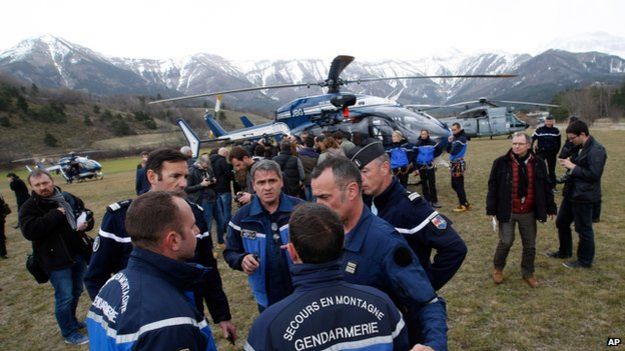
The French Bureau of Investigations and Analyses, which is leading the technical inquiry into the crash, sent seven investigators to the crash site on Tuesday. They have been joined by their counterparts from Germany, as well as by technical advisers from Airbus and CFM International, the manufacturer of the plane’s engines.
Speaking on Europe 1 radio, Jean-Paul Troadec, a former director of the French air accident investigation bureau, said one of the big challenges for investigators would be to protect the debris at the crash site from any inadvertent damage.
“We need to ensure that all the evidence is well preserved,” Mr. Troadec said, referring both to the pieces of the plane littered across the steep slopes as well as to the remains of the victims. The identification of the victims will most likely require matching DNA from the remains with samples from relatives.
The recovery effort will be a laborious task, given the state of the wreckage, the difficult terrain and the fact that the crash site is so remote that it could be reached only by helicopter.
Cabin depressurization, one of the possibilities speculated about on Wednesday, has occurred before, perhaps most notably in the crash of a Cypriot passenger plane in 2005 that killed all 121 people on board as it approached Athens. In that case, Helios Airways Flight 522, a slow loss of pressure rendered both pilots and all the passengers on the Boeing 737 jet unconscious for more than three-quarters of an hour before the aircraft ran out of fuel and slammed into a wooded gorge near the Greek capital.
Investigators eventually determined that the primary cause of that crash was a series of human errors, including deficient maintenance checks on the ground and a failure by the pilots to heed emergency warning signals.
Source: www.nytimes.com