Tag: hijab

  • EU Headscarf Ban Ruling Sparks Faith Group Backlash

    EU Headscarf Ban Ruling Sparks Faith Group Backlash

    Companies may ban staff from wearing Islamic headscarves and other visible religious symbols under certain conditions, the European Union’s top court ruled on Tuesday, setting off a storm of complaint from rights groups and religious leaders.

    In its first ruling on an issue that has become highly charged across Europe, the Court of Justice (ECJ) found a Belgian firm which had a rule that employees who dealt with customers should not wear visible religious or political symbols may not have discriminated against a Muslim receptionist it dismissed for wearing a headscarf.

    The judgment on that and a French case came on the eve of a Dutch election in which Muslim immigration is a key issue and weeks before a similarly charged presidential vote in France, where headscarves are banned in public service jobs.

    French conservative candidate Francois Fillon hailed the ECJ ruling as “an immense relief” to companies and workers that would contribute to “social peace”.

    But a group backing the fired employees said the ruling may shut many Muslim women out of the workforce. European rabbis said the Court had added to rising incidences of hate crime to send a message that “faith communities are no longer welcome”.

    The judges in Luxembourg concluded the dismissals of the two women may, depending on the view of national courts, have breached EU laws against religious discrimination.

    They determined that the case of the French engineer Asma Bougnaoui, fired by software company Micropole after a customer complaint, may well have been discriminatory.

    Reactions, however, focused on the findings that services firm G4S in Belgium was entitled to dismiss receptionist Samira Achbita in 2006 if, in pursuit of legitimate business interests, it fairly applied a broad dress code for all customer-facing staff to project an image of political and religious neutrality.

    “BACKDOOR TO PREJUDICE”

    The Open Society Justice Initiative, a group backed by the philanthropist George Soros, said the ruling “weakens the guarantee of equality” offered by EU laws: “In places where national law is weak, this ruling will exclude many Muslim women from the workplace,” policy office Maryam Hmadoun said.

    Amnesty International welcomed the ruling on the French case that “employers are not at liberty to pander to the prejudices of their clients”. But, it said, bans on religious symbols to show neutrality opened “a backdoor to precisely such prejudice”.

    The president of the Conference of European Rabbis, Chief Rabbi Pinchas Goldschmidt, complained: “This decision sends a signal to all religious groups in Europe”. National court cases across Europe have included questions on the wearing of Christian crosses, Sikh turbans and Jewish skullcaps.

    In the Belgian case, the ECJ said: “An internal rule of an undertaking which prohibits the visible wearing of any political, philosophical or religious sign does not constitute direct discrimination.”

    It was for Belgian judges to determine whether Achbita may have been a victim of indirect discrimination if the rule put people of a particular faith at a disadvantage.

    But the rule could still be justified if it was “genuinely pursued in a consistent and systematic manner” to project an “image of neutrality”.


    Source: Today

  • Firms Can Ban Wearing Of Religious Symbols: EU Court

    Firms Can Ban Wearing Of Religious Symbols: EU Court

    European companies can ban employees from wearing religious or political symbols including the Islamic headscarf, the European Union’s top court ruled on Tuesday (March 14) in a landmark case.

    The European Court of Justice (ECJ) said it does not constitute “direct discrimination” if a firm has an internal rule banning the wearing of “any political, philosophical or religious sign”.

    The Luxembourg-based court was ruling on the case of a Muslim woman fired by the security company G4S in Belgium after she insisted on wearing a headscarf.

    The ruling came on the eve of a Dutch election in which Muslim immigration has been a key issue and a bellwether for attitudes to migration and refugee policies across Europe. Terror attacks by over the past year or so have raised alarms in the continent, where the wearing of religious symbols, and especially Islamic symbols such as the headscarf has become a hot button issue.

    Mr Manfred Weber, head of the centre-right European People’s Party, the biggest in the European Parliament, welcomed the ruling.

    “Important ruling by the European Court of Justice: employers have the right to ban the Islamic veil at work. European values must apply in public life,” Mr Weber said in a tweet.

    The ECJ was ruling on a case dating to 2003 when Ms Samira Achbita, a Muslim, was employed as a receptionist by G4S security services in Belgium.

    At the time, the company had an “unwritten rule” that employees should not wear any political, religious or philosophical symbols at work, the ECJ said.

    In 2006, Ms Achbita told G4S she wanted to wear the Islamic headscarf at work but was told this would not be allowed.

    Subsequently, the company introduced a formal ban. Ms Achbita was dismissed and she went to court claiming discrimination.

    The ECJ said European Union law does bar discrimination on religious grounds, but G4S’s actions were based on treating all employees the same, meaning no one person was singled out for application of the ban.

    “The rule thus treats all employees of the undertaking in the same way, notably by requiring them, generally and without any differentiation, to dress neutrally,” the ECJ said.

    “Accordingly, such an internal rule does not introduce a difference of treatment that is directly based on religion or belief,” it said.

    However in a related case in France, the ECJ ruled that a customer could not demand that a company employee not wear the Islamic headscarf when conducting business with them on its behalf.

    Design engineer Asma Bougnaoui was employed full-time by Micropole, a private company, in 2008, having been told that wearing the headscarf might cause problems with clients.

    Following a customer complaint, Micropole asked Ms Bougnaoui not to wear the headscarf on the grounds employees should be dressed neutrally.

    She was subsequently dismissed and went to court claiming discrimination.

    The ECJ said the case turned on whether there was an internal company rule in place applicable to all, as in the G4S instance, or whether the client’s demand meant Ms Bougnaoui was treated differently.

    The ECJ concluded that Ms Bougnaoui had indeed been treated differently and so the client’s demand that she not wear a headscarf “cannot be considered a genuine and determining occupational requirement”.


    Source: Today

  • UAB Researcher Makes Own Antibiotic And Pesticide. She’s 18 And Muslim.

    UAB Researcher Makes Own Antibiotic And Pesticide. She’s 18 And Muslim.

    Rowan El-Qishawi, an 18-year-old freshman at the University of Alabama at Birmingham (UAB) who has already been acknowledged nationally for her scientific work, said she wants to help dispel several misconceptions about Islam.

    “I want people to understand that Muslim women are not oppressed,” she said. “We have access to education. We’re not in arranged marriages. Here I am, 18 years old, doing an international science project. I don’t see what’s so oppressing about that. Just because I wear this scarf doesn’t mean I’m any more oppressed than anyone else. I wear this scarf as my way to submit to God, and that’s beautiful to me.”

    While at Hoover High School, El-Qishawi attended the Intel International Science and Engineering Fair (ISEF), the world’s largest precollege science fair. At the event, held in Phoenix, Ariz., 72 countries were represented and 2,000 students presented projects.

    “These are your top-notch students,” El-Qishawi said. “A girl made a cane to assist deaf people and a hand to help blind and deaf people. I was so humbled by it because out of all of the people I got chosen.”

    El-Qishawi’s project was impressive, as well. She introduced an antibiotic that could cure Huanglongbing (HLB) disease, a citrus-greening disease that affects citrus plants all over the world. The disease has cost the citrus industry about $3 billion, and billions are being paid to some universities in California to find a cure.

    “It potentially can be used in hand sanitizers, also,” she explained. “It broke down E. coli when I was researching it, but I will have to do a bit more research before I can be sure.”

    El-Qishawi, who has done research in several areas over the past five years, said she’s not looking for a big payout.

    “I don’t do these things because I want to be recognized. I genuinely want to help,” she said. “If my research can help cure a disease, why not do it?”

    In her research for the antibiotic, El-Qishawi uses ladybug blood from an Asian species: “These are not your normal American ladybugs. These are an Asian species. They’re a lot bigger. When they feel scared or see a predator, they start to bleed from their knees. This yellow hemolymph has a distinct smell that is supposed to drive away predators, kind of like a skunk’s spray. I broke down the blood and saw that there could be potential cure for [HLB] disease. Because it has a distinct smell, it could be used as a pesticide. This would be an organic pesticide, but I’m not sure. I’ve been so busy with college that I haven’t been able to look into it.”

    El-Qishawi also is passionate about the environment. “Protect the place where you live,” she said. “God gave it to you. Give it back in a good condition.”

    Some have made insulting comments when they learned she was a Muslim and a scientist.

    “I’ve heard things like, ‘You study science, so you make bombs,’” she said. “That’s so ignorant … it’s an eye-opening experience.”

    That’s why her work is so important.

    “Besides helping people, it’s also helping people understand and have a different perception about Muslims. A lot of times, people have never met a Muslim before, and all it takes is meeting one.”

    El-Qishawi said she believes in empowering women.

    “One of the things I do with all the science and research is show people that Muslims are your scientists, your engineers,” she said. “If an 18-year-old Muslim girl can go and make her own antibiotic and pesticide on an international level, then you dare not say I’m oppressed, you dare not say I’m a terrorist.”

    El-Qishawi said she wants to teach people to not focus on her scarf but rather on what she does as a person. That can be difficult, however.

    “When I was 14 years old, I was at the library, and just as I walked in a kid walked out of the elevator and said, ‘Look, daddy. There’s one of those terrorists you were talking about.’ He said it with absolute fear. I went to my mom’s car and cried. As soon as I got to the car, I took the scarf off.”

    But El-Qishawi eventually put it back on because she knew she had to wear it.

    “I wear this scarf as a walking ambassador for Muslims,” she said. “I want you to come to me and ask me questions. I want you to learn.”

    El-Qishawi, who eventually hopes to become a doctor, said she wants demonstrate the importance of diversity.

    “You need people who are more culturally integrated into society,” she said. “It’s sad that people say if you’re not pretty you’re not good enough. You may not see all of me in my scarf, but I am beautiful, and I am good enough.”


    Source: birminghamtimes

  • Nike Is Launching A Hijab Collection That Muslim Athletes Helped To Develop

    Nike Is Launching A Hijab Collection That Muslim Athletes Helped To Develop

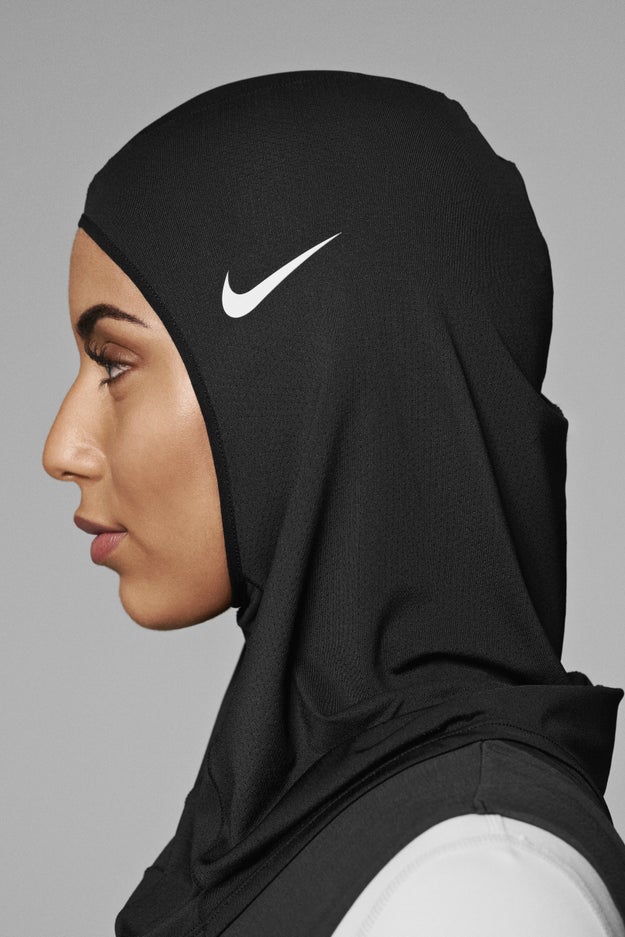
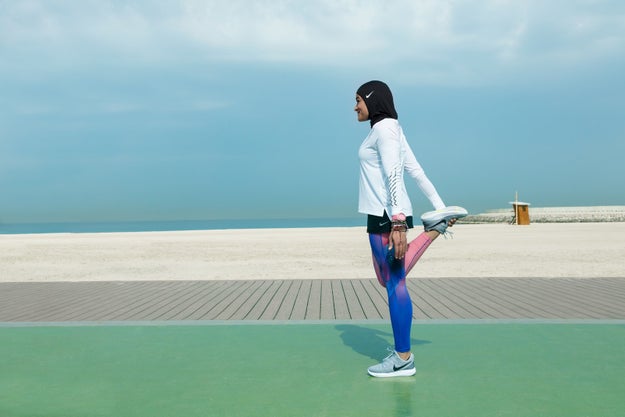
    Nike will soon sell a lightweight, polyester sports hijab called the “Nike Pro Hijab.”

    In a statement to BuzzFeed News, the company said that the Nike Pro Hijab is the result of about a year of work. Both professional and everyday hijab-wearing athletes helped to create the final product.

    Emirati figure skater and elite Nike athlete Zahra Lari.

    “The final, pull-on design is constructed from durable single-layer Nike Pro power mesh,” the company said. Nike called the mesh its “most breathable fabric.” The hijab will come in dark, neutral colors.

    "The final, pull-on design is constructed from durable single-layer Nike Pro power mesh," the company said. Nike called the mesh its "most breathable fabric." The hijab will come in dark, neutral colors.

    Nike

    On Twitter, many people reacted to the new product. “Nike finally joins the sports hijab world,” said this woman.

    Others were more skeptical of the sports hijab. This woman expressed concerns over the logo and the look.

    And someone else said that it wasn’t anything special.

    Slightly torn- Sport hijabs have been around 4 awhile & I can’t see anything special (expect the nike tick) about the design #NikeProHijab

    — Fardousa (@Fardousie)

    This person, however, was excited.

    Pumped for the Nike hijab

    — mar (@MariaAliaa)

    “It’s like all my dreams have come true,” another woman said.

    I audibly gasped when I read that @Nike was coming out with a sport hijab. It’s like all my dreams have come true.

    — Balsam (@bslam15)

    Nike said that the Pro Hijab will be available early next year.

    Nike said that the Pro Hijab will be available early next year.
    Nike
    Source: Buzzfeed
  • Someone Who Doesn’t Wear A Hijab Is Not Any Less A Muslim Than Someone Who Wears It

    Someone Who Doesn’t Wear A Hijab Is Not Any Less A Muslim Than Someone Who Wears It

    What makes a Muslim, a Muslim? Just being born into a Muslim family sure doesn’t make one a Muslim. So what is it?  Is it the five daily prayers? Is it the regular remembrance of God? Or is it the hijab for women? In my opinion, what makes a Muslim, a Muslim is his or her Iman. Iman or the faith in one God and His teachings is the foundation of Islam. It’s the faith in your Lord that differentiates you from the others. This is something that is intangible, something that can’t be seen and can only be felt in the heart. When you have Iman, the other things follow.

    Hijab is usually described by a head scarf worn by women to guard their beauty. However, the proper meaning of hijab is not just the head scarf, but also loosely fitted attire which cloaks the shape of a woman’s body. For the women in Islam, it is advised that they wear a hijab. A significant amount of people consider the hijab as a reflection of submission towards God, which is very true. Nonetheless, someone who doesn’t wear a hijab is not any less a Muslim than someone who wears it. Something as trivial as the head scarf can’t determine the level of faith and belief towards God. Hijab doesn’t indicate if she is regular in her daily prayers or not.  Hijab doesn’t determine if she is kind to her fellow Muslims or not. But, maybe someone without a hijab has the Quran memorized and is living a more pious life than someone who is wearing a hijab. Maybe, someone without hijab has better manners than someone with it. Your relationship with God is something spiritual which can’t be seen from outside. Whether you wear a hijab or not, doesn’t determine the closeness to your Lord. Just because someone wears a hijab, they can’t say that someone who doesn’t has any less Iman than they do. They might be following God’s will in other ways that a hijabi isn’t. You can’t say or interpret what a person is thinking just by looking at his or her face. The same logic applies here. You can’t possibly know the intensity to which someone is devoted towards their God just by looking at their outlook or by what they wear and how they dress up.

    I’ve heard stories from a fellow non-hijabi who went to pray at a mosque only to be questioned if she was actually a Muslim, that she sure didn’t look like one. What we don’t understand is that, if she didn’t have the spiritual connection with God, she wouldn’t have been present in the mosque for prayers in the first place. This surely represents her level of Iman.

    Every Muslim is struggling in a way or the other. Someone who doesn’t wear a hijab is someone who’s struggling with it. She might have every intention of wearing a hijab and might have even tried wearing it multiple times, but she might have a medical condition where she gets heat stroke if she keeps her head covered. She might want to start hijab but can’t because of a hundred reasons we will never understand because we are not in her shoes. The bottom line is, where a hijab is a garment worn to show respect to the teachings of our Lord, not wearing it doesn’t make one any less of a Muslim than someone who wears it. The reason behind being, there are thousands of ways you can please your God, be it helping an animal or giving charity, be it praying regular prayers or just a simple thank you conveyed to your Creator  in the middle of the day. What actually matters is how you feel when He comes to your mind, how often you keep everything else on hold and let yourself feel the blessings of God all around you. You don’t need to be wearing a hijab to feel close to God, it’s what in the heart that matters.

    In a nutshell, just wearing a hijab doesn’t determine how good a Muslim you are. Someone who doesn’t wear one might just well beat you to it. The judgment based on someone’s outlook has been going on for quite some time. It’s time we get rid of this prejudice and move on; learn to accept people for who they really are and not by how they look.


    Source: Mvslim