Tag: hijrah

  • Analysis: Islamic State Distortion Of Hijrah: Emigrating For A Lost Cause

    Analysis: Islamic State Distortion Of Hijrah: Emigrating For A Lost Cause

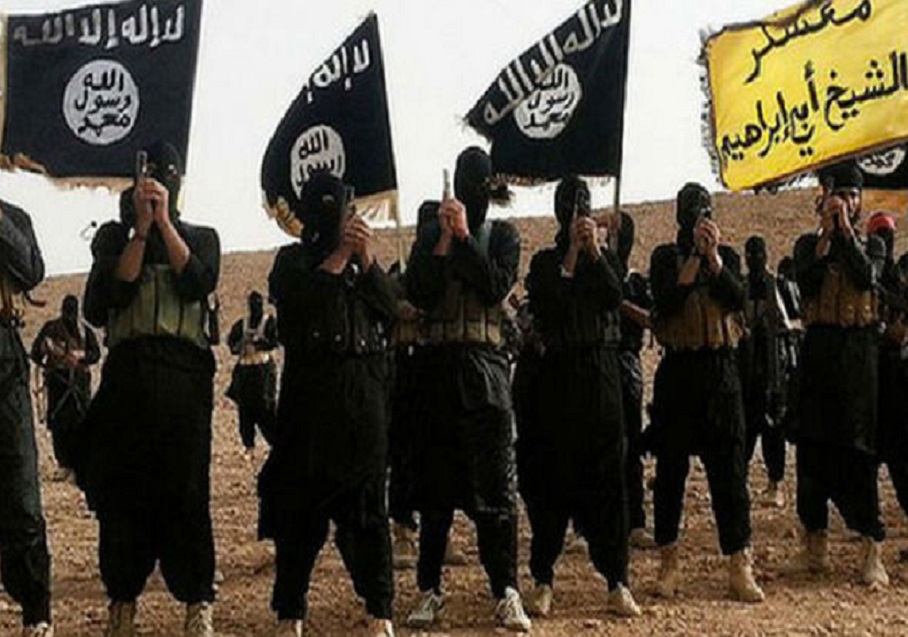
    Since 2015 there have been at least a dozen Singaporeans investigated by the Singapore authorities for harbouring intention to travel or emigrate to the self-proclaimed Islamic State (IS). This year four individuals were detained for the same reason. In September, IS issued a propaganda video featuring a Singaporean who is known to have gone to Syria to join IS. In the brief three-and-a-half minute video, Megat Shahdan Bin Abdul Samad calls on Muslims to relocate to IS-controlled territories or locations where the group’s influence is present.

    He quotes a hadith or Prophetic saying that implicitly affirms that the duty of hijrah will not cease until the Final Hour (Doomsday). While most people would ignore or reject such a call, especially coming from a terrorist group, there will be a few who will fall prey to extremists’ exploitation of hijrah and other Islamic concepts. They include the literalists and those who understand the hadith without using appropriate tools of enquiry and interpretation used in the science of hadith. Like Shahdan, they would believe that relocation to IS fulfils a religious obligation.

    The Origin of Hijrah

    IS’ promotion of hijrah calls for a deeper examination of the concept. To begin with, what was the cause of hijrah as reported in Islamic history? Why did Prophet Muhammad encourage Muslims to emigrate? How should Muslims react to calls for hijrah? And why should terrorist propaganda and interpretation draped in scripture be roundly dismissed?

    Hijrah is Arabic for emigration. In the early days of Islam, Prophet Muhammad and his followers were ill-treated and harassed by polytheist Meccan Arabs over differences in religious beliefs. They were subjected to economic and social boycott and barred from marriage and trade. When these tactics failed to stop people from converting to Islam, the pagan Quraish clan resorted to physical abuse. This triggered the first hijrah to Ethiopia which was then ruled by a Christian king named Negus.

    The Quraish intensified their violence when they learned that several Muslims secretly sought refuge in Medina. The clan also plotted the assassination of the Prophet. This marked a serious escalation of efforts to stop the practice of Islam, from mistreatment to violence, including an assassination plot against the Prophet.

    These developments led to Prophet Muhammad’s emigration to Medina. This marked the second and final hijrah in Islamic history. Viewed in its historical context, hijrah was in effect a means to preserve the basic right to practise one’s faith and to protect one’s life.

    Distortion of Hijrah by IS

    IS however exploited hijrah to build up their human capital and resources in their newly-established ‘caliphate’ which they declared in June 2014. The group’s online magazine Dabiq (later known as Rumiyah) and weekly online Arabic newsletter An-Naba’, for instance, frame hijrah as a religious obligation, an act of worship that would bring a Muslim close to God, and a manifestation of true faith.

    IS claims that Islam requires Muslims to live in an Islamic state that practises Shari’ah law over a territory governed by non-Muslims or by Muslims administering man-made laws.

    IS asserts that Muslims should leave his country (especially in the Middle East) which was created based on the colonial era Sykes-Picot “false border demarcation” and relocate to IS to support the caliphate and redraw the borders. Both Hadith and Sunnah (Prophetic tradition and practice) were distorted to back these arguments. Shahdan’s video is a clear example of such distortion.

    The Correct Understanding of Hijrah

    IS’ narrative on hijrah needs to be debunked for its so-called religious justifications.

    Contrary to IS claims, hijrah to IS is not among the best forms of worship and does not make a Muslim closer to God. Many acts of worship bring a Muslim closer to God, from regular prayers and repentance to generous donations and charitable acts. A hadith was reported to have implied that whoever comes to the mosque of Quba (in Medina) and prays in it will have a reward similar to performing an umrah (small pilgrimage).

    This suggests that location is not fundamental to get closer to God but the performance and quality of a ritual. Hijrah to IS to achieve this goal is unnecessary.

    IS falsely claims that Prophet Muhammad instructed Muslims to sever ties with family and tribe by performing hijrah. The hadith was, in fact, a directive for a newly-converted Muslim to detach himself from the religious practices of his people, not blood ties. This is to distinguish himself from the other faith groups through his observance of religious obligations.

    Maintaining good relationship with non-Muslim family members is part of Islamic teachings. This is evident in the Prophet’s behaviour towards his two pagan paternal uncles. Hence, there is nothing Islamic when a Muslim leaves his family and heads to IS – like what Shahdan did – with the hope of receiving blessings from God and die as a martyr.

    Way Forward: Migration from Literalism

    Lastly, Prophet Muhammad was reported as saying that hijrah will not cease until repentance is ceased. Repentance will not cease until the sun rises from the west (a major sign of the end of time). Although the hadith is authentic, its reading must be complemented with the understanding of its implicit objective. Hijrah in this hadith does not suggest a physical relocation but rather a change in mindset and behaviour.

    Islam promotes progressive thinking and positive change in life. A believer must think of ways to become a better person each day to benefit not only himself but those around him including animals and nature. A Muslim who learns Islam by heart and perseveres to ponder upon its teaching marks a ‘hijrah’ in his cognitive attitude towards his faith, from a literalist to a pragmatist. Hijrah is also a manifestation of a paradigm shift.

    A Muslim who constantly seeks to upgrade his knowledge so that he could be of service to others is expressing a form of hijrah towards becoming a useful and productive Muslim. Similarly, a Muslim who strives to distance himself from evil is making hijrah towards becoming a better Muslim who understands his religion holistically. These counter-narratives can be understood from other prophetic sayings such as “An emigrant is one who ditches mistakes and sins”. In another hadith the Prophet was reported as saying: “An emigrant is the one that ditches from anything that Allah has forbidden.”

    The fall of IS’ de facto capital Raqqa is not likely to lead to a decline in the propagation of literalist, narrow and extremist interpretations of Islamic scriptures. IS will decentralise and exploit social media platforms to the fullest to maintain its hold over its followers and to radicalise even more vulnerable segments of society.

    Given this scenario, it is imperative that action be taken not only to debunk extremist teachings through various means but also to disseminate widely moderate and progressive values which will act as a ‘firewall’ against false, deviant and divisive ideas.

    *Muhammad Saiful Alam Shah is an Associate Research Fellow with the International Centre for Political Violence & Terrorism Research (ICPVTR), a constituent unit of the S. Rajaratnam School of International Studies (RSIS), Nanyang Technological University, Singapore. He is also a religious counsellor with the Religious Rehabilitation Group (RRG).


    Source: Eurasiareview
  • Niqab Ladies Are Better Than Hijab Ladies, And Both Are Better Than Non-Niqab/Hijab Ladies?

    Niqab Ladies Are Better Than Hijab Ladies, And Both Are Better Than Non-Niqab/Hijab Ladies?

    Bila kita berhijab, kita da pakai uniform Islam. We are the ambassadors of Islam especially to the group of people we are hanging out every day. Like it or not, people will judge us based on our character and dressing. Aku pernah “tervulgar” at work one day and a colleague jaw dropped and immediately tanya aku, “Muslims can swear ar? My friends swear la.. but u in that scarf and swear.. like not appropriate sia..”

    Allah..

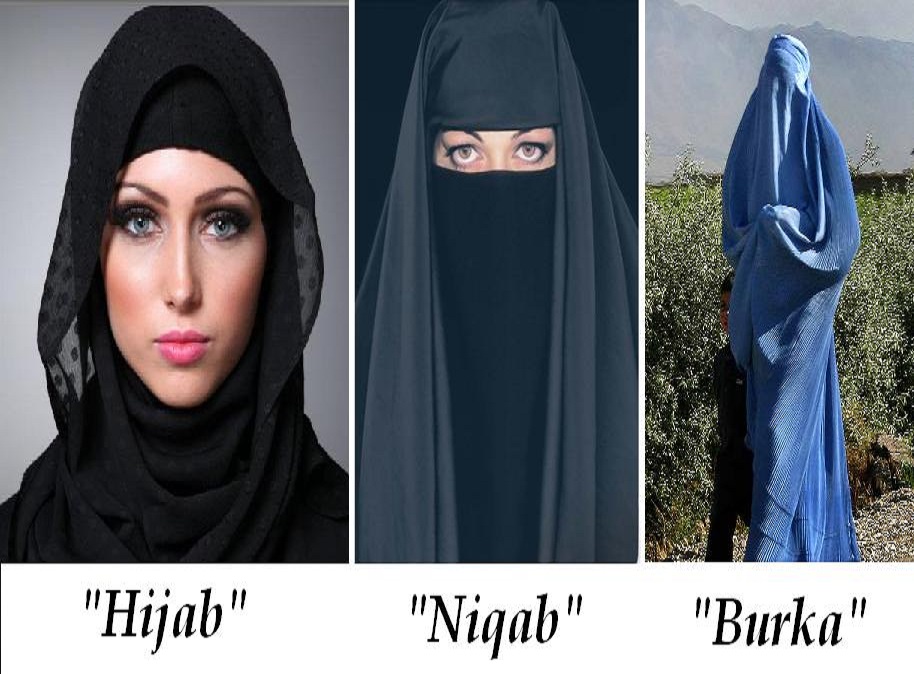
    Like it or not, orang akan have the impression that ladies yang berhijab have better character than ladies yang belum berhijab and ladies yang berniqab have better character than ladies yang berhijab. Aku pernah dapat a PM where a lady not in hijab asking me about a particular person in niqab, “Sis kenapa apa dia cakap semua macam lucah. dia kan pakai niqab. Tak paiseh ke?”

    Islam is simple. Kalau ibadah kita on the right track, in shaa Allah, with increased imaan and taqwa, hayaa’ akan menyusul dalam jiwa kita. Kita yang beragama Islam, tau that, tak semestinya someone yang berniqab, they have better akhlak and adab dari a lady yang tak berhijab. Everyone ada their own personal struggle.
    Ada da settle hijrah luaran, but dalaman masih work in progress.  Ada yang da adjust dalaman, luaran masih no progress. Recently, aku had a discussion with a friend about niqab and how some niqabis jadian ruined the image of those yang berniqab lillahi ta’ala.

    Mulut tak jaga.
    Adab tak jaga.
    Suka sindir2 orang.
    Suka cakap pasal orang.
    Suka rasa that pandangan dia better dari everyone else.
    Suka cakap berbaur lucah.
    Jokes double meaning.
    Suka mengata orang
    Tak boleh ditegur..
    Tegur je naik hantu..
    Mana akhlak kita?
    Mana hijab sebenar kita?

    Tak cukup tutup satu badan but kita tak jaga akhlak in public.

    Of course, every single one of us is a work in progress. Wallahi I dont deny that. And as muslims, kita kena berlapang dada bila anyone tegur kita demi kebaikan. We should never look down upon anyone, no matter what stage we are in our hijrah journey, continue to keep on reminding each other that we are in this together. Niqabis should mix around with rugged ladies and break that mentality barrier of “Im better than you”.

    Rugged ladies should be open minded that walaupon kita mungkin kena attack dengan one, two or 3 niqabis, there are still ladies who don the niqab for the sake of Allah SWT. They are nice and humble as the rest of the struggling muslimah. Kadang2 kita rasa diri kita da perfect dalam segala aspect, pakaian.. ibadah, but imagine hari mati kita, first day masuk kubur and kita dapat tau that satu pon amalan kita, Allah tak terima. Every single deed was rejected. Takut kan..?

    Why? Sebab mulut kata lillahi ta’ala. Hati penuh perasaan sombong. Nauzubillah min dzalik. May Allah SWT protect kita semua dari perasaan sombong.


    Source: Khainis Tahir

  • Ominous signs of an Asian hub for Islamic State in the Philippines

    Ominous signs of an Asian hub for Islamic State in the Philippines

    Dozens of foreign jihadis have fought side-by-side with Islamic State sympathizers against security forces in the southern Philippines over the past week, evidence that the restive region is fast becoming an Asian hub for the ultra-radical group.

    A Philippines intelligence source said that of the 400-500 marauding fighters who overran Marawi City on the island of Mindanao last Tuesday, as many as 40 had recently come from overseas, including from countries in the Middle East.

    The source said they included Indonesians, Malaysians, at least one Pakistani, a Saudi, a Chechen, a Yemeni, an Indian, a Moroccan and one man with a Turkish passport.

    “IS is shrinking in Iraq and Syria, and decentralizing in parts of Asia and the Middle East,” said Rohan Gunaratna, a security expert at Singapore’s S. Rajaratnam School of International Studies.

    “One of the areas where it is expanding is Southeast Asia and the Philippines is the center of gravity.”

    Mindanao has been roiled for decades by bandits, local insurgencies and separatist movements. But officials have long warned that the poverty, lawlessness and porous borders of Mindanao’s predominantly Muslim areas mean it could become a base for radicals from Southeast Asia and beyond, especially as Islamic State fighters are driven out of Iraq and Syria.

    Although Islamic State and groups affiliated to the movement have claimed several attacks across Southeast Asia in the last two years, the battle in Marawi City was the first long drawn-out confrontation with security forces.

    On Tuesday, a week after the fighting began, the government said it was close to retaking the city. As helicopters circled, troops cleared rebel positions amid explosions and automatic gunfire, moving house by house and street by street.[nL3N1IW1FS]

    Last year, Southeast Asian militants fighting for Islamic State in Syria released a video urging their countrymen to join the cause in the southern Philippines or launch attacks at home rather than attempting to travel to Syria.

    Jakarta-based terrorism expert Sidney Jones passed to Reuters some recent messages in a chatroom of the Telegram app used by Islamic State supporters.

    In one, a user reported that he was in the heart of Marawi City where he could see the army “run like pigs” and “their filthy blood mix with the dead bodies of their comrades”.

    He asked others in the group to pass information on to the Amaq News Agency, a mouthpiece for Islamic State.

    Another user replied, using an Arabic word meaning pilgrimage: “Hijrah to the Philippines. Door is opening.”

    The clash in Marawi City began with an army raid to capture Isnilon Hapilon, a leader of Abu Sayyaf, a group notorious for piracy and for kidnapping and beheading Westerners.

    Abu Sayyaf and a relatively new group called Maute, both of which have pledged allegiance to Islamic State, have fought alongside each other in Marawi City, torching a hospital and a cathedral, and kidnapping a Catholic priest.

    The urban battle prompted Philippines President Rodrigo Duterte to impose martial law across the whole island of Mindanao, an area roughly the size of South Korea with a population of around 21 million.

    FIGHTERS FROM THE MIDDLE EAST

    The head of the Malaysian police force’s counter-terrorism division, Ayob Khan Mydin Pitchay, named four Malaysians who are known to have traveled to Mindanao to join militant groups.

    Among them were Mahmud Ahmad, a Malaysian university lecturer who is poised to take over the leadership of Islamic State in the southern Philippines if Hapilon is killed, he said.

    Security expert Gunaratna said that Ahmad has played a key role in establishing Islamic State’s platform in the region.

    According to his school’s research, eight of 33 militants killed in the first four days of fighting in Marawi City were foreigners.

    “This indicates that foreign terrorist fighters form an unusually high component of the IS fighters and emerging IS demography in Southeast Asia,” Gunaratna said.

    According to an intelligence brief seen by Reuters, authorities in Jakarta believe 38 Indonesians traveled to the southern Philippines to join Islamic State-affiliated groups and about 22 of them joined the fighting in Marawi City.

    However, an Indonesian law-enforcement source, speaking on condition of anonymity, said the actual number of Indonesians involved in the battle could be more than 40.

    Indonesia officials believe some militants might have slipped into Marawi City under the cover of an annual gathering of the Tablighi Jamaat just days before the fighting erupted. The Tablighi Jamaat is a Sunni missionary movement that is non-political and encourages Muslims to become more pure.

    An Indonesian anti-terrorism squad source told Reuters that authorities have beefed up surveillance at the northern end of the Kalimantan and Sulawesi regions to stop would-be fighters traveling by sea to the southern Philippines and to prevent an influx of others fleeing the military offensive in Marawi City.

    “The distance between Marawi and Indonesian territory is just five hours,” the source said. “It should not get to the point where they are entering our territory and carrying out such (militant) activities.”


    Source: http://www.todayonline.com

  • Jemaah Umrah Yang Terkandas Masih Menanti Penerbangan Ke Tanah Suci

    Jemaah Umrah Yang Terkandas Masih Menanti Penerbangan Ke Tanah Suci

    NILAI: Seramai 200 jemaah umrah masih terus menanti peluang menjejakkan kaki ke Tanah Suci selepas kegagalan syarikat penerbangan sewa khas mendapatkan permit kebenaran mendarat pada Isnin (12 Dis).

    Seorang jemaah, A. Husaini Rahman, 41 tahun, yang ditempatkan di sebuah hotel di Nilai bersama jemaah lain berkata, sehingga kini mereka masih lagi tidak mendapat sebarang maklumat mengenai status penerbangan mereka.

    “Sehingga kini, kami masih belum menerima apa-apa berita, saya dan jemaah lain hanya berhubung dengan pihak Eagleexpress Al-Fajr melalui panggilan telefon dan aplikasi WhatsApp sahaja yang mana hanya menyatakan masih belum menerima sebarang arahan kelulusan untuk melakukan penerbangan,” katanya kepada Bernama semalam (14 Dis).

    “Saya dan jemaah lain bingung dan sebagai orang Islam kami beramai-ramai berdoa agar diberi petunjuk dan berharap mendapat perkhabaran baik dalam masa terdekat,” katanya.

    Media pada Isnin melaporkan kira-kira 200 jemaah umrah yang dijadual berlepas bagi mengerjakan umrah pada hari berkenaan terkandas selepas penerbangan mereka ditangguhkan berikutan permit kebenaran mendarat masih belum diperoleh syarikat penerbangan sewa khas itu untuk membawa rombongan berkenaan.

    Bagaimanapun, usaha untuk mendapatkan penjelasan lanjut daripada pihak Eaglexpress gagal.

    Source: http://berita.mediacorp.sg

  • Jemaah Berwukuf Di Arafah

    Jemaah Berwukuf Di Arafah

    Jemaah dari seluruh dunia seramai 1.37 juta – bersama 600,000 jemaah Arab Saudi – berwukuf di Arafah hari ini, 9 Zulhijah, bagi menunaikan rukun haji.

    Pemandangan lautan manusia yang berhimpit di Padang Arafah dengan berpakaian ihram serba putih begitu syahdu.

    Wukuf adalah rukun haji yang yang difardukan ke atas jemaah, sejajar dengan sabda Rasulullah saw bahawa “Haji itu Arafah”.

    Lantaran itu, semua jemaah tidak kira lelaki dan wanita, tua dan muda, yang sihat dan sakit, perlu berwukuf pada 9 Zulhijah di Padang Arafah yang terletak 21.6 kilometer dari Masjidil Haram.

    Mereka termasuk 56 jemaah yang masih dirawat di beberapa hospital kerana cedera dalam kejadian kren runtuh dekat kawasan sai di Masjidil Haram pada 11 September.

    Mereka dibawa dengan kenderaan khas ke Hospital Jabal Al-Rahmah dan Hospital Besar Arafat untuk berwukuf.

    Dalam kalangan dua juta jemaah haji yang berwukuf itu termasuk 680 jemaah dari Singapura.

    Menurut pegawai bertugas, lebih 40,000 bas dan pelbagai kenderaan lain digunakan untuk mengangkut jemaah antara Makkah, Arafah dengan Mina bagi perhimpunan antarabangsa setiap tahun itu.

    Dalam perjalanan, jemaah melaungkan “Labbaiikallahhumma labbaik…” hingga akhir yang antara lain bermaksud “Kami datang menyahut seruan-Mu, ya Allah”.

    Semasa di Arafah, jemaah ditempatkan dalam khemah.

    Mereka mendengar khutbah Arafah di kawasan masing-masing, mendirikan solat jamak takdim zuhur dan asar serta berzikir.

    Selepas asar, jemaah biasanya keluar dari khemah dan memohon keampunan dan memanjatkan pelbagai doa.

    Keadaan lebih sesak dijangka di Jabal Rahmah, tempat Rasulullah dilaporkan menyampaikan khutbah terakhir beberapa bulan sebelum Baginda wafat.

    Selepas maghrib, jemaah meninggalkan Arafah, bermalam di Muzdalifah dan kemudian ke Mina, yang terletak kira-kira 15 kilometer dari Arafah, bagi melontar jamrah aqabah pada 10 Zulhijah dan menyembelih korban.

    Pada hari yang sama (10 Zulhijah), umat Islam di serata dunia menyambut Hari Raya Aidiladha, yang dikenali juga sebagai Hari Raya Korban.

    Jemaah haji pula terus mabit (berkumpul) di Mina beberapa hari bagi meneruskan ibadah melontar jamrah.

    Mereka juga melakukan tawaf dan sai haji serta bertahalul (bergunting atau cukur rambut) bagi menyempurnakan ibadah haji.

    Selesai pelaksanaan ibadah haji, jemaah beredar.

    Sebahagian mula pulang ke tanah air, sebahagian pula terus beramal ibadah di Makkah manakala sebahagian lagi pergi ke Madinah supaya dapat beribadah di Masjid Nabawi dan menziarahi makam Nabi.


    Source: http://beritaharian.sg