Tag: history

  • We, Muslims Are Proud Singaporeans!

    We, Muslims Are Proud Singaporeans!

    “We, Muslims are proud Singaporeans”, were the flinty words a Singapore national servicemen reportedly told The Diplomat magazine in 2014.

    He complained that Muslims serving in the Singapore military [were] routinely kept away from critical roles in air and naval units.

    His comments to The Diplomat magazine was prefaced by what had happened in Singapore in February 1915. Inexplicably the history books in the city-state have excluded the explosively, seismic event from its curriculum even as it had paralleled the Maria Hertogh riots of 1952.

    Still if there is something largely forgotten in Singapore, is the Sepoy Mutiny of 1915 when bands of Indian soldiers, namely Muslims, roamed the streets in the weeks of February 1915 hunting down and killing Europeans. The disgruntled troops were outraged when they learned – though falsely – that they would be sent to fight their co-religionists in Turkey during World War I. After breaking out of their barrack lines in what is today’s Dempsey Road, the mutineers began an orgy of rampage and killings. They even had the help of some Germans interred in Singapore.

    The outbreak occurred during Chinese New Year that year. But thanks to some Japanese, French and Russian reinforcements which the British summoned, the mutiny was quickly suppressed.

    All the mutineers were then court-martialled and tried and found guilty of the probable crime of treason.

    They were all executed in broad daylight at where now stands the Outram Park MRT to the perverted delight of onlookers who cheered when British marksmen began taking aim to shoot and kill the men standing blindfolded before them.

    It was something that British would never dare want to do in their own home turf.

    As how The Diplomat pointed, for some South Asian historians, the Singapore Mutiny is a sequel to the 1857 Sepoy Mutiny and an important milestone in the struggle for independence. The 5th Light infantry would be disbanded shortly after World War I after serving with the British Army in East Africa. Yet, Singapore would again be the site of another important rebellion involving colonial Indian troops. In 1942, the fall of Singapore, placed 40,000 Indian troops of whom nearly 30,000 would join the anti-British First Indian National Army (INA) under nationalist leader Mohan Singh. That army collapsed but, a second INA under Subas Chandra Bose joined Japanese forces during the Burmese campaign. During World War II, similar but smaller units of Indian soldiers were raised by both Germany and Italy from among Indian POWS. (http://thediplomat.com/2015/02/singapore-a-mutiny-like-no-other)

    Next week marks the 102nd anniversary of that uprising and what has been sobering is that has never received any mention in Singapore’s history books.


    Source: www.theindependent.sg
  • What’s Missing In The Teaching Of Islam

    What’s Missing In The Teaching Of Islam

    There has been much misinformation about Islam. Reports in Western media tend to perpetuate stereotypes that Islam is a violent religion and Muslim women are oppressed. Popular films like “American Sniper” reduce places like Iraq to dusty war zones, devoid of any culture or history. Fears and anxiety manifest themselves in Islamophobic actions such as burning mosques or even attacking people physically.

    At the heart of such fear is ignorance. A December 2015 poll found that a majority of Americans (52 percent) do not understand Islam. In this same poll, 36 percent also said that they wanted to know more about the religion. Interestingly, those under 30 years were 46 percent more likely to have a favorable view of Islam.

    These statistics highlight an opportunity for educators. As a scholar of Islamic art and architecture, I am aware that for the past 20 years, educators have been trying to improve the teaching of Islam – both in high school and college history courses.

    The problem, however, is that the teaching of Islam has been limited to its religious practice. Its impact on the arts and culture, particularly in the United States, is seldom discussed.

    What teaching of Islam misses

    In high school history books, there is little mention of the intertwined histories of Europe, Asia and Africa in the middle ages and the Renaissance. There is even less mention of the flowering of art, literature and architecture during this time.

    In a world history textbook for New York public high schools, for example, the “Muslim World,” appears in the 10th chapter. In condensing a thousand years of history – from the seventh to the 17th century – it focuses only on “Arab armies” and the rise of early modern Muslim empires.

    Palatine Chapel borrowed from the art of the Fatimids.
    Al-dabra, CC BY-NC-ND

    Such narrow focus misses out on the cultural exchanges during this period. For example, in medieval Spain, the Troubadour poetsborrowed their lyrical beauty from Arabic. Arabic was the courtly language of southern Spain until the 15th century. Similarly, the 12th-century Palatine Chapel in Sicily was painted and gilded in the imperial style of the Fatimids, the rulers of Egypt between the 10th and 12th centuries.

    Such exchanges were common, thanks to the mobility of people as well as ideas.

    The point is that the story of Islam cannot be told without a deeper understanding of its cultural history: Even for early Muslim rulers, it was the Byzantine empire, the Roman empire and the Sassanian empire (the pre-Islamic Persian empire) that provided models. Such overlaps continued over the centuries, resulting in heterodox and cosmopolitan societies.

    The term “Middle East” – coined in the 19th century – fails to describe the complex social and cultural mosaic or religions that have existed in the region most closely associated with Islam – and continue to do so today.

    How the arts can explain important connections

    So, what should educators do to improve this literacy?

    From my perspective, a fuller picture could be painted if identities were not to be solely defined through religion. That is, educators could focus on the cross-cultural exchanges that occurred across boundaries through poets and artists, musicians and architects. Both in high school and university, the arts – visual, musical and literary – could illustrate the important connections between Islam and other world histories.

    For example, a class on the Renaissance could explain how the 15th-century Italian painter Gentile Bellini gained famed at the court of Mehmet II, the conqueror of Istanbul. Mehmet II commissioned Bellini to design an imperial portrait that was sent to rulers throughout Europe. His art presents a wonderful example of the artistic exchanges that took place between early modern cities such as Delhi, Istanbul, Venice and Amsterdam.

    It might also help students to know that the Dutch painter Rembrandt collected Mughal miniature paintings. Silks from the Safavid empire (the Iranian dynasty from the 16th to 18th century) were so popular that Polish kings had their coat of arms woven in Isfahan.

    This exchange of art continued into the Age of Enlightenment, a time when ideas around politics, philosophy, science and communications were rapidly being reoriented in Europe. A class on the Enlightenment may highlight the fact that writers like Montesquieuturned to the Middle East to structure a critique of their own religious institutions.

    Goethe found inspiration in Persian poetry.
    kaythaney, CC BY-NC

    A poetry class could similarly show connections between the German author Wolfgang von Goethe’s writings and Islam, as exemplified in his “West-Eastern Diwaan,” a collection of poems. This epitome of world literature was modeled after classical Persian poetry in its style, and inspired by Sufism, the mystical tradition in Islam.

    Most students are open to seeing these connections, even if it might require overcoming their own preconceptions about Islam. For example, when I teach my class on medieval architecture, students are surprised to learn that the two oldest continuously run universities in the world are in North Africa (in Fez – a city in Morocco – and Cairo).

    Indeed, it is not easy to disentangle contemporary politics from historical fact, to teach more fully the culture and diversity of a religion that is almost 2,000 years old.

    Perhaps educators could learn from a recent exhibition at the Metropolitan Museum of Art in New York titled “Jerusalem 1000-1400: Every People Under Heaven.” The show illustrates how Abrahamic religions – that is, Christianity, Judaism and Islam – borrowed freely from each other in the realm of art, music and literature. Jerusalem was home to diverse populations and the arts played an important role within its religious and political life.

    Muslims in America

    It’s not in the past alone. We see these connections continue today – here in America, where Islam is an intrinsic part of the culture and has been for centuries.

    From the Mississippi delta to the Chicago skyline, Muslims have made contributions, which might not be so obvious: West African slaves in the South were central to the development of the blues. Its complex vocalization and rhythms incorporated the rituals of Islamic devotion many of them had to leave behind.

    The same is true of architecture. A quintessential example of modern American architecture is the Sears Tower in Chicago, which was designed by the Bangladeshi-American structural engineer Fazlur Rahman Khan.

    Muslim contributions to art and architecture don’t just reflect the diversity of America, but the diversity of Islam in this country. Muslims in America comprise a rich tapestry of ethnicities, languages and cultures. This knowledge is particularly meaningful for young Muslim Americans, who struggle to claim their place in a country in which they are sometimes made to feel like outsiders.

    Educators, especially within the arts and humanities, have an important role to play in this religious literacy, that helps students understand the unity in the diversity. After all, as the most popular poet in America, the 13th-century Muslim mystic Rumi wrote:

    All religions, all this singing, one song.
    The differences are just illusion and vanity.


    Source: huffingtonpost

  • Chee Soon Juan: Singaporeans – A People Cut Adrift

    Chee Soon Juan: Singaporeans – A People Cut Adrift

    I STOOD ON the balcony of the school block and surveyed the campus of the Anglo-Chinese School at Barker Road. I had not been back there since I graduated some four decades ago (I was accompanying Shaw Hur to buy his textbooks during the year-end break as he prepared for secondary school).

    I searched for a familiar landmark – any familiar landmark – of the place I had spent ten years of my school life. I couldn’t. Every inch of the grounds had been razed and, in its place, new buildings erected.

    Gone were the open spaces and lawns (more like sandy patches from our constant trampling) that afforded students the space to play before and in between classes. And play we did: football, marbles, spider-catching, chatekkuti-kuti, hantam bola… We invented our own games and laid down our own rules. We found our own fun – lots of it. And when you sat quietly in the afternoons, you could hear the crickets chirp.

    My mind returned to the present and it dawned on me how much the multi-storey buildings, squished up against one another, resembled the HDB jungle. The school field, where many a scrape and bruise was inflicted, was missing, replaced by a carpark that shouldered a swimming pool above. A boarding school for foreign students was even jammed into the premises. Every square foot of real estate was manicured, exquisitely engineered for maximum capacity.

    What does all this do for (or to) students? Sure, the AV equipment was state of the art, the auditorium outfitted with cinema-like plushness, and the driveways pristinely landscaped. But how does the environment facilitate play? How do students find their own leisure? Where do they go to do that? Yes they are studying, but are they learning?

    If all this sounds depressingly familiar, that’s because the campus reminds us of the country itself. The island is blanketed with residential blocks built ever closer and stacked up ever higher. It teems with inhabitants, the number of which this city has never seen.

    But fast as it was, construction on the island was always one step behind a burgeoning population whose explosive growth, ignited by lax immigration laws, meant that the infrastructure would be overtaxed.

    With the mass influx of foreigners came the escalation of the cost of living. At the same time, wages for the locals were put under downward pressure. Retrenchments and unemployment have risen. Leisure has become a scarcity and where there was once spacious greenery, there is now only bodies and concrete. Stress and work-related psychological disorders, as one might expect, run high. For the average Singaporean, the quality of life has deteriorated.

    That wasn’t all. The school’s wholesale makeover also meant that there was little I could relate to my son. There was nothing to share with him about how I grew up in a place in which he was now going to grow up. The past-present dislocation was as rude as it was complete.

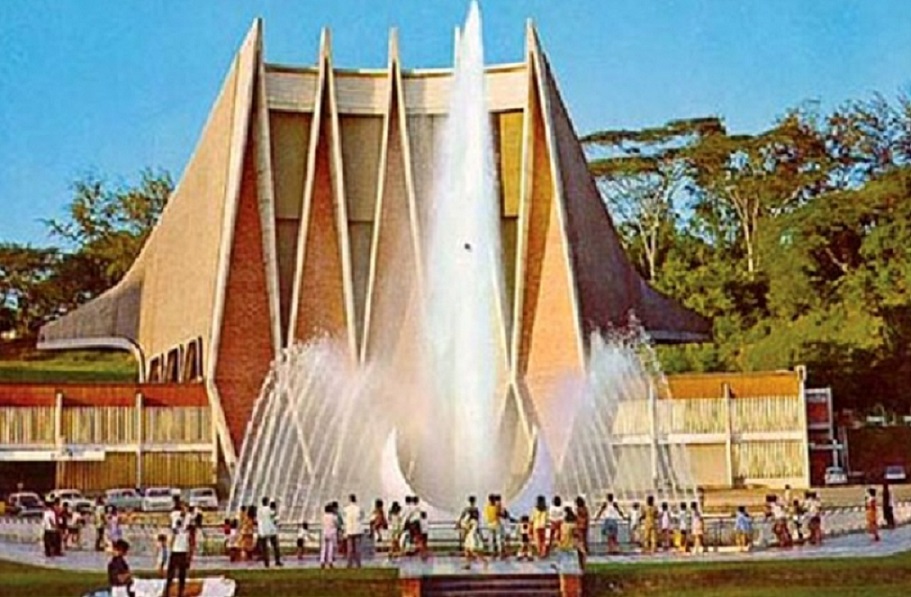
    Again, the situation is evocative of present-day Singapore. Anything and everything that served to remind us of days gone by – the National Theatre (photo above), Bugis Street, Satay Club, the National Library, Kallang Park – have been demolished and replaced by shopping centres, expressways and golf courses.

    When the break between past and present is so abrupt and comprehensive, we become unmoored from our own history. What, then, binds us to our roots? Need it be said that an undeveloped sense of belonging erodes our national identity?

    But can this country, one may be tempted to ask, afford to indulge in idle reminiscence? Why hanker for a past that would have impeded economic progress?

    These are wrong questions to ask. Progress and the retention of our collective past don’t have to be mutually exclusive; national development can proceed even as we preserve our history. What is needed to achieve a seemly balance are enlightened and dedicated planners. Japan and Europe, to cite but two examples, have done admirably in pushing the boundaries of modernisation while retaining their proud traditions and heritage.

    If we insist on hanging a price-tag on everything, as this country’s officialdom is wont to do, then what value do we put on places that tell the story of where we came from or where we’ve been? What amount of money do we place on Singaporeans emigrating because they don’t know what being Singaporean is anymore? What price do we figure for citizens living disengaged lives, tethered together only by that national creed that ‘No one owes us a living’ or its variant ‘What’s in it for me’?

    Even if we accept that nostalgic sentimentality has no place in the kind of hard-nosed pragmatic thinking needed for economc success, it is entirely appropriate to question what all the upheaval and change has brought us. A more genteel and less stressful lifestyle? A sustainable economic structure that ensures financial security for our retirees? A future that promises hope and opportunity for our youth? A system that can still deliver the Singapore Dream for our workers?

    When we cast our eyes ahead and see only ominous clouds, what conjures even more disquiet is to look behind and see that we’ve been cut adrift.


    Source: www.cheesoonjuan.com

  • Team Singapore Synchronised Swimmers Makes History With SEA Games Gold

    Team Singapore Synchronised Swimmers Makes History With SEA Games Gold

    The Republic’s national synchronised swimming team created history today (June 3) when their technical and free routine won Singapore its first-ever SEA Games gold medal in the sport.

    The Singapore team finished with a total of 150.8455 points — 76.5000 for the free routine and 74.3445 for the technical routine. The Malaysians, who won all the gold medals the previous two times the sport was included in the Games (2001 and 2011), finished second with 146.5204. Indonesia finished third with 138.1796. The gold medal is Singapore’s first after winning three silvers and one bronze during the sport’s 2001 and 2011 editions.

    Captain Stephanie Chen was visibly elated after leading her team to victory, and expressed her appreciation for the fan support.

    “I can’t say this (medal) was expected,” she said. “But we managed to hit our target and bring home some gold. I think Singaporeans can expect more gold from synchro because this sport is fairly new in Singapore and we were the few pioneer batches and we are already garnering the next generation for Singapore.”

    On hand to congratulate the team’s achievement was Culture, Community and Youth Minister Lawrence Wong, who commended the girls and other Singaporean athletes for giving the host nation a strong start at the Games.

    “We are proud of the girls. I would say that I am also proud of all the Team Singapore athletes so far who have had a strong start to the Games campaign, and the official opening hasn’t even started,” said Mr Wong.

    “I would also say that I am very impressed with the turnout of the fans because at all the competition venues that I have been to (table tennis, football, netball), I see the fans cheering for Team Singapore athletes. That’s what the home ground advantage is all about and I hope that we see this continuing.”

    National coach Maryna Tsimashenka felt the team had a good performance, though she has identified areas that need improvement.

    “There was a mistake during the performance but the start was very, very good. Maybe the sync was not good. Tomorrow we will try again,” she said.

    Two more finals for the synchronised swimming — one for the duet technical and free routine and another for the team free combination — will take place today.

    Malaysia is currently in the lead with 75.3436 points with Singapore closely behind at 73.9705 for the duet technical and free routine category.


    Source: www.todayonline.com

  • Wakaf Philantropher: Syed Mohamed Bin Ahmad Alsagoff

    Wakaf Philantropher: Syed Mohamed Bin Ahmad Alsagoff

    Salaam Friends,

    Wakaf (Islamic endowments) in Singapore are typically properties bequeathed for a charitable purpose by a philanthropist. Our pioneering wakifs such as Syed Sharif Omar Ali Aljunied, Syed Mohamed bin Ahmad Alsagoff and many others left behind significant assets that are still benefiting our community today.

    We will be sharing with you “info bites” of some of these great philanthropists in the upcoming days. We hope you get to learn more about our forefathers and their contributions to our country.

    ============================================
    Philanthropist #1: Syed Mohamed bin Ahmad Alsagoff
    ============================================

    Born of royal parentage and a respectable Arab clan, Syed Mohamed bin Ahmad Alsagoff engaged in the export of Straits produce and Malayan tin to Arabia and Europe. From his vast assets, Syed Mohamed bequeathed a portion of his estate to Wakaf SMA Alsagoff.

    Together with other pioneers, he also set up the Muslimin Trust Fund Association (MTFA) in 1904 to look after the welfare of poor and underprivileged Muslims. In his last will just before his death, he had stated that a school be built to teach Islamic knowledge, Arabic language as well as English for the Muslim community. The school, Madrasah Alsagoff Al-Arabiah was later opened in 1912.


    Source: MUIS