Tag: Javanese

  • Doubts About Presidential Hopefuls Not Being Malay Enough Are Off Track

    Doubts About Presidential Hopefuls Not Being Malay Enough Are Off Track

    Singapore’s Malay community has long held an expansive view of race, a stand that reflects its confidence.

    The coming presidential election is the first to be reserved for candidates from the Malay community, following changes to the Constitution to ensure the highest office of the land reflects Singapore’s multiracial society.

    Yet there has been some contention on social media over the “Malayness” of would-be candidates, with some asking whether any of the aspirants who have stepped up or are mulling over a bid is “truly Malay”.

    It is as if the very nature of this year’s contest has misdirected energies towards securing the “most authentic” candidate instead of a Malay candidate who would make the best head of state.

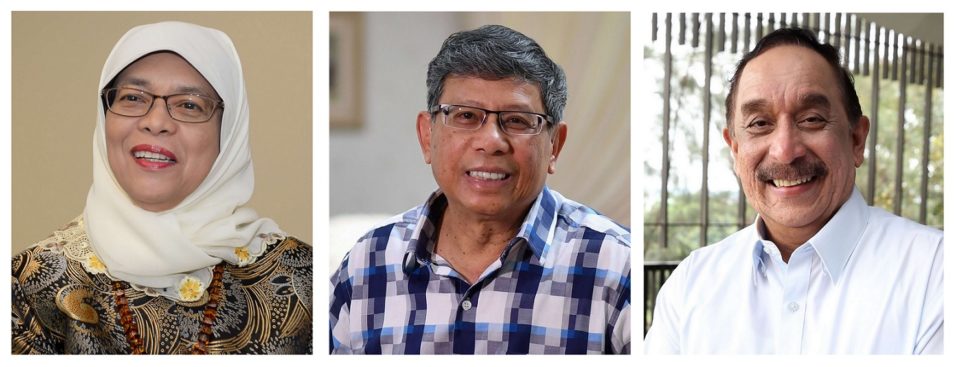
    Ironically, all three hopefuls – businessmen Salleh Marican and Farid Khan, and Speaker of Parliament Halimah Yacob – have been acknowledged by the community, peers and the media as prominent Malay individuals.

    They speak Malay, follow Malay customs and are, to some extent, role models for the community in business and public service. Why, then, has the question of whether they are “pure Malays” or “Malay enough” cropped up when it comes to the presidential election?

    Media attention on them may have played a part. Businessman Mohamed Salleh Marican, whose father is Indian, has been criticised for not being fluent in Malay, after his fumbling during a Facebook Live interview conducted outside the Elections Department where he had gone to collect the forms for the elected presidency contest.

    Businessman Mohamed Salleh Marican has been criticised for not being fluent in Malay, after his fumbling during a Facebook Live interview. ST FILE PHOTO

    Marine company chief Farid Khan has been panned for stating openly his Pakistani ethnicity, while declaring that he has always seen himself as a member of the Malay community as he speaks the language, practises the customs and gives back to it.

    Madam Halimah too has been pressed on the issue – past media reports noted her father was Indian – but she considers herself as very much a member of the Malay community, and has contested four general elections as a Malay candidate in a GRC or Group Representation Constituency.

    A number of community leaders and observers say the critics’ obsession with authenticity and purity flies in the face of tradition – it neglects the open, inclusive view of race that many Malays have adopted in welcoming new members to the community, which includes a wide range of admixtures and ethnicities.

    Mr Farid Khan has been panned for stating openly his Pakistani ethnicity, while declaring that he sees himself as a member of the Malay community. ST FILE PHOTO

    What is a Malay?

    Official records since 1824 have classified inhabitants of Singapore into four broad races – Malays, Chinese, Indians and Others. While Chinese and Indians have generally been understood to refer to people with forebears from China and India and migrants from the archipelago who trace their roots to these countries, Malay has included a variety of ethnicities regarded as indigenous to this region: Acehnese, Baweanese, Bugis and Javanese, among others.

    Yet the sense of affinity to a Malay identity was not strong up till the 1930s, when the burgeoning Malay-language press helped promote a nationalism that sought to improve the lot of the Malay community.

    The formation of the United Malays National Organisation in 1946 in Johor Baru – just across the Causeway – focused the minds of many Malays on issues of identity at a time of rapid change. For the first time, Malay would be clearly defined. Because the vast majority of Malays were Muslims and Islam had become closely associated with the Malay identity, the official definition of Malay in the Federation linked race with religion.

    Past media reports on Madam Halimah noted that her father was Indian – but she considers herself very much a member of the Malay community.   BH FILE PHOTO

    Article 160 of the Malaysian Constitution thus defined “Malay” as a person who professes the religion of Islam, habitually speaks the Malay language, conforms to Malay custom – and was before Merdeka Day born in the Federation or in Singapore, or one of whose parents was born in the Federation or in Singapore or living in both places; or is the issue of such a person.

    Article 152 of the Singapore Constitution also made clear the Government’s responsibility to constantly care for the interests of minorities, and referred to the special position of the Malays, “who are the indigenous people of Singapore”, and whose interests and language it had a duty to safeguard and support.

    After Separation, a Constitutional Commission headed by Chief Justice Wee Chong Jin discussed the issue of safeguards for minorities as well as, among others, the definition of Malay. It rejected calls to expand the definition to non-Malay Muslims and have Islam as a marker of Malayness. Instead, it chose not to explicitly define the races, languages or religious minorities in Singapore, in the hopes of a “united, multiracial multicultural society”.

    GRC debates

    However, concern over ensuring enough Malays will be represented in key institutions – Parliament, and more recently, the Presidency – meant there was a need to define who is a Malay in Singapore’s context.

    Thus when the concept of Team MPs – later GRCs – was discussed in the late 1980s, it was inevitable that the debate on what is a Malay should resurface.

    The Government said the idea behind GRCs was to ensure Parliament remained multiracial and to prevent the spectre of a House that might one day be without minorities.

    A Select Committee held hearings involving a wide range of representatives in 1987 and 1988, and many Malay leaders felt strongly about having Islam included in the definition of a Malay.

    The committee took the view that as Singapore is a secular state, it would not be appropriate for the state to spell out that a Malay must also be Muslim to contest in a GRC.

    There was one other issue: a good number of Malays had Indian, Arab or Other on their ICs due to their ethnicity or parentage, even though they had long associated with the Malay community.

    The Select Committee recognised this point. It also accepted a submission that sociologically, self-definition is the only valid way to define an ethnic group. “A person belonging to the Malay community must think of himself as Malay, and must be acceptable to the Malay community,” it said. “Therefore the legislation should not lay down prescriptive criteria as to who does or does not belong to the Malay community, but should define a mechanism to let the community decide for itself.”

    This mechanism has taken the form of a community committee, which the Select Committee report said would be “a safeguard against an unacceptable candidate being wrongly certified as a member of the Malay community”.

    At the same time, the Parliamentary Elections Act – and the latest amendments to Article 19B of the Constitution – define a person belonging to the Malay community as “any person, whether of the Malay race or otherwise, who considers himself to be a member of the Malay community and who is generally accepted as a member of the Malay community by that community”.

    A similar approach has been adopted for aspiring candidates for the presidential election in the latest round of changes to the law.

    Associate Professor Eugene Tan of the Singapore Management University School of Law notes the criteria for running as a minority in a GRC is the same as that for a presidential election.

    And during the debate on changes to the Presidential Elections Act on how race is defined earlier this year, MPs called for a broad, inclusive approach to be adopted.

    Singapore’s Malay community has long held an expansive view of race – and been open to newcomers and others keen to identify with it.

    It is a signal of confidence and courage – and nothing could be further from that than questioning whether someone who identifies as Malay and is accepted as Malay is “pure Malay” or “Malay enough”.

    So long as a person identifies as Malay and is generally accepted as such by the community, his Malayness should not be questioned.


    Source: http://www.straitstimes.com
  • How Malays Define Malayness? Well Truth Is Its Very Confusing And Inconsistent

    How Malays Define Malayness? Well Truth Is Its Very Confusing And Inconsistent

    So how does one define who is or isn’t Malay? Having actually researched this for my thesis for the past two years, please let me share with ya’ll SOME of what I’ve learned.

    How Malays define Malayness has always been head-scratchingly confusing to those who are not Malay and even to us who identify as Malay in Singapore, it’s blatantly inconsistent. It is something of a pet passion of mine, probably because people keep assuming I’m chinese. Also, why is Malayness confusing? This is because there are actually competing definitions of Malayness. Dr. David Tantow identifies three which can be found in Sg:

    1) there is the Islamic ummah, which basically imagines ALL Muslims in the Malay archipelago regardless of ethnicity as being part of the larger Malay community (basically, it’s: you are Arab? Pakistani? Well, hello, welcome, cuz as long as you Muslim, you my bro). Apparently, This emerged as kind of an identity-based counter to Western imperialism and colonialism in the 19th and early 20th centuries but which has now gotten a pretty bad rep because talk about a southeast Asian caliphate now (which is what this definition alludes to) and people will be like, eh, don’t become Isis leh, I call police.

    2) Then, for the second, we have Malayness defined by cultural signifiers and codes, where we talk about people who practise Malay customs (adat), speak the Malay language (Bahasa), and practise Islam (agama). These three thingies form the basis of whether someone is either Malay (Melayu) or if that person has “enter (has become) Malay” (masuk Melayu). What confuses people about THIS definition is that it does NOT take genetic heritage into account. Basically, it’s: oh, you have Pakistani parents? But you now speak Malay, love motorcycles, know how to eat nasi ambeng, and go Friday prayers? Then we same-same Melayu lah bro.

    3) The third definition is the one Mendaki and the gahmen loves cuz it’s the simplest one; using parentage/ancestry or “genetic and territorial qualifiers”. It’s really just, oh, your father is Malay, your mother is Malay, then two plus two equals four cikgu. It’s the most exclusive kind of Malayness but also one that people who are not Malay are least confused by. Also, can anyone spell “administrative convenience”?
    (Source: www.tandfonline.com/doi/abs/10.1080/13639811.2012.725553)

    4) THEN, as if these three ways of defining Malayness is not enough, we’ve not even touched on the fact that “Malay” also refers to an umbrella term for “the Malay races”, which is when we further divide Malays up into whether they are Minang, or Bawean (Boyan), or Javanese, or Bugis, even Filipinos and Orang Asli,etc, etc, oh so many many, many of which have their own languages, customs, even religious practices, some of whom are chill with being called Malay and others who are less chill because of reasons. All of them are represented in singapore so JOY.

    5) THEN, as if I don’t have a migraine already, not only are all these different ways of defining Malays competing with each other, they are COEXISTING in some kind of strange equilibrium because, you know, we Malays don’t have enough problems in our lives. It’s why some of us say, Wah, this Marican cannot Bahasa Melayu, is he really Melayu (second definition)? Then with Khan, whom no one has criticised for not being able to speak Malay, people are like, eh, he Pakistani ancestry means he’s not Malay right (third definition).

    6) THIS EQUILIBRIUM SHIFTS, because Malays cannot duduk diam-diam, between each other but also internally within the three definitions as well. For example, increased religiosity in recent decades means many Malays absolutely require someone to be Muslim to be considered Malay while others like the 1960s Malay nationalists placed a premium on customs and heritage. Before that, there was also the phrase “Bahasa jiwa bangsa” (language is the soul of a nation) which was a huge draw for the malay intelligentsia because they ardently believe that MALAY LIT IS MORE LIT THAN YOUR ROKOK. It’s only really with the (racist) British system of colonial administration, and later on with the (rac-Er-problematic) CMIO system that the third definition really became much more dominant in the lives of Malays in sg. All in all, these shifting lines evolve to adhere to historical and cultural changes.

    7) So, really, what I am trying to say is defining who is Malay and how has been one long historical ?&$?? that has resulted in the inconsistency many people are now seeing in how the Malay community is treating the candidates. ALSO, AND MOST IMPORTANTLY, it has resulted in me extending my MA Programme by one semester, WHICH LIKE WAHLAO NI MELAYUNESS MAKAN MELAYU KE PE, incidentally. Now, with this development in the Presidential Election, this headache is finally going to be passed on to, as it usually happens here, a committee. I’m kinda looking forward to what they’re gonna say. For research purposes. Of course, they could just use the simplest, most boring way which is the third, genetically defined one, which will disqualify Khan. But this would leave us with Marican who many Malays would like to instinctively disqualify because of the second definition.

    Of course, likely, both will be disqualified because of the 500 million dollar in whatever equity rule, neatly avoiding this headache, which will mean, happily, that this migraine will continue, resulting in more MC days for my Malay brethren and me.

    Disclaimer: While Malay identity is important to my thesis, it’s not the main subject I am investigating for my research project. As such, what I know is limited and no doubt incomplete. So please feel free to add in any gaps or correct any inaccuracies as you spot them.


    Source: Hidhir Razak

  • Khan Osman Sulaiman: Why Do People Claim Themselves Malay Only When There’s Something To Gain From It?

    Khan Osman Sulaiman: Why Do People Claim Themselves Malay Only When There’s Something To Gain From It?

    The Malays take all the negative stereotyping people throw at them.

    The Indian Muslims, Arabs, Javanese, Boyanese, Ceylonese will quickly distance themselves when asked whether are they Malays.

    But when there are privileges on hand, everyone wants to be a Malay. Case in hand is the presidential election where it is reserved for Malay candidates.

    Now all of the above mentioned ethnic groups will consider themselves as Malays or ‘representing’ the Malays if qualified to contest the election. Other than that, these people will proudly proclaim ‘Im not a Malay.’

    Nice right?


    Source: Khan Osman Sulaiman

  • Javanese Spoken To Share Secrets

    Javanese Spoken To Share Secrets

    As a child, Mr Suryakenchana Omar would often eavesdrop on his parents speaking in Javanese from his bedroom.

    “As soon as they realised I was awake, they would switch to Malay,” said the 44-year-old director of a training firm.

    Mr Haider Sahle has similar memories from his childhood spent with his grandaunt. “Whenever my elders didn’t want the children to overhear or understand what they were saying, they would speak in Javanese,” recalled the 36-year-old production editor.

    But eavesdropping helped him to pick up Javanese words and phrases.

    Mr Haider and Mr Suryakenchana serve as vice-president and honorary secretary respectively of the Javanese Association of Singapore, which was formed in 2015.

    There are 89,000 ethnic Javanese in Singapore, according to 2010 census records, making them the largest Malay sub-group here.

    But few speak the language, said Mr Suryakenchana.He added that there may be many more Javanese Singaporeans but they now identify themselves as Malay.

    According to 1825 census reports, there were only 38 Javanese residing in Singapore. But by 1891, the number had climbed to 8,541, with many first moving to Kampung Java. They assimilated quickly, picking up the more commonly spoken languages of Malay and English, said Mr Haider.

    That was what happened with Mr Mohamed Saat Mokhtar’s Javanese father, who emigrated to Singapore as a labourer in the 1940s. Although both Mr Mohamed Saat’s parents were from Java, they spoke to their children in Malay.

    “My father was looking for a better future in an environment that was alien to him,” said the 53-year- old senior manager in an engineering firm. “He had to assimilate into the culture here and make sure that his children also fit in.”

    Now, these men want to rediscover the language and culture.

    Mr Mohamed Saat has been learning Javanese primarily through conversations with his Indonesian domestic helper.

    In 2010, Mr Haider started a Javanese language class with seven others under the tutelage of linguist Gloria Poedjosoedarmo. But in 2014, the classes had to be stopped due to Dr Poedjosoedarmo’s poor health.

    Though many are interested, Mr Suryakenchana said there are few qualified Javanese teachers here, adding that the hierarchical nature of the language makes it difficult to learn.

    There are three different registers – Ngoko, Madya and Krama – and the words used differ based on the status of the audience. Ngoko is used between friends while Madya is used between strangers. Krama is used when speaking to elders and those of higher social standing.

    In Ngoko, the question “What is your name?” would be “Jenengmu sapa?”, while in Madya, it would be “Asmane sampeyan napa?”. The same question, in Krama, would be “Asmanipun panjenengan punapa?”

    Apart from vocabulary, the intonation also differs. While Ngoko is spoken in short bursts, Krama is softer and more nuanced.

    “Just to say one word, you have to think through the three levels for which word to use,” said Mr Suryakenchana, who also researches and gives talks on Malay and Javanese culture.

    He added that while the language may be lost here, the culture lives on in the enduring popularity of batik as well as nasi ambeng, a traditional dish of a mountain of rice served with various meat and vegetable dishes on a communal tray.

    Non-Javanese are also embracing aspects of the culture.

    About a third of the members of the Singa Ngalaras Gamelan Ensemble – a National University of Singapore group which plays traditional Javanese music – are not of Javanese descent.

    They include master’s student Thow Xin Wei, 33, who started playing a decade ago. In 2010, he was given a scholarship by the Indonesian authorities to further his studies in gamelan music in Solo.

    For his 25-year-old daughter’s wedding next month, Mr Mohamed Saat plans to hold a traditional Javanese ceremony complete with unique rituals such as the timbang, where the couple sit on the lap of the bride’s father to symbolise that he will treat both fairly.

    Mr Suryakenchana said the Javanese here have not been as active as other Malay sub-groups in promoting their culture. But he holds to the Javanese philosophy of “sepi ing pamrih, rame ing gawe”. “It means to work without drawing attention to yourself,” he added.

    Balancing two cultural identities – Javanese and Malay – is not a problem. “I’m both. I could be wearing baju kurung in the morning and a batik shirt in the afternoon,” he said.


    Source: www.straitstimes.com