There was no vainglory in the title of the first volume of Lee Kuan Yew’s memoirs: “The Singapore Story”. Few leaders have so embodied and dominated their countries: Fidel Castro, perhaps, and Kim Il Sung, in their day. But both of those signally failed to match Mr Lee’s achievement in propelling Singapore “From Third World to First” (as the second volume is called). Moreover, he managed it against far worse odds: no space, beyond a crowded little island; no natural resources; and, as an island of polyglot immigrants, not much shared history. The search for a common heritage may have been why, in the 1990s, Mr Lee’s Singapore championed “Asian values”. By then, Singapore was the most Westernised place in Asia.
Mr Lee himself, whose anglophile grandfather had added “Harry” to his Chinese name, was once called by George Brown, a British foreign secretary, “the best bloody Englishman east of Suez”. He was proud of his success in colonial society. He was a star student in pre-war Singapore, and, after an interlude during the Japanese occupation of Singapore from 1942-45, again at the London School of Economics (LSE) and Cambridge. He and his wife, Kwa Geok Choo, both got firsts in law.
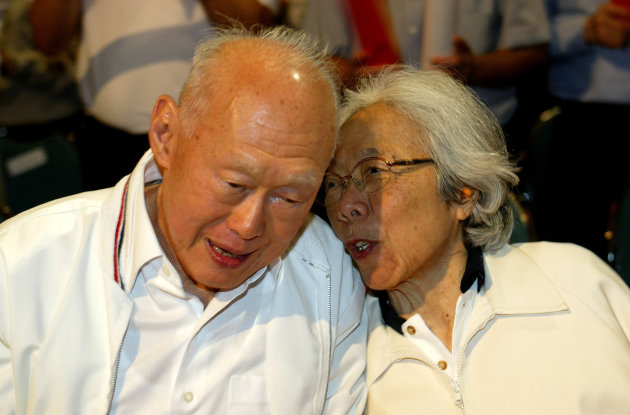
When Geok Choo first appears in “The Singapore Story” it is as a student who, horror of horrors, beats young Harry in economics and English exams. Mr Lee always excelled at co-option as well as coercion. When he returned to Singapore in 1950, he was confident in the knowledge that she “could be a sole breadwinner and bring up the children”, giving him an “insurance policy” that would let him enter politics. He remained devoted to her. Before her death, when she lay bedridden and mute for two years, he maintained a spreadsheet listing the books he read to her: Lewis Carroll, Jane Austen, Shakespeare’s sonnets.
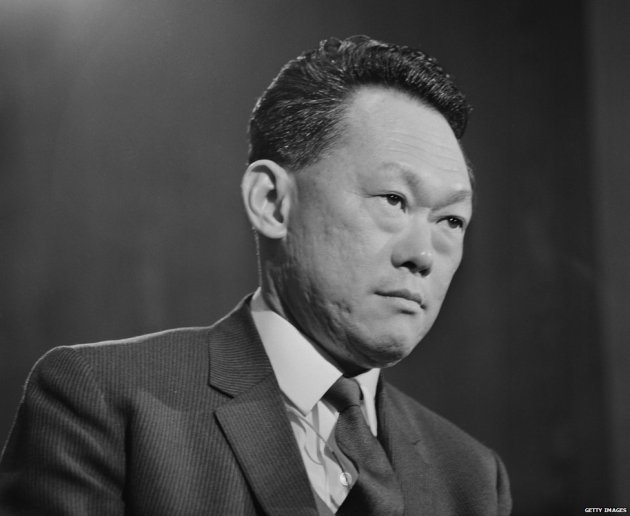
In his political life he gave few hints of such inner tenderness. Influenced by Harold Laski, whom he had encountered at the LSE, he was in the anti-colonial movement of the 1950s, and in Britain had campaigned for the Labour Party. But for him ideology always took second place to a pragmatic appreciation of how power works. In later life he would rail against the welfare state as the root of Britain’s malaise. He also boasted of his street-fighting prowess: “Nobody doubts that if you take me on, I will put on knuckle-dusters and catch you in a cul-de-sac.” He was a ruthless operator, manoeuvring himself into a position at the head of the People’s Action Party (PAP) to become Singapore’s first prime minister when self-governance arrived in 1959. He remained so for 31 years.
Just once in that time the steely mask slipped. Having led Singapore into a federation with Malaysia in 1963, Mr Lee led it out again when it was expelled in August 1965, with Malaysia’s prime minister accusing him of leading a state government “that showed no measure of loyalty to its central government”. For his part, he had become convinced that Chinese-majority Singapore would always be at a disadvantage in a Malay-dominated polity. Still, he had, he confessed, believed in and worked for the merger all his life. Announcing its dissolution, he wept. Perhaps, besides lamenting the wasted effort and dashed hopes, he foresaw that, with Singapore deprived of its natural hinterland, he would never command a political stage big enough for his talents.
In compensation, he turned Singapore into a hugely admired economic success story. As he and his government would often note, this seemed far from the likeliest outcome in the dark days of the 1960s. Among the many resources that Singapore lacked was an adequate water supply, which left it alarmingly dependent on a pipeline from peninsular Malaysia, from which it had just divorced. It was beholden to America’s goodwill and the crumbling might of the former colonial power, Britain, for its defence. The regional giant, Indonesia, had been engaged in a policy of Konfrontasi—hostility to the Malaysian federation just short of open warfare—to make the point that it was only an accident of colonial history that had left British-ruled Malaya and its offshoots separate from the Dutch-ruled East Indies, which became Indonesia.
Singapore as a nation did not exist. “How were we to create a nation out of a polyglot collection of migrants from China, India, Malaysia, Indonesia and several other parts of Asia?” asked Mr Lee in retrospect. Race riots in the 1960s in Singapore itself as well as Malaysia coloured Mr Lee’s thinking for the rest of his life. Even when Singapore appeared to outsiders a peaceful, harmonious, indeed rather boringly stable place, its government often behaved as if it were dancing on the edge of an abyss of ethnic animosity. Public housing, one of the government’s greatest successes, remains subject to a system of ethnic quotas, so that the minority Malays and Indians could not coalesce into ghettoes.
A dot on the map
That sense of external weakness and internal fragility was central to Mr Lee’s policies for the young country. Abandoned by Britain in 1971 when it withdrew from “east of Suez”, Singapore has always made national defence a high priority, although direct threats to its security have eased. Relations with Malaysia have frequently been fraught, but never to the point when a military conflict seemed likely. And Indonesia ended Konfrontasi in the mid-1960s. The formation in 1967 of the Association of South-East Asian Nations, with Mr Lee as one of the founding fathers, helped draw the region together. Yet Singaporean men still perform nearly two years of national service in the armed forces. Defence spending, in a country of 5.5m, is more than in Indonesia, with nearly 250m; in 2014 it soaked up over one-fifth of the national budget.
Singapore’s vulnerability also justified, for Mr Lee, some curtailment of its people’s democratic freedoms. In the early days this involved strong-arm methods—locking up suspected communists, for example. But it evolved into something more subtle: a combination of economic success, gerrymandering, stifling press controls and the legal hounding of opposition politicians and critics, including the foreign press. Singapore has had regular, free and fair elections. Indeed, voting is compulsory, though Mr Lee said in 1994 that he was “not intellectually convinced that one-man, one-vote is the best”. He said Singapore practised it because that is what the British had bequeathed. So he designed a system where clean elections are held but it has been almost inconceivable for the PAP to lose power. The biggest reason for that has been its economic success: growth has averaged nearly 7% a year for four decades.
But Mr Lee’s party has left nothing to chance. The traditional media are toothless; opposition politicians have been hounded into bankruptcy by the fierce application of defamation laws inherited from Britain; voters have face the threat that, if they elect opposition candidates, their constituencies will suffer in the allocation of public funds; constituency boundaries have been manipulated by the government. The advantage of Mr Lee’s system, its proponents say, is that it introduced just enough electoral competition to keep the government honest, but not so much that it actually risks losing power. So it can look around corners on behalf of its people, plan for the long term and resist the temptation to pander to populist pressures.
Mr Lee was a firm believer in meritocracy. “We decide what is right. Never mind what the people think,” as he put it bluntly in 1987. His government’s ministers were the world’s best-paid, to attract talent from the private sector and curb corruption. Corruption did indeed become rare in Singapore. Like other crime, it was deterred in part by harsh punishments ranging from brutal caning for vandalism to hanging for murder or drug-smuggling. As Mr Lee also said: “Between being loved and feared, I have always believed Machiavelli was right. If nobody is afraid of me, I’m meaningless.” As a police state, however, Singapore was such a success that you rarely see a cop.
A cool guy
In some ways, Mr Lee was a bit of a crank. Among a number of 20th-century luminaries asked by the Wall Street Journal in 1999 to pick the most influential invention of the millennium, he alone shunned the printing press, electricity, the internal combustion engine and the internet and chose the air-conditioner. He explained that, before air-con, people living in the tropics were at a disadvantage because the heat and humidity damaged the quality of their work.
Now, they “need no longer lag behind”. Cherian George, a journalist and scholar, spotted in this a metaphor for Mr Lee’s style of government, and wrote one of the best books about it: “The air-conditioned nation: Essays on the politics of comfort and control”. Mr Lee made Singapore comfortable, but was careful to keep control of the thermostat. Singaporeans, seeing their island transform itself and modernise, seemed to accept this. But in 2011 the PAP did worse than ever in a general election (just 60% of the vote and 93% of the seats!). Many thought change would have to come, and that the structure Mr Lee had built was unsuitable for the age of Facebook and the burgeoning of networks which it can no longer control. They began to chafe at the restrictions on their lives, seemingly no longer so convinced of Singapore’s fragility, and less afraid of the consequences of criticising the government.
They resented above all that many people, despite a much-vaunted compulsory savings scheme, did not have enough money for their retirement. And they blamed high levels of immigration for keeping their wages down and living costs up. This was a consequence of a unique failure among Mr Lee’s many campaigns to make Singaporeans change their ways. He succeeded in creating a nation of Mandarin speakers who are politer than they used to be and neither jaywalk nor chew gum; but he could not make them have more children. In the early 1980s, he dropped his “stop at two” policy, and started to encourage larger families among the better-educated. But, three decades later, Singaporean women have as low a fertility rate as any in the world.
The hereditary principle
The “setback” of the 2011 election led Mr Lee into the final stage of retirement. In 1990 he had moved from prime minister to “senior minister”, and in 2004 to “minister mentor”. Now he left the cabinet, but remained in parliament. By then, Singapore’s prime minister for seven years had been Lee Hsien Loong, his son. The Lee family would sue anyone who hinted at nepotism. And, for Mr Lee, that talent is hereditary was an obvious fact. “Occasionally two grey horses produce a white horse, but very few. If you have two white horses, the chances are you breed white horses.”
Such ideas, applied ethnically, veer close to racism. The stream of distinguished Western visitors who trooped to see him in Singapore would steer clear of such touchy areas. They preferred to seek his views on the rise of China or America’s decline. They also admired the comfort and the economic success of Mr Lee’s Singapore, and sought his advice on how to replicate it. Meanwhile, the control and good “social order” there attracted admirers, too, including Chinese leaders, notably Deng Xiaoping, who was, like Mr Lee, a member of the Hakka Chinese minority. Thus Mr Lee, famous as both a scourge of communists at home and a critic of Western decadence and its wishy-washy idealism, revelled in the role of geopolitical thinker. What, he must have wondered, if fate had allotted him a superpower instead of a city state?
Source: www.economist.com


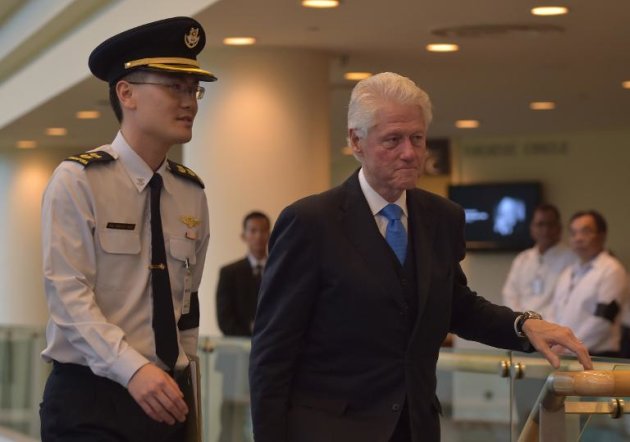
 Lee Hsien Yang, son of former leader Lee Kuan Yew, delivers his eulogy during the funeral service at the University …