Tag: Lee Hsien Loong

  • Top 10 Highest Paying Jobs In Singapore

    Top 10 Highest Paying Jobs In Singapore

    “Choose a job you love, and you will never have to work a day in your life.” —  some guy on the internet who may or may not be Confucius.

    Well, thanks maybe-Confucius, but not all of us have the luxury of being paid to do what we enjoy.

    For some people (okay, most people), money is what they look for in our job. Because money is more important that any form of job satisfaction.

    Which is why we need lists like these. We’ve checked out the Ministry of Manpower’soccupational wage table last updated in June 2014. Source for your next career move here:

    10. Commodities Derivatives Broker (Median Monthly Wage: $10,000)

    leo-wolf-of-wall-street

    Source

    A commodity broker traditionally buys and sells goods such as oil, grains, or even coffee. A commodities derivatives broker, on the other hand, trades a variety of assets, such as shares and bonds. Potential employers include investment banks, financial clearing houses, and even international stock exchanges.

    With great power comes great responsibility. Accordingly, this job comes with Spider-Man levels of stress and responsibility. Commodity brokers also often have to work long hours, but it’s all good, because opportunities for promotion are aplenty, along with good salaries, and high bonuses. Just be prepared to slog it out for a least a while.

    9. Company Director ($11,800)

    Anthony-Chen-TigerBeer_Singapore_09032014_HKStreet_-354
    Source

    This is probably one of the harder jobs to just pick up. A company director refers to individuals who have been either voted or appointed to a board of directors, and is responsible for the design and execution of the company’s corporate policy.

    Directors do not have to originally be employees of the company, and can sit on more than one board at any time. Which means these people pick up their salary from two or three different places. Pretty cool right.

    8. General Practitioner / Physician ($12,547)

    drhouseoops

    Source

    Turns out that guy you always go to for MCs is doing very well for himself, thank you very much. No such thing as Monday Blues for GPs, as they welcome lines of people queuing up for that precious slip of work-prevention paper.

    Being a doctor isn’t really that difficult. All you need are top notch grades to enter medical school (at least all As), minimum of five years of undergraduate study (along with enough money to fund said education), and be accredited with the relevant bodies before actually being able to whip out that trusty stethoscope and pump-action blood pressure monitor.

    7. Chief Operating Officer (COO) / General Manager ($13,135)

    nick_fury_director_of_s_h_i_e_l_d_wallpaper_by_anyayuy-d7arv3u

    Source

    A COO is typically the second-in-command to the Chief Executive Officer, and is in charge of day-to-day operations. A General Manager is responsible for managing profits and costs of the company. We’re not quite sure why these two rather different job scopes are bundled together.

    But we expect individuals who have the opportunity to rise to either position to have the ability, experience, and gumption to fulfill their roles with aplomb. Experience pays.

    6. University Lecturer ($13,684)
    tumblr_inline_mla31nLw791qz4rgp

    Source

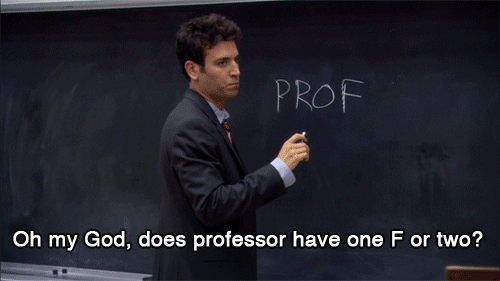
    We have to admit, this one caught us a little by surprise. Who would have thought university lecturing is such a viable form of income? Turns out relentless research and occasionally ticking off the resident smart mouth is worth the trouble. Of course, lecturers come in many forms. The lucky students get the ones who actually want to teach over doing research.

    Potential university lecturers are typically required to have a Masters in their chosen field, but a Bachelor’s Degree may sometimes suffice.

    5. Chief Executive Officer (CEO) / Managing Director ($17,962)
    s09

    Source

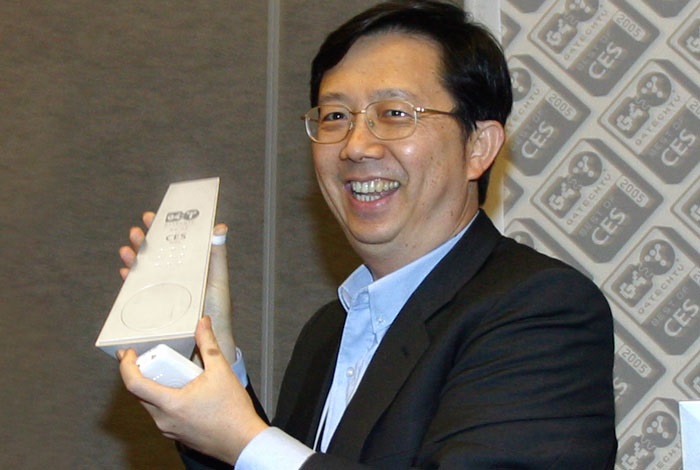
    That’s right, the head honcho in most conglomerates comes in at only fifth in the list. Of course, the pay structure for CEOs can range wildly depending on company size, but being a CEO seems like a pretty safe bet to earn some serious moolah. Holders of an MBA generally have an advantage, but possessing a Master’s in the related industry is also useful.

    A CEO’s responsibilities are defined by the board, but should possess some level of leadership qualities, foresight, and be an effective communicator. Interested individuals may want to check out WikiHow’s guide to be a CEO, but we’re pretty sure this tutorial is hardly exhaustive.

    4. Advocate / Solicitor ($18,333)
    Subhas_Anandan_lawyer

    Source

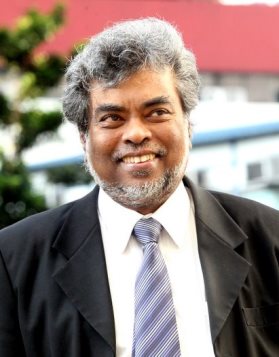
    Unlike in other countries, lawyers in Singapore are part of what is known as a fused profession, where they are able to perform the duties of both an advocate or solicitor. An advocate speaks on behalf (“advocates”) of a client, and presents arguments and cases in the place of the client. A solicitor, on the other hand, are trained in all areas of the law.

    We’re pretty sure TV’s favourite occupation is also one of the coolest, if only because you get to cut off somebody in the middle of their sentence with a loud “OBJECTION” and getting to use words like “subpoena” and “impermissible”. Also, hot paralegals are a thing. Probably.

    Lawyers who are neither advocates nor solicitors are unfortunately not included in this entry, and can expect to bring home less than their colleagues.

    3. Specialist Medical Practitioner ($23,085)

    1487759_792642510761771_638116745_o

    Source

    There’s a reason why those specialists charge so much just to look at. They have spent ridiculous amounts of time to get to that tiny white office and large lab coat. After medical school — which takes a minimum  of five years — hopefuls have to further their education and undergo a multi-year residency in their chosen field before being able to register in Singapore as a specialist. The entire process can take anything from seven to nine years.

    If you’re lucky, you might become known as the ‘son of Punggol’!

    2. Minister ($91,666)

    HdnNy

    Source

    The gap between the top two paying positions and the rest is HUGE – a whopping $70,000.

    One sure-fire way to be a minister is to sign on with either the Army, Navy, or Air Force. Don’t believe us? Let’s take a look at current ministers who were once served in the military.

    • Brigadier General Tan Chuan-Jin : Minister for Manpower
    • Rear-Admiral Lui Tuck Yew (Former Chief of Navy): Minister for Transport
    • Rear-Admiral Teo Chee Hean (Former Chief of Navy): Deputy Prime Minister, Co-ordinating Minister for National Security, Minister of Home Affairs
    • Major General Chan Chun Sing (Former Chief of Army): Minister for Social and Family Development

    4 ministers of a 17-member Cabinet is actually a pretty decent ratio. Of course, just because they previously held high positions in fatigues doesn’t mean they’re actually competent ministers. We’ll just let you decide.

    Getting into higher positions can in the military can also lead to better job prospects in Government-linked organizations as well. Just ask SMRT CEO Desmond Kuek (Former Chief of Defence Force) and S-League CEO Lim Chin (Former Chief of Artillery).

    1. Prime Minister ($183,333)
    060603-N-0696M-382

    Source

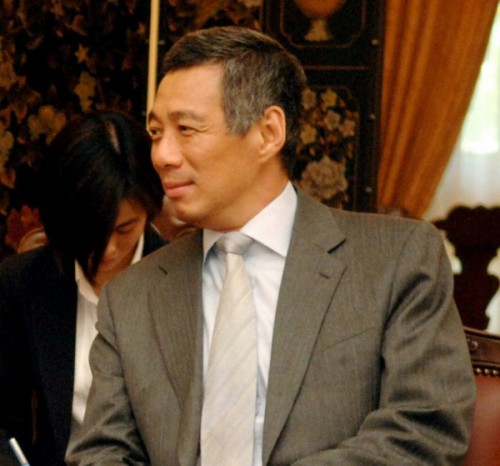
    With an annual salary of $2.2 million, Singapore’s Prime Minister (PM) comfortably eclipses the combined salaries of the next 5 highest paid world leaders, including US President Barack Obama. This works out to a monthly salary of about $183,333, which means the PM can buy a BTO flat every two months.

    Also, current Prime Minister Lee Hsien Loong happens to be a former Brigadier General in the Singapore Army, and is yet another soldier who made the jump to politics.

    Haters of the PM’s high salary should note that he actually accepted a 36% pay cut in 2012, so he’s actually working hard on it ok.

    At the end of the day, we’d all probably prefer doing something we enjoy. Unfortunately, not all of us have the opportunity to do so. Maybe the one thing that we actually enjoy is popping bubble wrap. How can that possibly be monetised? And so, banking is the natural option instead. Monetary or family constraints can force some to opt for that soul-sucking, higher-paying gig. Perfectly understandable. All we ask for is that this year, think less about the money, and more about the ones you’re earning the money for.


    Source: http://mustsharenews.com

  • Lee Hsien Loong Hints That General Elections Is Some Time Away

    Lee Hsien Loong Hints That General Elections Is Some Time Away

    Hinting that the next General Election could be some time away, Prime Minister Lee Hsien Loong said the Government has not had time to think about setting up the Electoral Boundaries Review Committee – often seen as one of the final steps in the run-up to polls.

    The next GE must be held by January 2017. Speaking to the Chinese media in an interview on Thursday, Mr Lee said the Government is preoccupied with the SG50 celebrations this year and hence, has had no time to think about when to set up the committee. “When it’s set up, everyone will know,” he added.

    Mr Lee was also coy on whether his successor has been identified from among the current batch of Cabinet ministers. Saying it was very likely that the person is already in Cabinet, he nevertheless added that he is not entirely certain because he is looking to bring in some candidates with potential to lead the country for the next election.

    But, he said, the search for his successor should be complete after the polls.

    When it was pointed out by reporters that the possible successor would have little time to work with his Cabinet colleagues if he were to come from the next cohort of Members of Parliament, Mr Lee said: “But it might not be an unfamiliar face.” So could it be someone whom the public is already familiar with? “There is the possibility, certainly” he replied.

    Referring to United States President Barack Obama and British Prime Minister David Cameron – both of whom had no prior experience running a government department or ministry before emerging as their respective countries’ top leader – Mr Lee said the Government might have no choice but to accept such a model.

    Mr Lee also said that in the next election, voters should be prepared for the possibility of junior office-holders – such as Ministers of State and Senior Parliamentary Secretaries, and not necessarily Ministers – leading the People’s Action Party teams in Group Representation Constituencies.


    Source: www.todayonline.com

  • Did Lee Hsien Loong Breach The Ministerial Code Of Conduct?

    Did Lee Hsien Loong Breach The Ministerial Code Of Conduct?

    I made the following posts on Facebook at midnight on Friday. I have now decided to put the posts up on my blog to answer some online comments

    I am seriously concerned that the PM has breached the Ministerial Code of Conduct by using his Official Press Secretary to write a letter to the Economist newspaper defending the PM’s private defamation suit against the blogger Roy Ngerng. This states:

    “4.3 A Minister must not direct or request a civil servant to do anything or perform any function that may conflict with the Singapore Civil Service’s core values of incorruptibility, impartiality, integrity and honesty.

    He should respect the duty of civil servants to remain neutral in all political matters and matters of public controversy.”

    Neutral? This is quite apart from the fact of whether it is right for the PM to use a civil servant paid by the taxpayer to assist him in his private capacity and not his official one.

    He is suing Roy as a private individual and yet he uses a state employee, paid by you the tax payer, to write to the foreign press defending his personal matter. I believe the principle has been established that State Institutions cannot sue a private individual so why can a state employee be put to work on it. Is the Press Secretary working for us, who put the government in place as public servants, or is the Press Secretary working for LHL in a private capacity. It needs clarifying.

    I pointed out the uncanny parallels with the alleged misconduct that led to the blogger Roy’s sacking from Tan Tock Seng Hospital:

    I have had another thought. If the PM used his Private secretary to write to the Economist on his personal matters was this also a misuse of office resources, computer etc such as got Roy fired?

    The posts have already attracted a lot of online comments. Some of the commentators have defended Lee Hsien Loong’s actions in getting his Press Secretary to write since, they say, Roy Ngerng’s defamation brought the Prime Minister’s Office (PMO) into disrepute.

    However I would disagree. The defamation was against the person and not the office. Lee Hsien Loong is suing Roy for damage to his personal reputation not to the reputation of the PMO. If he succeeds in his action for damages the money will not go to the PMO but to Mr Lee personally. The proper person to have written to the Economist should have been Lee Hsien Loong’s lawyer, and not his Press Secretary who is paid by the taxpayer.

    Who has responsibility for determining if there has been a breach of the Code and what sanctions should apply?

    The preamble to the Ministerial Code of Conduct makes clear that any breaches of the Code are to be treated extremely

    This Code of Conduct for Ministers sets out the “rules of obligation” that all Ministers are to abide by in order to uphold these standards. Breach of any of these “rules of obligation” may expose the Minister to removal from office.

    However the Code goes on to say that:

    This Code does not have the force of law and therefore any issue concerning the compliance or non-compliance with it is not subject to review by any court or tribunal.

    The Code is silent on how it is to be enforced. While responsibility for Ministers’ observance of the Code would appear to rest with the Prime Minister, it is not clear from the Constitution how breaches by the Prime Minister would be dealt with. The onus for investigating breaches would appear to lie with the President though this needs clarification. In matters involving corruption the President has the power under the Constitution to concur with the Director of CPIB’s decision to authorise an investigation even if the Prime Minister refuses to give his consent. However the CPIB comes under the PMO so it is not independent. The President does not have the power on his own to initiate investigations.

    In this instance a request should be made to the President asking him whether he has jurisdiction in this matter? If he does not who does? If he does, then he should investigate whether Lee Hsien Loong has breached the Code and make his findings public. Surely Lee Hsien Loong would not be able to continue in office if he was found to have committed a serious breach of the Code?


    Source: Kenneth Jeyaretnam; http://sonofadud.com

  • Lee Hsien Loong: Important To Combat Corruption

    Lee Hsien Loong: Important To Combat Corruption

    A review of the Prevention of Corruption Act and a new One-Stop Corruption Reporting Centre are in the works to enhance the republic’s fight against corruption, said Prime Minister Lee Hsien Loong this morning (Jan 13).

    Speaking to some 600 public servants at today’s conference on integrity as a public service value, he said: “The trust that Singaporeans have in the public service as an institution, and each one of you individually, is critical… Overall, our system is clean and maintains high standards. But we must keep working at them… We must maintain our zero tolerance for corruption, regardless of the rank and seniority of the officers involved.”

    Faced with increasing transnational challenges, the Corrupt Practices Investigation Bureau (CPIB) is currently reviewing the Prevention of Corruption Act with the Attorney-General’s Chambers. The Bureau’s manpower will also be increased by more than 20 per cent.

    Calling Singapore the “shining exception” amid countries like the US and China, where corruption is a problem, Mr Lee called for members of the public to play their part in maintaining the public service’s “zero tolerance for corruption”.

    To increase public engagement, so that more can play a part in the fight against corruption, a One-Stop Corruption Centre will be set up so that complaints can be made more discreetly and in a more accessible manner, said the Prime Minister.

    The centre will likely be set up in the central area and be open during office hours. It will be accompanied by a heritage gallery.

    Currently, whistle-blowers can make complaints by calling the CPIB’s 24-hour hotline or by walking in to the Bureau.


    Source: www.todayonline.com

  • Roy Ngerng Ordered To Pay Lee Hsien Loong S$29,000

    Roy Ngerng Ordered To Pay Lee Hsien Loong S$29,000

    Blogger Roy Ngerng, who was found to have defamed Prime Minister Lee Hsien Loong last November, was ordered by a court to pay Mr Lee S$29,000 for legal fees and related expenses.

    In response to media queries, Ms Chang Li Lin, the Press Secretary to PM Lee, issued the following statement on Monday (Jan 12):

    “At the hearing today, the Judge ordered that the total costs to be paid by the Defendant to the Plaintiff be fixed at $29,000.  This amount is for the legal fees and related expenses incurred up to the conclusion of the application for summary judgement. The dates for the subsequent hearings are not confirmed.

    “Mr Ngerng’s lawyer indicated at the hearing that Mr Ngerng did not want to be cross-examined.  The judge directed his lawyer to confirm whether he would be giving evidence by 30 January 2015. PM Lee stands ready to be cross-examined, a position he has earlier communicated to the Court”.

    Channel NewsAsia understands that Mr Lee had asked for S$40,000; Ngerng’s lawyers had offered S$10,000 to S$13,000.

    The Prime Minister filed the defamation suit against Ngerng in May last year. The suit arose from a blog post by Ngerng that same month titled “Where Your CPF Money Is Going: Learning From The City Harvest Trial”, which alleged that CPF monies had been misappropriated.

    In November, a judge ruled that Ngerng had defamed Mr Lee with his posts. The blogger was ordered to be restrained from publishing or disseminating the allegation that Mr Lee is guilty of criminal misappropriation of the monies paid by Singaporeans to the Central Provident Fund, or any words and/or images to the same effect.


    Source: www.channelnewsasia.com