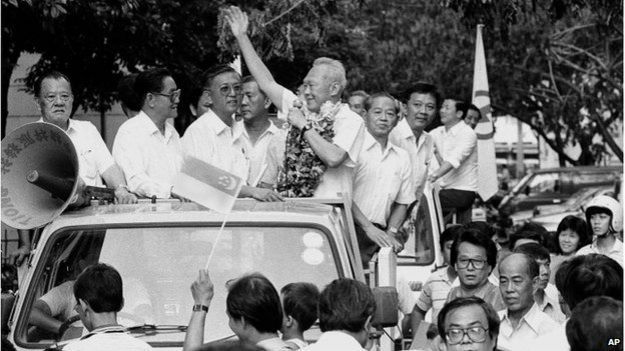
7.19pm, 29 March 2015 – playground – HDB estate – Choa Chu Kang.
My son, 8 years old, is playing with his friends.
My mind is elsewhere – Mandai crematorium. LKY. His life ended a week ago. By now, his flesh and bones would largely be ash. (Having gone to collect my mother-in-law’s ashes slightly over a year ago, I realise that not all of the bones turn to ash.)
What an extraordinary life.
The first Prime Minister of Singapore, one member of the extremely talented group of men, has made his final journey. Lee Kuan Yew is no more.
8.49pm, 29 March 2015 – back in my flat
It has been a pretty exhausting day. Soaked with emotion. I can’t fully understand the feeling. Some 12 days have passed since the announcement made by the Prime Minister’s Office on 17 March 2015 about LKY’s critical condition and 7 days since the announcement of his death. I’ve been having mixed feelings about him and his death. On 23 March 2015, when I woke up at 6am and looked at my phone, I discovered via Facebook posts that LKY had passed away. A strange quiet feeling filled my mind. It had not yet sunk in.
How did I react? Nothing. No feeling. The moment had arrived and I had no emotion to record.
Just a few days earlier on Wednesday, 18th March 2015, I was asked via Facebook as to how I would react if LKY passed away. This was my response:
“Twenty to thirty years ago, there were a whole bunch of my friends that used to talk about opening table for just such an event. And I would have gladly joined them in celebration even if it was just to drink coke.”
To be precise, when I was pursuing my law degree, I remember having a CONVERSATION with some friends about local politics and one of them remarked about how we would react if LKY passed away. All of us agreed, at that time (1993/1994), we would throw a party. The image of Lee Kuan Yew that I had in my mind at that time was of a tyrant, a dictator and a person that had caused great anguish to the families of many Singaporeans for the sake of consolidating his own power.
Many of my friends (who are in their late 40s now) felt a deep resentment for LKY at that time. (Bearing in mind that most of my friends were my fellow law undergraduates, we were not a proper sample of the broader society. )
We were not a generation that had experienced either the Japanese Occupation or British Rule. We didn’t experience the merger in 1963 or the separation in 1965. My generation was born soon after independence. Perhaps the most significant political event experienced by us when we were politically conscious was Operation Spectrum in 1987. I was 19. Many of my friends were skeptical of the government’s story about the Marxist conspiracy. Some things just did not gel. I had a sense that this was either a case of over-reaction to the activities of social workers or a deliberate frame up to scare a new generation of voters that were beginning to swing towards the opposition.
Starting from the 1981 Anson by-election, the voting pattern in Singapore started shifting. The Worker’s Party led by JB Jeyaretnam and the Singapore Democratic Party led by Chiam See Tong were making inroads into the minds of the electorate. I remember that Lee Kuan Yew had some words of scorn for younger voters that, according to him, did not understand how fast things can fall apart in Singapore. At that time, the impression that I had was that Operation Spectrum was intended to instill a fresh sense of fear in the minds of Singaporeans. It was a sense of fear that was beginning to disappear and the PAP was in danger of losing more seats. (1980 GE – PAP’s popular vote = 77.77% with all seats to PAP, 1984 GE – PAP’s popular vote = 64.8% with WP and SDP capturing 2 seats.)
To this day, the real motivations behind the 1987 arrests are unclear. The last arrest and detention under the ISA was in 1979 and the 1987 arrests arrived after a 8 year non-use of the ISA. To put it into perspective, from 1963 to 1979, there were arrests under the ISA every single year. My parents were not very interested in politics and they had been PAP voters all the while. Nevertheless, they would say on and off that I shouldn’t speak too much about politics because I will get arrested. It was something that the general population had grown to expect. Say something wrong about the PAP and you will get arrested. )
I went to primary school in the 1970s and to secondary school from 1981. During my school years, we didn’t learn about Hock Lee bus riots, racial riots, etc. that is so much a part of the curriculum these days. The Singapore history that we read about included Sang Nila Utama and the founding of Singapore by Stamford Raffles and the growth of the sea port. During those days, there was no active attempt at spelling out a national narrative through the education system. We were, however, brought up to fear the authorities.
Nevertheless, the general prosperity and stability and the relatively long disuse of the ISA was beginning to embolden more youths. The 1987 arrests may well have been intended to put the brakes on the opposition’s ability to organize and the increasing support for the opposition. (Despite the 1987 arrests, the downward TREND of the PAP’s popular vote continued in the 1988 and 1991 elections with the PAP hitting a low of 61% of the vote. I suspect that the arrests actually made it worse for the PAP in terms of popularity. New batches of voters were less afraid and more defiant when threatened.)
I remember being very angry with LKY and his Cabinet ministers for what I perceived to be unjust imprisonment on trumped up charges. Unlike today, PAP in those days wasn’t in an overdrive mode trying to educate people about the 1950s and the 1960s. I wasn’t aware of Operation Coldstore, the Communist treat of the 1950s or the circumstances of the merger. All I saw was the imprisonment of students, Catholic Church activists and lawyers. False accusations, detentions without trial, total surveillance – we were living in an Orwellian nightmare. (Over the years, reading and researching on the detentions, I have become more convinced that these were not Marxists conspirators. Tharman Shanmugaratnam has gone on record and expressed doubts about the arrests and it appears the Dhanabalan’s Cabinet resignation was, in part, due to his disagreement over the arrests. Ex-President Devan Nair also expressed his doubts about the Marxist conspiracy arrests. )
The LKY that I grew to hate in the 1990s was a power-hungry man that maneuvered his old-guard leaders out of the way and arrested and detained political opponents and activists. As CV Devan Nair had written in the forward to Francis Seow’s “To Catch a Tartar” in 1994:
“Today every member of that superb team has been eased out of power and influence in the name of political self-renewal, while Lee himself has ensured that he presides, as Secretary-General of the ruling party, not as he once did, over equals who had elected him, but over a government cabinet and a judiciary made up entirely of his appointees or nominees. In relation to old guard leaders, Lee had been no more than primus inter pares. He had perforce to deal with equals, and they were fully capable of speaking their minds.”
“To Catch a Tartar” is banned in Singapore. The beauty of BOOKSbanned in Singapore is that they are easily available across the border in Malaysia. I got to read Francis Seow’s ACCOUNT of the events surrounding the detentions in 1987 and 1988 as well as Francis Seow’s own detention. Francis Seow was once the Solicitor General and at the time of his arrest and detention he was the President of the Law Society. He stood for elections under the Workers’ Party banner and eventually escaped from Singapore when charges were brought against him for alleged Tax evasion.
Whilst the Straits Times always presented the official narrative, there were ample opportunities to get hold of alternative sources of information if one tried hard enough. Books that come to mind now include Christopher Tremevan’s “Political Economy of Social Control in Singapore”, Seow’s “Media Enthralled” and “Lee’s Lieutenants” which was a compilation of academic writings on the contributions of the old guard.
And that’s the other matter. Censorship: the banning of BOOKS, the restriction of the circulation of books and the defamation suits. As a law student in the 1990s, what I was witnessing was totally at odds with the Constitutional values that I was learning about. I encountered incidents of censorship of the arts. Playwrights often came under the radar of the authorities because of the theme of their plays. I used to follow the local arts scene closely in the 1990s and the heavy hand of the authorities was evident.
I witnessed, first hand, the sleight of hand practiced by the media in the way they reported. Some events that I attended at the SCWO and Substation were reported with a different slant from the actual event. I understand fully what is meant by the phrase “nation-building” press. Of course, as I came to fully understand the legislative framework under which the press operates, it was obvious as to how the state maintained that total control.
Gerrymandering was another issue that really irked me. The redrawing of electoral boundaries, the introduction of the GRCs and the political use of Town Councils as well as upgrading projects caused me to be a really angry young man. I had nothing but hate for the PAP and, of course, LKY. It was impossible to imagine that anybody else could have masterminded this.
My mind is filled with impressions of injustice during the LKY years: Hounding JBJ with lawsuits, convicting him and getting him disbarred and eventually removing appeals to the Privy Council after that Court produced a scathing judgment against the Singapore authorities in JBJ’s case.
Between 1963 (Operation Coldstore) and 1987/88 (Operation Spectrum) there were 485 publicly verifiable arrests made under the Internal Security Act. The Communist boogeyman was so effective in drumming up support for these arrests that the government was doing it with impunity.
I was comfortable in using the word ‘dictator’ to refer to LKY. Whilst these decisions would have been Cabinet decisions, somehow LKY always loomed large and I had the sense that he was probably the sole or main decision maker when it came to these arrests and detentions.
Not many Singaporeans had the empathy to put themselves into the shoes of those wrongfully detained and to understand the suffering of the families of the detainees. How does it feel to have your father imprisoned when you are very young and not to see him for a decade or two? How do we wipe off the tears of the spouses? How do we compensate for the lost years of those detainees’ lives?
In deifying LKY after his death, many Singaporeans have gone overboard in painting a picture of the man beyond what he is. I read one facebook post that referred to him as a Nelson Mandela. If Mandela was a Singaporean, he would have arguably languished in prison longer than he did in South Africa. In fact, we hold the record for having the longest serving political detainee in the world.
I could go on and on about different aspects of the ‘LKY way’ that disturbed me, riled me up and caused me to hate the man. It is safe to say that the word ‘hate’ can be used. Would I have hastily compared him to a Hitler or a Stalin? No. His most extreme weapon was detention without trial. There have been no reports of extra-judicial killings or disappearances in Singapore politics. This dictator was also delivering the goods on the economic front. He wasn’t focused on amassing wealth for himself at the expense of all others. He was committed to the betterment of the overall society. The term benevolent dictator has come to be used to refer to him.
As LKY slowly went into the background as Minister Mentor, I started having less of that hatred against the man but, he still remained the symbol of repression.
Over the last 7 days, some Singaporeans have expressed negative views against LKY and they have been taken to task as ‘ingrates’. There was a letter written to the forum page urging Singaporeans to take negative commentators to task. Police reports have been filed. While I understand the need to be respectful at times like these, I can also understand the reason for the strong feelings held by LKY’s detractors.
Strangely, despite all the hatred I had for the man in the 1990s, I found myself searching for a reaction on that Monday morning when I woke up to the news of his death. There was no emotion. Not sad. Not happy or rejoicing. Neutral. Just neutral.
THE REHABILITATION
Over the years, as part of a personal, spiritual journey, I have come to value forgiveness. In my personal life, being at the receiving end of a cheating wife in my first marriage, I experienced emotions bordering on depression. In the end, forgiving her turned out to be the most healing experience. I have, since then, made it a regular practice to let go of negative emotions that I may have had against particular individuals in my life. Reconciliation through forgiveness heals the mind in a way that is difficult to explain.
That forgiving attitude has made it easier for me to not hold a person’s past misdeeds against him. When the PMO’s office announced on 17 March that LKY was critically ill, I started pondering about the man. I wasn’t feeling anything in particular. He’s already 91. There was nothing that I had personally to really hold against him. I was, in fact, somewhat disturbed by the fact that his family may be delaying the decision to take him off life support. (He had made an Advanced Medical Directive and didn’t wish to be on life support.) There was a little irony, I felt, in him being held captive in his body against his wish. (To be fair, given the scarcity of information surrounding his condition, we are not sure when he was taken off life support.)
On the morning of 21 March 2015, whilst meditating I got distracted by thoughts of him. I found myself praying for him to have a quick painless death. I was surprised at my own action. I did It again on Sunday morning (22 March 2015). I found myself rationalizing that whatever he may have done, I don’t need to hold It against him. That’s his journey and his karma. My position as a fellow travelling soul is to pray for and transfer merits to all souls.
On 23 March, it finally happened. In the morning, PM Lee addressed the nation and I watched it on Channel News Asia. I felt sad for the first time. It was clearly because I put myself in Lee Hsien Loong’s shoes and imagined how difficult it must be to announce the death of your own father to the world. He had the burden of making the announcement as the Prime Minister of this country but he is also a son who had lost his father. He was fighting back his tears as he spoke. I felt myself getting a little teary-eyed.
That night, I was contemplating on the bodily prison and the man-made prison. LKY came to be trapped in his body in his final days. Those that he imprisoned were trapped within concrete walls. They are both prisons. I posted this on Facebook:
What does a prison look like?
There are walls?
Metal? Steel? Concrete?
Bones? Flesh? Skin?
Does it hurt to be locked in
Behind bars?
For words, thoughts and views?
For age and ill health?
How do loved ones weep
For the ones imprisoned
By the firm claws
Of laws and death?
A 7-day mourning period was announced on the morning of his passing and Channel News Asia went on overdrive. Round the clock, non-stop special features in memory of LKY. It went on and on and on ad nauseam. By midweek, it was taking a toll on me. Some of the documentaries were obviously part of a propaganda effort to whitewash history and to build an early electoral advantage for the party.
Myths were now being created. Singapore’s development was being presented as a one man show. That fishing village to modern metropolis storyline was being peddled incessantly. Whilst I did not rejoice at his death and even felt a little sad, I found the deification of LKY rather horrifying.
Last week, if you consumed information through Channel News Asia and the Straits Times, you would have been presented with no alternative but to think that LKY single handedly introduced a housing policy, education policy, economic policy, etc. The term Founding Father has been used. I suspect that it will get stuck.
This myth-making prompted me use the hashtag #notmyfather when I made some comments on facebook. It wasn’t a popular thing to do last week. Some (not most) people can be pretty aggressive when they are grieving.
If, as a nation, we are going to use the term “Founding Father”, I believe that we would truly be ingrates not to include men like Goh Keng Swee, Toh Chin Chye, Lim Kim San, Rajaratnam, Ong Pang Boon, Ahmad Ibrahim, Othman Wok, EW Barker and Lee Khoon Chye. I am sure that I am leaving out others. But, these men stand out. When it comes to the economy, one man stands out as a towering figure and it is not LKY. It is Goh Keng Swee. How about housing the nation? Lim Kim San stands out.
LKY has himself acknowledged that it wasn’t a one-man show:
“How can we say who contributed more? Without Dr Toh holding the fort in the PAP, we might never have held the Party together. Without Lim Kim San putting up the buildings, the whole Party could have been smashed up and been washed out in September 1963.”
LKY has also CREDITED Rajaratnam for being a strong proponent of multiculturalism and the PAP’s positioning on racial harmony was done largely through the writings and speeches of this man. The first Cabinet of independent Singapore created a vision for Singapore on a collegiate basis. This was not a Cabinet that operated in a fashion where there was Prime Ministerial dominance.
If we are going to give an accolade to LKY as the founding father, it is important that this should be a SHARED honour with the other team members.
Deva Nair: “Lee Kuan Yew, let me acknowledge with pride, was the superb captain of a superb team, but like all the best captains at the end of the game, they come to believe that they have scored all the goals themselves.”
What has happened is that last week’s myth making has taken it one step further. LKY did not only score all the goals. He was the only player on field. That is clearly not true. It is important that history is not adulterated like this simply because we want to give an over-the-top tribute to the man.
Nobody should take away the CREDIT from the government of the 1960s to 1980s in improving Singapore economically. However, we have to stop peddling the myth that Singapore was a fishing village in 1965.
The nauseating propaganda was putting me off.
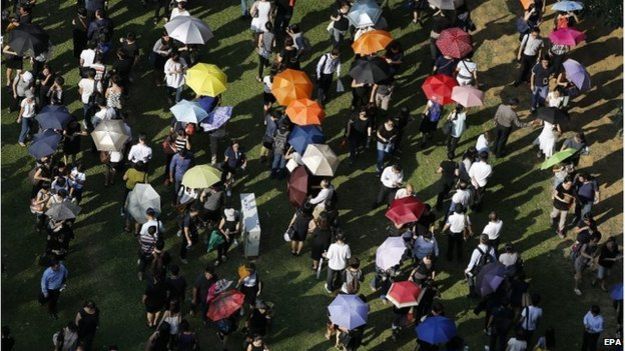
And then the queues happened. On Wednesday, I witnessed the crowds queuing up outside parliament with the line snaking all over the place. Starting from Parliament House the queue stretched back over Cavenagh Bridge running along Circular Road and back over the Elgin Bridge and back under the bridge towards Clarke Quay, going over Coleman bridge and stretching back New Bridge road all the way up to Hong Lim Park. It was overwhelming. I was walking from my office at New Bridge road to Funan and was emotionally overwhelmed by the queue. Walking along this mass of grieving Singaporeans suddenly stirred something in me. This is not about LKY the man. This is about LKY the idea.
My countrymen were coming out to say their farewell to a man that in many ways had come to represent the Singapore story. The rise of Singapore as an economic powerhouse in a short time frame after independence occurred through the sound leadership of some exceptional men assisted by able and efficient civil servants and supported by an army of citizens. The hardworking men and women of Singapore that came to be ranked as the most productive workforce on the planet have always been the unsung heroes of the Singapore miracle. These dedicated and uncompromisingly hardworking people had in LKY a symbol of themselves. Somehow, I felt that what really drew most of us inexorably towards Parliament House last week was that our supreme symbol of ourselves had passed away. An era in our National psyche has ended. We have now moved into the truly post-LKY era.
His death has provided us with a moment of catharsis.
For sure, lifelong supporters of the PAP would have paid their respect to him and that should come as no surprise. However, many of my friends that have been voting routinely for the opposition and even despised him in the 1990s have gone to Parliament House to pay their last respects. This is bigger than LKY the man. This is about a nation recognizing its identity.
In Parliament, on 20 Aug 2009, LKY asked this rhetorical question: “Are we a nation?” He answered it himself: “In transition”.
Singaporeans in their hundreds of thousands have come out to express their grief, respect or gratitude. The elderly, the young, the handicapped, the able bodied, Chinese, Malays, Indians, new citizens, businessmen, government officials, civil servants, office workers, blue collar workers – they have all come. They seem to have answered that question. Are we a nation? Yes we are!
1.2 million people have paid their tribute. A population that is usually averse to public displays of emotion was out in force.
Singaporeans have often debated about our national identity. We have often wondered what makes us Singaporean. We end up picking up on trivial externalities like our love for food and our kiasu mentality. Well, what really makes us special? How about some things that LKY is himself lionized for? Efficient, incorrupt, hardworking, disciplined.
Perhaps, the man does, to a large extent, represent who we are collectively (warts and all).
On Friday, 27 March, I was feeling heavy-hearted and beginning to feel somewhat exhausted. I had been voraciously consuming all the news on LKY’s passing: the outpouring of grief, the response of foreign dignitaries, the reports and opinion pieces of local and foreign journalists, pictures and online postings of facebook friends, etc.
I was feeling conflicted. I don’t do tears for dictators.
Am I an ingrate for not expressing gratitude for the things we have as a nation today? Have I not forgiven the man for the things that he had done to his political adversaries?
I had a long CONVERSATION with my wife on the night of 27thMarch. She had similar conflicts in her mind. We clarified our emotions and I came to better understand myself.
I don’t need to compromise my sense of what is morally right and wrong. If I expressed some gratitude to the man, it doesn’t have to mean that I have agreed that nothing wrong has happened in our politics. I can forgive a person and still insist today on higher moral standards in our politics.
GRATITUDE
What is there to be grateful about?
Firstly, let me clarify that my gratitude here is not to one person but to the collective. The first Cabinet, the Civil Servants and external advisers of that time and the hardworking people. LKY, being the leader of that generation, represents more than just himself as a person. My gratitude is to that collective as represented by and now symbolized by him.
The most important thing that I have benefitted from in this country is education. My father moved to Singapore in the 1950s. His brother, my uncle, still lives in India. I have first cousins that are pretty intelligent but don’t have a proper education beyond 8thstandard to 10th standard. I am thankful to my parents for having decided to live in Singapore and thankful to God for the privilege of having been born in post-independence Singapore.
After I got my PSLE results and did well enough to qualify for Raffles Institution, my parents were delighted. My father was a school watchman. There are not many post-colonial nations that provide for an educational system based entirely on merit. Most of my friends at RI were not from RICH families. There were, of course, some. Predominantly, these were sons of cleaners, hawkers, road sweepers, junior civil servants and other low income parents. It really did not matter. We were received based on merit and not affiliation or donations.
At the 188th Founder’s day celebration of RI, Lee Kuan Yew was the Guest-of-Honour. He said the following:
“188 years ago, Sir Stamford Raffles established RI to provide a sound education for the FUTURE leaders of the land. The school’s mission has not changed. RI has produced generations of leaders at all levels: in politics and government, the professions, academia, business, sports and the arts. Rafflesians must give back to the community, do their best for their own personal advancement and for the wider public good.
RI must always remain a school that admits students on the basis of merit, and not on their parents’ status or wealth. They must be able, whatever their race or social backgrounds. RI also attracts bright students from other countries. This makes RI the leading school in Singapore. The ideals of Singaporeans and Rafflesians are meritocracy and multiculturalism, regardless of their race, religion or mother tongue.
I am a beneficiary of that meritocratic system. Some of my fellow students came in big cars, like descendants of the Eu Tong Sen family; some in unpressed clothes from Chinatown on buses and bicycles. But our goal was to achieve excellence. From RI, I went on to Raffles College and, subsequently after the war, to Cambridge. But my formative years were from 1936 to 1940 at RI.”
I can say quite safely that I too am a beneficiary of that meritocratic system. (I’m aware that our brand of meritocracy has led to its own set of problems of elitism. That’s for us to remedy as we go along.)
In developing Singapore’s post-independence education strategy, the Cabinet decided on nurturing that meritocracy. I am thankful for that for I benefitted from it.
When I doing my Bar in London, I remember being asked by a doctor from India whether my father was a lawyer. My answer was, “He is a cleaner and I am proud of it.” As a Singaporean, such a question was irrelevant to me. Yet, I realized that for an Indian from India it was not easy to appreciate that a society could come without the kind of stratifications that exist in India.
True it is that Singapore is not the only country that allows someone from a low-income family to get a good education and make something of himself. But, this is where I have been born. This is where I got the opportunities. I am grateful to those that were responsible for laying a sound infrastructural foundation for me to get a good education.
In my mind, I took some time to say: Thank You.
On 28th March 2015, I reached Choa Chu Kang after WORK. I walked towards the LKY Tribute Centre.
I lit a candle. I bowed 3 times in front of his picture. I wrote a short thank you note addressed to the First Cabinet.
I came back home with a sense of relief.
THE STATE FUNERAL
I watched the whole funeral ‘live’ on TV.
The procession made it’s way from parliament house to The university cultural Centre at NUS. It passed key landmarks in Singapore. Memories of his mixed legacy flooded my mind.
The eulogies were, at times touching and at other times veered towards propaganda.
The Last Post – Never before did it have so much meaning for me. It was not just about letting a leader have his final rest. It was about laying the past to rest.
This man has been too much a part of my system. My political consciousness has been, over the years, dominated by the things that happened in the LKY era. That era is now over.
It’s our turn now. To build a FUTURE as we imagine it. We can build a gentler, kinder and more caring society. We can build a more open and transparent system of government. We can build a more free society on our own terms. We can move towards a society that is more tolerant of differing ideas and is able to debate vigorously and yet honour and respect each person’s individuality.
The pledge was recited.
We haven’t always lived up to it. It is time we did.
“We, the citizens of Singapore, pledge ourselves as one united people, regardless of race, language or religion, to build a democratic society based on justice and equality so as to achieve happiness, prosperity and progress for our nation.”
The Anthem was played.
I haven’t been much of a fan of patriotism but I can relate to the idea of a community that I’m part of and to which I have responsibilities.
I cried. I looked at my wife and she was crying.
My son looked puzzle. He asked why we were crying and pointed out that LKY was not family.
We didn’t answer.
I guess, we are All one family of humans.
After all the elaborate drama of Living is done we go back to the elements.
There’s a Tamil saying:
Even a King that wears a glorious crown will in the end be no more than a fist of ash.
I write to rehabilitate a memory. I write to heal.
It is time to move on.
Source: https://article14blog.wordpress.com/