Tag: Moderate

  • Saudi Crown Prince Promises To Destroy ‘Extremist Ideology’ And Revert Saudi Arabia Back To ‘Moderate Islam’

    Saudi Crown Prince Promises To Destroy ‘Extremist Ideology’ And Revert Saudi Arabia Back To ‘Moderate Islam’

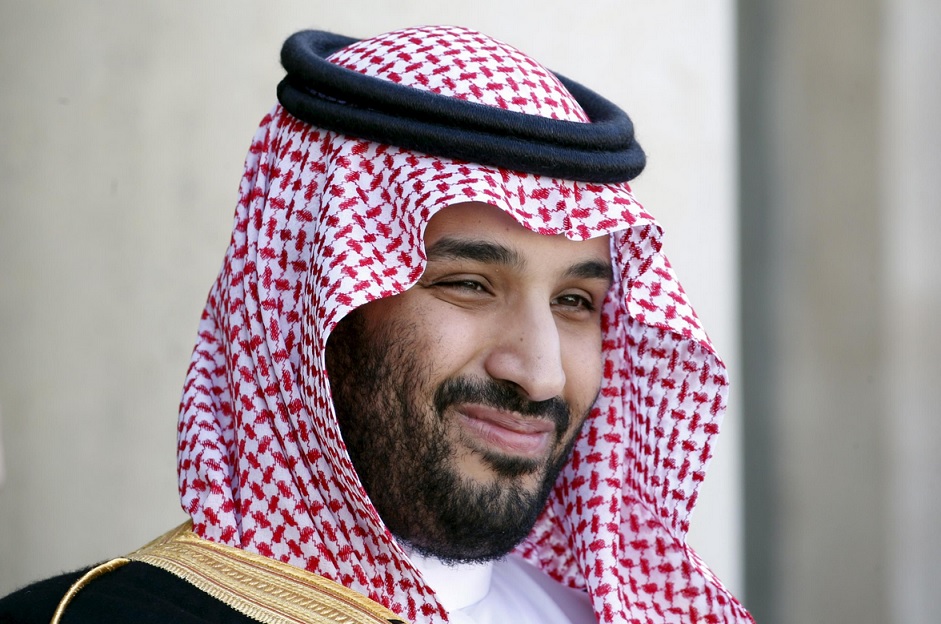
    As his country experiences the early pangs of a cultural and economic transformation, Saudi Arabia’s crown prince vowed Tuesday to destroy “extremist ideologies” in a bid to return to “a more moderate Islam.”

    Speaking at the Future Investment Initiative conference in Riyadh, Crown Prince Mohammed bin Salman said the moves will put the kingdom in lockstep with many other nations as it seeks to transform its economy over the coming decades.

    “We want to lead normal lives, lives where our religion and our traditions translate into tolerance, so that we coexist with the world and become part of the development of the world,” he said.

    It’s a move sure to rile the ultraconservative clerics who have held sway in the kingdom, even if that sway appears to be waning. At the same time, the prince’s declaration will be heralded by Saudi Arabia’s increasingly youthful population and the outside world, on whom the kingdom will rely in its quest to overhaul its finances.

    “Seventy percent of the Saudi population is under the age of 30. In all honesty, we will not spend 30 years of our lives dealing with extremist ideologies. We will destroy them today and immediately,” bin Salman said.

    He continued, “Saudi was not like this before ’79. Saudi Arabia and the entire region went through a revival after ’79. … All we’re doing is going back to what we were: a moderate Islam that is open to all religions and to the world and to all traditions and people.”

    Conference attendees broke into applause.

    ‘Righteousness is on our side’
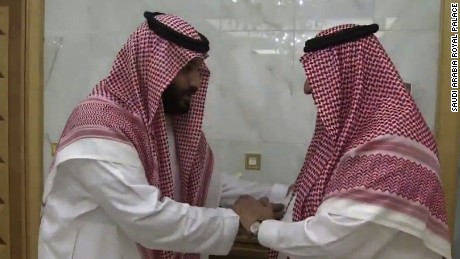
    Royal shake-up in Saudi Arabia

    Royal shake-up in Saudi Arabia

    Bin Salman’s reference to 1979 was doubtless a nod to a tumultuous year for Saudi Arabia that included Shiite militants overthrowing the secular Shah of Iran and Sunni fundamentalists seizing the Masjid al-Haram, or Grand Mosque, in Mecca. That same year, the country’s Shiite minority staged a deadly revolt in Al-Hasa province.

    The Saudi monarchy responded by shoring up ties with the Wahhabi religious establishment and restoring many of its hardline stances. For instance, it shut down the few movie theaters in the kingdom.

    Saudi police release woman in miniskirt video

    Wahhabism is a form of Islam that bans the mixing of sexes in public and puts myriad restrictions on women — among them, the requirement that they need permission from a male guardian to work or travel. Saudi Arabia’s religious police were given great leeway to enforce the restrictions.

    The tentacles of Wahhabism reached deeply into Saudi life, influencing its courts, politics and foreign policy, as elder kings with tight relations to the religious establishment ruled for the next few decades.

    In 2015, King Salman bin Abdulaziz Al-Saud took the helm, along with bin Salman, ushering in a new era of Saudi politics. The king promoted bin Salman to crown prince, making him heir apparent, in June.

    The two curbed the authority of religious police, taking away their power to arrest citizens. They allowed the first music concerts in decades, cracked down on religious incitement and granted women a growing list of rights — most notably the right to drive, which will take effect next year.

    “Some clear steps were taken recently and I believe we will obliterate the remnants of extremism very soon,” bin Salman said at Tuesday’s conference. “I don’t think this is a challenge. It reflects our values of forgiveness, righteousness and moderation. Righteousness is on our side.”

    The challenges ahead
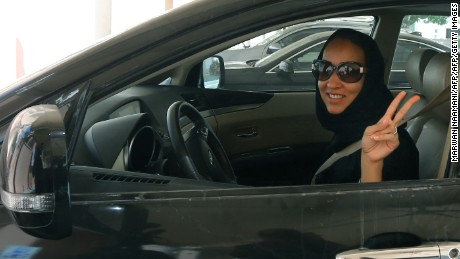
    Saudi activist hails end of ban on women driving

    Saudi activist hails end of ban on women driving

    Watchdog groups say Saudi Arabia has a long way to go. Weeks ago, the kingdom said it planned to indict “radical” Twitter users who were “harming the public order.”

    Amnesty International, Human Rights Watch and the Committee to Protect Journalists have reported in recent months that the kingdom still targets peaceful activists and jails reporters, while state clerics incite hatred against the Shia minority and the Saudi-led coalition in Yemen perpetrates crimes against children.
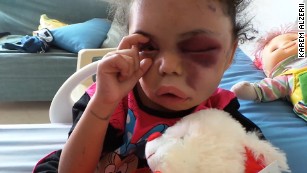
    Little girl opens the world's eyes to Yemen conflict

    In applauding the move to allow women to drive, Human Rights Watch’s Liesl Gerntholtz told CNN last month that Saudi women still face a plethora of hardships in daily life — namely laws that govern the guardianship of women.

    “This prohibition on driving is just one in a vast series of laws and policies which prevent women from doing many things,” she said. “The guardianship rule stops women from making every decision in her life without the assistance of a male relative, even if that relative is her 7-year-old son.”

    It’s also worth noting that while the world and many in Saudi Arabia — including the Saudi Senior Scholars Council, the kingdom’s highest religious body — commended the royal order allowing women to drive — many Saudis took to Twitter to promote the hashtag, #The_People_Refuse_Women_Driving, as Wahhabi sheikhs predicted, “This is the end of Saudi.”

    Economy, culture collide
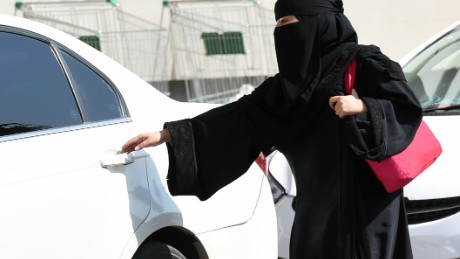
    saudi women driving

    Spokeswoman defends progress in Saudi Arabia

    While permitting women to drive might seem like a cultural move, bin Salman also painted it as an economic one that will bring more women into the workforce. It’s no coincidence that he raised the economic aspect of pursuing a more tolerant Islam as he delivered his remarks at the investment conference in the Saudi capital on Tuesday.

    The crown prince faces the daunting task of revamping the Saudi economy, and quickly. He is spearheading a reform plan called Vision 2030 that aims to wean Saudis off government aid and diversify an economy almost wholly dependent on oil.

    Oil, whose prices have dropped precipitously in recent years, directly or indirectly employs roughly 70% of the population. Meanwhile, Saudis pay no taxes and receive free education, free health care and subsidies for most utilities.

    In 2015, the International Monetary Fund forecast that the Saudi economy would run out of financial reserves by 2020.

    The government has been able to reduce subsidies for gas and water. There is a proposal to sell a chunk of the state-owned oil company, Aramco, which could raise a substantial sum. On the flip side, efforts to cut bonuses and benefits for Saudi government officials did not pan out and the notion of taxing Saudis is a nonstarter.


    Source: http://www.cnn.com

  • Walid J. Abdullah: Religious Conservatism Does Not Equate Extremism

    Walid J. Abdullah: Religious Conservatism Does Not Equate Extremism

    Do not conflate religious conservatism with extremism.

    As is always the case, once a terrorist attack occurs (which again seems to be the exclusive domain of Muslims, as the media has shown from its reluctance to use the word ‘terrorist’ to describe the murderer of Jo Cox), experts rush to dissect what is wrong with Islam.

    Almost inevitably, there will be a group of analysts who suggest that Islam itself is the problem, and that Islam needs a ‘reformation’. They would then proceed to conflate expressions of religious conservatism with extremism.

    Which is not only mistaken, in my opinion, but extremely dangerous. Suddenly, conservative Muslims are viewed with much suspicion. How many times have we heard – whether in jest or otherwise – people making remarks such as ‘eh why your beard so long? Like terrorist/osama/al-qaeda/isis.’

    What these people do is essentially equate conservatism with extremism.

    Personally, i do shake hands with members of the opposite gender, i do wish non-Muslims on their festive occasions, and so on, but i know many Muslims who do not, but utterly despise extremism and extremists.

    And if we start saying that conservative expressions are signs of extremism, as was recently done when it was suggested that not wishing ‘Merry Christmas’ was a step toward/an indication of extremism, where do we draw the line? What about those who do not shake hands with those of the opposite gender? What about someone who dons the hijab? Or someone who only eats halal? Or someone with a beard?

    We must be more careful in using terms such as ‘moderate Muslim’, ‘extremist’, ‘radical’ inter alia, as words do have meanings, and they may shape perceptions. Otherwise, we may end up creating unnecessary frontiers in the fight against extremism.


    Source: Walid J. Abdullah

  • A Confused Muslim, Once Again

    A Confused Muslim, Once Again

    I found myself sucked into a debate while having breakfast at a mamak restaurant recently. It all started with a friendly chat about the call by Penang Opposition Leader, Jahara Hamid to remove a Taoist shrine from Armenian Park in Georgetown.

    “You are a Muslim. Tell me why Muslims do this?” asked an uncle who joined me for my morning nasi lemak.

    “Apparently they are confused,” I replied with a chuckle.

    “I don’t think so. This is something they are doing on purpose. You should know – you are a Muslim.”

    Getting somewhat defensive, I blurted, “Not all Muslims are the same.”

    “So you don’t practice your religion?” the uncle shot back.

    Realising the conversation had taken a serious turn, I tried explaining: “I do practice my religion to the best of my ability. But that is not what we are talking about here.”

    “It is precisely what we are talking about. The lady who wanted the shrine to be removed; the man who wanted ‘No Pork’ signs to be banned, the group who wanted the cross taken down – you all have the same faith. You all read the same Holy Book…”

    “I disagree. You can’t judge everyone based on the conduct of a small group of Muslims. I do not go around persecuting people. I do not go around telling people how to live their lives. I support freedom and human rights. I am no extremist. Most Muslims are not extremists.” I was clearly upset by now.

    “Girl, you follow your Holy Book and so does the confused Muslims and the extreme Muslims. If all Muslims accept the one and only Holy Book and live by it, they are no different from one another. They are all extremists – including you.”

    “I disagree. I do not condone discrimination, violence and terrorism. Islam is not a religion of violence. Islam is a religion of peace,” I argued, as the uncle had gotten on my nerves with his blanket judgements.

    “Your Holy Book promotes violence. There is even a verse saying: ‘Go and kill.’ Now how can a religion which promotes killings be a peaceful religion?”

    “There are more than six thousand verses in our Holy Book – why emphasise on the negatives? Why aren’t you talking about the messages of kindness, love and compassion in most of the verses?” I countered, not realising that I had raised my voice in the process.

    The uncle laughed, “Girl, religion is not like a plate of mee goreng you order at a mamak shop. You don’t get to tambah pedas or kurang pedas; tambah taugeh or takdak taugeh; tambah telur or tambah ayam. You can’t be selective of which content suits you and drop those you disagree with.”

    The uncle got me thinking. If a good Muslim accepts every single verse in the Holy Book without any argument, does that make me, a cherry-picking liberal Muslim and a moderate, a bad Muslim?

    I went home that day, quite confused.

    There are approximately 30 million people in Malaysia, 60% of whom are Muslims. If a mere 1% of Malaysia’s 18 million Muslims are extremists, why is it that we haven’t witnessed violence or crime perpetrated by some 180,000 extremists?

    Clearly, that could mean only one thing – extreme Malaysian Muslims don’t even make up 1% of our Muslim population. That makes me wonder – why then did the uncle get so worked up over a tiny number of people?

    More importantly, if 99% of Malaysian Muslims are non-extremists, why haven’t we seen even 1% of the 17,820,000 non-extremists fighting against extremism in our country?

    Maybe that’s what makes us – the non-extreme, moderate ones – bad Muslims. We do not fight injustice and cruelty. We are after all, moderates – in thinking and behaviour. We can talk for hours about Arabisation, Islamaphobia, Zakir Naik, Zionist and Shariah law. But when it comes to fighting extremism and terrorism, we hide behind our moderate robe. That’s the problem with being a moderate Muslim. We tolerate nonsense.

    Perhaps that is also why we moderates like to insist that Islam is a peaceful religion – it allows us to justify our laid back attitude. In response to any extreme movement, we, the moderates peacefully make a peaceful statement, clarifying how peaceful Islam is, so we can get back to our peaceful lives, sipping kopi O at Kedai Kopi Ahmad.

    In conclusion, although I do not agree with the uncle on most counts, I believe he got one thing right – we are not good Muslims. As long as we tolerate nonsense, the moderates are equally as bad as the extremists.


    Source: www.freemalaysiatoday.com

  • Shafiqah Othman Hamzah: The Hypocris Of Malay Muslims

    Shafiqah Othman Hamzah: The Hypocris Of Malay Muslims

    APRIL 16 ― Zakir Naik is a world-renowned Islamic scholar. Love him or hate him, you cannot deny that his name has travelled across continents and countries.

    He’s also an extremely controversial figure. Known to many as an authority in comparative religion, while to some others, as a charlatan who holds no regard for people of other faith.

    This Sunday, April 17, Zakir Naik was scheduled to have a talk at UTeM titled “Similarities between Hinduism and Islam.” However, the talk got cancelled after it raised uneasiness within the Hindu community. Sensitivities were touched and eventually, IGP Tan Sri Khalid Abu Bakar released a statement regarding its cancellation.

    Immediately after, there was an uproar in the Malay Muslim community. People started talking about how this was an infringement of freedom of speech, and that Hindus were probably just afraid that their adherents would convert en masse during the talk.

    People started talking as though Zakir Naik was denied entry into the country, like how he is barred from UK and Canada. They started talking as though all his talks were cancelled when that was just one out of the many other events he has here. The rest of his talks are carried out as per normal.

    Zakir Naik released a statement about how he was upset that such a small matter was blown out of proportion to the extent that Malay Muslims were fighting amongst themselves. He said that some Muslims even had the audacity to call another Muslim “kafir” just because of different opinions.

    However, amidst the hustle and bustle of the controversy, I cannot help but feel appalled; not by Zakir Naik, but by the hypocrisy of Malay Muslims. The Malay Muslim community of Malaysia has such jarring double standards, and it’s even more obvious now than ever.

    The Malay Muslims who get upset when people talk bad about Islam or when Muslims present a version of Islam that is unfamiliar to them are the same Malay Muslims who shout “It’s freedom of speech!” when Muslims belittle other religions or when an Islamic scholar says something that is potentially inflammatory but is parallel to their beliefs.

    But where were you when Dr Ulil Abshar Abdalla was denied entry into Malaysia in 2014 for supposedly being a deviant? Zakir Naik is notorious for his support of al-Qaeda and Osama Bin Laden while Ulil was denied entry to “defend Malaysia’s brand of Islam” despite wanting to speak against terrorism. What does this say about our brand of Islam then?

    The Malay Muslims who say that freedom of religion is mutually exclusive from Islam, disallowing the propagation or profession of other faiths while discriminating against converts from Islam or apostates, are the same Malay Muslims who use that term to justify the propagation of Islam, to fight back cases of Islamophobia, to encourage adherents of other religions to join Islam and to defend converts into Islam who are attacked by their family or friends.

    But where were you when Lina Joy wanted to get her religion changed legally? Where is your outrage regarding the Raif Badawi case? Did you try to defend Juli Jalaluddin when she was deported out of Malaysia?

    The Malay Muslims who are against pluralism and expect religious minorities to respect the needs and wants of the Muslim majority are the same Malay Muslims who would be appalled at the news of abuse or killings of Muslim minorities in foreign countries, saying, “We should respect other religions! We have to learn to live in peace and harmony!”

    But where were you when protests were held against the construction of a Hindu temple? Or when Molotov cocktails were thrown at a church? Where were you when a church was forced to take down their cross?

    The Malay Muslims who rallied behind Zakir Naik’s statement against excommunications of other Muslims are the same Malay Muslims who so very easily label others “kafir” for unorthodox opinions.

    But where were you when progressive Muslims get told to leave Islam because of their opinions? Where were you when organisations like Sisters In Islam are labelled “deviant” and accused of infidelity? Did you try to stop any acts of takfir (excommunication of another Muslim) when you see it happen? Or did you jump on the bandwagon because the thoughts of these unorthodox Muslims didn’t mirror yours?

    Obviously, I know that not all Malay Muslims think like this. But a huge group of us do and it can be seen everywhere. These Malay Muslims that I am talking about only support certain values when it benefits them, or wherever it is convenient for them. They don’t apply these values across the spectrum and immediately take back these “privileges” when someone does not share the same thoughts and opinions as they do.

    Their “freedom of speech” means “freedom of speech only for my group.” Their “freedom of religion” means “freedom to only practise Islam.” Their disagreement on takfir means “as long as you think like me, you’re still a Muslim.”

    If you don’t agree with the limitation of Zakir Naik’s freedom of speech, you shouldn’t agree with the limitation of other Muslims’ freedom of speech. If you don’t agree with the belittling of Islam, you shouldn’t agree with the belittling of other religions. If you don’t agree with the excommunication of Zakir Naik, you should not agree with the excommunication of other Muslims.

    The problem now is not with Zakir Naik, but with the hypocrisy of our Malay Muslims. Like what is written in the Qur’an, “Do not let the hatred of a people prevent you from being just.” Thinking back, have we really been just to the rest of Malaysians? I wonder.

    *This is the personal opinion of the columnist.


    Source: www.themalaymailonline.com

  • Malaysia Says “Controversial Preacher” Zakir Naik Is Moderate Islamic Voice

    Malaysia Says “Controversial Preacher” Zakir Naik Is Moderate Islamic Voice

    KUALA LUMPUR — The Malaysian Deputy Minister in charge of Islamic Affairs on Tuesday (April 19) defended the country’s decision to allow controversial Islamic scholar Zakir Naik (picture) to conduct his recent week-long lecture series on religion following an uproar from various quarters, including the ruling Barisan Nasional (BN) component parties, because Dr Zakir is a “voice of moderation” for Islam.

    Analysts, however, told TODAY the Malaysian government’s endorsement of Dr Zakir — including a meeting between the preacher and Prime Minister Najib Razak — was aimed at appealing to the Malay voter base, marking another level at which the country’s main ruling party, the United Malays National Organisation (UMNO), is using religion to shore up its political position.

    In an interview with business radio station BFM on Tuesday morning, Deputy Minister in the Prime Minister’s Department Asyraf Wajdi Dusuki said the India-born preacher was needed in Malaysia to counter the rising extremist voices in Islam. “Islam is a misunderstood religion, and there are many voices that are perceived as being extremist. We need a voice of moderation,” said Mr Asyraf . “He could represent a voice of moderation, not only among Muslims, but especially non-Muslims.” Mr Asyraf said Dr Zakir was capable of convincing non-

    Muslims that Islam is a “religion of moderation”. “We are facing plenty of problems right now with extremist groups. This is why we need iconic personalities to change this perception,” he added.

    Mr Asyraf was among those who lobbied for Dr Zakir to be allowed to speak in Malaysia, despite objections from BN’s senior partners, Malaysian Indian Congress (MIC) and the Malaysian Chinese Association (MCA), as well as from numerous non-governmental organisations.

    NGO Hindu Rights Action Force had accused Dr Zakir of encouraging discord by allegedly promoting terrorism and criticising the various faiths practised in Malaysia. The preacher is controversial for his views, among them his support for Al Qaeda jihadists and Osama bin Laden, after, in a 2006 lecture, he called for “every Muslim to be a terrorist”. However, Malaysia’s Deputy Prime Minister Ahmad Zahid Hamidi has defended the Islamic televangelist and even described the latter as a “very wise man”. During his week-long tour, Dr Zakir spoke in Kuala Lumpur, Terengganu and Malacca, after being given permission to do so by the police and the government.

    Dr Lim Teck Ghee, director of the Centre for Policy Initiatives in Kuala Lumpur, told TODAY that the government’s move in greenlighting Dr Zakir’s speaking engagements was to appeal to the Malay-Muslim support base. “It is to make sure this audience continues to see the government as protecting Muslim and Malay dominance and hegemony,” said Dr Lim.

    “The past two elections have shown that UMNO’s hold on power is precarious. Distracting the Malay Muslim audience with religious issues, which make it appear as if UMNO is the champion of Islam, is a straightforward and sure-to-win method to retain Malay votes; perhaps even a majority.”

    Political analyst Wong Chin Huat noted the issue is about domestic positioning, to “lock in” Muslim voters who are eager to see Islam or Muslims emerging triumphant in any zero-sum game with other faiths or religious communities. “It’s a sign that the government is using the religious card to shore up its political position,” the head of political and social analysis at Penang Institute told TODAY.


    Source: www.todayonline.com