Tag: MUIS

  • Lunch With Sumiko – When The Going Gets Tough, Muft Fatris Bakaram Writes Poetry

    Lunch With Sumiko – When The Going Gets Tough, Muft Fatris Bakaram Writes Poetry

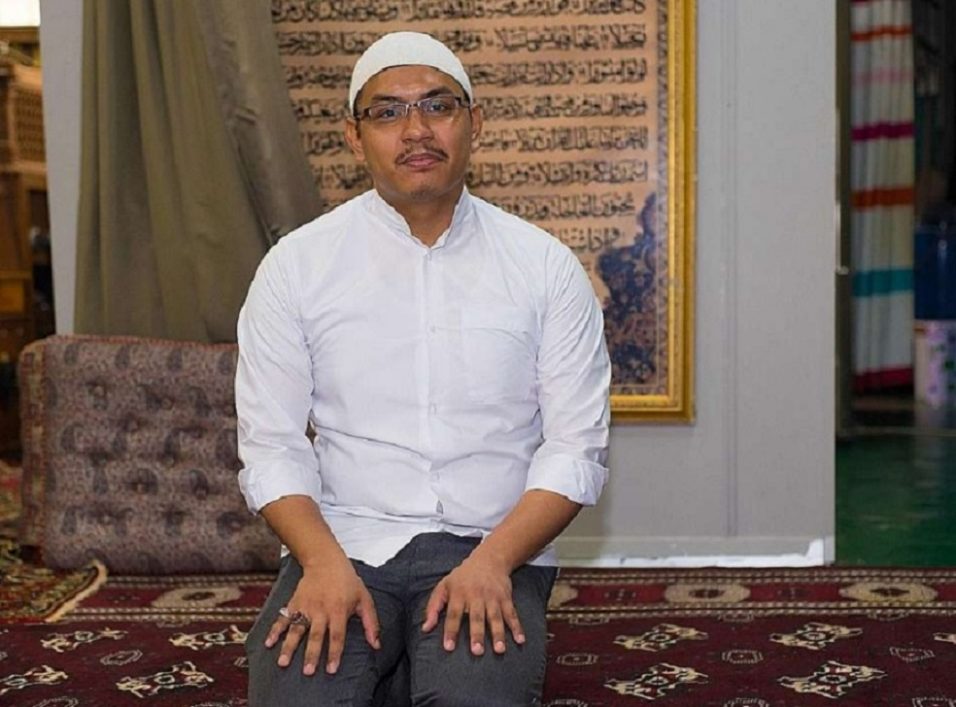
    My lunch with the Mufti of Singapore is held in the shadow of the Sultan Mosque.

    I’m early at The Landmark, a restaurant at the Village Hotel Bugis overlooking the swimming pool.

    It is just past 1pm and I’m suddenly aware of a different sound in the air. Ah, I realise, the call to prayer, or azan.

    Dr Fatris Bakaram, the Mufti, arrives soon after. I nod and wave my hello.

    He’s accompanied by Mr Zainul Abidin Ibrahim, director of strategic engagement at the Islamic Religious Council of Singapore, otherwise known by its Malay acronym Muis.

    A mufti is an Islamic scholar who helms the religious leadership in a Muslim community. He interprets Islamic law and provides spiritual guidance to the community, which numbers about 500,000 here.

    The Office of the Mufti is part of Muis, a statutory board under the Ministry of Culture, Community and Youth and supervised by the Minister-in-charge of Muslim Affairs.

    Among his many duties, the Mufti chairs the committee that issues fatwas, which are Islamic legal rulings.

    His office also issues Friday sermons, gives direction for programmes in mosques and Islamic education, and advises the Government on Islamic matters.

    Dr Fatris, 47, became Singapore’s third Mufti in 2011. He has also been an ustaz, or religious teacher, since the 1990s, and still conducts a class at a mosque every Sunday.

    I ask what it’s like to be in the public eye.

    “I think I manage to live with it, although at times it has caused a bit of discomfort to my wife,” he says with a laugh. He lets on that these days, she would rather he wait for her in the car when they go to the market and shops around their home in Yishun.

    The Mufti comes from a family of religious teachers. His father, Bakaram Osman, was an ustaz in the Pasir Panjang village Dr Fatris grew up in, and his mother is a housewife. He is the third of four children, and an elder brother and younger sister are religious teachers.

    His father, who died in 1995, was a major influence in his life. “He always emphasised the need to be calm in the face of challenges, and the importance of appreciating different points of view even if we disagree with them,” he says.

    “That shaped me as a person. Some of his students say they see his reflection in me. I am a person who does not vent. Even when times get tough, I have to be tough in my thoughts, in my thinking, in the process of coming to a decision, but in my interaction, Fatris is Fatris.”

    He studied at Pasir Panjang Primary School before switching to Madrasah Aljunied. In 1988, he left for Egypt’s prestigious Al-Azhar University to study Islamic theology, returning in 1993.

    After he returned, he taught at a madrasah before joining Muis. He later became a principal of a madrasah, did his master’s in education in Malaysia, and then went back to Muis where he was manager of the Office of the Mufti.

    In 2004, he was told by Muis that he would succeed Mufti Syed Isa Semait, who had been mufti since 1972 and had postponed his retirement several times.

    To prepare for his new role, he went to the University of Birmingham in Britain to do his doctorate in Islamic law.

    He took part in a week-long multi-faith conference in Germany and got to know Jewish rabbis and Christian leaders. “We had meals together, we openly discussed our different faiths. That’s when I saw the human side of religion rather than just the theological part.”

    A large part of Dr Fatris’ job is chairing the fatwa committee, and in recent years, fatwas have been issued on topics such as organ transplants.

    Fatwas, he explains, are different from religious advisories. For example, whether it is okay for Muslims to wish Christians “Merry Christmas” is not a fatwa but an advisory. (For the record, it is okay.)

    A recent fatwa he took satisfaction in shaping was on adoptions. Muslim couples who wanted to adopt or foster had some questions on the permissibility of adopting girls, as they understood that there are guidelines that a male and a female should not be in closed premises when they do not have a family relationship.

    The committee studied the Quran, prophetic precedents and sought expert opinions on child and family psychology. It concluded that no child should be denied the love and care of a family. An adopted child, regardless of gender, should be treated as part of the family.

    Muis explained its decision to religious teachers and they understood and supported the fatwa, Dr Fatris says. He is happy to see more couples coming forward to adopt and foster children.

    A few days before our interview, terror group Islamic State in Iraq and Syria claimed responsibility for an attack in Berlin that killed 12 people. I wonder if it would be insensitive to raise the issue of terrorism, but he is unperturbed when I bring it up.

    To a large degree, he says, Muslims in Singapore are very enlightened compared with those in many other countries.

    “Only a small number of individuals are attracted to deviant teachings,” he says, and points out how most Muslims will speak out if they attend classes by teachers who “get carried away” or espouse radical or extremist views.

    “Muslims in Singapore are able to differentiate between what true Islam should be, how it should be practised in Singapore, and which practices would be inappropriate here. So I take comfort in that.”

    Does he feel the need to defend Islam each time an attack happens?

    “I think we have come to a stage now where it’s not fruitful to continuously keep making statements, because it doesn’t help. We need to go beyond this,” he says firmly.

    The best way Muslims here can help to dispel the idea that Islam is a troubled religion is to be a community that is productive, which contributes to the country and upholds the values and principles of peace, he says.

    I ask what’s the most difficult part of being mufti and his reply is swift: Managing expectations.

    There are people who say the Government should do more to support Muis, but there’s also another group that wants the Government to do less as they want Muis to be independent.

    There are some who want the Mufti to be more visible in mosques, yet others say it’s inappropriate for the Mufti to be conducting classes in the mosque because of his position.

    There’s also the matter of Friday sermons. A group in Muis – including outside experts – prepares the sermons which are sent to mosques. While they sometimes check with him on what to say, he usually leaves it to them because “I want my officers to be empowered”. The imams can make adjustments to the sermons while keeping the core message.

    There are those who think it is not Muis’ job to write the sermons, but others want Muis to continue doing so as they feel Singapore is too small for different mosques to be preaching different messages.

    He has concluded that the key in managing expectations is integrity.

    “In the midst of managing those expectations, really building up your integrity is important. You just have to convince people with action, with your programmes, deliver results.”

    One result he likes to cite is Singapore’s mosque-building programme, which is wholly funded by the Muslim community.

    When Muis started the programme in 1975, there was scepticism. Today, there are 25 new, multi-function satellite mosques, many not just beautiful but also buzzing with programmes for all segments of the community, including the larger Singapore society.

    Dr Fatris points out how in many parts of the Muslim world, mosques are used only as a place of ritual and worship.

    Singapore’s mosques are also progressive. Dr Fatris relates how a visiting female Muslim community leader from Britain was surprised to learn how mosques here have prayer spaces for women, and how many of the activities are driven by women.

    “She was shocked. She asked, ‘What else?’ I said, ‘In Singapore we have female scholars, female religious teachers who will conduct lectures and we males will just sit down and listen to them and get instruction from them, not only from the males.’ She said, ‘Are you sure?’

    “It’s something that they cannot imagine in their part of their world – that Muslim men would be able to listen to a female preacher talking about religion.”

    Still, being Mufti has its challenges, and to relax, he writes Malay poetry, a passion since secondary school.

    One poem is about his dreams for his daughter and three sons. They are aged 22, 21, 19 and 16 and studying. Some lines go: “One by one, you will go on to build your own lives/Fly into the clouds without worry/Because God’s sky is your umbrella/And my prayers are your wings”.

    He writes about “anything”, he says. “Sometimes I write about life in a kampung, sometimes I write about children, about family, about religion, about society.”

    He adds self-deprecatingly: “Kampung boy, sometimes get very sentimental, romanticising about the good old days… something that my wife can read but cannot understand. My wife is totally a city person, she was raised in Toa Payoh.”

    He used to enjoy handicraft too, but “now in an HDB flat, how can you knock-knock on wood without disturbing others”, he chuckles.

    Our lunch has taken us to nearly 3pm. We decline an offer for dessert but get tea.

    Before we go, I ask if there’s anything he wants to add. He laughs and says he has shared a lot already. Then, turning serious, he adds that there is something very important he wants to talk about – the influence former mufti Syed Isa has had on his life.

    He tells me that Mr Syed Isa was mufti at a time when he didn’t have the luxury of having a team of officers behind him, but he was very confident, courageous and ahead of his time.

    He cites an example of how, back in the 1970s, Mr Syed Isa decided to base Hari Raya dates on scientific calculations rather than ritual visibility sightings. “It was very, very tough for the people to accept that but he just believed in it.”

    Today, he and the former mufti – now 78 – still have long chats whenever Mr Syed Isa is in Muis.

    Do you see yourself serving as long as your predecessor’s 40 years, I ask.

    “I do not know whether I can stay or whether I should stay that long,” says Dr Fatris. “Sometimes it gets tough.”

    But, he adds with a charming smile: “Writing poetry is a way for me to release that stress without venting my anger. It’s an outlet for me.”


    Source: www.straitstimes.com

  • What Happens To The CPF Money If Your Husband Passes On Before Reaching 55

    What Happens To The CPF Money If Your Husband Passes On Before Reaching 55

    Duit oh Duit!
    .

    Tadi berbincang dengan seorang teman yang baru
    beberapa bulan kematian suami.
    Suaminya meninggal pada usia 54 tahun,
    dan tak sempat nak merasa duit CPFnya pun!
    Suaminya meninggalkan seorang isteri dan
    2 orang anak perempuan yang dalam usia 20an.
    .
    .

    Masaalahnya:
    Apa hukum duit CPF dan rumah HDB peninggalan sang suami?
    Adakah keluarga sang suami ada hak ke atas harta tersebut?

    Lalu kak Aabid pun buat research di website
    Majlis Ugama Islam Singapura.
    .

    1] Adakah wang CPF (Tabung Simpanan Pekerja)
    yang telah diletakkan nama “calon” (nominee)
    oleh si mati menjadikan calon tersebut
    pemilik harta wangCPF itu secara mutlak?
    .

    Jawapan:
    Jawatankuasa Fatwa telah mengulas kembali fatwa
    berkenaan nominasi CPF pada mesyuarat yang ke 24,
    bertarikh 3 Ogos 2010.
    .

    Jawatankuasa Fatwa memutuskan bahawa:
    Sistem nominasi merupakan cara baru pembahagian harta.
    Cara ini tidak terdapat dalam penulisan dan karya para ulama terdahulu, namun ia dibenarkan kerana ia dianggap sebagai jenis hibah yang baru.

    http://www.muis.gov.sg/officeofthe…/…/wang-nominasi-cpf.html

    .

    2] Bolehkah Saya melakukan Nuzriah atau Hibah Ruqba pada Rumah HDB?

    Jawapan: http://www.muis.gov.sg/…/Joint%20Tenancy%20Fatwa%20Booklet_…

    .
    .

    Semoga perkongsian ini membantu mereka
    yang memerlukan jawapan pada persoalan di atas.

    Sila SHARE sekiranya ia boleh memberi manafaat pada ramai!

    #kakAabid
    #HukumDuitCPFuntukKeluargaSimati
    #DuitOhDuit


    Source: Aabidah Samath


  • MUIS Clarifies McDonald’s Statement On Halal-Only Birthday Cakes

    MUIS Clarifies McDonald’s Statement On Halal-Only Birthday Cakes

    The Islamic Religious Council of Singapore (MUIS) has clarified that it adopts “a flexible approach” for the consumption of outside food in halal-certified restaurants, after McDonald’s Singapore said that only halal cakes are allowed on its premises.

    In a media statement on Tuesday (Jan 10), MUIS said that in certain cases, such as with birthday cakes and baby food, customers can consume them at halal-certified restaurants.

    MUIS explained that food establishments with the halal certification “may exercise some discretion in such cases” as long as the following conditions are met:

    – There is no cross-contamination and the item is not brought into the kitchen/food preparation area/storage facilities

    – Only disposable cutlery is used

    – The food item is consumed and any remnants bagged and disposed of immediately

    The fast food chain had said last week that the rule on birthday cakes was implemented in 1992 when all McDonald’s restaurants in Singapore received halal certification from MUIS.

    “We need to adhere strictly to MUIS regulations to ensure the food we serve is halal and suitable for consumption for our Muslim friends,” the director of government relations and communications of McDonald’s Singapore, Faz Hussen, told Channel NewsAsia. “These include regulations on preparing our food, storing our ingredients and ensuring the food we serve is not mixed with non-halal food.”

    MUIS said on Tuesday that while it appreciates McDonald’s Singapore’s approach in only allowing halal-certified birthday cakes, the fast-food chain had not consulted it when it made the statement last week.

    MUIS added that it has since been in touch with McDonald’s.


    Source: Today

  • McDonald’s Singapore: Only Halal Cakes Allowed In Our Outlets

    McDonald’s Singapore: Only Halal Cakes Allowed In Our Outlets

    Due to the recent news of McDonalds Malaysia banning non-halal birthday cakes on their premises, McDonalds spokesman Faz Hussen has clarified on the issue to the local mainstream news.

    Mr Hussen said that although McDonalds does not allow outside food on their premises, birthday cakes are an exception. However, birthday cakes brought into the premises have to been halal certified and this practice has been in place since McDonalds received their halal certification in 1992.

    He added that as a halal certified food establishment, McDonalds Singapore has to strictly follow the regulations set out under the halal certification to ensure their food complies with halal requirements so that it is permissible for muslims in Singapore to patronize.

    During the food preparation process, McDonalds Singapore takes precaution to ensure their food products are not mixed with non-halal certified products.


    Source: www.allsingaporestuff.com

  • A Singaporean In Iran: Life In A Shi’ite Seminary

    A Singaporean In Iran: Life In A Shi’ite Seminary

    Mr Ahmad Murtadha Rosli, 26, is not your typical Singaporean university student. He attends classes from 8am to 5pm every Saturday to Thursday and shares a dormitory with nine other students.

    His teachers are all men who wear turbans and long, flowing cloaks and teach using thick, vintage tomes. That is because Mr Ahmad is studying in a hawza that is a renowned Shi’ite Islam seminary in Qom, Iran.

    Shi’ite Islam is the second-largest sect of Islam, after Sunni Islam. Both branches agree on many aspects of the religion, but are divided over Prophet Muhammad’s rightful successor.

    More than 85 per cent of the world’s 1.5 billion Muslims are Sunni. In Singapore, Shi’ites make up less than 1 per cent of its Muslims, the majority of whom are Sunni.

    The hawza in Qom, home to about 70,000 students, teachers and academics, is the largest Shi’ite seminary in the world. Smaller seminaries exist in other parts of Iran and in neighbouring Iraq, and even in Canada and the United Kingdom. Hawza graduates are accomplished in fields like Islamic law and faith. Many go on to become religious teachers, while some end up in politics. Iran’s Supreme Leader, Ayatollah Ali Khamenei, graduated from Qom.

    The seminary attracts students from across the globe. Many come from India and Pakistan; others from countries like China, Austria and Russia. Singaporean students are rarer. Mr Ahmad’s father, Ustaz Mohammad Rosli Hassan, graduated from Qom nearly three decades ago. Now 52, Ustaz Rosli is the leader of the 5,000-strong Shi’ite community in Singapore.

    “My name was placed under ‘Thailand’ when I first joined because ‘Singapore’ wasn’t in its system,” said Mr Ahmad. “There were a few other students from Singapore but, sadly, they (didn’t finish), maybe because the way of living over in Iran is too different.”

    Since there was no other suitable candidate, Mr Ahmad added, he felt a responsibility to eventually replace his dad as leader.

    Ustaz Rosli said: “Not everyone likes that role; it is a very challenging role. The community needs leadership – whether it comes from my family or not, it doesn’t matter. I am happy that Ahmad is willing (to take over from me), but there are tough challenges ahead.”

    BACKACHES AND LONELINESS

    The seeds of Mr Ahmad’s calling were planted when he was a 10-year-old seeing the hawza for the first time during a holiday in Qom. “I always told my dad I wanted to go there,” he said.

    He attended secular schools and went from Yusof Ishak Secondary School to Ngee Ann Polytechnic, from where he graduated with a Diploma in Civil and Environmental Engineering. The decision to make the switch to a religious institution did not come easily.

    “Being a religious teacher, you won’t be earning a lot,” Mr Ahmad said, as he worried about raising a family and not having enough savings to buy an HDB flat. “I thought about all that – it’s a sacrifice I have to make for the community.”

    Two years ago, after completing his national service as a firefighter, Mr Ahmad packed his bags and left. “I thought it was like going to any other boarding school,” he said. “But at the end of the day, it’s a very different lifestyle.”

    Until recently, Mr Ahmad’s classrooms did not have air-conditioning, computers and projectors. When he stepped inside his small dorm, he was shocked to find bunk beds that did not come with mattresses. “I was sleeping on a wooden frame,” he said. “My back was aching very badly.”

    When it comes to classes, Mr Ahmad has the same timetable – comprising subjects like Persian, Quran studies and Islamic history – every day. Revision is done in pairs, where students take turns explaining a topic they learnt in class to each other. The school believes that encourages critical thinking and helps students to clarify misconceptions.

    Mr Ahmad also had to adapt to unfamiliar conditions in Qom, a desert city 125km south-west of the capital, Teheran. “Singapore is very green, but Qom is very brown,” he said. “If you leave your shoes outside for three days, it will be covered with dust.”

    On Fridays, when it is the weekend and there are no classes, Mr Ahmad plays football on a synthetic pitch with his friends from Malaysia. As meals are not provided on Fridays, they would cook dishes from home, like tom yam and chicken curry. “But it’s hard to find red chilli there,” he said. “Whenever someone visits, we would ask them to bring chilli powder or flakes.”

    However, the company of friends did not stop him from missing home. “Sometimes, I would be very lonely,” he said. “I would just sit in my room and look at old pictures on my phone.” Despite that, Mr Ahmad felt encouraged by his desire to please his parents, whom he described as “very religious”. “This is the time I can prove to them that I want to be successful,” he said.

    His moment of glory came when he scored full marks for an Arabic exam, a subject he initially struggled in because he lacked the foundation. “I would spend four hours doing my homework over and over again, just so I could get it right,” he recalled.

    Mr Ahmad plans to study in Qom straight through to a PhD in the fundamentals of Islamic law – a process that will take at least 10 years. He doesn’t intend to return to Singapore until his father “decides to retire one day, or if he’s too old or sick”.

    Right now, Mr Ahmad is taking a break from his studies. He has been back in Singapore since March last year to get married to his girlfriend of six years. The pair met and got together during their polytechnic days, when she was still a Sunni interested in the Shi’ite sect. About a year into their relationship, she switched over.

    “Before, her parents were good to me,” he said. “After finding out that I was a Shi’ite and that she was slowly converting, things changed.” When Mr Ahmad approached her parents about tying the knot, they rejected him. So, the pair went straight to the Registry of Muslim Marriages. According to the Administration of Muslim Law Act, a Muslim marriage can still be solemnised by a religious official, or kadi, even if the bride’s parents object to it. But after questioning Mr Ahmad about his Shi’ite background, the kadi refused to proceed with the marriage.

    “Now, we have to appeal through Muis (the Islamic Religious Council of Singapore); they are helping us a lot in settling the issue,” he said. Ustaz Rosli is confident his son will prevail in this “unwanted episode”. “Like it or not, he will be married officially in Singapore,” he said.

    Mr Ahmad expects to know the outcome of his appeal soon. If things go to plan, his future wife will accompany him back to Qom, where she intends to enrol in the hawza. He just wants his ordeal to be resolved quickly. “I’m very much missing everything in Qom,” he said. “I wish the authorities would do things a lot faster.”

    LIKE FATHER, LIKE SON

    For Ustaz Rosli, life in the hawza could not have been more different. He arrived in Qom in 1986, during the tail end of the Iran-Iraq war that killed nearly half a million people.

    “People were living in a tough situation,” Mr Ahmad recalled his father telling him. “Everything was so expensive back then.” During meal times, he added, students were issued coupons that entitled them to a serving of meat. “They didn’t get to eat meat or chicken on a daily basis, like how it is now.”

    Ustaz Rosli graduated in 1990 before returning to Singapore, where he is now president of the Jaafari Muslim Association, a Shi’ite organisation based in Geylang. “There were people before us who lived through life in the seminaries with difficulties,” he said. “Anyone who wants to succeed me must be spiritually strong.”

    Ustaz Rosli has also been a full-time religious teacher for more than 25 years, a job that has taken him to countries like Indonesia, the Philippines and the United States, where he gives lectures on Islamic studies. Mr Ahmad said his dad wanted to challenge the perception that religious teachers cannot be successful. “Back then, people used to think that there was no future in being an ustaz,” he said.

    When Mr Ahmad comes home, he wants to be a religious teacher too. He thinks he will have no problems registering under the Asatizah Recognition Scheme, which requires Islamic religious teachers in Singapore to have at least a diploma in Islamic studies from a recognised institution.

    The mandatory scheme, which kicks in from this month, aims to recognise qualified teachers and combat extremist ideology. “Although the majority of Muslims in Singapore are Sunni, Islam in Singapore is not monolithic. Sunnis and Shi’ites have lived in harmony in Singapore for many years,” said a spokesman for Muis. The scheme will ensure that asatizah can “serve as a reliable source of reference” for the Muslim community in Singapore, he added. “The Asatizah Recognition Board has begun engaging asatizah as well as centres providing Islamic education.”

    Mr Muhammad Al-Baqir Buang, who is president of the Muslim Youth Assembly, another Shi’ite group with about 200 members, said: “The scheme will help to reduce extremist or radical thoughts from being spread to the masses by unqualified teachers. However, I have doubts about how far it can be implemented, given that there are some asatizah who teach in homes, and other loopholes that can’t be totally monitored.”

    Nevertheless, Mr Ahmad said the scheme helps to deter “extreme” Islamic teachers who might label Shi’ites as heretics. “The authorities are trying to promote harmony between Shi’ites and Sunnis,” he said. “That is something that is good.”


    Source: www.straitstimes.com