Tag: niqab

  • Niqab Ladies Are Better Than Hijab Ladies, And Both Are Better Than Non-Niqab/Hijab Ladies?

    Niqab Ladies Are Better Than Hijab Ladies, And Both Are Better Than Non-Niqab/Hijab Ladies?

    Bila kita berhijab, kita da pakai uniform Islam. We are the ambassadors of Islam especially to the group of people we are hanging out every day. Like it or not, people will judge us based on our character and dressing. Aku pernah “tervulgar” at work one day and a colleague jaw dropped and immediately tanya aku, “Muslims can swear ar? My friends swear la.. but u in that scarf and swear.. like not appropriate sia..”

    Allah..

    Like it or not, orang akan have the impression that ladies yang berhijab have better character than ladies yang belum berhijab and ladies yang berniqab have better character than ladies yang berhijab. Aku pernah dapat a PM where a lady not in hijab asking me about a particular person in niqab, “Sis kenapa apa dia cakap semua macam lucah. dia kan pakai niqab. Tak paiseh ke?”

    Islam is simple. Kalau ibadah kita on the right track, in shaa Allah, with increased imaan and taqwa, hayaa’ akan menyusul dalam jiwa kita. Kita yang beragama Islam, tau that, tak semestinya someone yang berniqab, they have better akhlak and adab dari a lady yang tak berhijab. Everyone ada their own personal struggle.
    Ada da settle hijrah luaran, but dalaman masih work in progress.  Ada yang da adjust dalaman, luaran masih no progress. Recently, aku had a discussion with a friend about niqab and how some niqabis jadian ruined the image of those yang berniqab lillahi ta’ala.

    Mulut tak jaga.
    Adab tak jaga.
    Suka sindir2 orang.
    Suka cakap pasal orang.
    Suka rasa that pandangan dia better dari everyone else.
    Suka cakap berbaur lucah.
    Jokes double meaning.
    Suka mengata orang
    Tak boleh ditegur..
    Tegur je naik hantu..
    Mana akhlak kita?
    Mana hijab sebenar kita?

    Tak cukup tutup satu badan but kita tak jaga akhlak in public.

    Of course, every single one of us is a work in progress. Wallahi I dont deny that. And as muslims, kita kena berlapang dada bila anyone tegur kita demi kebaikan. We should never look down upon anyone, no matter what stage we are in our hijrah journey, continue to keep on reminding each other that we are in this together. Niqabis should mix around with rugged ladies and break that mentality barrier of “Im better than you”.

    Rugged ladies should be open minded that walaupon kita mungkin kena attack dengan one, two or 3 niqabis, there are still ladies who don the niqab for the sake of Allah SWT. They are nice and humble as the rest of the struggling muslimah. Kadang2 kita rasa diri kita da perfect dalam segala aspect, pakaian.. ibadah, but imagine hari mati kita, first day masuk kubur and kita dapat tau that satu pon amalan kita, Allah tak terima. Every single deed was rejected. Takut kan..?

    Why? Sebab mulut kata lillahi ta’ala. Hati penuh perasaan sombong. Nauzubillah min dzalik. May Allah SWT protect kita semua dari perasaan sombong.


    Source: Khainis Tahir

  • Bigot Calls Burqa-Clad Lady At MBS A “Potential Suicide Bomber”

    Bigot Calls Burqa-Clad Lady At MBS A “Potential Suicide Bomber”

    Netizen Dzahir Syirain‎ shared screenshots of an insensitive lady Candice Hong who took photos of a woman dressed in a burqa and made inflammatory comments about the lady’s dressing. For no apparent reason, Candice commented that there were “so many potential suicide bombers in MBS”.

    Contributor Dzahir did not give details on when or where these screenshots were taken but shared that such comments were saddening to see. If these comments are authentic, is this a sign of Islamophobia spreading to our Little Red Dot.

    Should Candice Hong be arrested for making such inflammatory uncalled for comments against people’s religious dressing?

    Source: www.allsingaporestuff.com

  • Syed Farid Alatas: Against The Grain – Arabisation And The Malay Identity

    Syed Farid Alatas: Against The Grain – Arabisation And The Malay Identity

    *This article first appeared in Forum, The Edge Malaysia Weekly, on October 24 – 30, 2016.

    There has been much resentment expressed recently towards what is perceived as the Arabisation of Malays. This Arabisation is said to be manifested in a number of ways, the most common being the adoption by Malays of Arabic words in their vocabulary and the donning of Arabic dress such as the thobe, an ankle-length garment similar to a robe.

    In the past, for example, Muslims in Malaysia, Singapore and Indonesia would use the term “buka puasa” for the breaking of the fast during the month of Ramadan. These days, however, the Arabic word, iftar, is often heard.

    After the end of the fasting month, the common greeting among Muslims was Selamat Hari Raya Aidilfitri, but this has increasingly given way to the Arabic eid mubarak.

    More and more male Muslims in the region are using the Arab thobe rather than the sarong or kain pelikat. In fact, a variety of thobes originating from the United Arab Emirates, Oman and other countries in the Arab world can be seen in our mosques and at religious functions.

    Many have lamented the fact that things Malay have been substituted by things Arab and fear that this is the beginning of a trend of the Arabisation of the Malay identity and culture. Indeed, this phenomenon of Arabisation must be properly understood and distinguished from an earlier process of the Islamisation of the Malays, when Islam arrived in the Malay world of Southeast Asia.

    When a religion spreads from one region to another, it is quite normal that elements of the culture of the society of origin of that religion would be adopted by its new adherents. This can be said to have happened with the spread of Islam to the Malay world.

    When the Malays adopted Islam as a religion and way of life, the Malay language was influenced in significant ways. Not only was the Arabic script in a modified form adopted by the Malays, but many Arabic words also found their way into the Malay language. This was the case not only with religious vocabulary but also with words used in other areas of social, cultural and political life.

    Some words in Malay are obviously of Arabic origin. Examples are tadbir (administer), had (limit) and mustahil (impossible). Other words, however, are less obviously of Arabic origin. Examples are kuat (strong), derived from the Arabic quwwah, and pasal (paragraph, section), derived from the Arabic fasl.

    This process of acculturation is something normal that takes place whenever there is contact between two different cultural areas. Aspects of the Arabisation of the Malays that had accompanied the Islamisation of the Malays since the early days of the coming of Islam to the Malay world must be distinguished from what is being referred to as Arabisation today.

    What is referred to as Arabisation today is in fact a worrying trend. This is because the adoption by some Malays of certain elements of Arab culture would result in the gradual erosion of Malay culture and practices. If more and more Malay men were to adopt the thobe, this would mean the marginalisation of the kain pelikat and baju Melayu and their possible demise as a cultural artifact. Indeed, it is already the case that there is hardly a Malaysian kain pelikat industry to speak of, as this is dominated by a few Indonesian manufacturers.

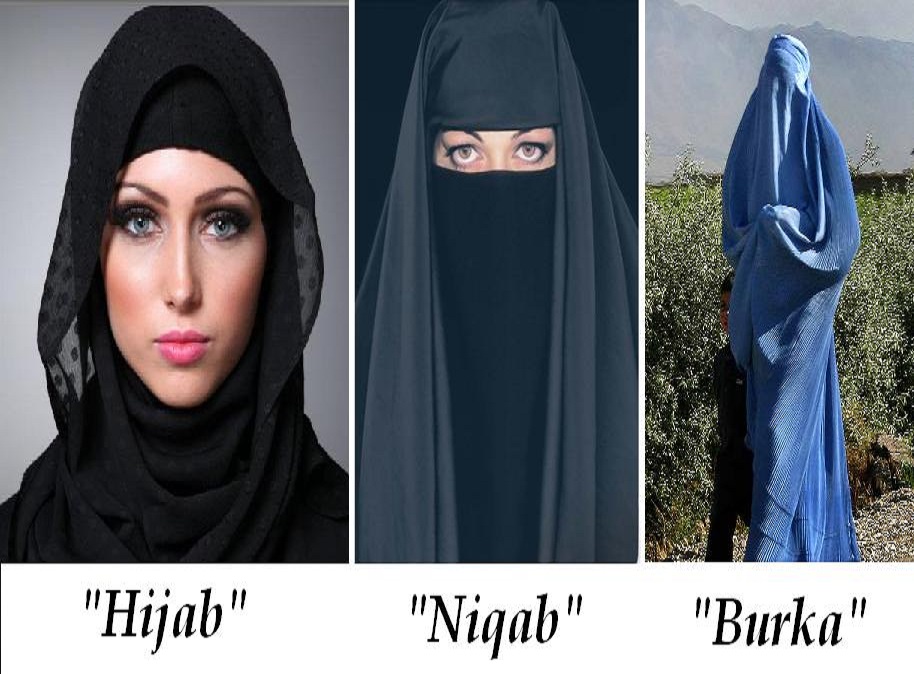
    An even greater concern as far as the trend of Arabisation is concerned is the adoption of a way of life that is not only contrary to Malay culture but is also inappropriate for our society. The example I have in mind is the adoption of the niqab, the part of the hijab that covers the face. The niqab is a tradition of many Arab societies but is foreign to Malay culture. Still, it is increasingly seen on the streets of Kuala Lumpur, Singapore and Jakarta.

    Arabisation in this sense is really a reflection of the influence of certain understandings of Islam originating from the Arab world. For example, there is the phenomenon of Malaysians and Indonesians going to the Hadhramaut region in Yemen to study and returning home with Hadhrami Arab practices such as the donning of the niqab, gender segregation and so on.

    Those Malays and Indonesians who adopt such ways perhaps imagine that they are practising a more authentic version of Islam. In doing so, they set themselves apart from the larger Malay society, contribute to the erosion of Malay traditions and practices, and could be a party to the infusion of extremist interpretations of Islam.

    When Islam arrived in the Malay world centuries ago, it adapted itself to the culture of the region and did not marginalise the culture of its people. Take the zapin, a musical and dance genre. Zapin (Ar. zafin) was introduced to the region from Hadhramaut centuries ago.

    In each part of the Malay-Indonesian archipelago, zapin was indigenised to suit local conditions. Among the Malays of Sumatra and the Malay Peninsula, for example, the language of the song-text of zapin became Malay and the dance was not gender-segregated, unlike in Hadhramaut.

    Furthermore, the introduction of zapin throughout the region did not result in the marginalisation of the music and dance genres that were already thriving in the Malay world. This is unlike the situation in Malaysia today in which some Malay music and dance genres, such as wayang kulit (shadow puppetry) and mak yong (dance drama), are said to be unIslamic and proscribed.

    If elements of Arab culture blend in with Malay traditions and practices without eroding or eliminating things Malay, then such “Arabisation” can be said to be a creative process.

    On the other hand, if Arabisation is founded on the idea of the greater Islamic authenticity of Arab culture, it would result in the erosion and marginalisation of Malay culture and the adoption of inappropriate practices.

    It is this sense of Arabisation that has come under attack in Malaysia recently. The same can be said of the influence of any other culture such as Westernisation.


    Syed Farid Alatas teaches at the National University of Singapore’s Department of Sociology
     

    Source: www.theedgemarkets.com

  • Muslimah: Hijabis Should Stop Thinking They Are Superior To Minahs

    Muslimah: Hijabis Should Stop Thinking They Are Superior To Minahs

    I once knew a Muslim girl who loved wearing short skirts, the shortest shorts possible and tank tops. She used to go dancing at discos with her boyfriend(s). Go out late at night.

    I vividly remember one day, I saw her wearing the skimpiest of clothes, and thought to myself – Ya Allah, whats wrong with this girl? Why does she dress like that??

    I judged her. At the time, I felt superior to her because I was covered. I didn’t say anything to her about it. I sort of stayed away from her. Didnt want to get ‘infected’. Syaitan had played a trick on me. He tricked me into thinking I was better because I went to halaqah, mixed with the ‘good’ kids, went to Islamic talks. My headscarf covered my chest and I didn’t wear revealing clothes.

    A few years after that, I met her again, she had already started wearing a proper hijab and modest clothing. She had started going to Quranic classes as well. I was shocked, but happy for her. She told me she felt like a newborn. Like she was given a second chance to do things right.

    Recently I met her again, this time she was wearing a niqab. I didn’t recognise her! She had changed so much. She held my hands and told me that I had somewhat ‘helped’ her to be better. That she read my fb posts and sometimes felt like I was talking to her.

    All I felt was shame. She didn’t know that I judged her once upon a time. That I looked at her and had negative thoughts. That I didn’t say a sincere prayer for her to be a better Muslim.

    We both had tears in our eyes. Hers was probably due to happiness and Iman.. mine was pure shame and guilt and fear.

    Allah sent her to me to teach me a lesson. Astaghfirullah is all I can say.

    Sharing this so it can be a lesson to all of us. A reminder for me. A slap in the face.

    Never ever judge someone. It’s not our place to do that. We should only pray that Allah gives Hidayah to them. And that He continues to keep our hearts in line towards Him.

    ‪#‎astaghfirullah‬

    Source: Za’Faran Hisham

  • Egypt Drafts Bill To Ban Burqa And Islamic Veils In Public

    Egypt Drafts Bill To Ban Burqa And Islamic Veils In Public

    The Egyptian parliament is drafting a law banning women from wearing the niqab veil. The ban will apply to wearing the clothing in public places and government institutions, it has been reported.

    The full-face veil is worn by some followers of Islam and typically covers all of the wearer’s face other than their eyes. The clothing is common in Egypt which is a predominantly Muslim country.

    MP Amna Nosseir, professor of comparative jurisprudence at Al-Azhar University, who has backed the ban, said that wearing the veil is not a requirement of Islam and in fact has non-Islamic origins. She has argued that it is a Jewish tradition which appeared in the Arabian Peninsula prior to Islam and that a variety of Quran passages contradict its use. Instead, she has advocated that the Quran calls for modest clothing and covered hair, but does not require facial covering.

    A number of restrictions have been placed on wearing the niqab in Egypt in recent years. In February, Cairo University banned nurses and doctors from wearing it in medical schools and in teaching hospitals, arguing the ban would: “protect patients’ rights and interests.”

    In September of last year, the university also banned academic staff from wearing the niqab in classrooms in response to complaints from students that it was too difficult for niqab wearers to communicate effectively with students.


    Source: www.independent.co.uk