Tag: Pakistan

  • PE 2017 Candidate Farid Khan: Rationale Behind Reserved Presidency Is Noble

    PE 2017 Candidate Farid Khan: Rationale Behind Reserved Presidency Is Noble

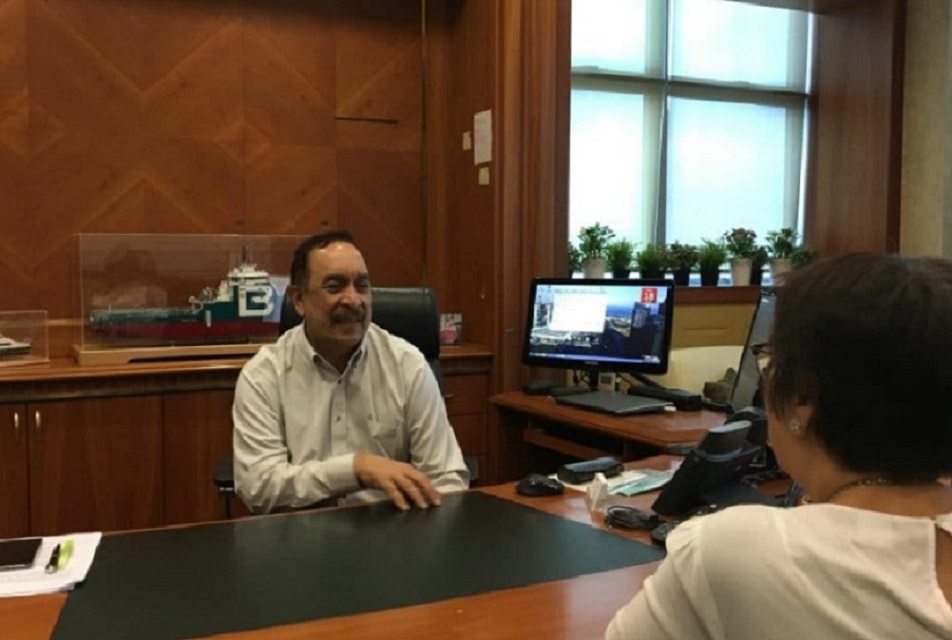
    Like his rival contender, Mr Salleh Marican, Mr Farid Khan, 62, his is a rags-to-riches story that has made the rounds of media publications. He stopped school when he was 13 years-old to support his family. He worked his way through jobs like cleaning toilets, and cutting grass before ending up in the marine sector as a captain’s steward on a ship when he turned 21. Now, he’s chairman of a regional marine sector company with a shareholder’s equity of US$300 million (S$407 million).

    Jokingly, I said that a scion of some billionaire family would do well to stay out of the presidential fray given the sterling background credentials of the two potential candidates. It is a story that he hopes would resonate with the populace – a poor boy made good who is now trying to serve his country. But why president? The answers came out readily: about being asked to serve, having reached the stage of life when he can put aside family and business cares, and deciding to heed the call of duty. A man, he said, had asked him if he was willing to die for his country. He said he would and the man retorted: “Then why are you afraid to serve?”

    He laughs easily. He is a tall, strapping man who would dignify any room of people. He looks the part but can he play the part? Over an hour, we ranged over several issues.

    His suitability as president

    He laments that the private sector qualification threshold has been set so high. At $500 million shareholder equity, few companies would cross the bar. Even his French employer, Bourbon, which deals in offshore oil and gas marine services like freight and cargo, has only four times as much in shareholder equity at 1.2 billion euros last year. But he thinks his appointments in other companies would help raise the numbers. What else would he bring before the Presidential Elections Committee? He cited his international links. As the chairman of Bourbon Offshore Asia, he is used to talking business with foreigners.

    He also stressed his non-partisan, independent stance. Clearly, he is no Establishment figure. He meets government officials only at business events, has never been to the Istana or even spoken to any previous presidents besides saying “hi’’ to the late President S R Nathan whom he bumped into while jogging in East Coast Park. He has no party political connections, not with the People’s Action Party nor the Workers’ Party, both of which were said to have courted Mr Salleh.

    It led me to think about whether he knew enough of the workings of government to be able to talk to the Prime Minister and his Cabinet as equals. Several times, he bumped his fists together, saying that he was not in favour of a confrontational relationship. He saw himself as a representative of the people and that should be the chief consideration for any G executive who has to deal with him. He saw himself as mediator or adviser.

    What would he do, for example, if he objects to the G’s choice of a key appointment holder? “I would approach a different way. If you want me to decide, give me three good names. And to the best of my judgement, I will make the decision. If I’m not sure, I ask my Council of Presidential Advisors (CPA).”

    That is how business is usually done, he said. He would after all be advised by his CPA. Who are the three he would name to be part of the eight member council, we asked. He said it would depend on what sort of expertise was lacking in the council, which also has three members nominated by the Prime Minister, one by the Chief Justice, and one by the Chairman of the Public Service Commission. Thinking aloud, he thought a constitutional expert would be useful given his own inexperience in the area, “a good financial guy” with knowledge of global finance and someone very strong in social work.

    We got into a tangle over the constitution.

    Did he think the provisions on the presidency should be entrenched? He confessed that he was unclear about why the G was balking on this and it would be something to discuss if he was elected president.

    He was also asked about the late President Ong Teng Cheong’s open squabble with the G on the extent of his powers in 1999. Mr Farid said the elected presidency was a new concept then. As a former PAP man, Mr Ong had to play a “completely independent” role as President, which was then “quite uncharted territory”. Personally Mr Farid thought the G felt “challenged” by Mr Ong’s approach. Maybe his approach was “right” at that point in time, but for himself Mr Farid would ask questions in a “little bit different way”.

    As much as he is “is diligently going to watch the reserve”, it’s “quite difficult” if the G is asked for “each and every detail” he said. Instead, he would get input from the G and ask how a financial crisis for example can be managed, rather than for the detailed value of every asset.

    He was on firmer ground on the subject of the reserves, ticking off on his fingers the number of times presidential assent has been sought and given. Like in Oct 2008 during the global financial crisis when former President S R Nathan approved a $150 billion guarantee on all bank deposits in Singapore to be backed by past reserves. It was not used. And three months later, when Mr Nathan gave the G approval to draw on $4.9 billion of reserves to fund the Jobs Credit Scheme and the initiative which helped certain companies have greater access to credit. In the end, $4 billion was drawn and the sum returned to the coffers by Feb 2011. He said his “confidence is high because of that”.

    Given the G’s track record in financial management, he reckons the President’s “job is little bit easier” because he’s “sure there is a mechanism in place”. And that is what he wants to know more about: “the kind of mechanisms you have in place, rather than how much money you have inside the bank”, he said.

    Role of president

    At his maiden press conference on July 11, his comment that there was a “thin line’’ between what a President can do or not do had raised eyebrows. Asked to elaborate, he clarified that while the “the scope and responsibility of the president is quite clear”, it was easy to cross the line. Not that he had any intention of doing so. For him, it was a clear line. He would stay out of the business of government, but would advocate social issues, like strengthening the trust between different races and religions, help the needy and youth at risk, and strengthening families.

    What about his statement that he would get involved in countering radicalisation of Muslims? Would this not be dipping his toes in controversial waters, given the range of Muslim thought and practice? “Not really. I’m more into the perception of Islam, on radicalism where not everybody is like that… make sure that other [communities] do not isolate them.” And this is not about protecting the Muslim community alone because radicalism affects all Singaporeans, he said.

    As a Muslim, he follows the Shafi’i jurisprudence, which is the predominant school of thought in the Malay community, unlike Pakistan which generally follows the Hanafi school. He is active in Masjid Tentera Diraja at Clementi Road, next to the National University of Singapore (NUS), which has a youth-at-risk programme that he supports financially. Annually, about 70 to 80 youths are supported through the mosque. Whether it’s through providing them with positive role models or help with finding jobs, “somebody needs to be there, to hold their hand, bring them in”, said Mr Farid.

    His multi-racial credentials

    He was prepared for questions on a reserved presidency. He said that as a non-Chinese, he has to “thank the government” for ensuring minority representation in the highest office of the land. He was looking forward to a more crowded arena, so that the people can see that the community was throwing up enough qualified choices for them to pick from.

    And he would have run even if this was an “open’’ election. Why not the last time? Because he was still building his company and raising a family with two children.

    What about charges that he was trying to get into office through the back door? “In fact the bar has been raised much higher compared to PE2011. The only difference is that this time round it has been reserved for the Malay community. To convince the other races, that is the difficult part. I can see that. But if I’m independent, non-political, I care for all Singaporeans… you can see my team, it’s a mixture of a races.

    “I always want to look at positive impact than negative. If the door is open, go down there, don’t throw stones from outside… Find out what exactly is the true intention. If the intention is minority representation, that is a noble thing.”

    His chief asset on the multi-racial front is his work in Careers@Maritime programme at Mendaki SENSE which he started in mid-2013. He made clear that G-aligned or not, the platform “can reach a lot of people” at the grassroots level. So “take the politics out of it, and see how we can use the platform to benefit the people”. A year into the programme he lobbied for it to be opened to all races. His committee had members of various races who also reached out to the Chinese self-help group CDAC, Indian self-help group Sinda and The Eurasian Association.

    Still, he acknowledges that “it will be tough” to campaign because he’s a “very private person” and “not many people know” him. Those who do, know him as a nice man, he said, a point he made several times. Which made us wonder how he would fare in the hurly-burly of an election campaign, however staid and sedate, and if he could stand up to personalities in the G if elected.

    When we mentioned that it was like jumping from a private to a public swimming pool, he replied with a hearty laugh:  “But I can swim ah, I’m a good swimmer.”

    May things go swimmingly for Mr Farid.


    Source: http://themiddleground.sg


  • Muslim Asia Caught In The Middle As Diplomatic Row Rocks Middle East

    Muslim Asia Caught In The Middle As Diplomatic Row Rocks Middle East

    Non-Arab nations in Asia, such as Malaysia, Indonesia and Pakistan, are getting caught in the middle after Saudi Arabia led a clampdown on Qatar, accusing the tiny emirate of supporting pro-Iranian militants.

    Malaysia had rolled out the red carpet for Saudi Arabia’s King Salman at the end of February, the first by a Saudi king to Malaysia in more than a decade. Then, the following month, Kuala Lumpur signed a defence cooperation agreement with Qatar.

    A source close to the Malaysian government said that the recent efforts to strengthen ties with Qatar, including a visit by the foreign minister last month, will probably now be put on the backburner.

    “We have more to lose by siding with Qatar,” said the source, who requested anonymity.

    On Monday, a half-dozen countries, including Saudi Arabia, the United Arab Emirates, Egypt, and Bahrain, cut diplomatic ties with the energy-rich emirate, accusing it of backing Tehran and Islamist groups such as the Muslim Brotherhood. Qatar has said it does not support terrorism and the rupture was founded on “baseless fabricated claims.”

    Doha now faces an acute economic plight as it relies on Gulf neighbours for 80 per cent of its food imports.

    The diplomatic clamp down on Qatar is seen as an indirect jab at Iran, and leaves non-Arab Muslims countries in an “uncomfortable position”, according to James Dorsey, a senior fellow at Singapore’s S Rajaratnam School of International Studies (RSIS).

    “The Saudis view Iran as the foremost terrorist threat rather than the Islamic State and a lot of non-Arab Muslims countries … would probably not agree with that,” Dorsey told Reuters.

    PAKISTAN’S OFFICIAL SILENCE

    Indonesia, Malaysia and Pakistan are predominantly Sunni-Muslim countries like Saudi Arabia. Jakarta has sometimes tried to play a mediating role when inter-Arab tensions have flared, particularly between Saudi Arabia and predominantly Shi’ite Muslim Iran.

    Jakarta’s Foreign Minister Retno Marsudi received a phone call from Iran’s Foreign Minister Mohammad Javad Zarif on Monday who wanted to discuss the rift, Foreign Ministry spokesman Arrmanatha Nasir said.

    Indonesia has called for reconciliation and dialogue in the latest diplomatic clash.

    The dilemmas are particularly acute for nuclear-armed Pakistan, which has the world’s sixth-largest army and the largest military in the Muslim world.

    Sunni-majority Pakistan maintains deep links with the establishment in Riyadh, which provided Prime Minister Nawaz Sharif with political asylum after he was ousted in a 1999 military coup.

    But with a large Shi’ite minority and a shared western border with Iran, Pakistan has a lot to lose from rising sectarian tensions. In 2015, Pakistan declined a Saudi call to join a Riyadh-led military intervention in Yemen to fight Iranian-allied insurgents.

    Pakistan has maintained official silence about the latest rift in the Arab world, loathe to be seen taking sides between Saudi Arabia and Iran. Pakistan also has close ties with Qatar itself, including a 15-year agreement signed last year to import up to 3.75 million tonnes of liquefied natural gas a year from the emirate, a major step in filling Pakistan’s energy shortfall.

    “Pakistan has to act very carefully. In my opinion, there is only one option for Pakistan: to stay neutral,” said retired army Brigadier Shaukat Qadir, now an independent risk and security analyst.

    ISLAMIC MILITARY ALLIANCE

    Pakistan’s recently retired army chief, General Raheel Sharif, travelled to Riyadh in April to lead the Saudi-led Islamic Military Alliance. The stated mission of the multinational alliance is to fight terrorism but it is increasingly seen as anti-Iran.

    “There are rumours flying around that Raheel Sharif is pulling out of the Saudi-led military alliance. I hope they are true and he comes back soon,” said Qadir.

    Pakistani Prime Minister Nawaz Sharif in January 2016 visited both Riyadh and Tehran along with Shariff, who was then the army chief, in an attempt to bridge the deepening chasm.

    Relations between Malaysia and Saudi Arabia have been in the spotlight over the last two years after Saudi Arabia was dragged into a multi-billion dollar corruption scandal at Malaysian state fund lMDB, founded by Najib.

    Najib has denied any wrongdoing in the money-laundering case which is now being investigated by several countries including the US, Switzerland and Singapore.

    During King Salman’s visit to Malaysia, Saudi oil giant Aramco [IPO-ARMO.SE] agreed to buy a US$7 billion equity stake in Malaysian state energy firm Petronas’ major refining and petrochemical project.

    But Qatar has also invested between US$12 billion and US$15 billion in Malaysia, according to media reports.

    RSIS’ Dorsey said non-Arab Muslim countries like Malaysia would be “put on the spot” if the Saudis demand that its trade partners pick a side.

    “They (Malaysia) can say either I do business with you, or say I’m not going to make that choice. Then the question would be how would the Saudis or Qatar respond to that,” Dorsey said. “But we’re not there yet, and there’s no certainty that it will get there.”


    Source: http://www.channelnewsasia.com

  • Suami Isteri Berbasikal Ke Makkah Sudah Lepasi 11 Negara, Tinggal 1 Negara Untuk Sampai Destinasi

    Suami Isteri Berbasikal Ke Makkah Sudah Lepasi 11 Negara, Tinggal 1 Negara Untuk Sampai Destinasi

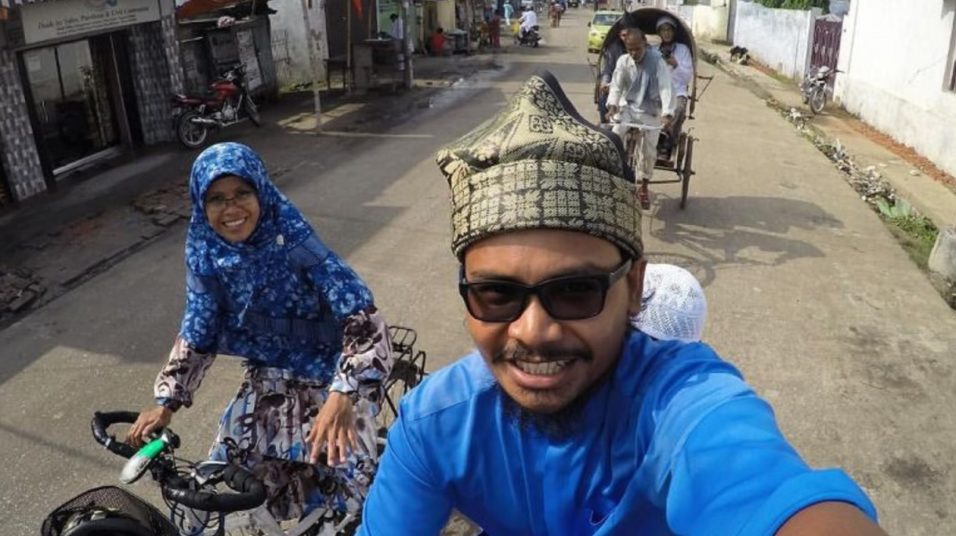
    Sepasang suami isteri Melayu yang sedang dalam perjalanan menunaikan ibadah umrah dengan sekadar mengayuh basikal sahaja, bakal mencapai hajat mereka tidak lama lagi setelah mengembara sembilan bulan lamanya.

    Ya, pasangan rakyat Malaysia itu – Encik Ahmad Mohd Isa, 27 tahun dan isterinya Noradilah Mohd Sapie, 28 tahun memilih untuk mengayuh kenderaan dua roda itu sahaja ke tanah suci.

    Sebelum ini, pasangan itu dilaporkan nekad mencabar keupayaan mereka melakukan ekspedisi berbasikal ‘Kembara Memburu Hikmah’ (KMH), dengan mengayuh basikal dari Malaysia ke Makkah sejauh 17,000 kilometer.

    Setelah bertolak dari Malaysia, mereka perlu melalui 13 buah negara lain dalam tempoh sembilan hingga 12 bulan – iaitu Thailand, Myanmar, India, Nepal, Pakistan, China, Kyrgyzstan, Kazakhstan, Uzbekistan, Afghanistan, Iran, UAE, sebelum menjejakkan kaki ke Arab Saudi selaku negara ke-13.

    Encik Ahmad Mohd Isa dan isterinya Noradilah Mohd Sapie ketika di Khazakhstan.

    TINGGAL 1 NEGARA UNTUK SAMPAI MAKKAH

    Dalam wawancara menerusi kiriman emel dengan BERITAMediacorp, pasangan itu memberitahu bahawa mereka kini sudah berada di Afghanistan, negara ke-11 daripada 12 negara yang perlu dilalui. Ini bermakna tinggal lagi 1 negara perlu direntasi sebelum tiba di Arab Saudi.

    “Alhamdulillah, selama 27 hari kami di Uzbekistan iaitu dari 11 Disember 2016 hingga 6 Januari 2017, sekarang kami sudahpun berada di Afghanistan. Insya Allah, mengikut perancangan kami, perjalanan seterusnya (mengikut urutan) adalah Iran, Amiriah Arab Bersatu dan Arab Saudi,” kata mereka.

    Menurut Encik Ahmad dan Cik Noradilah, antara cabaran besar yang mereka lalui sepanjang pengembaraan itu adalah masalah komunikasi dengan masyarakat di sesebuah negara.

    “Bahasa yang mereka tuturkan seperti Urdu, Uighur, Parsi dan Bahasa tempatan lain tidak dapat diterjemahkan menggunakan mana-mana aplikasi di internet.

    “Mereka pula kebanyakannya tidak memahami bahasa Inggeris atau Arab. Maka ini menyulitkan komunikasi antara kami untuk saling bertukar-tukar pandangan,” pasangan itu memberitahu BERITAMediacorp.

    Encik Ahmad Mohd Isa dan isterinya Noradilah Mohd Sapie ketika di Kyrgystan.

    PERTAMA KALI BERBASIKAL PADA MUSIM SALJI

    Sungguhpun begitu, pengalaman yang diraih ada juga yang memberi kesan mendalam kepada pasangan yang memang ‘kaki basikal’ dan membesar dengan berbasikal daripada zaman sekolah hingga ke universiti.

    Di laman Facebook KMH, pasangan itu berkongsi “pengalaman hebat” ketika berbasikal pada musim salji di Kazakhstan – menerusi video yang dimuat naik – kerana itulah kali pertama mereka bergelumang dengan salji!

    Ternyata bukan mudah kerana mereka beberapa kali tergelincir. Namun menurut pasangan berkenaan ia “membuatkan hati mereka semakin kental untuk meneruskan perjalanan”.

    “MAKANAN TIDAK PUTUS-PUTUS”

    Selain itu layanan baik yang diterima cukup membuatkan mereka tersentuh.

    “Pelbagai bentuk layanan dan bantuan yang di luar jangkaan kami terima daripada insan-insan berhati mulia sepanjang perjalanan ini dan semuanya membuat kami tersentuh.

    “Sejak memasuki negara-negara ‘STAN’ (Pakistan, Kyrgyzstan, Kazakhstan, Uzbekistan, Afghanistan, Kazahstan), rezeki dalam bentuk makanan tidak putus-putus. Kami tidak sempat untuk berasa lapar.

    “Setiap kali dijemput makan, makanan penuh terhidang atas meja, kata mereka, ini adalah adat budaya mereka untuk memanjakan tetamu dengan pelbagai jenis hidangan.

    “Semoga Allah merahmati hidup mereka yang memberikan bantuan, sokongan dan mendoakan kami sama ada kami tahu atau tidak. Setiap kebaikan itu ada balasan dan rahmat di sisiNya.”

    MAHU “SUJUD SYUKUR DEPAN KAABAH”

    Setelah sekitar sembilan bulan perjalanan mereka, iaitu sejak April 2016, kini Cik Noradilah dan suaminya semakin hampir ke destinasi utama, yang diidam-idamkan setelah sekian lama.

    Ketibaan mereka di Makkah nanti pasti menjadi satu detik bersejarah dalam kehidupan mereka dan tiada tolok bandingnya.

    BERITAMediacorp diberitahu sebaik sahaja menjejakkan kaki di Makkah, perkara pertama yang ingin dilakukan adalah “bersujud syukur di hadapan Kaabah”.

    RINDU DAKAP IBU BAPA

    Encik Ahmad dan Cik Noradilah dijangka berada di Makkah menunaikan umrah selama dua minggu sebelum pulang ke pangkuan keluarga tercinta di Malaysia.

    “Kami rindu sekali menjejakkan kaki ke tanah air sendiri selepas ke tanah suci Makkah dan Madinah. Selain itu kami juga rindu ingin mendakap kedua-dua ibu bapa kami yang tidak putus-putus mendoakan perjalanan kami agar sentiasa lancar dan selamat,” luah pasangan kembara ini.

    Encik Ahmad Mohd Isa dan isterinya Noradilah Mohd Sapie ketika di Nepal.

    Selain melakukan misi kemanusiaan di setiap negara yang dijelajah, pasangan suami isteri itu turut membawa cabaran merekod data berkaitan sejarah, budaya dan kehidupan masyarakat Islam.

    Turut mengiringi misi KMH itu ialah Mohd Nur Aiman Mohd Zaid, 27 tahun, dan Amirul Ariff Abd Wahab, 28, yang bertindak sebagai kru penggambaran video.

    Perkembangan semasa ekspedisi itu boleh diikuti melalui facebook Kembara Memburu Hikmah.

    Encik Ahmad dan Cik Noradilah yang berasal dari Selangor, dijangka menamatkan misi itu dan tiba di Masjidil Haram pada April 2017.


    Source: BeritaMediacorp

  • Boy Loses Part Of Penis After Botched Circumcision By Foreign Doctor At Unlicensed Clinic

    Boy Loses Part Of Penis After Botched Circumcision By Foreign Doctor At Unlicensed Clinic

    KUALA LUMPUR: What was supposed to have been a routine circumcision went disastrously wrong for a 10-year-old boy when the doctor accidentally sliced off the head of his penis. The incident occurred on Dec 20 at a clinic in Taman Cheras Utama at 8.15pm.

    It was learnt that the boy’s father had brought his son to the clinic for the surgery. However, during the surgery, the doctor, using a laser, inadvertently sliced off the glans (head) of the boy’s penis.

    The doctor informed the father of his mistake, and they then rushed the boy to the Hospital Universiti Kebangsaan Malaysia. Doctors there then transferred the boy to the Kuala Lumpur Hospital for him to undergo surgery to reattach the head of the penis.

    It is unknown at press time as to whether the reattachment surgery was a success.

    Upon advice, the boy’s father lodged a police report at the hospital. It is learnt that the clinic where the accident took place had been in operation for 15 years. The doctor in question has 21 years experience, and is a graduate of the University of Karachi, Pakistan.

    It is learnt that the clinic, however, is not registered under the Health Ministry. It is learnt that the doctor concerned had also lodged a police report and had admitted that it was an accident.

    Kajang police chief Assistant Commissioner Othman Nanyan confirmed the case.
    Source: www.nst.com.my

  • International Crisis Group: Rohingyas Involved In Attack On Border Guards Headed With People With Links To Pakistan And Saudi Arabia

    International Crisis Group: Rohingyas Involved In Attack On Border Guards Headed With People With Links To Pakistan And Saudi Arabia

    A group of Rohingya Muslims that attacked Myanmar border guards in October is headed by people with links to Saudi Arabia and Pakistan, the International Crisis Group (ICG) said on Thursday, citing members of the group.

    The coordinated attacks on Oct. 9 killed nine policemen and sparked a crackdown by security forces in the Muslim-majority northern sector of Rakhine State in the country’s northwest.

    At least 86 people have been killed, according to state media, and the United Nations has estimated 27,000 members of the largely stateless Rohingya minority have fled across the border to Bangladesh.

    Predominantly Buddhist Myanmar’s government, led by Nobel Peace Prize winner Aung San Suu Kyi, blamed Rohingyas supported by foreign militants for the Oct. 9 attacks, but has issued scant additional information about the assailants it called “terrorists.”

    A group calling itself Harakah al-Yakin claimed responsibility for the attacks in video statements and the Brussels-based ICG said it had interviewed four members of the group in Rakhine State and two outside Myanmar, as well as individuals in contact with members via messaging apps.

    The Harakah al-Yakin, or Faith Movement, was formed after communal violence in 2012 in which more than 100 people were killed and about 140,000 displaced in Rakhine State, most of them Rohingya, the group said.

    Rohingya who have fought in other conflicts, as well as Pakistanis or Afghans, gave clandestine training to villagers in northern Rakhine over two years ahead of the attacks, it said.

    “It included weapons use, guerrilla tactics and, HaY members and trainees report, a particular focus on explosives and IEDs,” the group said, referring to improvised explosive devices.

    It identified Harakah al-Yakin’s leader, who has appeared prominently in a series of nine videos posted online, as Ata Ullah, born in Karachi, Pakistan, to a Rohingya migrant father before moving as a child to Mecca in Saudi Arabia.

    “Though not confirmed, there are indications he went to Pakistan and possibly elsewhere, and that he received practical training in modern guerrilla warfare,” the group said. It noted that Ata Ullah was one of 20 Rohingya from Saudi Arabia leading the group’s operations in Rakhine State.

    Separately, a committee of 20 senior Rohingya emigres oversees the group, which has headquarters in Mecca, the ICG said.

    U.S. State Department spokesman John Kirby said in a news briefing on Thursday that the United States was aware of the report and reviewing it, but declined to comment further.

    Groups like Islamic State and al Qaeda in the Indian Subcontinent have referred to the plight of the Rohingya in their material, and the battlefield experience of at least some of the Rohingya fighters implied links to international militants, the ICG said.

    However, ICG said the group has notably not engaged in attacks on the civilian Buddhist population in Rakhine. Harakah al-Yakin’s statements to date indicate its main goals are to end the persecution of the Rohingya in Myanmar and secure the minority’s citizenship status.

    “It is possible, however, that its objectives could evolve, given its appeals to religious legitimacy and links to international jihadist groups, so it is essential that government efforts do not focus only or primarily on military approaches, but also address underlying community grievances and suffering,” the ICG said.


    Source: www.reuters.com