Tag: Perkasa

  • Malaysian, Indonesian Muslim Groups Calls Starbucks Boycott Over LGBT Stance

    Malaysian, Indonesian Muslim Groups Calls Starbucks Boycott Over LGBT Stance

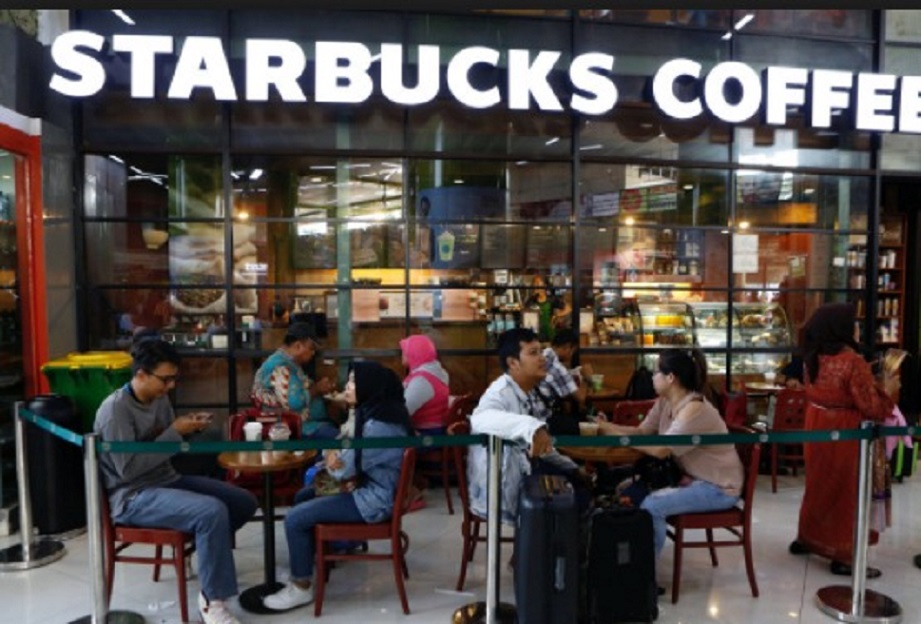
    A prominent Muslim group in Malaysia has joined calls by Islamic conservatives in Indonesia for a boycott of Starbucks to protest against the international coffee chain’s support of gay rights.

    Perkasa, a group with about 700,000 members that campaigns for the rights of ethnic Malay Muslims, said it agreed with calls this week by Muhammadiyah, Indonesia’s second-largest Muslim group, for a boycott of Starbucks over its pro-LGBT stand.

    Perkasa also agreed with the Indonesian group’s call for Starbucks’ operating license to be revoked, it said.

    Amini Amir Abdullah, who heads Perkasa’s Islamic affairs bureau, said Starbucks’ position challenged Malaysia’s constitution, which recognized Islam as the country’s official religion.

    “Our objection is because they are promoting something that is against the human instinct, against human behavior and against religion. That’s why we are against it,” Amini told Reuters in an interview on Wednesday.

    Muhammadiyah’s call for a boycott has gained support from the Indonesian Ulema Council, its top clerical body.

    The religious groups’ opposition to Starbucks came after a video from 2013 circulated online of pro-LGBT comments made by the company’s chairman and former chief executive, Howard Schultz..

    PT Sari Coffee Indonesia, which holds the license to run the Starbucks chain in Indonesia, said in a statement it was not affiliated with any political or ideological groups.

    “We are grateful and proud to have been a part of local communities in Indonesia for 15 years, always maintaining the deepest respect for, and adherence to, Indonesia’s local laws, culture and beliefs,” said Fetty Kwartati, a director at PT MAP Boga Adiperkasa, the parent company of PT Sari Coffee Indonesia.

    Some Muslims in Indonesia, however, said the boycott call would not stop them from buying Starbucks coffee.

    “I love their products, not their CEO,” said Jakarta resident Kornelius Kamajaya.

    The boycott call got a similar response from some in Malaysia.

    “Don’t make it such an issue that we have to boycott a company because of one small statement,” said Muhammad Azril Maridzuan, an assistant bank manager in Kuala Lumpur.

    Muslim groups should not “be so extremist” even though gay rights was against their religious beliefs, he said.


    Source: http://www.reuters.com

  • Malaysia Right-Wing Group, Perkasa, Sends Protest Letter To K Shanmugam For Claiming That Singapore Malays Better Off Than Malaysian Malays

    Malaysia Right-Wing Group, Perkasa, Sends Protest Letter To K Shanmugam For Claiming That Singapore Malays Better Off Than Malaysian Malays

    PETALING JAYA: Malay right-wing group Perkasa wants Wisma Putra to send a letter of protest to Singapore for comments attributed to a senior minister comparing Singapore Malays with Malaysian Malays.

    Singapore Home Affairs Minister K Shanmugam had been reported as saying that Singapore Malays are better off in terms of education standing, skills and wealth than those of similar ethicnicity in Malaysia or Indonesia.

    Perkasa deputy chairman Sirajuddin Salleh said the statement made by Shanmugam was uncalled for.

    “I am concerned about the statement. It is not diplomatic and is an insult to the King and the government of Malaysia,” he told FMT when asked to comment on Shanmugam’s statement.

    Sirajuddin said Malaysia and Singapore were close neighbours and there should be greater diplomacy between both countries.

    “I hope Wisma Putra will issue a strong protest letter. To me, the remark is not good. I will not touch on the content because it is very subjective.

    “It is just like if he comes to my house and says something that is not nice. Whether he is right or not, that is subjective, but in this case, it is not very nice,” Sirajuddin said.

    Earlier Channel News Asia quoted Shanmugam as saying that “with a stable, strong political system, with a strong government, with a guarantee for the minorities … with this framework, we can become the community that Muslim societies in other countries look towards and say, this is the example.”

    Shanmugam had also suggested that Malay, Indian and Chinese PMETs (professionals, managers, executives and technicians) from Singapore were better off than those of the same race, respectively, in Malaysia.

    However, the minister had cautioned that while Singapore was doing better compared with many parts of the world, “within Singapore there is still a gap” and they were no longer just competing with Malaysia or Indonesia, but instead competing with the world.

    He said the proportion of Malay Primary 1 students who go on to post-secondary education had doubled from 45% in 1995 to 93% in 2015. Those who eventually receive polytechnic diplomas, professional qualifications or university degrees have “gone up over a five-year period to 21%.”

    Shanmugam added that the proportion of Malays working as PMETs increased to 28% in 2010 and their median real monthly income per capita had doubled since 1990.

    Nearly 90% of Malay households in Singapore own their own homes, according to Shanmugam.

    However, he singled out three challenges facing the Malay-Muslim community in the country – radicalisation, loss of jobs and the over-representation of Malays being caught for crimes and drug abuse.

    Citing a Pew Research Centre study which showed that 10% of Malaysian Malays had a favourable opinion of Islamic State (IS), and that nearly one-quarter were not prepared to come out and say that IS is wrong, Shanmugam said that Singapore Malays must not get to that level.

    “A key part of that depends on you, the leaders of the Malay community, and whether you can make sure that the right religious values are put forth. We have to work hard at this because the influences are on the internet,” Shanmugam reportedly told a seminar organised by the Association of Muslim Professionals in Singapore.

    On drug abuse, Shanmugam had said 53% of those arrested for drug abuse last year were Malays. This is an increase from 10 years ago when the proportion of Malays arrested for the same was 32%.

    Singapore Malays better off, claims minister


    Source: www.msn.com

  • Perkasa: Singapore Minister’s Remark An Insult To King, Government

    Perkasa: Singapore Minister’s Remark An Insult To King, Government

    Malay right-wing group Perkasa wants Wisma Putra to send a letter of protest to Singapore for comments attributed to a senior minister comparing Singapore Malays with Malaysian Malays.

    Singapore Home Affairs Minister K Shanmugam had been reported as saying that Singapore Malays are better off in terms of education standing, skills and wealth than those of similar ethicnicity in Malaysia or Indonesia.

    Perkasa deputy chairman Sirajuddin Salleh said the statement made by Shanmugam was uncalled for.

    “I am concerned about the statement. It is not diplomatic and is an insult to the King and the government of Malaysia,” he told FMT when asked to comment on Shanmugam’s statement.

    Sirajuddin said Malaysia and Singapore were close neighbours and there should be greater diplomacy between both countries.

    “I hope Wisma Putra will issue a strong protest letter. To me, the remark is not good. I will not touch on the content because it is very subjective.

    “It is just like if he comes to my house and says something that is not nice. Whether he is right or not, that is subjective, but in this case, it is not very nice,” Sirajuddin said.

    Earlier Channel News Asia quoted Shanmugam as saying that “with a stable, strong political system, with a strong government, with a guarantee for the minorities … with this framework, we can become the community that Muslim societies in other countries look towards and say, this is the example.”

    Shanmugam had also suggested that Malay, Indian and Chinese PMETs (professionals, managers, executives and technicians) from Singapore were better off than those of the same race, respectively, in Malaysia.

    However, the minister had cautioned that while Singapore was doing better compared with many parts of the world, “within Singapore there is still a gap” and they were no longer just competing with Malaysia or Indonesia, but instead competing with the world.

    He said the proportion of Malay Primary 1 students who go on to post-secondary education had doubled from 45% in 1995 to 93% in 2015. Those who eventually receive polytechnic diplomas, professional qualifications or university degrees have “gone up over a five-year period to 21%.”

    Shanmugam added that the proportion of Malays working as PMETs increased to 28% in 2010 and their median real monthly income per capita had doubled since 1990.

    Nearly 90% of Malay households in Singapore own their own homes, according to Shanmugam.

    However, he singled out three challenges facing the Malay-Muslim community in the country – radicalisation, loss of jobs and the over-representation of Malays being caught for crimes and drug abuse.

    Citing a Pew Research Centre study which showed that 10% of Malaysian Malays had a favourable opinion of Islamic State (IS), and that nearly one-quarter were not prepared to come out and say that IS is wrong, Shanmugam said that Singapore Malays must not get to that level.

    “A key part of that depends on you, the leaders of the Malay community, and whether you can make sure that the right religious values are put forth. We have to work hard at this because the influences are on the internet,” Shanmugam reportedly told a seminar organised by the Association of Muslim Professionals in Singapore.

    On drug abuse, Shanmugam had said 53% of those arrested for drug abuse last year were Malays. This is an increase from 10 years ago when the proportion of Malays arrested for the same was 32%.


    Source: freemalaysiatoday