Tag: public

  • Madam President To Hold Open House At The Istana For Deepavali Celebration With Singaporeans

    Madam President To Hold Open House At The Istana For Deepavali Celebration With Singaporeans

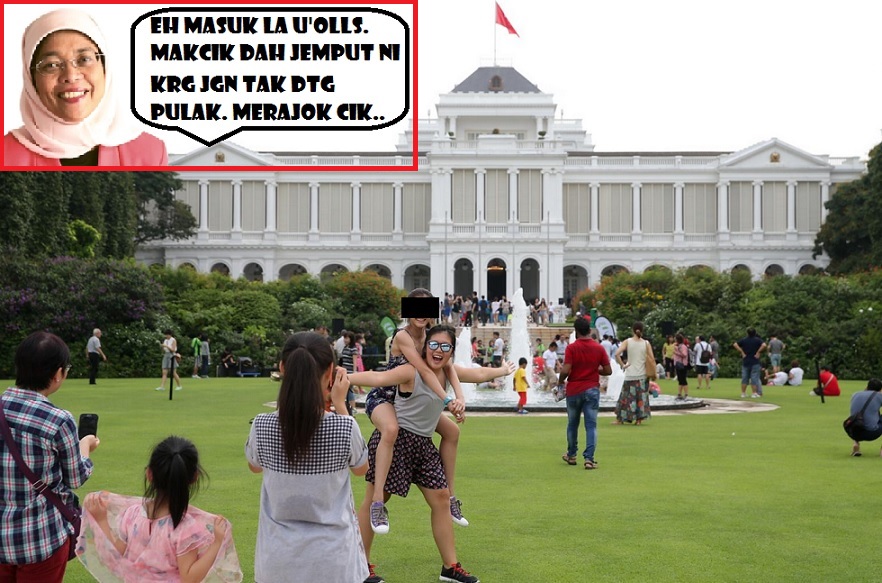
    The Deepavali public holiday may have passed by already, but the celebrations continue at the Istana this weekend in the first open house hosted by President Halimah Yacob since she took office.

    This Sunday, the grounds of the Istana will be open to the public from 8:30am to 6pm, with a line-up of programmes that includes music and dance performances, and henna painting among other activities. Visitors are also welcome to go on guided walks and tours around the Istana greenery and the main building itself.

    Halimah was officially sworn into office on Sep 14 as the first female president of the country and the first Malay head-of-state in 47 years following a highly contentious governmental decision to reserve the elections to Malays only. Though the president longed to live in the heartlands in her Yishun jumbo flat, she was forced to move out due to security challenges.

    Of course, you can ask the lady all about it if you happen to see her at the Istana open house on Oct 22. More details on the Istana’s website.


    Source: https://coconuts.co/

  • Changi Airport’s New Terminal 4 Open House Starts Today Until August 20

    Changi Airport’s New Terminal 4 Open House Starts Today Until August 20

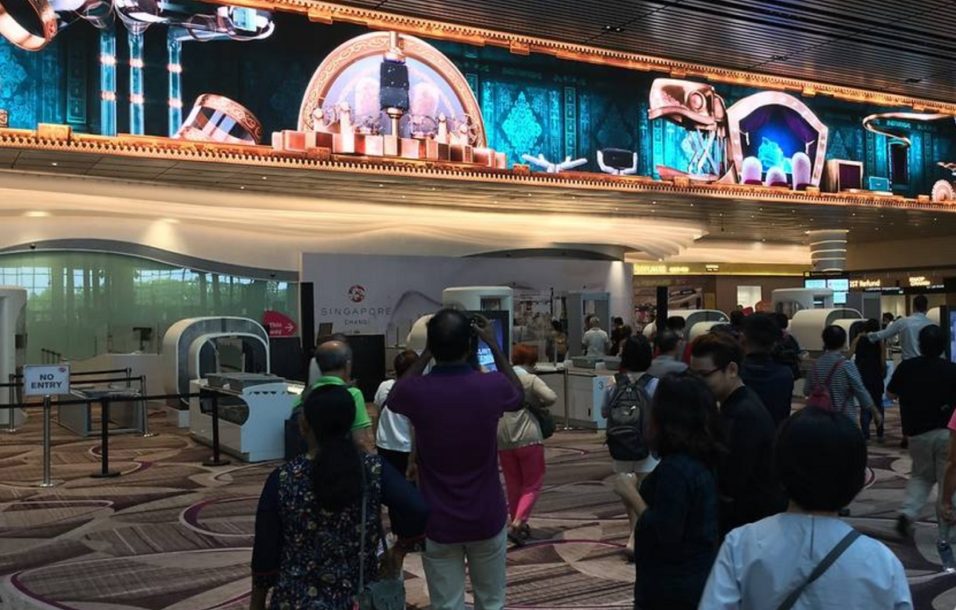
    Changi Airport’s new Terminal 4 opened its doors on Monday (Aug 7) to the public for a limited time before operations begin.

    Until Aug 20, registered guests can visit the terminal from 9am to 6pm daily. Visitors will be let in to the terminal at 10-minute intervals, with 1,500 people entering the terminal every hour, said Changi Airport Group (CAG).

    They will tour the terminal using a route on a mobile app specially created for the open house, with the software also providing visitors with information and trivia on the terminal’s features, functions and artworks, it added.

    The Changi Airport operator said its decision to let visitors in for a glimpse of the terminal ahead of its opening was a chance to let future travellers familiarise themselves with the facilities that the new terminal has to offer. The airport added that it expects 15,000 registered visitors on the first day of the open house.

    Minister for Transport Khaw Boon Wan was at the open house on Monday. He said he received positive feedback from visitors, many of whom were excited to use the new terminal when it opens this year.

    He also said that while the aviation industry remained a “bright spark”, “Singapore must keep picking up the pace” in order to compete with other regional aviation hubs.

    Terminal 4 will be the airport’s smallest, at 225,000 sqm. The double-storey terminal will only be about half the size of Terminal 3, but once fully operational, it will be expected to handle 16 million passengers a year – about 70 per cent of Terminal 3’s handling capacity.

    The airport will also feature start-to-end self-service systems, allowing travellers to check in, deposit their baggage and even go through immigration via automated systems.

    Leveraging on technology and innovation will make possible more convenient passenger processes and improved staff productivity, CAG said.

    The vice president of the terminal’s Programme Management Office, Ms Poh Li San, projected that once the terminal is fully operational and stable, it will be able to operate with 10 per cent fewer staff than T3.

    CAG said airport system and flight trials will continue until the terminal opens later this year.


    Source: http://www.channelnewsasia.com


  • ‘Ikat’ Anak Di Tempat Awam – Membantu Atau Memalukan?

    ‘Ikat’ Anak Di Tempat Awam – Membantu Atau Memalukan?

    Satu masa dahulu mungkin jarang dilihat kanak-kanak yang ‘diikat’ oleh ibu bapa mereka, menggunakan tali keselamatan, apabila berada di tempat awam.

    Tetapi sekarang, sedikit demi sedikit, nampaknya sudah semakin ramai ibu bapa yang melanggar ‘pantang-larang’ itu.

    Isu memakaikan tali keselamatan pada anak-anak apabila berada di luar rumah – lebih-lebih lagi di tempat yang ramai orang atau di luar negara – bukanlah isu baru.

    Namun, ia masih menjadi tajuk perbahasan hangat di kalangan ibu bapa, sama ada ia membantu atau memalukan.

    TIDAK MEMALUKAN, KERANA…

    BERITAMediacorp menghubungi Pengetua Kanan Busy Bees Asia, Cik Wirma Asad, yang mempunyai 20 tahun pengalaman dalam bidang pendidikan kanak-kanak prasekolah, bagi mendapatkan pandangan beliau.

    “Tiada apa yang memalukan tentang tali keselamatan kanak-kanak. Tujuannya adalah untuk memastikan anak berada pada jarak yang dekat dengan ibu bapa walaupun di tempat yang ramai orang. Ia amat berguna lebih-lebih lagi bagi kanak-kanak yang mempunyai masalah pembesaran dan mungkin tidak dapat memahami konsep keselamatan.

    Cik Wirma Assad. (Gambar: Wirma Assad)

    Cik Wirma akur, memang ada sesetengah orang yang menyifatkan tali keselamatan itu sebagai memalukan, “misalnya membuat anak-anak seolah-olah seperti anjing kerana diikat dan ditarik ke mana-mana”.

    “Manusia cepat membuat tanggapan sedemikian mungkin kerana tali keselamatan adalah satu stigma di kalangan sebahagian masyarakat,” kata Cik Wirma lagi, yang juga seorang ibu kepada tiga orang anak.

    KEJADIAN YANG DORONG PENGGUNAAN TALI KESELAMATAN

    Beberapa ibu bapa yang dihubungi BERITAMediacorp berkata, tujuan utama mereka ‘mengikat’ anak-anak hanyalah satu, iaitu demi keselamatan.

    Cik Noorrafiqah menunjukkan abah-abah kepada anak lelakinya.

    Bagi Cik Siti Noorrafiqah Moktar, 35 tahun, insiden di mana salah seorang anak lelakinya tiba-tiba berlari jauh daripadanya dan hampir-hampir melintas jalan cukup menguatkan lagi tekad beliau untuk menggunakan tali keselamatan kanak-kanak.

    “Masa itu anak saya nak masuk usia empat tahun, Dia suka berlari tak kira di mana. Pernah terjadi, dia melepaskan tangannya daripada saya dan terus berlari. Dia terus berlari dan tidak menoleh ke belakang langsung!

    “Di depan pula ada lampu trafik dan dia mahu melintas jalan. Mujur ada seorang pakcik yang baru saja melintas jalan dan sempat menarik tangan anak saya,” kongsi ibu kepada tiga orang anak itu tentang kejadian yang mencemaskan melibatkan anak kecilnya. Beliau kemudian memutuskan untuk menggunakan tali keselamatan sejak tahun 2015.

    Cik Noorrafiqah memberitahu BERITAMediacorp, lazimnya beliau menggunakan tali keselamatan kanak-kanak sewaktu menghantar anak-anaknya ke sekolah atau ketika keluar bersendirian bersama anak-anak.

    Cik Noorrafiqah bersama anaknya, Zoreef Zarkasyee Muhd Fadil, 5 tahun.

    Seorang lagi ibu, Cik Siti Maryam Mohd Amin, 32 tahun, yang juga menggunakan tali keselamatan ke atas anak-anaknya semasa mereka masih kecil berkata ia turut memudahkan kedua ibu bapanya sendiri membantu menjaga anak-anak beliau.

    “Anak saya sangat aktif. Saya mahu anak saya bebas bergerak dan meneroka tetapi dapat dikawal dengan mudah. Ia juga memudahkan arwah ayah dan ibu saya menjaga anak saya sewaktu membawanya bersiar-siar,” kata Cik Siti Maryam yang mempunyai tiga orang anak, dua perempuan dan seorang lelaki.

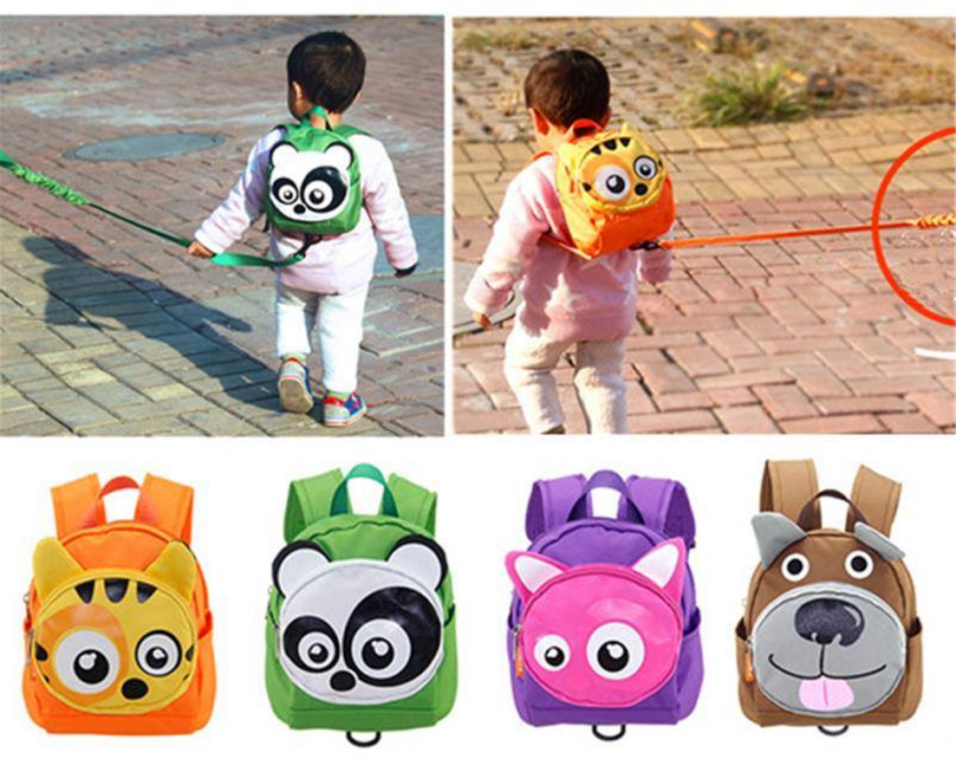
    Anak kedua Cik Siti Maryam memakai beg berbentuk beruang yang boleh dipasang tali abah-abah. (Gambar: Siti Maryam Amin)

    RAMAI ORANG MELAYU FIKIR NEGATIF

    Sungguhpun begitu, ibu bapa yang memilih untuk memanfaatkan tali keselamatan kanak-kanak ini seringkali dibelenggu dengan pandangan bertentangan daripada masyarakat yang mengibaratkan perbuatan mereka itu seolah-olah membuat anak bagaikan anjing.

    Jadi bagaimana mereka menangkis stigma sedemikian?

    Bagi Cik Istiqamah Jaafar, yang menggunakan tali keselamatan ke atas anaknya ketika dia berusia tiga tahun, para ibu bapa perlu sentiasa melihat sesuatu secara positif.

    “Bagi saya, orang Melayu kita memang ramai yang berfikiran negatif tetapi kita sendiri perlu berfikiran positif. Keselamatan anak-anak kita perlu diutamakan. Sama ada di dalam atau di luar negara, malang tidak berbau. Dengan adanya tali keselamatan ini, kurang sedikit rasa bimbang,” kata ibu berusia 27 tahun itu yang anaknya mengalami autisme ringan.

    Bagi pasangan Siti Zaleha Ahmad A’Taillah dan suaminya Muhammad Faizul Abu Samat, yang mempunyai dua orang anak, mereka berpegang kepada pandangan malang tidak berbau. Oleh itu, penggunaan tali keselamatan sedemikian adalah sesuatu keperluan.

    “Ada juga orang luar yang bertanya mengapa kami menggunakan tali keselamatan ini sedangkan kami boleh menjaga anak kami sendiri. Sebagai respons, kami hanya tersenyum. Bagi saya, itu pendapat masing-masing,” Encik Muhammad Faizul memberitahu BERITAMediacorp.

    Cik Zaleha, Encik Faizul memakaikan abah-abah pada anak pertama mereka.

    Cik Siti Maryam pula berkata, beliau juga tidak terlepas daripada hinaan orang. Namun masih ada segelintir yang memujinya kerana memastikan keselamatan anak-anak terjamin.

    “Kami hanya tersenyum. Keselamatan anak-anak lebih penting dan anak kami juga gembira dapat memakai tali keselamatan kerana saya membelikan mereka tali yang berbentuk binatang-binatang seperti beruang, kambing dan katak dan mereka boleh memilih hendak pakai yang mana,” ujar Cik Siti Maryam.

    “RAMAI IBU BAPA BERFIKIRAN SAMA”

    Tinjauan BERITAMediacorp ke atas laman-laman web mendapati, tali keselamatan kanak-kanak kini dijual dalam pelbagai bentuk – ada yang berupa beg galas dengan rekaan yang comel bagi memancing minat kanak-kanak dan ada juga yang berbentuk seperti gelang tangan yang bercantum dengan tali gegelung.

    Harganya juga agak berpatutan dalam lingkungan antara $10 dengan $50, bergantung kepada jenama dan mutunya.

    Cik Nuraien Jairani, ibu kepada dua orang anak, bukan saja menggunakan tali keselamatan, malah menjualnya.

    “Kali pertama saya membelinya ketika itu saya membuat tempahan sekali untuk rakan-rakan saya dan juga ibu bapa daripada satu kumpulan di Facebook. Dalam tempoh seminggu, jumlah tempahan saya mencecah 50 unit. Ini sekaligus menunjukkan ramai juga ibu bapa yang berfikiran sama.”

    Cik Nuraien menambah, beliau bagaimanpun tidak mengambil sebarang keuntungan daripada penjualan tali keselamatan itu.

    Abah-abah berbentuk beg bercorak seperti kumbang yang dipakai anak Cik Zaleha dan Encik Faizul.

    CARA-CARA GUNAKAN DENGAN BERTANGGUNGJAWAB

    Dengan tali keselamatan kanak-kanak kian mendapat perhatian di kalangan para ibu bapa, Cik Wirma memberitahu BERITAMediacorp, ia perlu digunakan dengan penuh tanggungjawab dan hanya dengan niat memastikan keselamatan anak-anak. Ini agar ia tidak akan mendatangkan kesan negatif dari segi psikologi.

    Cik Wirma turut menggariskan lima langkah menggunakan tali keselamatan dengan cara yang bertanggungjawab, iaitu:

    1. Menjelaskan kepada anak mengapa tali keselamatan itu satu keperluan
    2. Menghormati anak dengan memberikan ruang atau jarak yang diperlukan untuk anak bergerak
    3. Memberikan anak kebebasan untuk membuat keputusan tentang di mana dia ingin berjalan dan berjalanlah di sebelahnya
    4. Menjelaskan kepada anak mengapa ada tempat tertentu yang tidak dibenarkan baginya untuk berjalan seorang diri, khususnya sewaktu melintas jalan raya yang sibuk atau berlari ke arah lain tanpa memberitahu ibu bapa; dan
    5. Tali keselamatan mestilah menghubungkan antara anak dengan ibu bapa dan bukan pada tiang atau kerusi (sementara ibu bapa duduk membaca atau meminum kopi).

    Tali keselamatan memang dapat membantu memastikan keselamatan anak-anak.

    Bagaimanapun ia tidak seharusnya dijadikan sebagai pengganti tanggungjawab ibu bapa mendidik anak tentang amalan-amalan keselamatan.

    Pada akhirnya, ibu bapa jugalah yang perlu memberi ruang bagi anak-anak memperolehi pengajaran menerusi kehidupan.

    Source: BeritaMediacorp
  • Pasir Ris One DBSS – Yet Another Development Under Fire

    Pasir Ris One DBSS – Yet Another Development Under Fire

    In what is becoming a recurring series of incidents, another group of homeowners of new flats are crying foul at the shoddy workmanship and design of their homes.

    The Online Citizen (TOC) understands that some of the owners of the new Pasir Ris ONE have just received their keys to their new homes which are located at the junction of Pasir Ris Central and Pasir Ris Drive 1, a stone’s throw away from the Pasir Ris MRT station.

    The 447-unit development is one under the Design, Build and Sell Scheme (DBSS), and consists of three-, four- and five-room flats.

    The purchase prices of these homes are reported to be between S$390,000 to S$470,000 for 3-room flats, and S$550,000 to S$670,000 for 4-rooms.  (See here.)

    The Pasir Ris ONE website lists the prices for 5-rooms as follow:

    comparisons-chart

    DBSS flats are supposed to come with better finishings and design, as buyers pay a premium for them.

    However, since owners had entry to their homes the last few months, it has emerged that the workmanship has left a lot to be desired.

    For a start, the corridors of the flats are so narrow that two persons can hardly walk side by side.

    When TOC measured the corridor of one block, it was precisely 1.2m wide.

    DSC_0456

    This is believed to be the minimum required by HDB and the Singapore Civil Defence Force (SCDF) safety rules.

    According to the Singapore Civil Defence Force (SCDF) website:

    scdf1

    Guidelines_HDB_1

    It is also worth noting that in a parliamentary reply in 2013 to a question of ensuring “clear passages along common corridors of HDB flats”, the Ministry of National Development said it was revising the clearance required from 1.2m to 1.5m, to provide for safety and rescue purposes.

    “To prepare for an ageing population and to provide wider access routes for people using mobility aids, BCA announced revisions to the Code on Accessibility last month.

    “The revisions include a wider minimum clearance width of 1.5m along corridors for buildings with plans submitted for regulatory approval on or after 1 Apr 2014.”

    Some of the gates at the main doors of opposite flats along the corridors are so close together that the gates almost touch each other when they are swung open.

    It is thus unclear how the homeowners of the Pasir Ris ONE flats would have the requisite allowable and safety space in their corridors if they were to, for example, place a shoe rack or a bicycle outside their main doors.

    Another curious placement issue is the way the gas vents have been installed on the ceilings along the corridors.

    DSC_0488
    Besides its questionable aesthetic design, is there also a safety issue here if an incident of leakage or fire should happen, especially with the narrow corridors?

    Besides safety, there are also concerns of security with how the flats are designed.

    Burglars or others with ill intention could gain easy entry into their homes through the air-conditioner ledges, for example, and enter the flats though the windows.

    Here is how it looks like, outside a ground floor flat:

    DSC_0460

    Here is another view:

    DSC_0491

    It would not be too hard for someone to climb to the upper floors through these balconies.

    And for some unknown reasons, TOC understands that the owners cannot make use of the entire ledge, although the floor area of the ledge is included as part of the size of the flat.

    And even over at the community barbeque pits, the design also came under fire, as one resident posted on the Pasir Ris ONE Facebook page on 4 June:

    bbqcomplaint

    TOC measured the height of the pit and it was about 1.3m high – from the ground to where the wire mesh would be. This would make it hard for anyone who is below, say, 1.7m to manage the barbeque.

    This writer – who is 1.7m tall – is pictured here at the pit:

    bbqpit

    When it comes to drying the laundry, the clothes rack isn’t something to crow about either.

    The rack is so small it can hardly dry any clothes; and also, the sun is blocked by the ledge above the rack which is presumably to prevent litter from the upper floors from reaching the lower ones.

    These would make drying your laundry quite a challenge.

    DSC_0462

    These are some issues which residents have with the external surroundings of the flats.

    What about the insides?

    Not much better.

    TOC understands that owners face many defects which need to be rectified.

    These include tiles in the living room which were either scratched, or have different shades of colour, or the groutings were poorly finished, while others have uneven flooring which need to be corrected.

    Some of the grilles at the balcony were also badly painted, and others had leaky pipes in the kitchen.

    The placement of the water heater in their kitchens is also another issue.

    When it is turned on, the heater can become a safety hazard, and it also contributes to warming up the kitchen when cooking is also in process because of the inefficient ventilation design.

    In the bedrooms, there were more defects – there were windows which took some effort to open, and toilet and shower doors were designed such that one has to close one in order to have enough space to open the other.

    And then there were the cracked tiles and poor grouting work.

    Some bedroom doors were also faulty, leaving big gaps between the door and the floor. There were also faulty window screws, window frames, door handles, chipped doors, bad wiring, dirty toilet bowls, and poorly installed floor tiles, among many other complaints.

    Some have complained that the master room, which is 15sqm, is so small it can barely fit a king-sized bed, leaving scarce room to walk.

    According to HDB rules, homeowners have one year to inform the developer of any defects.

    Pasir Ris ONE is a joint project between Sing Haiyi Group and Kay Lim Holdings.

    Homeowners have since created a private Facebook group  to highlight the flaws in their homes.

    Such problems in new developments have been reported  by new owners of other DBSS flats at the Trivelis in Clementi and Centrale 8 in Tampines in the last two months, along with several other groups of owners of build-to-order flats, such as in Punggol and Bukit Panjang, in the last few years.

    In its response to all these, the HDB said earlier in June that the defects were merely “surface imperfections.”

    “This is due mainly to the inherent features of natural materials or the nature of construction works that are dependent on manual labour,” a HDB spokesman said.


    Source: www.theonlinecitizen.com

  • Property Experts: DBSS Losing Its Relevance

    Property Experts: DBSS Losing Its Relevance

    Property experts say the Design, Build and Sell Scheme (DBSS) is losing its relevance and should be scrapped.

    The scheme was suspended in 2011, but came under the spotlight after recent complaints by residents over defects in their new DBSS flats. The Housing and Development Board (HDB) says the scheme is not currently its priority.

    One four-room DBSS unit at Ang Mo Kio gave its owner nightmares. Forty-five-year-old Ng Tong Seng had moved into the flat – which cost more than S$500,000 – in December 2012. Within weeks, he found numerous flaws, from bug infestation to cracks on the walls.

    It was a painful process for Mr Ng, who had to spend months getting the developer to rectify the defects.

    “The number of defects filed by the residents was a lot,” he said. “And they were having a difficult time catching up with all the work. We have about one year to get all these rectified by the developer and the developer took their own sweet time.”

    He said the HDB did not offer much help.

    “We are being left alone by authorities,” he said. “We bought the house under the ruling of HDB. They threw the rule books at us, but when we faced problems and approached them for help, they said, ‘Sorry, I can’t do anything’. So, that is frustrating. On one side, you try to govern me, on the other side, you can’t help me. So, I’m very confused about their rule.”

    Residents of the Trivelis DBSS estate in Clementi have also questioned HDB’s role in the scheme. About 500 of them have complained about problems such as rusty dish holders and flooding in the corridors.

    The housing board says it oversees the scheme, but under the sale and purchase agreement, developers must rectify defects reported by buyers within a year.

    HDB brought on board private developers to bring diversity and creativity to public housing designs, when it introduced the scheme in 2005. The condominium-like furnishings of DBSS units initially grabbed attention.

    But experts say the quality of Build-to-Order (BTO) flats has gone up.

    Associate Professor Sing Tien Foo from the Department of Real Estate at the National University of Singapore said: “I think the differentiation has become smaller. So, if the price differentiation is relatively big, it makes DBSS less attractive in that sense compared to BTO flats, because there’s still a price gap between BTO and DBSS flats.

    “So, we might see that the DBSS scheme may no longer be necessary in the near future. So, this is probably a good time to phase it out.”

    The scheme was intended to cater for the “sandwiched class”, which referred to those who could not afford private condominiums, but did not qualify for BTO flats because their income exceeded the qualifying ceiling, which was then set at S$8,000.

    However, analysts say prices between private and HDB units are narrowing, which means the scheme is losing its target group. Furthermore, the income ceiling for BTO flats was raised to S$10,000 in 2011, the same as that for DBSS properties.

    With not much difference in quality, they added that home buyers will be more inclined to purchase BTO flats, which are cheaper. This would lower demand for DBSS flats.

    Still, one expert says it’s better to suspend the scheme than scrap it totally.

    “Because we never know that, perhaps one day when prices start to escalate quickly again, there may be a need to bring back a scheme that is similar to DBSS,” said Mr Nicholas Mak, an executive director for research and consultancy at SLP International Property Consultants. “But I think in the next two or three years, the chances of it coming back are not high.”

    There have been 13 DBSS projects since the scheme was introduced.


    Source: www.channelnewsasia.com