Tag: Religious Rehabilitation Group

  • Analysis: Islamic State Distortion Of Hijrah: Emigrating For A Lost Cause

    Analysis: Islamic State Distortion Of Hijrah: Emigrating For A Lost Cause

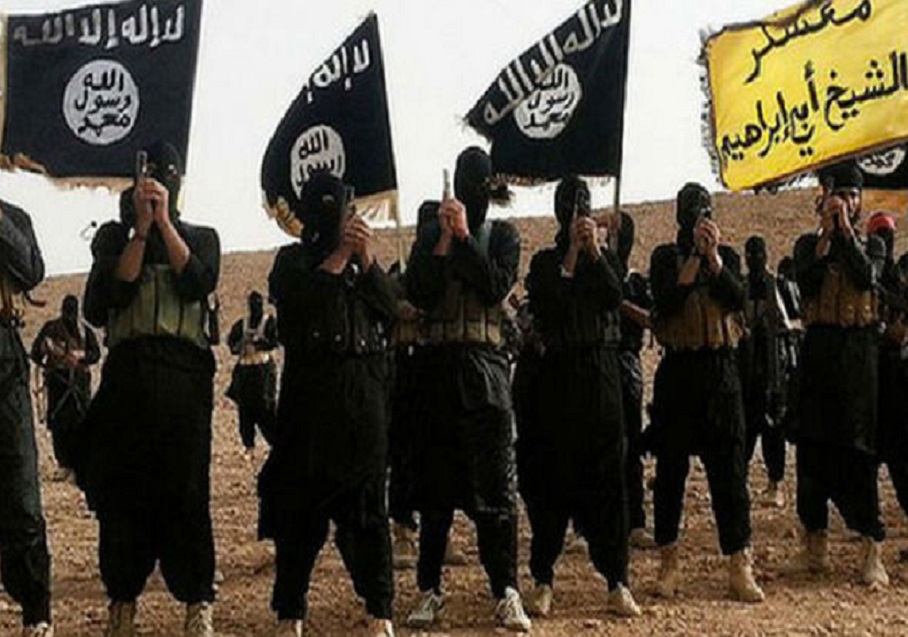
    Since 2015 there have been at least a dozen Singaporeans investigated by the Singapore authorities for harbouring intention to travel or emigrate to the self-proclaimed Islamic State (IS). This year four individuals were detained for the same reason. In September, IS issued a propaganda video featuring a Singaporean who is known to have gone to Syria to join IS. In the brief three-and-a-half minute video, Megat Shahdan Bin Abdul Samad calls on Muslims to relocate to IS-controlled territories or locations where the group’s influence is present.

    He quotes a hadith or Prophetic saying that implicitly affirms that the duty of hijrah will not cease until the Final Hour (Doomsday). While most people would ignore or reject such a call, especially coming from a terrorist group, there will be a few who will fall prey to extremists’ exploitation of hijrah and other Islamic concepts. They include the literalists and those who understand the hadith without using appropriate tools of enquiry and interpretation used in the science of hadith. Like Shahdan, they would believe that relocation to IS fulfils a religious obligation.

    The Origin of Hijrah

    IS’ promotion of hijrah calls for a deeper examination of the concept. To begin with, what was the cause of hijrah as reported in Islamic history? Why did Prophet Muhammad encourage Muslims to emigrate? How should Muslims react to calls for hijrah? And why should terrorist propaganda and interpretation draped in scripture be roundly dismissed?

    Hijrah is Arabic for emigration. In the early days of Islam, Prophet Muhammad and his followers were ill-treated and harassed by polytheist Meccan Arabs over differences in religious beliefs. They were subjected to economic and social boycott and barred from marriage and trade. When these tactics failed to stop people from converting to Islam, the pagan Quraish clan resorted to physical abuse. This triggered the first hijrah to Ethiopia which was then ruled by a Christian king named Negus.

    The Quraish intensified their violence when they learned that several Muslims secretly sought refuge in Medina. The clan also plotted the assassination of the Prophet. This marked a serious escalation of efforts to stop the practice of Islam, from mistreatment to violence, including an assassination plot against the Prophet.

    These developments led to Prophet Muhammad’s emigration to Medina. This marked the second and final hijrah in Islamic history. Viewed in its historical context, hijrah was in effect a means to preserve the basic right to practise one’s faith and to protect one’s life.

    Distortion of Hijrah by IS

    IS however exploited hijrah to build up their human capital and resources in their newly-established ‘caliphate’ which they declared in June 2014. The group’s online magazine Dabiq (later known as Rumiyah) and weekly online Arabic newsletter An-Naba’, for instance, frame hijrah as a religious obligation, an act of worship that would bring a Muslim close to God, and a manifestation of true faith.

    IS claims that Islam requires Muslims to live in an Islamic state that practises Shari’ah law over a territory governed by non-Muslims or by Muslims administering man-made laws.

    IS asserts that Muslims should leave his country (especially in the Middle East) which was created based on the colonial era Sykes-Picot “false border demarcation” and relocate to IS to support the caliphate and redraw the borders. Both Hadith and Sunnah (Prophetic tradition and practice) were distorted to back these arguments. Shahdan’s video is a clear example of such distortion.

    The Correct Understanding of Hijrah

    IS’ narrative on hijrah needs to be debunked for its so-called religious justifications.

    Contrary to IS claims, hijrah to IS is not among the best forms of worship and does not make a Muslim closer to God. Many acts of worship bring a Muslim closer to God, from regular prayers and repentance to generous donations and charitable acts. A hadith was reported to have implied that whoever comes to the mosque of Quba (in Medina) and prays in it will have a reward similar to performing an umrah (small pilgrimage).

    This suggests that location is not fundamental to get closer to God but the performance and quality of a ritual. Hijrah to IS to achieve this goal is unnecessary.

    IS falsely claims that Prophet Muhammad instructed Muslims to sever ties with family and tribe by performing hijrah. The hadith was, in fact, a directive for a newly-converted Muslim to detach himself from the religious practices of his people, not blood ties. This is to distinguish himself from the other faith groups through his observance of religious obligations.

    Maintaining good relationship with non-Muslim family members is part of Islamic teachings. This is evident in the Prophet’s behaviour towards his two pagan paternal uncles. Hence, there is nothing Islamic when a Muslim leaves his family and heads to IS – like what Shahdan did – with the hope of receiving blessings from God and die as a martyr.

    Way Forward: Migration from Literalism

    Lastly, Prophet Muhammad was reported as saying that hijrah will not cease until repentance is ceased. Repentance will not cease until the sun rises from the west (a major sign of the end of time). Although the hadith is authentic, its reading must be complemented with the understanding of its implicit objective. Hijrah in this hadith does not suggest a physical relocation but rather a change in mindset and behaviour.

    Islam promotes progressive thinking and positive change in life. A believer must think of ways to become a better person each day to benefit not only himself but those around him including animals and nature. A Muslim who learns Islam by heart and perseveres to ponder upon its teaching marks a ‘hijrah’ in his cognitive attitude towards his faith, from a literalist to a pragmatist. Hijrah is also a manifestation of a paradigm shift.

    A Muslim who constantly seeks to upgrade his knowledge so that he could be of service to others is expressing a form of hijrah towards becoming a useful and productive Muslim. Similarly, a Muslim who strives to distance himself from evil is making hijrah towards becoming a better Muslim who understands his religion holistically. These counter-narratives can be understood from other prophetic sayings such as “An emigrant is one who ditches mistakes and sins”. In another hadith the Prophet was reported as saying: “An emigrant is the one that ditches from anything that Allah has forbidden.”

    The fall of IS’ de facto capital Raqqa is not likely to lead to a decline in the propagation of literalist, narrow and extremist interpretations of Islamic scriptures. IS will decentralise and exploit social media platforms to the fullest to maintain its hold over its followers and to radicalise even more vulnerable segments of society.

    Given this scenario, it is imperative that action be taken not only to debunk extremist teachings through various means but also to disseminate widely moderate and progressive values which will act as a ‘firewall’ against false, deviant and divisive ideas.

    *Muhammad Saiful Alam Shah is an Associate Research Fellow with the International Centre for Political Violence & Terrorism Research (ICPVTR), a constituent unit of the S. Rajaratnam School of International Studies (RSIS), Nanyang Technological University, Singapore. He is also a religious counsellor with the Religious Rehabilitation Group (RRG).


    Source: Eurasiareview

  • RRG Counsellors Saved Two Secondary Schoolboys From Further Radicalisation

    RRG Counsellors Saved Two Secondary Schoolboys From Further Radicalisation

    One developed an interest in global affairs involving Muslims and became convinced of the need to migrate to an Islamic caliphate. Another penned pro-Islamic State (IS) slogans in his school books that were discovered by his father.

    In both cases, which involved secondary schoolboys, relatives and friends became concerned enough to alert the Religious Rehabilitation Group (RRG). The boys met with RRG counsellors, who explained religious concepts and the IS’ violent ideology to them.

    A third case was of a wife who noticed her husband becoming more vocal about a much stricter form of Islam, holding the exclusivist view that loyalty could only be given to God and Muslims. She confided in her relative, who approached RRG for advice. The wife spoke a few times over the phone with a counsellor on how she could advise her husband not to hold such extreme religious views.

    Sharing these cases on Friday (June 23) of people who had approached the RRG, the group’s vice-chairman Mohamed Ali urged the public to tap its helpline, mobile app and resource and counselling centre at Khadijah Mosque on Geylang Road, if they suspect their loved ones are close to being radicalised.

    The three cases are the only instances of voluntary reporting that RRG has encountered since 2014 – the year its resource centre opened – and that its counsellors “saved” from going further down the path of radicalisation, said Ustaz Mohamed.

    Because they were detected early, they did not need to be reported to the Ministry of Home Affairs or dealt with under the law, he said. “They are not those who were ready to use violence, but they believed that violence is justified.”

    Ustaz Mohamed declined to reveal when RRG was alerted to each case or the backgrounds of the individuals. The secondary schoolboys felt they benefited from the sessions with RRG counsellors and realised the danger of supporting IS, he said.

    In the third case, counsellors had no contact with the husband. But through speaking with the counsellors, the wife learnt more about how extremists promote their ideologies “under the cloak of religion”, said the RRG.

    Loved ones must be “first agents” and seek information such as what websites their children, relatives or friends have browsed, and for how long, said Ustaz Mohamed.

    Cases are not reported to the MHA unless individuals persist in the belief that violence is legitimate even after counselling. “RRG works with MHA, not for MHA,” he said.


    On whether the three individuals might have ended up detained under the Internal Security Act (ISA), were they not reported early to the RRG, Ustaz Mohamed said the answer was not straightforward.

    This is because there are other channels available, such as local mosques or the Islamic Religious Council of Singapore. “But logically we understand that when someone is radicalised and nothing is being done, that process of radicalisation can go further and it could lead to violence. It could lead to him wanting to use violence,” he said.

    The authorities have stepped up calls for family members and the community to report those who are potentially radicalised. They said the time between radicalisation and committing violence could be very short and that terror attacks would divide communities, playing into the hands of terrorist groups.


    Source: www.todayonline.com

  • Mufti: Jangan Ragu-Ragu Minta Bantuan Pihak Berwibawa

    Mufti: Jangan Ragu-Ragu Minta Bantuan Pihak Berwibawa

    MASYARAKAT Melayu/Islam tidak harus teragak-agak dalam usaha mendapatkan bantuan pihak tertentu yang lebih arif menangani ajaran radikal dan ideologi pelampau, kata Mufti Dr Mohamed Fatris Bakaram.

    “Walaupun susah, kita tidak harus berasa berat untuk bekerjasama dengan pihak berkuasa dan bersama Kumpulan Pemulihan Keagamaan (RRG) untuk menyelamatkan orang tersayang,” ujar beliau.

    Dalam satu kenyataan semalam, Dr Fatris berkata beliau amat terganggu dengan berita penangkapan terkini, bahawa “seorang yang begitu muda boleh terpengaruh dengan kepercayaan yang keji, dan sedia mensia-siakan hidupnya”.

    “Saya ingin menggesa masyarakat agar benar-benar mengambil serius isu radikal sendiri ini,” ujarnya.

    Masyarakat perlu menghayati pengajaran daripada kes ini, lebihlebih lagi dalam bulan Ramadan yang mulia ini.

    Masyarakat telah sentiasa digesa agar mengamalkan amal maaruf dan nahi mungkar – mengajak kepada kebaikan dan mencegah kejahatan.

    Ini bermakna memupuk dan melakukan semua perkara baik dan menolak perbuatan dan kepercayaan sangat keji yang dipupuk ISIS kerana ia tidak mempunyai asas dalam ajaran Islam.

    Hal ini harus dilakukan semua dalam masyarakat, sama ada sebagai saudara, bapa dan ibu, kawan dan rakan sekerja.

    Namun, masyarakat juga perlu tahu bahawa ia tidak boleh berdiri sendiri dalam usaha untuk menolak kejahatan dan mencapai rahmah dan belas kasihan.

    “Kita berdiri bersama-sama sebagai sebuah masyarakat, bersedia untuk membantu antara satu sama lain, dan memanfaatkan kekuatan masing-masing,” ujar Dr Fatris.

    Masyarakat tidak mampu kehilangan satu nyawa pun kepada ajaran pelampau dan eksklusif, katanya.


    Orang ramai yang memerlukan bantuan boleh menghubungi Muis di talian 6359-1199, Kumpulan Pemulihan Keagamaan (RRG) di talian 1800-774-7747 atau menerusi aplikasi mudah alih RRG.


    Source: www.beritaharian.sg


  • Father Of First Female ISA Radicalism Detainee Regrets Not Reporting Her

    Father Of First Female ISA Radicalism Detainee Regrets Not Reporting Her

    The father of the first woman detained under the Internal Security Act (ISA) regrets not reporting his daughter to the authorities.

    Mr Syaikh Abdu Manaf Al Ansari told Berita Harian last night that he and his wife had questioned Syaikhah Izzah Zahrah Al Ansari in late 2014, after noticing she had started dressing in black and wearing the niqab, a facial veil which reveals only the eyes. She was also using the Islamic State in Iraq and Syria (ISIS) flag as her WhatsApp display picture, he said.

    “I asked if she was an ISIS member. She denied it but said she thought ISIS was fighting for Islam,” said Mr Manaf, 49.

    “I told her all well-known Islamic scholars reject ISIS. I asked, is it halal in Islam to kill innocent people, children and women? I told her to show me evidence from the Quran and sunnah (prophetic teachings) that it is halal. She just kept silent.”

    Mr Manaf and his wife, both Quranic teachers, gave Izzah – the second of five children – religious advice, and decided not to inform the authorities after she stopped wearing the niqab and started listening to music and watching films again.

    “We thought she was okay. But we did not realise she had become more radical. She was smart at hiding herself,” he said.

    After Izzah was arrested, he found documents in her room with information about moving to Syria, including how to get tickets.

    He felt “disgust and anger” and, in a bid to “protect her”, threw the materials away. He told the authorities about them only during the investigation, and was given a warning.

    “This should not have happened. I really regret it,” he said.

    He advised the public to contact the authorities or the Religious Rehabilitation Group (RRG), which helps to counter radical ideology, if they notice suspicious changes in their loved ones. “To other parents, this comes from the bottom of my heart. If you see any sudden changes, et cetera, contact the authorities. If not (the authorities), contact RRG,” he said.


    Source: www.straitstimes.com

  • No One Should Spread Ill-Will Against Other Religions Or Non-Believers: DPM Teo

    No One Should Spread Ill-Will Against Other Religions Or Non-Believers: DPM Teo

    Singapore must keep a close watch on exclusivist and divisive teachings or statements, Deputy Prime Minister Teo Chee Hean said on Tuesday (March 14).

    Such remarks have had repercussions in other countries, he noted in a speech at the annual retreat of the Religious Rehabilitation Group (RRG), a group of local Muslim scholars who have been countering terror detainees’ misunderstanding of religious concepts.

    “Attacks claimed to be in the name of Islam have led to a rise in Islamophobia, with anti-immigration rhetoric and negative reactions among other communities,” he said.

    “More importantly, no person should spread ill-will against other religions or non-believers,” said Mr Teo.

    Mr Teo, who is also Coordinating Minister for National Security, said the Government takes a strong stand on such teachings or statements.

    “We will investigate each case carefully, and take action if necessary,” he said.

    “It has taken many years for us to build a cohesive society, united as one people regardless of race or religion. We must focus on what we have in common rather than allow others to divide us,” he added.

    He was speaking in Malay to about 50 RRG members and volunteers, many of them religious teachers.

    In his speech, Mr Teo noted that the threat of terrorism to Singapore and the region is at its highest level in recent years.

    As terror group Islamic State in Iraq and Syria (ISIS) faces severe pressure in Syria and Iraq, its fighters are likely to disperse and find new battlegrounds.

    “We have to be prepared for attacks from ISIS-linked cells in South-east Asia,” he said.

    Observers have noted that the threats of terrorism and extremism could have an impact on social cohesion here, and Mr Teo suggested three levels the RRG could help in building a united and cohesive society.

    First, it can counsel individuals at risk and detainees to support their rehabilitation.

    Such individuals now tend to be significantly younger, have no prior terror links and were self-radicalised by extremist propaganda, said Mr Teo.

    Second, the RRG can play a “peace-building” role to enhance cohesion and promote inter-faith understanding within the Singapore community.

    “By working with other communities and religious groups, we can show how Islam as a religion is inclusive and consistent with our nation’s values,” he said.

    This is especially important as exclusivist religious teachings from the internet or preachers have tried to make inroads into Singapore, he added.

    Third, the RRG can continue to strengthen the understanding of the practice of Islam within Singapore’s multi-racial and multi-religious context.

    “Every one of you in the RRG has worked tirelessly,” Mr Teo said, thanking members for their work. “You make an important contribution to maintaining peace and harmony among all Singaporeans,” he said.


    Source: ST