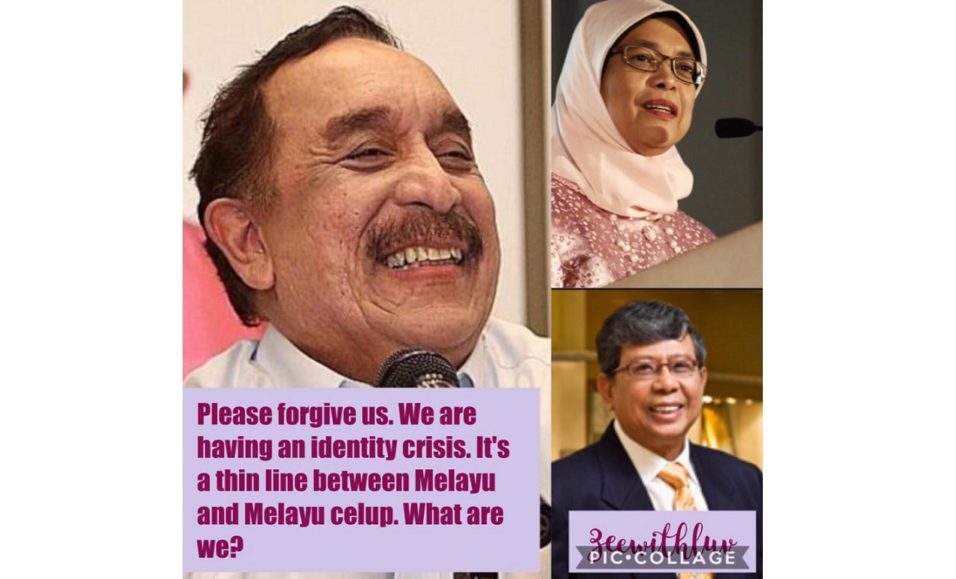
The upcoming PE has definitely once again throw the spotlight on Malays and Indian Muslims. In Singapore context, Indian Muslims have always been the sandwich race. We are sandwich between our Malay living lifestyle and our identity. Mendaki double standard is not helping in this matter.
Malay and Muslim are used interchangeably in Singapore context as and when they feel the need for it (Senang cakap ikut suka hati mak bapak dorang lah).
I give you a true point in case. Most of my Indian Muslims relatives contributed to both Mendaki and Sinda. When their children applied for the bursary or financial assistance, the favorite quote would be ‘sorry, Mendaki are for Malays. You can try applying to Sinda.”
But lo and behold, when any of this INDIAN MUSLIMS did well, suddenly they will be invited to Mendaki for whatever not ceremony to pose for pictures with you know who and claim their success under MENDAKI MALAY / MUSLIM banner. And Sinda never does that before. It’s very confusing tau for us! it leads to our own IDENTITY CRISIS…..Sad right?…..
This has always been our bone of contentions and I don’t think much has changed since.
As a Mendaki spokesman had declared and confirmed this biases “Malay-Muslim self-help group Yayasan Mendaki has a set of criteria for its financial assistance schemes for students administered on behalf of the Government. Among other things, the recipients “must be of Malay descent” as stated in their identity cards. It spells out a list of what it considers to be “Malay descent”, and this includes 22 ethnicities including Acehnese, Javanese, Boyanese, Sumatran, Sundanese, and Bugis. Students with “double-barrelled” race are eligible if the first race is listed on the identity cards as Malay, said a Mendaki spokesman. For example, a student who is Malay-Arab would qualify for the schemes but an Arab-Malay student would not, he added.”
CONFUSED HOR!
P.S – My daughter did not get any financial help from Mendaki after finding out all the stringent rules attached to it. It works out to something like ‘I scratch your back and you have to scratch more of mine’. However, when she did well, she was invited to attend the Mendaki ceremony, giving the impression that she owes her success to Mendaki.
His is a classic tale of rags-to-riches Singapore citizenry.
It was more or less an open secret among those following the developments of folks in the Malay community who might stand for the presidency this year.
Last month, four men emailed the press to inform them that they would be picking up forms for a then-unidentified candidate from the Elections Department.
When they were interviewed, they were coy on who they collected the forms for, but it emerged soon after that the man they were there for is Farid Khan Bin Kalim Khan, currently chairman of marine multinational firm Bourbon Offshore‘s Asia Pacific branch.
His last-held executive position at the firm was Southeast Asian Regional Managing Director, which he stepped down from about two years ago, according to his campaign manager Borhan Saini.
Now, while his automatic qualification to stand for president in the upcoming reserved election is not completely clear, Farid has nonetheless lived a story we reckon quite a few Singaporeans can rally around quite easily.
A classic rags-to-riches Singaporean
Photo by Chiew Teng
The second of 10 children — his older brother passed away at a young age —, Farid, who will turn 62 in November, felt the need to step up to support his family after his father passed away just as he was entering his teenage years.
He dropped out of his second year at Bartley Secondary School when he was 14, working by day at a timber processing factory and by night washing cars at a petrol station.
Two years later, he got a job as an assistant mechanic at a workshop, and discovered he really enjoyed working on board ships for projects. He then spent a few years working at a shipyard, got his first passport after his 21st birthday, and sailed as a captain’s steward for 14 months.
Spurred by passion for maritime engineering, Farid then completed a diploma in marine engineering at Singapore Polytechnic during his breaks onshore, and was finally appointed as a junior engineer in 1983, at the age of 28.
From there, he worked at Neptune Orient Lines and other shipping firms based in Singapore and Jakarta, after which he started up the Asian branch of Bourbon Offshore in 2005 as a partner.
He spent a decade at its helm, first as managing director and eventually stepping down from the post of Regional Managing Director to assume chairmanship at the French MNC’s subsidiary.
And somewhere in the middle of that, Farid got married, and now has a daughter, 24, and a son, 18.
Fulfilling people’s wish and trust
Photo by Chiew Teng
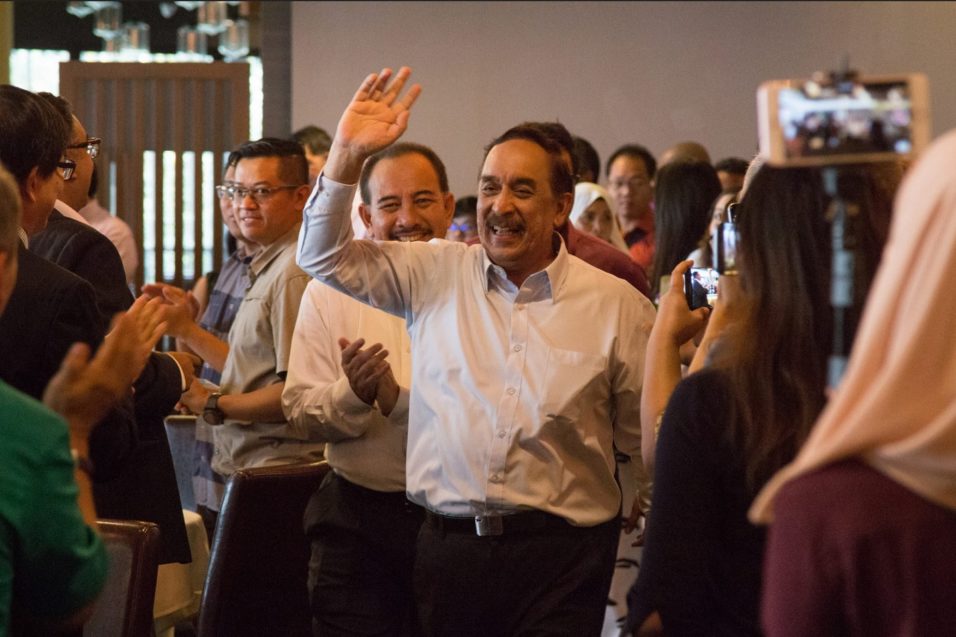
Tuesday’s press conference was held at the far-flung Village Hotel Changi, followed by a fancy lunch event attended by almost 200 supporters of Farid’s — many of whom come from the maritime sector.
Not only was there much fanfare welcoming him, complete with a rally-style speech, making rounds to meet attendees and even getting garlanded on the way, it was also pretty evident that the people who were there are fans of his.
Speaking to media, Farid said he felt like it was time to step up and serve the nation after spending decades achieving his dreams and building a strong career in the maritime sector.
“You see, all my life, 48 years I have worked in this country which I love. I worked very hard for my family, I worked very hard for my community. And now I’m 62 years old, I can do two things: live comfortably, retire and walk away from all this, or whatever that I’ve learned from my 48 years of working in this country, use that experience and serve the nation, which is what I’m doing right now.”
At another point during the conference, when asked if he would run if this was not going to be a reserved election, he said he had been a workaholic through most of his life:
“Few years ago I was building companies, very busy building companies — career, you know… I’m one of the workaholics ah, you can call me that — those who worked with me will say this guy is a workaholic, 7 o’ clock in the morning until 10 o’ clock at night working.
So I build companies… so I’ve come to a point now where the companies are all stable, 62 years old, I wanted to spend more time with my family; I’m going into retirement mode actually now. But this opportunity came, and I feel that I can serve this country.”
“Malay” enough?
Photo by Chiew Teng
All this aside, however, this round’s new qualification criteria stand as two rather daunting hurdles for Farid — apart from the financial and professional criteria that he doesn’t clearly meet, there is also the issue of his ethnicity.
You see, Farid, who in the press conference showed great fluency in both English and Malay, is of Pakistani descent, and has “Pakistani” written on his identity card.
In his speech and during the press conference, Farid said he grew up in Geylang Serai and his family and relatives speak Malay and practice the Malay culture, and hence identifies as part of the larger Malay community.
“The thing is, in the Malay community you have all kinds of people, right, from Balinese, Javanese, all kinds of descent that are there. It’s difficult for me to call myself otherwise. I live in a society that I love very much. I went to the same school with them, I shared the same fears, I shared the same joys with the people around me in the Malay village.
So I consider myself a Malay or Pakistani, even tomorrow my daughter got married, Insyallah, it will be the same, the same ceremonial like the Malay. We’ve kind of accepted that we are here to stay, and we are Malay in the community, in the Malay community.”
So will Farid Khan qualify to run for the Singapore presidency? The Presidential Elections Committee will have to decide, and we’ll just have to see.
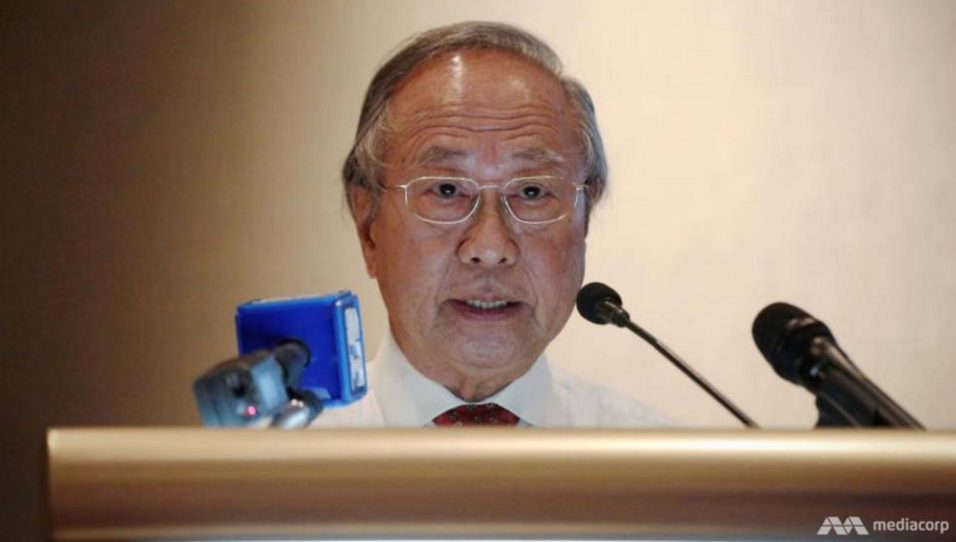
The High Court has dismissed former presidential hopeful Tan Cheng Bock’s application contesting the legitimacy of the upcoming reserved Presidential Election (PE).
Justice Quentin Loh’s decision on Friday (Jul 7) in favour of the Government maintains the status quo – that only Malay candidates are eligible to stand in the next PE, due in September.
Dr Tan has until next Wednesday to file a notice of appeal.
Dr Tan, a Member of Parliament for 26 years (1980–2006), ran unsuccessfully for President in 2011. In March 2016, he announced his intention to run again, but amendments to the Constitution passed late last year have precluded him from doing so.
Dr Tan filed an application in May challenging the basis of the Government’s decision to reserve the next PE for Malay candidates and called for the September election to be an “open” one.
Under new rules, if there is not a President from a particular racial community for five consecutive terms, then the next term will be reserved for a President from that community.
DR TAN’S CHALLENGE TO PARLIAMENT’S “UNCONSTITUTIONAL” DECISIONS
In an affidavit before the High Court, Dr Tan questioned the Government’s decision to count President Wee Kim Wee as Singapore’s first elected President.
President Wee was appointed in 1985 by the Government of the day.
The Elected Presidency as we know it – where Singaporeans vote for their President – was legislated in 1991, in the middle of President Wee’s second term.
Dr Tan, who was represented by Senior Counsel Chelva Retnam Rajah, argued that the decision to count five terms from President Wee’s was “unconstitutional”.
The first popularly elected President was Ong Teng Cheong, Dr Tan said, and if the Government had started counting from President Ong’s term, this year’s PE would not have to be a reserved one.
Dr Tan also argued that only the terms of Presidents elected by Singaporeans to serve six-year terms should be counted. President Wee was not popularly elected, and served two terms of four years.
PARLIAMENT’S DECISION A “POLICY” ONE, OUT OF COURT’S HANDS: JUDGE
In a 68-page judgement released on Friday (Jul 7), Justice Loh agreed with the AGC that “nothing” in the Constitution limits Parliament’s power to “start the count from the term of office of a popularly elected President”.
“(The Constitution) is both a duty-imposing and power-conferring rule. It expressly imposes a duty on Parliament to specify (the first elected President) and implicitly gives Parliament the power to do so,” Justice Loh said.
The Constitution also “does not only refer to Presidents elected by the citizens of Singapore for terms of six years”, the judge said. It could also refer to Presidents, like President Wee Kim Wee, who were elected by Parliament for four-year terms, he added.
The “plain language” of the Constitution “only refers to the person who holds the ‘office of the President’ without any words to draw a distinction between Presidents who were elected by Parliament, and those who were elected by citizens”, Judge Loh said.
“Ultimately, since (the Constitution) does not fetter Parliament’s power … Parliament’s choice of (the first elected President) is a policy decision which falls outside the remit of the courts.”
DR TAN “SELFISHLY” TRYING TO “UNDERMINE” MULTIRACIAL PRESIDENCY
In court documents obtained by Channel NewsAsia, the Attorney-General’s Chambers accused Dr Tan of “running a case that is entirely self-serving”.
“(Dr Tan) is advancing a strained interpretation of the Constitution so that he can apply to stand as a candidate in the coming (PE).
“His motives are purely selfish and he has shown no regard for the principle of multiracial representation which Parliament intended to safeguard,” Deputy Attorney-General (DAG) Hri Kumar Nair said.
In written submissions to the High Court, DAG Nair defended the Government’s decision to count President Wee Singapore’s first elected President.
The Constitution “does not impose any requirement on which President, or which category of Presidents the Legislature must choose or choose from”, he said.
DAG Nair added the Legislature has powers “to end the hiatus for any community sooner rather than later”, and that Dr Tan’s bid “undermines the longstanding imperative for multiracial representation in the office of the President, which the reserved election framework seeks to safeguard”.
NO DIFFERENCE WHETHER PRESIDENT IS ELECTED BY PARLIAMENT OR BY THE PEOPLE: JUDGE
Apparently in agreement with the AGC, Justice Loh said: “In my judgement, the recent constitutional amendments reflect a re-emphasis on the President’s unifying role and the conviction that, in order for the President to fulfil that role, that office must reflect the multi-racial character of our country.
“From the perspective of ensuring multi-racial representation in the Presidency in view of the President’s symbolic role, it makes no difference whether the President was elected by the electorate or by Parliament. In either case, the President’s capacity to symbolise Singapore is undercut if the occupants of the office do not reflect our multi-racial composition.”
Yesterday (1 Jun), ST published a news report stating that PAP MP and Speaker of Parliament, Halimah Yacob, is widely considered a front runner for the forthcoming Presidential Election.
It will be the first election reserved for candidates from the Malay community, following a recent review of the constitution.
According to the amended Singapore Constituion Section 19B, the Presidential Election will be reserved for a community if none of its members has held office of President for 5 or more consecutive terms.
“19B (1) An election for the office of President is reserved for a community if no person belonging to that community has held the office of President for any of the 5 most recent terms of office of the President.”
Sub-Section (6) defines a community:
“(6) In this Article, “community” means —
(a) the Chinese community;
(b) the Malay community; or
(c) the Indian or other minority communities;
‘person belonging to the Chinese community’ means any person who considers himself to be a member of the Chinese community and who is generally accepted as a member of the Chinese community by that community;
‘person belonging to the Malay community’ means any person, whether of the Malay race or otherwise, who considers himself to be a member of the Malay community and who is generally accepted as a member of the Malay community by that community;
‘person belonging to the Indian or other minority communities’ means any person of Indian origin who considers himself to be a member of the Indian community and who is generally accepted as a member of the Indian community by that community, or any person who belongs to any minority community other than the Malay or Indian community;”
Now, notice that in the case of Malay community, there is an addition clause added – “whether of the Malay race or otherwise”.
In other words, you don’t have to be a person of Malay race to be considered part of the Malay community. Persons of other race can also be considered part of the Malay community, presumably as long as he or she is a Muslim.
Halimah is an Indian Muslim
Take Mdm Halimah for example, she is actually not a Malay as her father is of Indian origin.
This was disclosed in an ST article in 2013 when Halimah was selected to be the new Speaker of Parliament after the former one, Michael Palmer, resigned from politics due to his marital affair with a PA woman. ST did a write-up to feature Halimah (‘A strong advocate for workers, women and minorities‘, Jan 2013):
In the article, it mentioned: “Her (Halimah’s) Indian-Muslim father was a watchman who died when she was eight years old.”
In fact, news of Halimah becoming Singapore’s first woman speaker also made its way to India. The Hindu described her as an “Indian-origin politician” (‘Indian-origin politician to be Singapore’s first woman speaker‘):
So, what all this means is that in the coming Presidential Election which is reserved for the Malay community, a non-Malay person who is a Muslim can also contest.
If Halimah, an Indian Muslim qualifies as part of the Malay community, then a Chinese Muslim, for example, can qualify too.