Tag: Saudi Arabia

  • Indonesia And Saudi Arabia Agreed To Promote A Moderate Version Of Islam

    Indonesia And Saudi Arabia Agreed To Promote A Moderate Version Of Islam

    For decades Wahhabism, the strict strain of Islam that promotes a literal interpretation of the Quran, has been Saudi Arabia’s predominant faith, and since the 1970s the oil-rich kingdom has been generous in sending funds to other Muslim countries to promote this conservative version of Islam.

    Now that Wahhabism has been linked with radicalism and even terrorism, the Saudi government has stepped up its campaign to counter that perception and the state visit of King Salman bin Abdulaziz Al Saud to Indonesia, where religious conservatism has gained ground alongside frequent terrorist attacks, was part of the public relations campaign. After dealing with business on the first day of his visit, King Salman on Thursday kicked off his charm offensive in a speech during a 30-minute special session at the House of Representatives, calling for a united front to deal with what he termed “a clash of civilizations” and terrorism.

    “The challenges that the Muslim community and the world in general faces, like terrorism and the clash of civilizations and the lack of respect for a country’s sovereignty, require us to unite in dealing with these challenges,” the monarch said in his two-minute speech, which was interrupted by rounds of applause from members of the House and guests, including former president Susilo Bambang Yudhoyono and former vice president Try Sutrisno.

    Later in his meetings with leaders of the country’s major Islamic organizations, the octogenarian king promoted a tolerant version of Islam as the key in the fight against terrorism and radicalism.

    Religious Affairs Minister Lukman Hakim Saifudin, who had organized the meeting, said Indonesia and Saudi Arabia agreed to promote a moderate version of Islam.

    “The two countries have come to an understanding that we would prioritize the promotion of Islam as rahmatan lil alamin [blessing for the universe]. What is needed to maintain the stability of global civilization is the moderation of Islam,” said Lukman, who joined the 30-minute session at the State Palace on Wednesday. President Joko “Jokowi” Widodo attended.

    During the session, three Muslim scholars were given the chance to speak directly to the monarch, including Indonesian Ulema Council (MUI) chairman Maruf Amin, who issued an edict last year calling for the prosecution of Jakarta Governor Basuki “Ahok” Tjahja Purnama for allegedly insulting the Quran.

    Earlier on Wednesday, King Salman and President Jokowi witnessed the signing of 11 agreements, including one addressing the issue of transnational crimes and global extremism, radicalism and terrorism.

    To further bolster its counterterrorism campaign, the Saudi government offered free haj trips for family members of personnel of the National Police’s counterterrorism squad Densus 88 who were killed while on duty.

    To further burnish his credentials as a promoter of moderate Islam, King Salman is expected to hold an interfaith forum on Friday, shortly before departing for Brunei Darussalam.

    Despite the visiting monarch’s pledge to join efforts to counter radicalism, the Saudi government continues to promote its conservative brand of Islam.

    Saudi Arabia is likely to step up its campaign to spread its version of Islam as it plans to open new campuses of the Saudi-funded Islamic and Arabic College of Indonesia (LIPIA) in Makassar, Surabaya and Medan.

    Currently, LIPIA only has a campus in Jakarta.

    Students studying at LIPIA will pay no tuition fees, as they receive Saudi-funded scholarships. Students will also receive a monthly stipend while studying at the institute.

    The college is known for graduating students ingrained with the conservative strain of Islam, including convicted terrorist Aman Abdurrahman, who has been known for his efforts to spread Islamic State (IS) movement propaganda.

    Alongside the Indonesian Society for the Propagation of Islam (DDII), LIPIA has been the primary beneficiary of Saudi funding in the country.

    Human rights groups have expressed concerns that conservative clerics in the country are promoting an agenda that conforms with the ideals of Wahabbism, including the call for the persecution of minority Muslim groups like Shiites and Ahmadiyah members.

    In Malaysia, where the visiting Saudi monarch agreed to invest US$7 billion in an oil refinery, the daughter of former prime minister Mahathir Mohamad, Marina Mohamad, lashed out against what she called Arab colonialism.

    Source: JakartaPost

  • Saudi Arabia Approves Increase In Singapore’s Haj Quota To 800 Pilgrims

    Saudi Arabia Approves Increase In Singapore’s Haj Quota To 800 Pilgrims

    More than four years after Singapore appealed for an increase in its official Haj quota, Saudi Arabia has agreed to the request, raising the number of places from 680 to 800.

    The news, which will be welcomed by the Muslim community here, was announced by Minister-in-charge of Muslim Affairs Dr Yaacob Ibrahim on Friday (Feb 17).

    He noted that Singapore had appealed for an increase from 680 since 2012, in light of the reduction in quota for domestic and foreign pilgrims, due to the major development and upgrading projects taking place in the vicinity of the Holy Mosque in Mecca.

    Thanking Saudi Arabia for the increase in the Haj quota, Dr Yaacob said the Saudi authorities would also consider Singapore’s requests for additional Haj visas for this year.

    Dr Yaacob, who is also Minister for Communications and Information, was speaking on the sidelines of a visit to Al-Khair Mosque at Teck Whye Crescent.

    Upgrading works at the mosque are due to be completed by the second quarter of this year, and will result in an increase of 500 new prayer spaces, he said.

    Singapore’s current Haj quota is based on a 1987 formula by the Organisation of Islamic Conference, which set it at 0.1 per cent of the Muslim population here.

    Since then, the Muslim community here has grown by about 20 per cent, but the quota for the Haj, the fifth pillar of Islam, has remained unchanged. Currently, there are about 800,000 Muslims in Singapore.

    The Islamic Religious Council of Singapore will contact eligible Haj registrants regarding the additional vacancies available.

    Hari Raya Haji will be celebrated on Sept 1 in Singapore this year, and pilgrims tend to leave for the Haj about a month before in order to perform the necessary rituals in Mecca.
    Source: www.todayonline.com

  • Saudi Arabia Quietly Spreads Its Brand Of Puritanical Islam In Indonesia

    Saudi Arabia Quietly Spreads Its Brand Of Puritanical Islam In Indonesia

    When Ulil Abshar-Abdalla was a teenager in Pati, Central Java, he placed first in an Arabic class held at his local madrasa. The prize was six months of tuition at the Institute for the Study of Islam and Arabic (LIPIA), a Jakarta university founded and funded by the Saudi Arabian government. At the end of six months, LIPIA offered him another six. He stayed on.

    After that, it offered him four more years of free tuition to obtain a bachelor’s degree in Islamic law, or shariah. He accepted that too. In 1993, after five years at LIPIA, he was offered a scholarship to continue his studies in Riyadh. He finally said no.

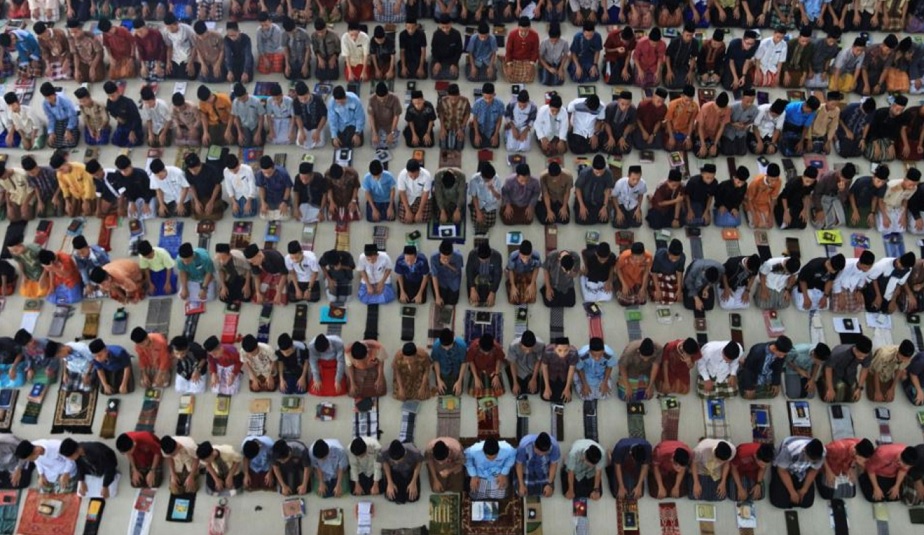
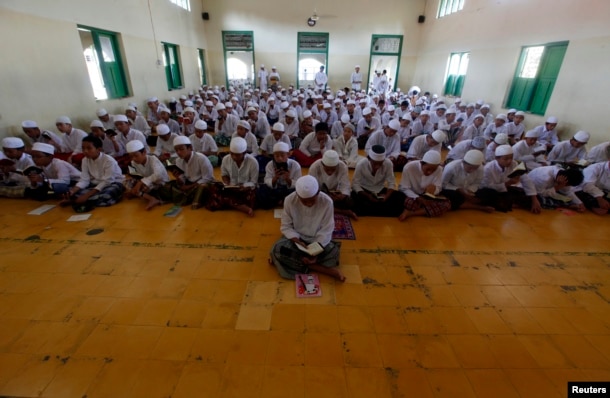
    FILE - Students pray during the first day of the holy month of Ramadan at Al-Mukmin Islamic boarding school in Solo, in Indonesia's Central Java province, August 1, 2011.

    FILE – Students pray during the first day of the holy month of Ramadan at Al-Mukmin Islamic boarding school in Solo, in Indonesia’s Central Java province, August 1, 2011.

    “Once you accept that, you’re on their payroll for life,” Abshar-Abdalla told VOA. “But they made it awfully easy to stick around. I’m from a poor family, and it was quite tempting… I think they managed to pull a few good minds from my generation that way.”

    Since 1980, Saudi Arabia has been using education to quietly spread Salafism, its brand of puritanical Islam, in Indonesia, the world’s most populous Muslim nation. The two main arms of this effort are LIPIA and scholarships for higher education in Saudi Arabia.

    Salafism is an ultra-conservative reform movement that advocates a return to Koranic times. LIPIA teaches Wahhabi Madhab, a strain of Salafi Islam expounded by the medieval Sunni theologian Ibn Taimiyah.

    “Saudi alumni” are now visible in many arenas of Indonesian public life, holding positions in Muhammadiyah, the Prosperous Justice Party, and the Cabinet. Some have also become preachers and religious teachers, spreading Salafism across the archipelago.

    The effects of Saudi Arabia’s massive soft power exercise on the Indonesian citizenry are just starting to become clear.

    ‘The most important post in Jakarta’

    The nexus of Saudi educational diplomacy is the religious attaché, a special office affiliated with its embassy in Jakarta. The office grants scholarships for students to study in Saudi Arabia, although the current attaché, Saad Namase, refused to confirm how many students were involved.

    “We don’t really work with the Indonesian government,” said Namase. “We just try to strengthen cultural ties between our two countries by, for example, holding Quranic recitation competitions.” On the topic of scholarships, he said many countries, including the Netherlands and the U.S. offer scholarships to Indonesian students and the Saudi program was just one among many.

    FILE - A teacher gestures during an Islam personality class during the holy month of Ramadan at the Al-Mukmin Islamic boarding school in Solo, Indonesia Central Java province, Aug. 2, 2011.

    FILE – A teacher gestures during an Islam personality class during the holy month of Ramadan at the Al-Mukmin Islamic boarding school in Solo, Indonesia Central Java province, Aug. 2, 2011.

    “The Saudi religious attaché is the most important post in Jakarta,” said Abshar-Abdalla, who now runs the Liberal Islam Network. “It is the portal for all Saudi efforts to influence Indonesian culture.”

    The attaché’s office also pays the salary of prominent Salafi preachers and supplies Arabic teachers to boarding schools across Indonesia, according to Din Wahid, an expert on Indonesia Salafism at the Syarif Hidayatullah State Islamic University in Jakarta.

    Beyond the attaché’s office, several Saudi Arabian universities directly offer scholarships to Indonesian students.

    One reason the Indonesian government is unlikely to present roadblocks to Saudi cultural expansion is its precarious annual Hajj quota, according to Dadi Darmadi, a UIN researcher who focuses on the annual pilgrimage to Mecca.

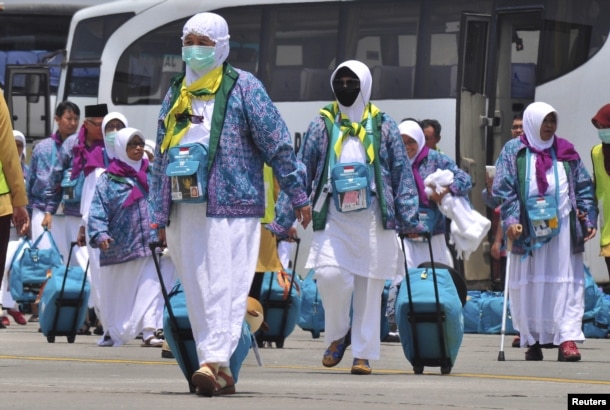
    FILE - Indonesian Haj pilgrims walk towards their flight at the airport in Solo, Central Java province, Indonesia, Sept. 17, 2015, in this photo taken by Antara Foto.

    FILE – Indonesian Haj pilgrims walk towards their flight at the airport in Solo, Central Java province, Indonesia, Sept. 17, 2015, in this photo taken by Antara Foto.

    “We were just granted 10,000 extra Hajj permits this year, which is still a drop in the bucket considering Indonesia’s population of 203 million Muslims,” said Darmadi, “I think Indonesia would hesitate to antagonize Saudi Arabia and prompt cuts to that hard-won quota.”

    Divergent paths

    Hidayat Nur Wahid, a member of Indonesia’s House of Representatives and a leader of the right-wing Prosperous Justice Party (PKS), is one of the most prominent national politicians who have passed through Saudi universities. He studied, through a series of scholarships, for an undergraduate, master’s and doctorate degree in theology and history of Islamic thought at the Islamic University of Medina.

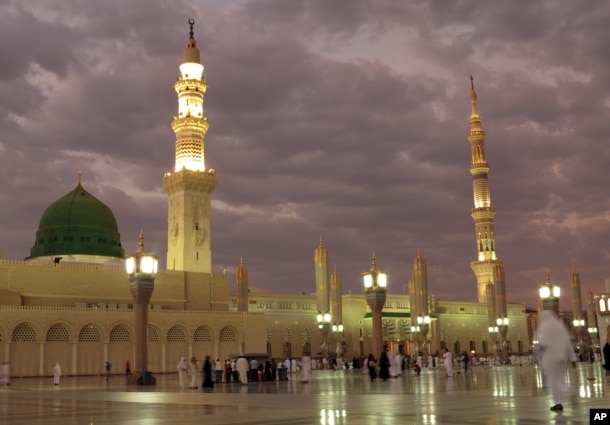
    FILE -- In this July 5, 2013 file photo, worshipers visit the Prophet's Mosque in Medina, Saudi Arabia.

    FILE — In this July 5, 2013 file photo, worshipers visit the Prophet’s Mosque in Medina, Saudi Arabia.

    “The majority of Islamic texts are in Arabic, which is why I wanted to study in Saudi Arabia,” Nur Wahid told VOA. “Plus, the spirit of the Prophet Muhammad animates Medina. I enjoyed my years there.”

    Nur Wahid said he was not exposed to radicalism or “anti-social” teachings in Medina. “We just learned how to be good Muslims. And it’s a misconception that everyone who studies in Saudi Arabia becomes a preacher or religious teacher. Many graduates become officials or politicians like me.”

    “Since it is the place where Islam originated, many students think that Saudi Arabia represents authentic Islam,” researcher Din Wahid.

    Saudi theology had the opposite effect on Abshar-Abdalla, who gradually grew disenchanted with the Salafi movement during his five years at LIPIA.

    “Although I had some short-lived enthusiasm for that simplistic theology, I found it to be puritanical at its core,” said Abshar-Abdalla. Instead, he started to read various other Islamic texts on his own, including Sufi and Shia ones, and eventually founded the Liberal Islam Network (JIL) in 2001.

    Ironically, he himself was once recruited for the student movement that would develop into PKS. “I was invited for a rafting trip in Bogor one weekend at university, and I realized they were trying to get me to join Tarbiyah, the embryo of the current PKS party,” said Abshar-Abdalla. “I sort of ran in the opposite direction.”

    Extremist connection

    Although Saudi-educated preachers in Indonesia might be causing a subtle rightward shift in national ideology, a more immediate concern is whether Salafi teachings encourage terrorism or extremism.

    “By and large, I think not, because official Salafism is quietist, or apolitical, in order to preserve the authority of Saudi royalty in its homeland,” said Wahid. “That being said, when this ideology migrates back to Southeast Asia, all bets are off.”

    One prominent example of non-quietist, or jihadist, ideology is the Salafi-influenced Ngruki pesantren in Solo, Central Java, which has incubated a number of known Indonesian terrorists.

    And Zaitun Rasmin, a graduate of Medina Islamic University, was one of the chief organizers of the hardline demonstrations against the governor of Jakarta in late 2016. “He’s an example of an Indonesian Salafist who is unconcerned with being ‘apolitical,’” said Wahid.

    Wahid’s point is that, for all the resources Saudi Arabia is directing towards Indonesian students, it remains to be seen how exactly Salafi ideology evolves in its new Southeast Asian context. “There are three ‘flavors’ of Salafi ideology: quietist, political, and jihadist. We don’t know what exactly it looks like in Indonesia. All we know is that it’s here, and it’s growing.”


    Source: VOA

  • International Crisis Group: Rohingyas Involved In Attack On Border Guards Headed With People With Links To Pakistan And Saudi Arabia

    International Crisis Group: Rohingyas Involved In Attack On Border Guards Headed With People With Links To Pakistan And Saudi Arabia

    A group of Rohingya Muslims that attacked Myanmar border guards in October is headed by people with links to Saudi Arabia and Pakistan, the International Crisis Group (ICG) said on Thursday, citing members of the group.

    The coordinated attacks on Oct. 9 killed nine policemen and sparked a crackdown by security forces in the Muslim-majority northern sector of Rakhine State in the country’s northwest.

    At least 86 people have been killed, according to state media, and the United Nations has estimated 27,000 members of the largely stateless Rohingya minority have fled across the border to Bangladesh.

    Predominantly Buddhist Myanmar’s government, led by Nobel Peace Prize winner Aung San Suu Kyi, blamed Rohingyas supported by foreign militants for the Oct. 9 attacks, but has issued scant additional information about the assailants it called “terrorists.”

    A group calling itself Harakah al-Yakin claimed responsibility for the attacks in video statements and the Brussels-based ICG said it had interviewed four members of the group in Rakhine State and two outside Myanmar, as well as individuals in contact with members via messaging apps.

    The Harakah al-Yakin, or Faith Movement, was formed after communal violence in 2012 in which more than 100 people were killed and about 140,000 displaced in Rakhine State, most of them Rohingya, the group said.

    Rohingya who have fought in other conflicts, as well as Pakistanis or Afghans, gave clandestine training to villagers in northern Rakhine over two years ahead of the attacks, it said.

    “It included weapons use, guerrilla tactics and, HaY members and trainees report, a particular focus on explosives and IEDs,” the group said, referring to improvised explosive devices.

    It identified Harakah al-Yakin’s leader, who has appeared prominently in a series of nine videos posted online, as Ata Ullah, born in Karachi, Pakistan, to a Rohingya migrant father before moving as a child to Mecca in Saudi Arabia.

    “Though not confirmed, there are indications he went to Pakistan and possibly elsewhere, and that he received practical training in modern guerrilla warfare,” the group said. It noted that Ata Ullah was one of 20 Rohingya from Saudi Arabia leading the group’s operations in Rakhine State.

    Separately, a committee of 20 senior Rohingya emigres oversees the group, which has headquarters in Mecca, the ICG said.

    U.S. State Department spokesman John Kirby said in a news briefing on Thursday that the United States was aware of the report and reviewing it, but declined to comment further.

    Groups like Islamic State and al Qaeda in the Indian Subcontinent have referred to the plight of the Rohingya in their material, and the battlefield experience of at least some of the Rohingya fighters implied links to international militants, the ICG said.

    However, ICG said the group has notably not engaged in attacks on the civilian Buddhist population in Rakhine. Harakah al-Yakin’s statements to date indicate its main goals are to end the persecution of the Rohingya in Myanmar and secure the minority’s citizenship status.

    “It is possible, however, that its objectives could evolve, given its appeals to religious legitimacy and links to international jihadist groups, so it is essential that government efforts do not focus only or primarily on military approaches, but also address underlying community grievances and suffering,” the ICG said.


    Source: www.reuters.com

  • Jemaah Umrah Yang Terkandas Masih Menanti Penerbangan Ke Tanah Suci

    Jemaah Umrah Yang Terkandas Masih Menanti Penerbangan Ke Tanah Suci

    NILAI: Seramai 200 jemaah umrah masih terus menanti peluang menjejakkan kaki ke Tanah Suci selepas kegagalan syarikat penerbangan sewa khas mendapatkan permit kebenaran mendarat pada Isnin (12 Dis).

    Seorang jemaah, A. Husaini Rahman, 41 tahun, yang ditempatkan di sebuah hotel di Nilai bersama jemaah lain berkata, sehingga kini mereka masih lagi tidak mendapat sebarang maklumat mengenai status penerbangan mereka.

    “Sehingga kini, kami masih belum menerima apa-apa berita, saya dan jemaah lain hanya berhubung dengan pihak Eagleexpress Al-Fajr melalui panggilan telefon dan aplikasi WhatsApp sahaja yang mana hanya menyatakan masih belum menerima sebarang arahan kelulusan untuk melakukan penerbangan,” katanya kepada Bernama semalam (14 Dis).

    “Saya dan jemaah lain bingung dan sebagai orang Islam kami beramai-ramai berdoa agar diberi petunjuk dan berharap mendapat perkhabaran baik dalam masa terdekat,” katanya.

    Media pada Isnin melaporkan kira-kira 200 jemaah umrah yang dijadual berlepas bagi mengerjakan umrah pada hari berkenaan terkandas selepas penerbangan mereka ditangguhkan berikutan permit kebenaran mendarat masih belum diperoleh syarikat penerbangan sewa khas itu untuk membawa rombongan berkenaan.

    Bagaimanapun, usaha untuk mendapatkan penjelasan lanjut daripada pihak Eaglexpress gagal.

    Source: http://berita.mediacorp.sg