Tag: secular

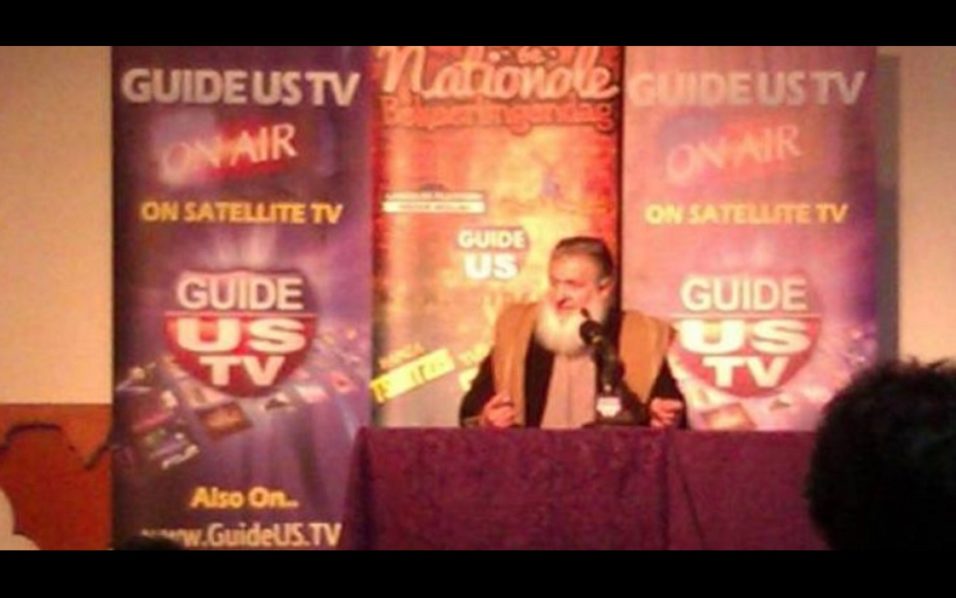
  • 10 Reaksi Orang Singapura Terhadap Yusuf Estes Yang Tidak Dibenarkan Masuk Singapura

    10 Reaksi Orang Singapura Terhadap Yusuf Estes Yang Tidak Dibenarkan Masuk Singapura

    1. MUIS tak bersuara, takut MHA, selalu angguk kepala aje. Tapi takpe… da biasa
    2. Komen pun tak guna. Simple.
    3. Kenyataan nya Melayu Singapura sudah kena belengu dengan doktrin jahiliyah tapi Tak sedar
    4. Satu2 yg diluar di tutup pintu …yg didalam ditaruh grill dan gate …dasar polisi islam the singapore way…..
    5. Jgn salahkn MUIS atau MUFTI, ini diluar kuasa mereka, ni arahan dr kementerian ehwal dlm negeri yg diterajui oleh org2 kafir
    6. Cabaran pendakwah di akhir zaman. Yang benar tidak boleh dicerahkan tapi yang batil dijunjung dan ditatang !!!
    7. Klau gomen ckp jimat air. Sebok khubat jumaat ckp pasal air. Klau gomen ckp pasal nyamok Khubah jumaat pun pasal nyamok. Klau gomen ckp pasal kurang kan gula khubah jumaat pun ckp pasal gula hehehehe tu pasal lah bila time khubah jumaat byk yg tidur lena. Dan yg paling merdu di dgr ia lah…. Pehat masjid tidak bertanggong jwp klau kereta ada di denda..yg ni paling class.. Belum pernah dgr khubah yg menaik kan semangat org2 islam ..sampai khubah kita pun di periksa oleh kafiroon..
    8. Ada Yusuf Estes kesah? Confirm dia tak kisah pon. And he’s better off in the US. Where he has thousands more of followers.
    9. Cuba sekat lagi, ilmu Allah itu luas. Inshallah. Kalau kita nak dengar yang baik2 anytime youtube ada
    10. Dilarang masuk kerana takot kebenaran disebarkan. Yusuf Estes tau tipu hela bekas agama dia.


    Rilek1Corner


  • Almakhazin: Islam, Christianity And The Foundation Of Secularism

    Almakhazin: Islam, Christianity And The Foundation Of Secularism

    Secularism, or the removal and/ or denial of religion in man, with the attendant focus on the present and material, is a product of Western civilization and the corruption of religious doctrine.

    Even though there are Muslims who promote secularism as their preferred political ideology, it is not part of Islamic worldview.

    In politics, it seeks the “desacralization of politics”, which is the removal of sacred legitimacy “of political power and authority” (16).

    Even though Islam does not view politics as sacred, its application of governance is different from the secularists’ view.

    Politics is not sacred since “Islam itself is based on Divine Authority and on the sacred authority of the Holy Prophet (may God bless and give him Peace!), which is no less than the reflection of God’s Authority, and on the authority of those who emulate his example.

    Thus every Muslim individually, and collectively as society and nation and as a Community (ummah) all deny to anyone, to any government and state, sacral legitimacy unless the person or the government or the state conforms with the practice of the Holy Prophet (may God bless and give him Peace!) and follows the injunctions of the Sacred Law revealed by God.” (29)

    Secularism is connected to Christianity and the corruption of Greek philosophy. It was however, not developed through the faith “but in the interpretation of biblical faith by Western man…” (18).

    Greek philosophy’s expansion to Rome and the move of the Christian centre from Jerusalem to Rome brought both ideologies together. The influence and confrontation between the two ideologies led to the removal of nature from Christian doctrine for a proclaimed “Kingdom of God”, which exists only in the supernatural world.

    “The outcome of this religio-philosophical confrontation was that Christian theology began to suppress the role of intelligence, and hence also the known of spiritual truth, and at the same time urged unquestioning faith through the exercise not of human intelligence and reason but sheer human will which made love the basis of faith” (31).

    Islam does not suggest such dichotomies. Reason, intellect and spirituality exists within the deen, “hence the understanding of spiritual realities is also within the province of reason and is not necessarily divorced from rational understanding of them” (32).

    The Shariah, or revealed law, is to be applied by man in this world, provided to him by his creator.

    It is the divine applied in our daily life.

    Secularism and its variations should not be part of our social, political or philosophical tradition. It is a corruption that seeks to corrupt.

    Reference:

    Al-Attas, Muhammad Naguib. Islām and secularism. Muslim Youth Movement of Malaysia, 1978.


    Source: Almakhazin SG

  • Stop Judging Secular Students

    Stop Judging Secular Students

    We are where Allah wants us to be. We do what Allah wants us to do.

    Never have I once feel ashamed of the background I had. But never have I felt that we deserve to be laughed at or belittled. You will never truly understand our plot and position if you have never been in our shoes. You will never truly understand the little hardships we face trying to be good Muslims. And you will never truly understand the sacrifice that we made sometimes.

    Is there regret on my end? Yes.

    If there is one thing I regretted most was putting a distance between me and my friends last time. I distanced myself in order to be a “better Muslim”. And when I left secondary school, I left everything behind. Friends, best friends, buddies. Everything.

    There was no “guide” to be a good Muslim in a secular school then. I thought I had to distant myself and put everything aside. I left them all behind and went to trod on the “better path” alone. And now when I look back, sometimes I wish I had been wiser, more matured with my decisions.

    I DO NOT REGRET WHERE I AM NOW.

    But I regret not having certain people with me. Friends, where we once called ourselves family. So it hurts when I see people, “better” and non secular-people judging us. Laughing at us when we do certain deeds. When we try to be better.

    You have no idea what some of us went through just to do our 5 prayers daily. You have no idea how hard we try to speak nicely and without the occasional swearing. And you have absolutely no clue how much effort we put to attend a religious class.

    So please, if we get over-excited religiously sometimes, forgive us and don’t mock us. We were just trying to enjoy and feel like a better Muslim. We acknowledge that we might not be as fluent as you in reciting the Qur’an or memorising the texts. But we are trying and we hope you don’t judge us when we do.

    Because I remember when I decided to leave that “secular path”, nobody came with a helping hand nor a piece of advise from the other side. I was judged, criticised and laughed at. So now when I look back at the people I left behind, who is going to reach out to them and show them Allah’s mercy and my Prophet’s love?

    We did not start our day in school last time with wirdul latif. Nor did we have a time to pray in congregation. Allah did not place us there to be mocked and laughed at. He placed us there, so you may take our hands and guide us to the beautiful path of Islam you learnt in school.

    If there is one thing I regret, is to have left all my friends behind. 

    But Allah work wonders. And He have met me with new friends that I cherish so much right now. And new opportunities for me to amend my faults and unwise decisions.

    To my friends, we got more work to do. The journey just began. The fun has only just started. People are going to judge us, criticise us, and bring us down. But Allah is with us. We’re here to make friends. To make new friends and patch up with old ones. Take blessing in where we are and where He have placed us.

    Our message is love.

    535077_989550847790285_1511708176630605432_n

    Wassalam,
    Muhammad Harith
    Guest Writer, JOM.sg


    Source: http://jom.sg
  • Muslimah: Kind Former British Principal In International School Allowed Me To Pray In Her Office

    Muslimah: Kind Former British Principal In International School Allowed Me To Pray In Her Office

    The story on the kind auntie who shares her rest spot so that Muslimahs can perform their prayers reminds me of the time i worked in an international school Avondale.

    My principal graciously told me (i didnt even asked her!) that i could use her office to pray if i want to and that she would step outside to give me the privacy.

    She was a British lady, very loud and outspoken, kind and funny. She also has a soft spot for small kids and her teachers. It was very long ago…

    Funny one remembers these things.


    Source: Nur Shah

  • Walid J. Abdullah: Stop Looking At Madrasahs And Students As Second-Class

    Walid J. Abdullah: Stop Looking At Madrasahs And Students As Second-Class

    It is wonderful indeed to see madrasah students – such as Nur Masyitah Borhan and Murshidah Albakri – performing so well in their O-Levels. Lest we forget, for many of these madrasah students, their O-levels are not their bread-and-butter, and we must not judge them by how well they do in it. Hence, for those who do brilliantly despite the fact that they have many other subjects to study for (yes, they do not stop reading other subjects just because it is O-level year), it is a phenomenal feat.

    Unfortunately, I have met many people – even Muslims – who do not really know too much about the madrasahs, but somehow ‘know’ enough (usually from their ‘own experience’, which actually involves encountering one or two madrasah students) to believe that madrasah students/graduates are somehow less able than students/graduates of national schools. It is almost like modern-day orientalism.

    From my own limited experience, I believe madrasah students are just like students of other schools: on average all of them are just as smart. Then you have some hardworking ones, and some less-hardworking ones. Some are naturally more gifted, others, less so. There is nothing ‘special’ or ‘inferior’ about their abilities.

    Two things, however, I believe are different:

    1) The workload of these students far outweigh their national schools counterparts, so naturally, the amount of work required is more as well.

    2) On average, these students are far more well-behaved, and well-mannered. I can understand why many choose to dedicate their entire lives serving the madrasahs, because the students – more often than not – make it worth the sacrifices.

    I am not at all saying that the madrasah system is perfect; no system is, after all. I am sure many could list some problems the madrasahs face, just as many could do the same for national schools. All i am saying is that we should always consider and reconsider our preconceived notions and possible biases before making sweeping statements about things that many consider integral to their communities, such as the madrasahs.


    Source: Walid J.Abdullah