Tragedy struck the Z family less than a week after moving into their flat at Block 165 Yishun Ring Road.
Their four-year-old son died after he fell nine storeys from the master bedroom window, which did not have window grilles installed.
Although the father, who wanted to be known only as Mr Z, 40, acknowledges that he shouldn’t leave his child alone at home, he also partly blames their contractor, who did not install the grilles in time.
When The New Paper visited the family yesterday, there were grilles in all the room windows. The boy’s father said they were installed two or three days ago.
Mr Z admitted he could not escape blame for his son’s death and it was “negligence on his part”.
He declined to use his full name as he wants to protect his remaining children, aged two to 10, and hopes to help his family move on from the tragedy.
Said the security officer: “That day, we all made the ‘fast’ decision (to leave the youngest two at home alone), which was the wrong decision. And we have paid for it with my son’s death. I can take that blame, it is our fault.
“But the grille thing had a part to play too. The contractor played a part in this by not fulfilling his contract.”
Yesterday, MP for Nee Soon GRC and Minister for Home Affairs and Law K Shanmugam wrote in a Facebook post that he would help the family seek legal recourse against the contractor.
Tragedy that could have been avoided——————–On 6 Oct 2015, a 4 year-old boy fell to his death in Yishun….
My daughter is merely 2 yrs old, how can a maid do such things to her?
Happily having her dinner, unknowingly out of nowhere a sudden kick from her had landed my Mikayla’s head hit hard on the floor. That impact is totally undescribable from me.
I was totally heart broken when I saw my maid doing that to my daughter.
Personally I wont even lay a hand on my princess, until someone else actually did it.
This afternoon at 3.20pm , after collecting my luggage at Changi , I was asked by Officer Eugene Ng , an Immigration & Custom Authority personnel to scan my belongings . I was curious and jokingly asked him what he saw in my outlook that made him pick me instead of dozens of people also leaving the airport with their belongings . I wasn’t even wearing my shades this time haha . He ignored me and I guess that was his right to do so but I wondered if he actually heard me , so I asked again . I raised my voice this time to make sure I would be heard . Then he demanded me to give him my passport and he took it to record my details . I was truly curious and I asked him why he asked for my passport and what my details were being recorded for . His reason was because I raised the volume of my voice . Shocking ! So for raising my voice the authorities took down my personal details ? I had already gone through immigration before I collected my luggage , and his job was really just to check my luggage at the scanner .
I was angry because he was holding me without cause . I asked him again for the purpose of taking down my details ; instead of answering me , he ordered me to follow him to the search room . Naturally , I refused . I asked him what he was planning to search and why I was being detained. His response was I should know the answer . Now , why and how would I know ? Nothing illegal showed up in my belongings on the scanner . I needed to know what I was being suspected for ; he refused to answer and again , demanded me to follow him to the search room . I refused again .
At this point , afraid I would be dragged away against my will , I started taking video of the events that would follow . He leaped forward and tried to snatch my phone but I managed to dodged and reminded him of my rights to take images of public places including airports and that even the police have no rights to take away my phone unless they have a warrant . This officer then told me the area is restricted and I cannot take videos of him . The luggage belt / custom area was a public area . Ten of dozens of people were moving around us . However , respecting his order , I asked where was the sign that says I cannot take videos but he couldn’t show me and said he needed to ask his superiors . All this time he held onto my passport and refused to return it to me and kept wanting to take my phone and demanded me to follow him to the search room . Finally his superior returned and guess what ? ….. his superior let me go within 10 seconds . Now the truth is clear . I did nothing wrong and officer Eugene Ng was just being an ass ! The officer detained me , held my passport , took down my personal details , demanded me to follow him to the search room , and tried to snatch my phone ; his superior let me go within 10 seconds upon his return . So who’s the one really carrying out his duties ?
What kind of people are we hiring these days as public servants to serve us ? This is clearly an abuse of power and an infringement of my rights . This officer had intimidated me and if I had followed him to the search room I could not imagine what would happen next . I was so afraid for my safety and what this officer and / or his other colleagues would have done to me if I had been dragged to the search room .
For this and many other similar reasons , I had left my country to live overseas . There are simply too many similar encounters every time I return . This one was indeed too scary and frustrating , thus I am sharing . I am sure there will be strong supporters of the system (a system where we are not to question the authorities and when we do , even if it was an innocent question , we would face the consequence of intimidation and harassment) but we should all be reminded of our rights , the rights and duties of this officer but not to forget my rights either .
As a result of this injustice , I was late for my business meeting . Note: I have various businesses in Singapore that pay taxes ; I am an original Singaporean who also contributed to nation building by being in uniform for 6 years . Maybe I should be treated slightly better than this when I return to my home . I wish officer Eugene Ng a successful career checking luggages at Changi .
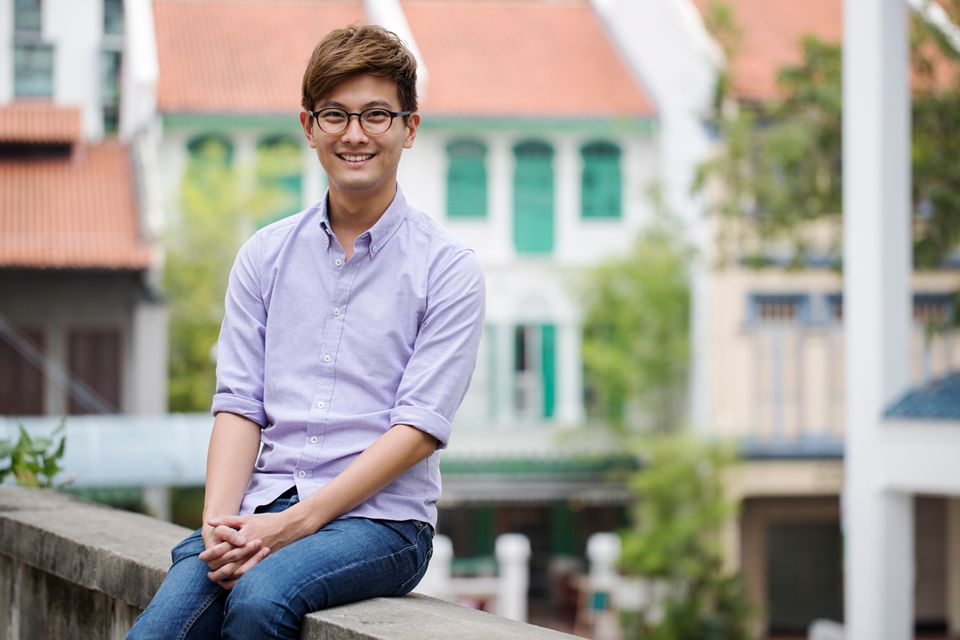
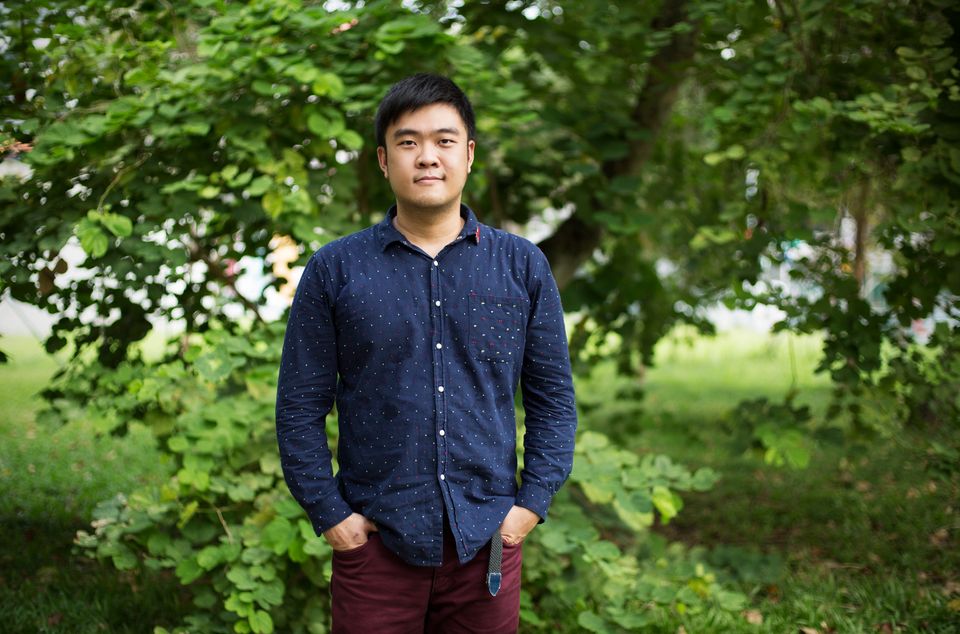
Kenneth Chee and Gary Lim have been together for almost two decades, but in the eyes of the law they’re criminals.
The couple met by chance at a shopping mall in Singapore in 1997. “I guess my ‘gaydar’ went off,” Chee recalls. “I just went up to him and asked him for his number.” They’ve been inseparable ever since.
“If gay marriage was legal here, we would get married in a heartbeat,” Lim says. Chee, by his side, nods in agreement.
But gay marriage is not legal in Singapore. Same-sex civil partnerships are also not recognized, and there are no laws that protect against discrimination on the grounds of gender expression or sexual orientation.
In 2007, Singapore, which is a former British colony, made headlines when it struck colonial-era penal code Section 377 from its books. The statute had criminalized “carnal intercourse … against the order of nature,” which included anal and oral sex. The law, which dates back to 1860 and was exported to many British colonies, is still in place in several countries, including India, Malaysia and Myanmar. The statute has been called “England’s least lovely law export.”
Though 377 was removed, a related provision — called Section 377A — was kept intact. 377A specifically targets sexual acts between two men. Under this law, homosexuality is criminalized and punishable by imprisonment of up to two years.
The LGBT community in Singapore was incensed. Lim and Chee, who are both graphic designers, say they were shocked.
“Why are we being singled out to be punished? It’s legal for straight people to have anal sex and oral sex, so why are we seen as criminals?” Lim says. “This law is now always hanging over our heads.”
Outraged by the “blatant discrimination,” the couple decided to challenge the state in court — a decidedly unusual move.
“I just refused to accept this nonsensical label,” Chee says. “We didn’t want to be seen as ‘illegal.’”
In 2010, a Singaporean man named Tan Eng Hong was charged under 377A for having oral sex with another man in a public restroom. At the time, Tan challenged the constitutionality of the law. Two years later, Lim and Chee raised a second challenge.
This was the first time in Singapore’s modern history that the constitutionality of a law was being challenged, according to the couple’s attorney, Peter Low.
Last October, the final ruling for the case was delivered after several years of bouncing through the courts. Singapore’s Court of Appeal, the nation’s highest court, determined that 377A is constitutional.
Homosexuality remains illegal in Singapore.
“We were very disappointed,” Lim says, his lips pursing grimly. “The message was loud and clear: We’re not ready for change.”
Singapore’s government has repeatedly said that it will not “proactively enforce” Section 377A. (In the case of Tan Eng Hong, the charge against him was later changed to “committing an obscene act in a public place.”) But Jean Chong, co-founder of LGBT rights group Sayoni, says the law — whether enforced or not — has had a profound effect on the country’s LGBT community, and on human rights in general.
“377A may be targeted at men, but it has a cascading effect. It shapes public opinion, and informs policy. It impacts the entire LGBT community,” she says.
Scott Teng, a 30-year-old gay man, points out that the government’s stance on the law is akin to “holding a gun to a person’s head, but saying, ‘oh, we’ll never pull the trigger.’ That’s the case here. You always wonder — at what point will the trigger be pulled?”
Such a law, he adds, can encourage marginalization.
“It gives people the justification to treat you as a lesser Singaporean, as a lesser human being,” Teng, who is an associate director at a brand consultancy, says. “It filters down to individual experiences, to the hurtful words people choose to use.”
SEAN LEE“When I first came out to my mother, it went horribly,” said Scott Teng. “My family’s very traditional, and the first reaction I got was ‘Get out of my house, you devil spawn!’ She took it very hard. But though it took her a few months, she’s accepted it and now she’s honestly the best mom ever. She told me, ‘Even if the sky falls down, mom will be here for you.”
Sayoni has been documenting cases of violence and discrimination against Singapore’s LGBT community for several years.
Most abuse is underreported Chong says, and she’s been “shocked” by many of the stories she’s heard.
“Transgender women and gay women spoke about being assaulted, sometimes sexually, because of their appearance,” she says. “One trans woman said she was gang-raped at a hotel room, but she didn’t report it to the police. She’s trans and she used to do sex work, so she didn’t feel comfortable.”
Chong says that the poor and the under-educated are particularly vulnerable to abuse. “They have less vocabulary to articulate what’s happening to them and they have fewer resources,” she says. These are individuals who don’t have access to the growing, though still small, LGBT community here.
Avin Tan, 30, is a gay man living with HIV. According to Tan, there have only been two gay people with HIV who have come out publicly in Singapore about their condition. Paddy Chew, who died in 1999 from HIV-related complications, was the first. Tan is the second. “More people need to come out. It takes guts and yes, it’s a risk, but we need people from every walk of life to speak up,” he said. “Only then will we see change.”
The first gay protagonist in a local TV series featured in a 2003 docu-drama called “Crunchtime,” which was aired on Singapore’s Channel U. It was a landmark moment, but the series, supposedly based on a true story, was criticized for promoting homophobia.
A subsequent exhibition about the history of Singaporean television, suggested that homosexuality was depicted as a mental illness in the show. The protagonist, named Shaohua, is seen visiting a counseling service in an effort to find the “correct and normal” path. By the end of the series, Shaohua is happily married to a woman, with whom he has a son.
Storylines like this aren’t unique in Singapore.
“A happy LGBT character, who has a good job or family support, isn’t allowed on Singaporean television,” LGBT activist and corporate attorney Paerin Choa says. “They have to be sad, troubled, or suicidal. In Chinese dramas, the gay character is often a serial killer or a comical sidekick.”
The “promotion or glamorization of the homosexual lifestyle” is not allowed on television or in radio broadcasts, according to guidelines established by Singapore’s Media Development Authority.
“Information, themes or subplots on lifestyles such as homosexuality, lesbianism, bisexualism, transsexualism, transvestism, pedophilia and incest should be treated with utmost caution,” the guidelines state. “Their treatment should not in any way promote, justify or glamorize such lifestyles.”
Activists say that media restrictions like these have impacted their ability to organize and advocate.
More than 50 percent of the 6,000 people who have been diagnosed with HIV in Singapore are gay men, yet, “because of the media law, we cannot run LGBT-specific campaigns,” Avin Tan, the head of advocacy and partnerships at Action for AIDS Singapore, the only organization in the country dedicated solely to HIV/AIDS awareness, treatment and prevention, tells HuffPost.
“We can’t even run condom ads” on mainstream media, he adds. “We have to rely on putting posters up in clubs or using social media. We end up only reaching 10 percent of the community.”
Tan, who lives with HIV, says that these restrictions aren’t just frustrating for advocates, but are potentially fatal for vulnerable individuals who are not being reached.
“For every person who is diagnosed, one is not,” Tan says, quoting an as-yet unpublished AFA study. “One of the greatest challenges right now when it comes to HIV/AIDS is a serious lack of access to information.”
Later this year, 32-year-old Ching S. Sia, a PhD student in architecture at the National University of Singapore, will be going to Australia to freeze her eggs. “Since young, I’ve always thought that I want to have a family one day,” she said. “As a gay woman, I want the option of having a kid when I want to.”
But for all the obstacles facing the country’s LGBT community, “there has been positive change,” according to Lynette Chua, an assistant law professor at the National University of Singapore and the author of Mobilizing Gay Singapore.
“As a scholar, if you solely study outcomes and if your main concern is what laws on the books have been changed, then you’d say activism in Singapore has not been successful,” Chua says. “But if you look at other outcomes, at what’s happening on the ground, there definitely has been progress.”
LGBT activism has a 25-year history in the country. The movement emerged in the early 1990s with small community groups, according to Chua. It was only a few years ago, however, that local activism gained real momentum. In 2009, Singapore’s first public gay pride event — the annual Pink Dot — was launched, and Sayoni was founded in 2012.
The size of the LGBT movement has ballooned in the last decade, Chua says, “and young people are coming out earlier.” There are more activists than ever before and the government has shown “an increased willingness to acknowledge the existence of gay activism.”
“Even as recently as 2009, the word ‘gay’ was very taboo. It wasn’t used in the media, it wasn’t often used in public. LGBT event were held behind closed doors. People were scared of being outed, of losing their jobs, that their families would find out. But that’s slowly changing,” said Pink Dot spokesperson Paerin Choa.
Indeed, when speaking to some members of the community, there is a tangible uniting sentiment: hope.
“When I was younger, ‘gay’ was such a disgusting word to me,” Teng says. “I had trouble even saying it. There wasn’t a sense of pride associated with the term at all. Instead the negative power of the word made me question if I even wanted to be called that.”
But the situation, he says, has “changed significantly.”
“Now being gay is associated with a lot of positive attributes. There’s a better narrative attached. There were no gay role models when I was a kid, but that’s changed too,” Teng says.
In recent years, a handful of local celebrities have come out. Kumar, a prominent comedian, revealed that he was gay in 2011 after years of being in denial. Last year, local actor and theater director Ivan Heng announced in a moving Facebook post that he had married his longtime partner in a ceremony in the U.K.
Paerin Choa, the spokesperson for Pink Dot, says that the LGBT community has grown “more fearless.” The younger generation is “not so frightened or constrained by societal norms.”
“Just look at Pink Dot’s numbers,” Choa says. “In 2009, the first year it was held, 2,500 people showed up. The following year, we had 4,000. In 2015, we had 28,000 people.”
(Pink Dot has had its share of challenges, however, as conservative Christian and Muslim groups have called for believers to oppose the event.)
Progress has been visible in other ways too.
Christopher Khor, a 24-year-old transgender filmmaker, is releasing next year what promises to be a groundbreaking documentary about Singapore’s trans community.
“When we started making this film, there was absolutely nothing, no exposure for the community. I was the first trans person that I knew,” Khor says, his face breaking into a smile. “We hope this film will start to challenge the idea of trans as ‘other.’”
As for the future of Section 377A, both legal experts and activists tell HuffPost that it’s unlikely the statute will be removed anytime soon. “Not in my lifetime anyway,” attorney Peter Low says.
Activists say that there’s plenty of work to be done before that goal can be reached.
“It’s going to be a long fight,” Chong says. “Activists must work the ground and it’s going to take a long, long time. Look at the U.S. How did they win gay marriage? Activists worked the ground for years, they knocked on doors, they educated people, they worked so hard. You need resources, you need tenacity and you need the commitment to slog it out for 10 to 20 years. You need to not give up, and yes, it’s going to be hard.”
Lim and Chee say they’re crossing their fingers that they’ll be around to see the needle shift.
“It took the U.S. 40 to 50 years to get where they are. We’re heading in the right direction, it’s just a matter of when,” Lim says. “I wouldn’t mind being 80 and getting married. I’d do it.”
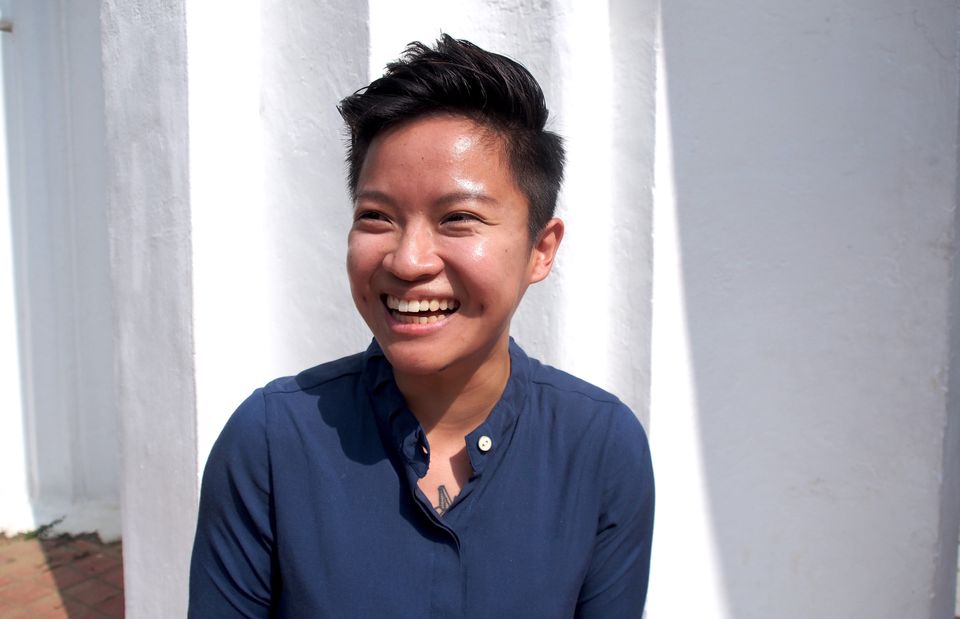
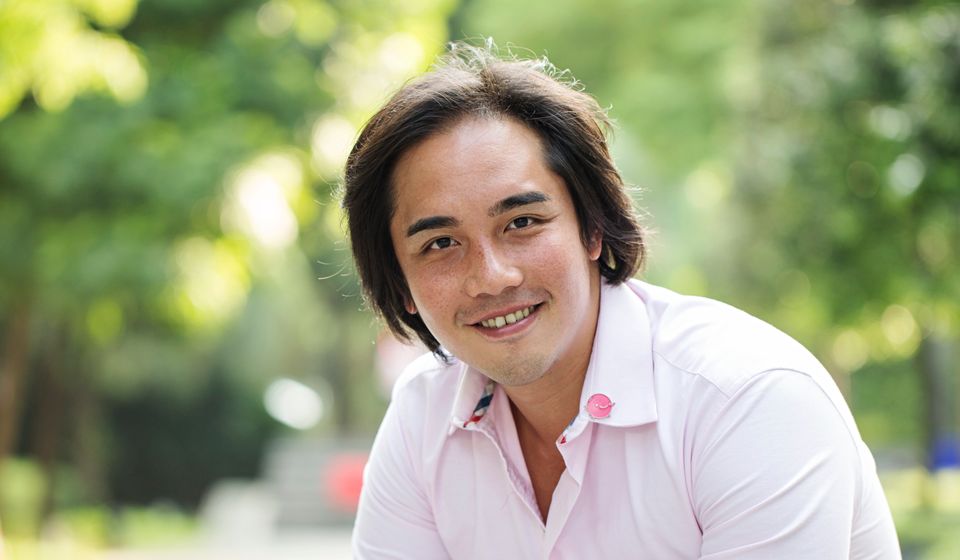
Singapore-based photographer Sean Lee captured many of the portraits featured in this article. See more of his work here.
Police were called in after debt collectors made a scene at Midview City, Sin Ming Lane yesterday afternoon (Oct 14), dressed in vests and armed with body cameras.
Stomper Hey witnessed the commotion and compared it to that of a dramatic movie. He also said the debt collectors looked as if they were from ‘special forces’.
The debt collectors had even put up a notice stating that they were from KX-Unit. The notice also said, “Don’t be alarmed. Debt collection in progress.”
KX-Unit describes itself as “Singapore Legal Debt Collection” on its Facebook page.
Stomper Hey recounted the incident to Stomp:
“Saw something exciting outside my office yesterday afternoon at around 4 to 5pm.
“A group of people were outside causing a commotion. According to reporters at the scene, this car dealer from Gold Automobiles cheated a guy of $20,000.
“Heard that he paid for a car but the dealer did not transfer the car to him. He got some debt collectors to chase the money back for him.
“You see the big guys in black, they have body cams and a big poster. So stylo and pro-looking, machiam special forces sia.
“I thought these drama only happens in movies, but it’s happening in real life in Singapore!”
Hey added the police later arrived at the scene.
A spokesperson for the Police responded to Stomp’s queries about the incident. He said:
“Police received a call for assistance received a call yesterday (Oct 14) at about 4.28pm requesting for assistance at 26 Sin Ming Lane.
“Upon Police’s arrival, it was established that a case of intentional harassment had occurred at the said location.