For the first time, the Govt seems to have so much money to throw to the people. And everyone is saying the GE is around the corner. That is a side issue, what matters is that the Govt is giving and giving and giving. Every citizen is getting something from the Govt directly or indirectly. And the Govt does not stop there. It is also throwing money to the PRs, the so called locals or residents but not citizens.
How can the people not be happy? How can the people not be having second thoughts not to vote for the ruling Govt? This is a Govt that is giving money to the people and no one knows how much more it is going to give to the people and when will it stop or will it ever stop.
It is SG50, a time for celebration and you cannot celebrate without money. So the Govt is going to stuff money in the pockets of the citizens. And everyone is happy that no one bothers to ask, where is the money coming from, whose money is it that the Govt is giving to the people? Would the giving be so excessive that it would kill the goose that is laying the golden egg. Would the Govt get carried away with so much money to give as if there is unlimited money available?
The people’s money? Who says that? The money the Govt is giving the people is the people’s money and it is just returning some to the people to make them happy. It is one of those too good to be true story. And when something is too good to be true, should not the people be wary? What’s next? The budget must be balanced, what the Govt is giving out must be within the budget and if not enough or over spent, then the Govt would have to take it back somehow, from someone or from somewhere. The Govt cannot simply print money to give away without having to account for it.
Where is the money coming from? Whose money is it in the first place? When Lily Neo was asking for a few dollars for the needy, the govt or someone was unhappy. Now, the rich also got, the poor also got, the non citizens also got.
Like that also can. Why give money to the non citizens? You know how many of them will be getting something from this SG50 celebration? The Hokkiens say, ‘Cheng hu chin tua kang’ [Ed. Hokkien for “the government is very magnanimous/generous”].
Lily Neo, this is the best time to ask for more help for those under public assistance scheme.
On Sunday, 21 June, Singapore Democratic Party celebrated its 35th anniversary at Holiday Day Inn Singapore Atrium and invited a few speakers from civil society to talk about their experiences with the party and their thoughts about it.
One of the speakers who was invited is Jolovan Wham, Executive Director of Local Non-government Organisation, Humanitarian Organisation for Migration Economics (H.O.M.E).
Jolovan Wham, (Image – Terry Xu)
Below is the full text of Jolovan’s speech:
I will start my presentation by reading some well known quotes about SDP, especially Dr Chee Soon Juan:
“What we are preventing is duds getting into Parliament and government. Any person of quality, we welcome him but we don’t want duds. We don’t want Chee Soon Juan, or J.B. Jeyaretnam. They’re not going to build the country.” (Lee KuanYew)
“[Chee Soon Juan’s] a liar, a cheat, and altogether an unscrupulous man. I could also add that I’ve had several of my own doctors who are familiar with such conduct…tell me that he is near-psychopath.” (Lee Kuan Yew)
“[Chee Soon Juan’s] a liar, he’s a cheat, he’s deceitful, he’s confrontational, it’s a destructive form of politics…” Lee hsien Loong
Anyone who is involved in human rights activism has to deal with the Singapore Democratic Party and its legacy. As the only political party who was actively taking a stand on civil and political rights, the SDP is an uncomfortable presence in the scene for many of us. In the book Building social space in Singapore: The Working Committee’s initiative in civil society activism , I was struck by how in one of the chapters, the issue of what to do with Chee Soon Juan sparked heated debate within members of The Working Committee. Should Chee Soon Juan be included in this forum that they wanted to organize? The discussants were afraid that their event would be ‘politicised’ if he got involved.
One of the forum respondents then suggested that if they wanted to be fair, they would have to invite someone from the PAP too. In my view this is a false equivalence because since the PAP is everywhere and dominates our political landscape, having them on a panel discussion doesn’t tilt the political balance at all.
But till this day, such fears and concerns continue to exist because of the false dichotomy that the PAP has created between activism and politics. Fears about funding cuts or incurring the annoyance of the government continue to affect NGOs, VWOs, and arts groups. The most prominent recent example is the Association of Muslim Professional’s removal of Nizam Ismail from its executive committee because the Information and Communications minister threatened to withdraw funding for AMP’s programme if he chose to participate in the Population White paper protest.
I didn’t have an interest in politics until I went into the National University of Singapore in the year 2000. I decided to major in social work because of my interest in issues such as animal rights, poverty and the disadvantaged. However, I became increasingly frustrated at the apolitical nature of my course of study. Most students and lecturers could not or refused to link social problems with its political structures and for me this was central if we wanted to talk about social problems. As I could not find like-minded people within my circle of friends in social work, I started to drift into political science circles and ended up attending small group discussions and forums organized by the NUS political association.
However, even among this group of people Dr Chee’s reputation was not good. One student told me that he was ‘dishonest’ and did not have ‘integrity’. I asked ‘how do you know that’ and she proceeded to recount this anecdote where he was invited to speak at a forum and how she felt his conduct and behavior at the forum was wrong. I took this with a pinch of salt; I wondered about the extent to which it was true. After all, this was one person’s subjective experience and I had not met the man before in my life.
However, such perceptions are widespread, which is no doubt cemented by negative portrayals of Dr Chee in mainstream media. There was no way in which one could escape this characterization of Dr Chee because even among those whom I thought were more critical and more politically aware seemed to hold such views. It was no longer about whether his political beliefs were correct but whether he was a good person, whether he was honest and whether he had integrity.
But the accusations were also more than that. It was also about his tactics and his strategy, which was often framed as actions which were confrontational, not constructive. I note that this criticism has affected SDP to the extent that it has branded itself as an opposition party that is constructive to counter the view it is an empty vassel making a lot of noise. The creation of this myth, of this notion that politics must be constructive and not confrontational is a PAP invention.
The PAP knows the power of civil disobedience, and this is why they are so afraid of it. Civil disobedience was what gave India its independence, it was what gave birth to the American civil rights movement, it was what led to the fall of Marcos in the Philippines, it was what won women the vote and workers their 8 hour work day. The list goes on.
So in reality the opposition to SDP and its so called confrontational approach is not that it is not constructive but simply the fact that the establishment fears this kind of activism. And this is why till now the police would never grant you a permit for holding a protest and a demonstration outside of Hong Lim park but somehow miraculously, groups like NTUC and Case Trust will get their permits should they wish to. Even until now, those who engage in various forms of protest are still viewed as confrontational, angry and therefore is less desirable to be associated with them.
In 2007, I was invited by the Singapore Democratic Party to speak at a forum to commemorate human rights day. I actually felt quite honoured to be invited to that event because JBJ was one of the speakers that day. I also took it as an opportunity to raise awareness of migrant worker issues, something which I felt and still feel very passionately about. However, some people were unhappy that I shared the same stage as Dr Chee. Even though I rationalized and explained that it was just another opportunity to raise awareness, I was already guilty by association. The reactions towards Dr Chee were quite visceral “I cannot stand this man!” people would exclaim to me, even though they have never ever met or interacted with him in their life.
The disdain for confrontational politics partly explains why movements such as pink dot are successful. Pink dot is not a protest, it is a picnic. It is not a demonstration, it is dance party. It is seen as constructive, pleasant and oozes positive vibes. Don’t get me wrong. I love pink dot. I go for it every year and I think it has done a lot to raise awareness of LGBT issues in Singapore. Such awareness is necessary if we want change and Pink Dot’s formula is smart, strategic and successful.
When the EU decided to invite Thio Li Ann as a speaker in an event which was supposed to celebrate human rights, the activists who staged a protest, including myself, in front of her during her speech were labeled by some as being confrontational and unnecessarily strident. In Singapore, we are against the politics of confrontation because it gets drummed into our heads over and over again, not just by Singaporeans but also by fellow activists that such tactics will not advance our social goals. It is the same political culture which reminds us that Low Thia Kiang of the Worker’s party and Chiam See Tong of the Singapore People’s Party are acceptable opposition politicians and Dr Chee Soon Juan will never be.
The SDP forces us to ask questions about the nature of activism in Singapore and how far we can push the boundaries of advocacy and social change. SDP was the first political party in our recent history to make the case that our economic well being is closely tied to our fundamental freedoms and our civil liberties. For the democratic development of Singapore, I would argue that not only is it necessary to support such tactics but we must continue to engage in it. A mature democracy cannot be achieved if we do not disobey laws which are unjust. This is because any country in which its citizens do not have equal rights and are discriminated against by society demands improvement. The fundamental purpose of politics and activism should be to protect human life, uphold basic human rights and very importantly to keep political power in check.
In the past two decades, Dr Chee and other party activists were the isolated mad dogs barking in the corner. He and fellow activists such as those involved in the tak boleh tahan protests and the protests in support of democratic reform in Burma showed us that politics and concern for social justice went beyond our country. Politics and activism is not parochial, and should never ever be parochial.
The SDP showed us by example what other activists around the world made a part of their practice: solidarity and collective action. Because no one dared to advocate for civil liberties, it was SDP that had to pay the political price for it. At a time when opposition parties kept to topics which were safe, what is often called ‘bread and butter’ issues, SDP continued to hammer away on issues such as the injustice of the ISA, the death penalty and the political prisoners of our authoritarian regime, issues which nobody really wanted to talk about. SDP was a trail blazer in this regard. Where civil society was not able, or did not dare to do, SDP filled up that space.
The political landscape has changed. Civil society activism has changed. Groups and individuals are more willing and likely to criticize government policies. There are more protests at Speaker’s Corner and people are starting their own fb pages and blogs to express their views. Socio-political sites such as the online citizen continue to be forerunners in this regard.
What gave SDP its supporters like me is its focus on human rights, civil liberties and leftist politics; but this is also what attracts many of its detractors: those who think that civil liberties are an abstract and wooly concept. The SDP was ahead of the political curve: the freedoms it used to aggressively champion is now being taken up by other individuals and groups. However, there is of course still a lot that needs to be done to further the cause of civil liberties in Singapore. But instead of standing at a distance, shouting and urging us to beckon, should SDP start from where the people are and walk with them, even if that means ‘compromising’ on some principles?
No matter how we answer this question, one thing is clear: for better or for worse, SDP has left an uncomfortable legacy for civil society. But I don’t mean uncomfortable in a bad way. The discomfort is what we need to force us to think about and debate the direction of civil society. The SDP was a trail blazer and its politics was ahead of its time for Singapore. The question is whether we as citizens and those in civil society are willing and able to pick up the baton it has left behind, and continue to push the boundaries to make Singapore the truly democratic country we want it to become.
I came across a series of photos posted by The Singapore Army Facebook page and I am glad to see a Malay soldier PTE Mohammad Jumadi who was awarded the best matador gunner in 42 Singapore Armoured Regiment (42SAR).
Finally, our Malay brothers are accepted in the Armour formation.
For the uninitiated, the Singapore Armour formation do not have Malay soldiers since its inception in 1968 for unspoken reasons. The formation uses armoured vehicles such as tanks and armoured carriers to spearhead advance movements and hold key objectives during times of war. From what I heard from my enciks, there were discomfort in the region after the AMX-13 tanks were first revealed during National Day Parade in 1969 but it was a source of pride among Singaporeans and assuring for those who chose to stay in the young nation. Our leaders then don’t have a choice, Singapore was a punching bag and her survival was at stake.
But Singapore is turning 50 this year and she was built on the foundation of mutual trust, respect and harmony among difference races. Singaporeans are highly educated, well-travelled and most are able to understand Singapore’s stability doesn’t come easy. With social media, Singaporeans could see the mistrust among different races in first world liberal nations where white cops held bias against non-whites.
I cannot deny there was mistrust towards Malays in the very early years of the SAF. It is impossible for me to understand the sense of injustice, discrimination and prejudice my Malay friends felt when they realized they were barred from certain “more sensitive” roles in the armed forces. I am a minority so sometimes I do feel some discrimination in the society but I never felt discriminated in the SAF because I’ve seen Indian Colonels and Sikh BGs around.
Except for the very tiny segment of the Malay community (Thank to the misguided JI, ISIS and terrorism sympathizers), I am 100% certain our Malay Singaporeans are loyal to Singapore and they will put the country above blood ties, religious ties and fight to their death to defend the country like any Singaporeans would.
Tabung Kewangan Antarabangsa (IMF) adalah sebuah organisasi antarabangsa yang menyelia sistem kewangan dunia mengikut polisi makroekonomi sesebuah negara.
IMF mengambil kira kadar pertukaran asing dan imbangan pembayaran sesebuah negara semasa menentukan keluaran dalam negara kasar (KDNK).
Kadar kekayaan sesebuah negara itu boleh diukur menerusi KDNK yang merangkumi pendekatan produk, pendapatan dan perbelanjaan.
Berdasarkan data perbandingan populasi yang diperoleh daripada IMF pada 15 Jun 2015, ketahui 10 negara yang dianggap paling kaya di dunia.
10 – Hong Kong
Semenjak tahun 70-an, Hong Kong beransur menjadi penghubung kepada dunia dan negara China. Selama beberapa dekad, negara yang mempunyai populasi 7 juta orang ini berkembang menjadi pusat dagangan paling popular di dunia.
Cukai yang rendah dan sistem perdagangan bebas menjadikan Hong Kong masyhur sebagai hab perdagangan utama global serta pusat kewangan paling penting selepas New York dan London.
9 – Switzerland
Laporan Daya Saing Global (GCR) menyatakan Switzerland sebagai yang negara yang paling berdaya saing di dunia. Sebahagian besar ekonomi negara yang ditubuhkan pada tahun 1300 ini dipacu oleh industri berkaitan bahan kimia, farmaseutikal dan kesihatan, mesin dan lain-lain.
Selain itu, pelbagai jenama bertaraf dunia berasal dari Switzerland seperti Nestlé, Swatch, Adecco, Zurich Financial Services, Credit Suisse dan lain-lain.
8 – San Marino
Negara Eropah ini kurang mendapat perhatian dunia. Terpencil dikelilingi Itali, struktur ekonomi San Marino sebahagian besar bergantung pada sektor kewangan, perindustrian, perkhidmatan dan pelancongan.
San Marino mempunyai keadaan ekonomi yang sangat stabil dan kadar pengangguran antara terendah di benua Eropah. Satu-satunya negara di dunia di mana jumlah kenderaan melebihi penduduk.
7 – Emiriah Arab Bersatu
Emiriah Arab Bersatu (UAE) adalah sebuah negara persekutuan merangkumi tujuh emiriah iaitu Abu Dhabi, Ajman, Dubai, Fujairah, Ras al-Khaimah, Sharjah dan Umm al-Quwain.
Presiden pertama UAE, Sheikh Zayed menyelia pembangunan negara lantas memacu hasil minyak untuk penjagaan kesihatan, pendidikan dan infrastruktur.
Petroleum dan gas asli menyumbang kepada kekayaan UAE. Simpanan petrol dan gas aslinya masing-masing adalah yang ketujuh dan ke-17 terbesar di dunia.
6 – Norway
Norway merupakan salah sebuah negara dengan kerajaan tertua di dunia. Ia ditubuhkan sekitar 1,100 tahun lalu dan sehingga kini mengekalkan pemerintahan monarki.
Norway kaya dengan bekalan petroleum, gas asli, mineral, kayu balak, makanan laut, air tawar dan kuasa hidro. Industri petroleum sahaja menyumbang sekitar satu perempat daripada keluaran dalam negara kasar negara.
5 – Kuwait
Meskipun mempunyai jumlah penduduk seramai 4.1 juta, hanya 1.2 juta adalah warga Kuwait manakala 2.8 juta yang lainnya adalah ekspatriat. Bank Dunia mengiktiraf Kuwait sebagai sebuah negara dengan ekonomi yang berpendapatan tinggi.
Petroleum sahaja menyumbang hampir separuh dari keluaran dalam negara kasar. Petroleum dan baja merupakan dua sektor utama yang memonopoli ekonomi Kuwait. Mata wangnya, iaitu Dinar adalah unit mata wang dengan nilai paling tinggi di dunia.
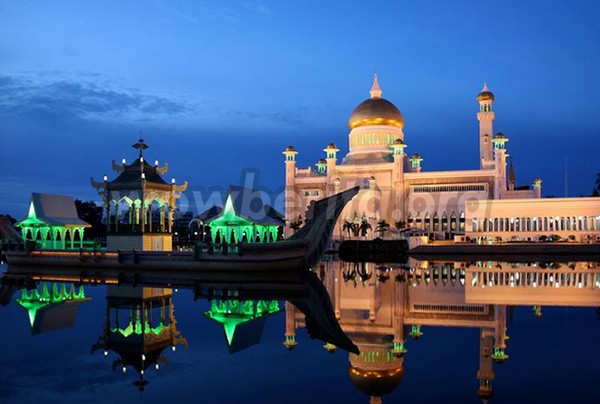
4 – Brunei
Pertumbuhan ekonomi sekitar tahun 1990-an hingga 2000, membawa perubahan kepada Brunei sehingga menjadi sebuah negara perindustrian. Purata peningkatannya adalah 56 peratus bagi tahun 1999 hingga 2008 sahaja.
Sektor petroleum dan gas asli menjana kekayaan negara yang mencapai kemerdekaan dari United Kingdom pada 1 Januari 1984 ini. IMF turut menyatakan bahawa hutang Brunei berada di kadar kosong peratus daripada KDNK negaranya.
3 – Singapura
Selain menjadi salah satu hab perdagangan utama dunia, Singapura merupakan pusat kewangan keempat terbesar dan salah satu daripada dua pelabuhan kontena paling sibuk di dunia.
Ekonomi global Singapura yang pelbagai tertumpu pada sektor perdagangan, terutamanya perkilangan yang menyumbang kira-kira 30 peratus daripada KDNK Singapura.
Negara yang terletak di selatan Semenanjung Malaysia ini juga menduduki kedudukan yang tinggi bagi taraf hidup, pendidikan, penjagaan kesihatan serta daya saing ekonomi.
2 – Luxembourg
Walaupun dilihat sebagai sebuah negara yang kecil dan dilitupi hutan Ardennes yang padat, ekonomi maju Luxembourg berjaya meletakkan negara Eropah ini di tangga kedua terkaya di dunia.
Ekonomi stabil dan berpendapatan tinggi Luxembourg didominasi oleh perindustrian besi sehingga 1960-an. Sejak beberapa dekad lalu, sektor kewangan mula mengambil alih sehingga menjadikan Luxembourg pusat pelaburan kedua terbesar di dunia selepas Amerika Syarikat.
1 – Qatar
Negara yang terletak di semenanjung Arab ini muncul sebagai negara terkaya dengan hasil keluaran dalam negara kasar tertinggi di dunia. Penduduk Qatar tidak perlu membayar cukai pendapatan kerana taraf kehidupan yang tinggi.
Negara berpendapatan tinggi ini mempunyai ekonomi yang maju disokong oleh simpanan gas asli ketiga terbesar di dunia. Selain itu simpanan minyaknya melebihi 25 bilion tong. Pada tahun 2012 sahaja, simpanan minyak Qatar menyumbang lebih 13 peratus daripada sumber keperluan global.
For years, Read Bridge in Clarke Quay was a weekend magnet for late-night revellers, filled to the railings with hundreds of young people having drinks on the cheap.
Now, the scene is hardly recognisable, 21/2 months after new laws restricting public consumption of alcohol kicked in.
When The Sunday Times visited after 11pm last Saturday, there were only about 50 people lining the bridge, compared to more than 300 in the past, and most were not drinking.
The few who were did so discreetly, sipping from plain cups or hiding the bottles and cans of alcohol in plastic bags.
At nearby Robertson Quay, gathering places around popular nightclub Zouk were quieter, with far fewer people loitering and drinking.
Both locations also had far less litter, a stark contrast from the past when empty liquor bottles, beer cans and vomit were the bane of cleaners.
Mr Tan Yong Hong, a 64-year-old who picks up cans on the bridge, said he used to be able to collect 10kg worth a night. Now, it is barely half that.
Under the Liquor Control (Supply and Consumption) Act, which came into force on April 1, drinking in public is banned from 10.30pm to 7am. Retail outlets also cannot sell takeaway alcohol during those hours.
The price of being caught drinking is a fine of up to $1,000. Repeat offenders face a fine of up to $2,000, and the possibility of a maximum three months in jail. Shops found selling alcohol during the hours of the ban can be fined up to $10,000.
Residents and retailers The Sunday Times spoke to were pleased with the changed environment.
Businesswoman Jung Jungyoon, who lives at Centennia Suites near Zouk, said the Robertson Quay area is much cleaner and a lot less noisy.
“I used to be bothered by the noise, and the smell of vomit. I could see some people just lying on pavements,” said the 34-year-old. “I’m pretty happy about the atmosphere now, it’s a big difference.”
A resident of Rivergate condominium, who did not want to be named, said the situation has “definitely improved” though she still spots young people drinking during the prohibited hours.
The alcohol restrictions have benefited clubs in the area, with Zouk saying it has seen a slight increase in alcohol sales during the earlier hours of its opening.
There has also been a marked decrease in rowdiness and drunken behaviour outside, and even inside, the clubs.
Attica’s general manager Roberto Gagliardi said: “Clarke Quay’s ambience may be a bit down, but there is less disorder… and fewer customers arriving drunk.”
Mr Saravana G., manager of wine bar Verre at Robertson Quay, said: “Drinkers would leave rubbish, get drunk and start shouting. They would also use the toilet in my bar. It was very unpleasant. I had to call the police several times before.
“Now the drinking crowd outside is all but gone.”
For non-drinkers, Read Bridge has become a more welcoming place. Musician Helmizar Kamal complained that the place used to be dirty and that it was very hard to find a place to sit. “Now it’s a lot more peaceful and I’ll come here more often,” said the 25-year-old.
But there are some who miss the “vibrancy” of the past.
A 29-year-old construction engineer, who wanted to be known as Victor, said: “I don’t enjoy this area as much now. We can’t come here and drink with our friends after work any more.”
Account manager Luke Brandon, 24, added: “It’s not as fun. We now have to travel to a friend’s place in some inconvenient area (to drink), then travel again to a club. We are usually sober by then. It’s a bummer, but I don’t want to get fined.”