Tag: Singlish

  • Andrew Loh: Governement Is Hypocritical In Its Handling of Singlish

    Andrew Loh: Governement Is Hypocritical In Its Handling of Singlish

    I don’t understand how the Prime Minister himself can dissuade Singaporeans from speaking Singlish, and his press secretary even finding it necessary to write to a foreign publication to disabuse a fellow Singaporean poet for being supportive of Singlish – and at the same time, the government have its Tourism Board spend taxpayers’ money to create a slick 3-minute video using that same Singlish to attract tourists.

    And in your “Little Black Book” publication, a guide for tourists, you describe Singlish as “Singapore’s unique gift to the English-speaking world.”

    A gift to the world but Singaporeans themselves should not speak or support it?

    How does that work?

    I hate to say this but this is really hypocritical.

    You tell Singaporeans not to speak the language but you glamourise it on a national stage at the National Day Parade 2015, and you also use it to attract tourists, and your MPs and ministers use Singlish during election rallies to portray themselves as ordinary citizens like the rest of us.

    But Singaporeans should not use Singlish because not all of us have PhDs and are thus unable to “code switch”?

    What lousy double standards you have.


    Source: Andrew Loh

  • “Singapura: The Musical” Is A Cringe-Worthy Attempt At Encapsulating Singapore Culture

    “Singapura: The Musical” Is A Cringe-Worthy Attempt At Encapsulating Singapore Culture

    Though most Singaporeans are still uncertain about what constitutes our identity, we can immediately call out what a Singaporean identity is not. 

    At the Gala Premiere of Singapura: The Musical on 23 May at theCapitol Theatre, many Singaporeans found themselves cringing at Philippine company 4th Wall Theatre Co. in their attempts to understand Singapore culture, including their attempts to speak Singlish.

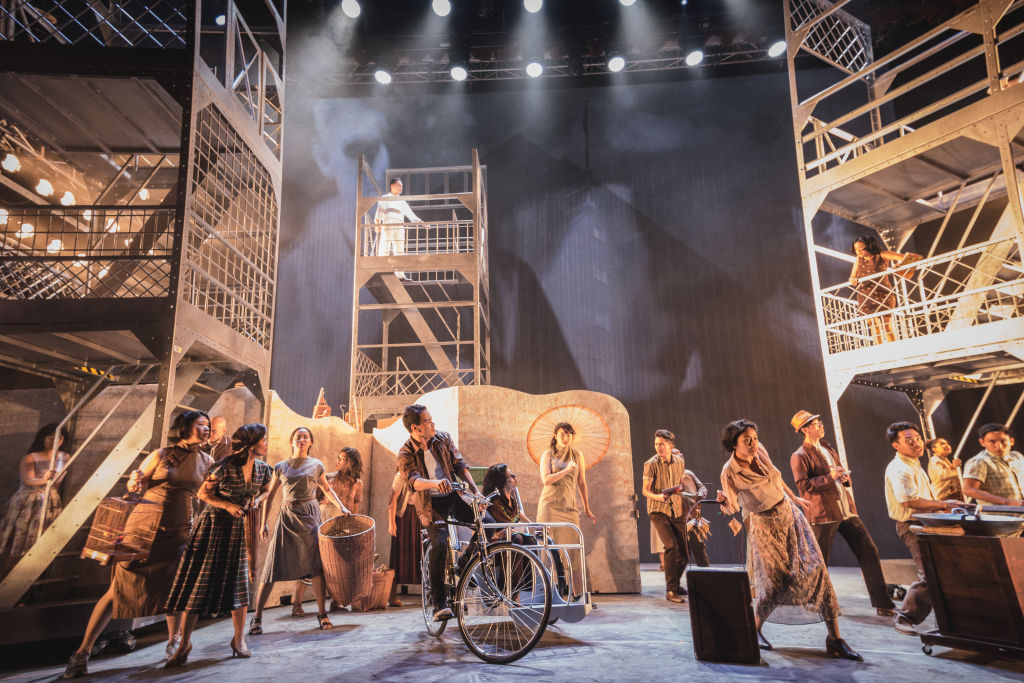
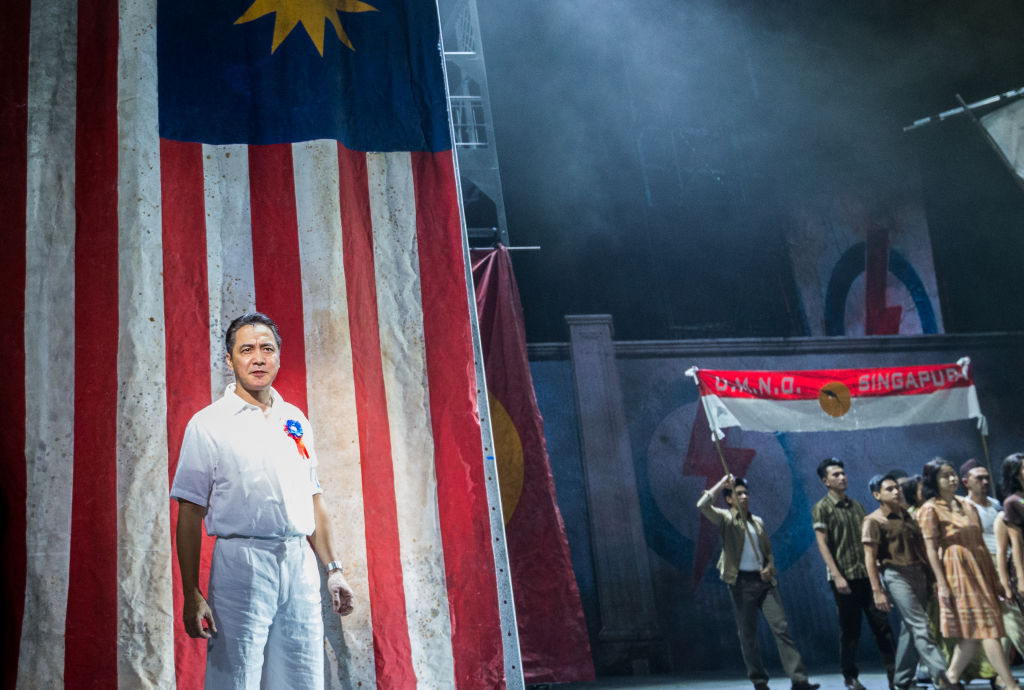
    Despite expected extensive preparations and rehearsals, the cast of Singapura: The Musical were still unconvincing in their Singlish words and accent on stage, still very much laced with their own Filipino articulation of words. This attempt to be Singaporean by a Filipino company would have been entirely awful, if not for their saving grace of having accurate costumes and props that well represented pre-independence Singapore visually.

    Scenes from Singapura- The Musical (credit to Singapura- The Musical) (8)

    Throughout the musical, it just felt like they were trying to recreate Miss Saigon and Les Misérables while squeezing so much in, at the expense of character and plot development. We expected a lot more when they said during the press conference that they were using Singapore history just as a backdrop for people’s life stories, but the whole plot (or lack thereof) just fell short.

    Scenes from Singapura- The Musical (credit to Singapura- The Musical) (9)

    Peace threatened by chaos, check. Disobedient daughter who doubles as an excuse for feminist girl power heroine, check. Asian woman getting into a relationship with Caucasian soldier against the wishes of everyone around her, check x 2. Said Asian-Caucasian couple becoming estranged, check x 2; one of the white men dies in duty, the other gets sent to the same assignment as the previous man.

    Sad Asian sidekick man having his affections repeatedly ignored until the end when Caucasian man gets sent to north Borneo and then the story ends and we see sad Asian sidekick man holding hands with the girl, check.

    Scenes from Singapura- The Musical (credit to Singapura- The Musical) (4)

    The strangest part was when the heroine’s mother dies, and suddenly we seeLee Kuan Yew’s world-famous crying scene at the backdrop. It was so random and it felt like they were trying to squeeze a metaphor out, as the sad Asian sidekick does repeatedly throughout the musical (heroine even gets blatantly compared to Singapore but the link was so tenuous).

    However, despite arguable visual and cultural-interpretative letdowns, the musical numbers in Singapura: The Musical were undeniably lovely. Composed by Ed Gatchalian, songs like “Another Day in Singapore“, “At The Kopitiam“, “Be With Me” and “Tomorrow Begins Today” will leave audiences humming its tunes while leaving the theatre. Catchy and emotional, the original scores and talented vocals from the cast effortlessly stole our hearts.


    Overall, we still applaud the efforts made by 4th Wall in this production. It definitely is not easy to encapsulate so much of Singapore’s culture and history in just one show. Unfortunately, we do not give gold stars for effort, for the reality is that the quality of a theatre production is judged in the end product – where Singapura: The Musical fell short.


    All Photos: Singapura: The Musical

    Dates: 23 May through 7 June 2015
    Duration: 2 hours 15 minutes (with 15-minute intermission)
    Venue: Capitol Theatre
    Tickets: singapurathemusical.eventclique.com


    Source: http://popspoken.com


  • Kiasu Is Oxford English Dictionary’s Word Of The Day

    Kiasu Is Oxford English Dictionary’s Word Of The Day

    Singlish is often frowned upon as the poorer local cousin to the Queen’s English but do you know that some Singlish words have found their way into the hallowed Oxford English Dictionary (OED)?

    Along with promoting the latest December 2014 quarterly update – which contains new words such as BYOD (bring your own device), un-PC (not politically correct) and g’day – to its online database of 60 million words, OED also selected an interesting choice for its Word of the Day on Feb 11.

    “Kiasu” was featured. It is not the only Singlish word to be accepted by the OED. Does this mean we can play the word in Words With Friends now?

    In the meantime, here is a quick primer on Singlish in the OED.

    “Lah” and “sinseh” included in OED’s online debut

    OED’s maiden online version, which was launched in March 2000, contained the Singlish words “lah” and “sinseh”. Ironically, this inclusion was announced just a month before then-Prime Minister Goh Chok Tong launched the Speak Good English Movement, aimed at stamping out Singlish.

    “Lah” is described as a particle used with various kinds of pitch to convey the mood and attitude of the speaker, with examples such as “Don’t act tough lah” gleaned from author and former New Paper journalist Sylvia Toh.

    According to OED, “sinseh” refers to a traditional Chinese physician or herbalist in Malaysia, Indonesia and Singapore.

    Singaporeans’ favourite catchphrase was admitted in 2007

    “Kiasu” (noun and adjective) officially made it to the big time in March 2007, together with now-ubiquitous words such as wiki (which means quick and is also short for Wikipedia) and technopreneur.

    The term is used to refer to a person “governed by self-interest, typically manifesting as a selfish, grasping attitude arising from a fear of missing out on something.”

    Here is one of the examples cited: “I know I always think mean things of Alisa about her being kiasu and pretending not to study, but..I realise that she probably also feels insecure about her own intelligence.”

    How are new words chosen for the OED?

    Once a word gets into the dictionary, it is there to stay forever. OED reportedly adopts a conservative approach to language, keeping out newfangled words until they become widely used.

    An editorial team in charge of new words actively monitors the Oxford Reading Programme (an electronic collection of short extracts drawn from a huge variety of writing) and the Oxford English Corpus (entire documents sourced mostly from the Internet). If there is evidence that a new term is being used in a variety of different sources, it qualifies as a candidate.

    These are then selected for entry based on what the team judges to be the most significant or important, as well as being likely to stand the test of time.

    Former Straits Times journalist Janadas Devan also noted in a 2007 interview that the Internet has played a large role in legitimising some words approved by the OED.

    Why is OED’s Word of the Day special?

    OED claims each word is “carefully selected for a particular reason”, be it for the word’s interesting etymology, a long and fascinating history, or simply because it’s novel and amusing. It can also be connected with a particular event or important date.

    Why do you think “kiasu” was selected?

    Trivia: It will take approximately 753 years for every word in the dictionary to be featured in Word of the Day. And that is if nothing else is added.


    Source: www.straitstimes.com