Tag: terrorist

  • Boston Attack: A Profile Of Usaamah Rahim

    Boston Attack: A Profile Of Usaamah Rahim

    (CNN) Soon after Usaamah Rahim was killed by officers earlier this week, questions arose about his shooting death and his alleged terror plot.

    Was the 26-year-old security guard simply the latest man to be shot dead by police? Authorities quickly showed a video to community leaders to counter the social media claim.

    Was Rahim a radicalized religious extremist? The FBI said his social media posts point in that direction.

    Rahim initially wanted to behead Islam critic Pamela Geller, who had organized a Prophet Mohammed cartoon drawing contest, law enforcement officials told CNN. But then he switched targets to police officers, because he found them easier to access.

    Rahim was fatally shot Tuesday after waving a military knife at law enforcement officers in Boston.

    As the investigation continues, questions remain open. From a possible ISIS connection to additional suspects in his case, here’s what we know and don’t know about the case.

    THE ASSOCIATES

    What we know:

    Authorities say an FBI anti-terror task force had been watching not only Rahim but two associates as well. The pair may have helped Rahim or at least known what he was up to, which could lead to terror- and conspiracy-related charges for them.

    They have named one of them, David Wright, 25, who already faced federal obstruction charges this week. Wright is accused of destroying Rahim’s smartphone to conceal evidence of their plan. He could spend up to five years in jail if convicted.

    The two appeared to use coded language and names in their exchanges, the FBI said. Wright’s lawyer, Jessica Hedges, cast doubt on the investigation connecting her client with the case.

    What we don’t know:

    Were more people involved in the alleged plot? Police on Tuesday conducted a raid on a property in Rhode Island in connection with the investigation and took a third person in for questioning. The FBI is investigating whether there are overseas connections to the case, but law enforcement officials believe they have tracked down everyone involved in the Boston terror plot and are not looking for other suspects within the U.S.

    Who was Usaamah Rahim?

    THE TERROR CONNECTION

    What we know:

    The FBI said Rahim’s behavior changed over time, as they observed him, and that he made social media threats against police. Investigators said ISIS and other extremists radicalized him.

    On his Facebook page, Rahim “liked” a page about ISIS in 2012. He has also “liked” extremist preachers.

    “There’s a certain tone to it, and it points to a certain direction,” said radicalization researcher Nick Kaderbhai from King’s College in London. “We can look back and say the warning signs were there.”

    The case has highlighted fears about the deepening reach of the terror group in the United States. U.S. officials say it only takes online communication for ISIS to inspire and train operatives to plot attacks in the country.

    Rahim graduated in 2007 from Brookline High School in the Boston suburb. He enrolled in Brookline in 2004 for 10th grade after spending his ninth-grade year at the Academic International School in Saudi Arabia. Two years before his schooling in Saudi Arabia, he attended the Baker School in Chestnut Hill, Massachusetts.

    Rahim had “no major disciplinary infractions” at Brookline High and after graduation he went to college in Florida. He emailed his former dean and guidance counselor at Brookline “thanking them for the help that they provided in getting him through high school,” said William H. Lupini, the superintendent of Brookline schools.

    The dean and counselor remember Rahim as being bright and thriving from the attention of his teachers and tutors, said Lupini.

    What we don’t know:

    Despite suspicions Rahim’s social media activity has generated, any interpretation that these were warning signs is a product of hindsight, Kaderbhai said.

    Had he seen the Facebook feed before the police confrontation with Rahim, Kaderbhai said, he would not have thought much of it. “It’s fairly banal; it’s fairly benign,” Kaderbhai said. It didn’t look like a feed typical of someone determined to commit jihad.

    There were no images of Muslims under threat. “There was very little talk of politics,” Kaderbhai said. Rahim’s social media posts could have easily belonged to someone who believes Islam and Sharia should determine how a society works, but who is unwilling to become violent to achieve that end, he said.

    The public may have to wait for the investigation to reveal more about Rahim’s possible radicalization, as those who knew Rahim casually said the suspicions against him caught them by surprise.

    How deep does Rahim’s network run?

    THE SHOOTING

    What we know:

    An FBI anti-terror task force believed Rahim posed an imminent threat and confronted him with it in public, authorities said. Their guns were not drawn at the time; surveillance video shows this, Boston police said.

    Then, Rahim pulled a knife and went after them. The officers fired to protect themselves.

    Afterward, social media lit up with the claim that Rahim had become the latest young man to be gunned down by police. Rahim’s brother, Ibrahim Rahim, may have triggered it, when he posted on social media that Usaamah Rahim was shot three times in the back while on the phone with their father.
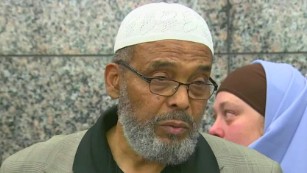
    Boston Imam: Suspect not shot in the back

    Boston Imam: Suspect not shot in the back 01:22
    PLAY VIDEO

    To dispel the claim, police invited religious and civil rights leaders from the community to watch surveillance video of the shooting.

    Darren Williams from the Urban League summed up what they saw — and didn’t see.

    “What the video does reveal to us very clearly is that the individual was not on the cell phone, the individual was not shot in the back and that the information reported by others that that was the case was inaccurate,” he said.

    What we don’t know:

    The viewers said the video doesn’t reveal everything, including a clear view of the knife Rahim allegedly wielded.

    “We do see a very vague video that is not clear as to what transpired. It wasn’t at a bus stop. He wasn’t shot in the back, and there is not detail enough on the video to tell us exactly what happened,” said Imam Abdullah Faaruuq, a Muslim community leader invited to watch the footage.

    Authorities want to wait until Rahim’s family has seen the footage before releasing it to the public.

    THE EVIDENCE

    What we know:

    Officers say Rahim wielded a knife at them before they shot him.

    Rahim purchased three military fighting knives with blades longer than 8 inches on Amazon, court documents said.

    He told his associate David Wright about them. “I just got myself a nice little tool. … You know it’s good for carving wood and … carving sculptures,” Rahim said in a conversation that was recorded, according to court documents.

    He told Wright that he was going after “boys in blue,” a reference to police, because he had grown impatient and wanted a quick target. “I can’t wait that long,” he said.

    The two used coded language, authorities said. Killing police was termed “vacation.” The FBI thought Rahim would act on his plans on Tuesday or Wednesday, so they sent officers to confront him.

    What we don’t know:

    Police have conducted raids in Massachusetts and Rhode Island and questioned people in the case. They have not released all of their findings yet.

    Source: http://edition.cnn.com

  • Combating Self-Radicalisation: What Are The Signs, What Can Family And Friends Do?

    Combating Self-Radicalisation: What Are The Signs, What Can Family And Friends Do?

    What are the signs to look out for?

    Following the recent arrests of two self-radicalised youths, there have been calls for the community to play a part in identifying persons who might have been influenced by extremist propaganda, and to alert the authorities.

    Experts said there are telltale signs that family members and friends can look out for.

    Dr Munidasa Winslow, a psychiatrist at Novena Medical Centre, said this could be a sudden change, like spending more and more time on religious practices.

    Typically, the individual is also likely to be withdrawn, secretive and spend a lot of time online.

    Said psychologist Carol Balhetchet: “Family or friends or neighbours would say something and they would walk away or get very aggressive about it, and be very opinionated about something… The main sign is they isolate themselves and don’t seem to have many friends.”

    Dr Lim Boon Leng, a psychiatrist at Gleneagles Medical Centre, said most of these individuals “are marginalised” and probably neglected by their parents. “They don’t have people to turn to or mentor to turn to,” he added.

    Pasir Ris-Punggol GRC MP Zainal Sapari, a former school principal, said the “trigger point” to report someone to the authorities is knowing that he or she is sympathetic to the ideas of the Islamic State in Iraq and Syria (ISIS). “Sympathising with the ISIS cause is, I believe, the first step in terms of wanting to join in the terrorist cause,” he added.

    The Ministry of Home Affairs told The Straits Times that when a report is made, initial investigations will be carried out. In appropriate cases, the person may be referred for counselling and other mitigation measures without the need for arrest.

    Counselling or rehabilitation programmes are tailored to the person’s specific circumstances, including age, it said. Should it be necessary, the person could be arrested for further investigations. But this will depend on the extent of radicalisation, and the risk and potential threat the person poses.


    What is the typical profile of a teen vulnerable to being radicalised?

    Teenagers who are isolated from their families, who do not feel close to their loved ones, or who are detached from their social communities such as schools, can be easily influenced by radical ideology from terror groups such as the Islamic State in Iraq and Syria, said Dr Carol Balhetchet, a clinical psychologist and senior director for youth services at the Singapore Children’s Society.

    “These are the same sort of young people who would join gangs, because they do not feel committed or feel like a part of their social group,” she said. “They may be loners in school or loners in their family unit. These teens are the ones who would easily fall prey to outside influence.”

    Dr Kumar Ramakrishna, head of policy studies at the S. Rajaratnam School of International Studies, said some young people who are unemployed or bored may also be susceptible as they seek adventure and excitement abroad.

    Psychiatrist Lim Boon Leng added that teenagers can also lack the ability to understand the consequences of their actions while acting on impulse.

    “The immediate gain that they see from joining an extremist group, such as the sense of glory or the reinforcement they get, are very attractive to them. They do not think about what is going to happen to them in five years or even in one year,” said Dr Lim.

    “It is this impulsiveness that sometimes tips them over and makes them decide to do something to prove themselves to these extremist groups.”


    What can parents and others do?

    Parents play a key role in keeping their children on the straight and narrow.

    For a start, they can take greater interest in what their children are doing and pay more attention to what they are exposed to on the Internet, experts say.

    Dr Lim Boon Leng, a psychiatrist at Gleneagles Medical Centre, suggested: “Keep the computer or devices out in the open, so that the parents can see what they are doing.”

    Parents also have to sit their children down for a talk if they suspect that something is amiss.

    Dr Munidasa Winslow, a psychiatrist at Novena Medical Centre, said they can start by asking open-ended questions such as what they think about radical beliefs, for example.

    “It also depends on how much they trust you to talk to you about it. It is a bit like having a conversation about sex. There must be a safe place, a safe time and a safe person,” he added.

    However, in doing so, experts said parents should not judge or victimise their children.

    “Try to understand what is the reason he is being radicalised. Is it because the parents are not paying enough attention, or is there bullying in school, is he being ostracised or having other social issues at hand?” Dr Lim said.

    There could also be other reasons, for instance, the individual may have psychiatric conditions such as attention deficit hyperactivity disorder or depression.

    Nevertheless, the “best thing” to do is to seek professional help as family members may not be able to deal with the issue, said Dr Carol Balhetchet, senior director for youth services at the Singapore Children’s Society.

    “Bring them to the family service centre, bring them to a government agency or authority who is equipped to refer them to more professional help or the right authority to contain the situation,” she said.


    Why is extremist propaganda so attractive to teens?

    Propaganda put out by ISIS to sell concepts like the Islamic State, the Caliphate and their call for Muslims to migrate to Syria is portrayed in a jazzed-up manner that captures the imagination of some youth, said Mr Mohamad Alami Musa, the Head of Studies in Inter-Religious Relations in Plural Societies Programme at RSIS.

    These ideals are not part of mainstream Islamic teaching, but have been made even more appealing by the high-quality videos uploaded and widely-shared online by the terrorist group.

    “The ideology has been packaged with such gloss, sound and colour. The content is also being distributed with the clever use of social media, which resonates with young people,” he said.

    “These things are attractive to young minds who have this idealism of wanting to change the world. Such content makes it very tempting to be swayed by such virulent ideology.”

    Psychiatrist Lim Boon Leng says the violent images shown by ISIS can also be a reflection of the power the group has, and this might attract youth in search of strong and protective figures.

    “Marginalised youth who feel that they are vulnerable within their own communities may think that these extremist groups can help protect them,” he said.

    The promise of having a better life by joining a terrorist group may also appeal to some youth, especially if they are isolated from their families or society, added Dr Carol Balhetchet.

    “It is the promise of things to come, versus what they have right now,” she said.


    Source: www.straitstimes.com

  • Golongan Belia Punya Peranan Cegah Radikalisme

    Golongan Belia Punya Peranan Cegah Radikalisme

    Beberapa pemimpin pelajar dan wakil belia melahirkan rasa sedih dan bimbang selepas mendengar berita dua remaja menjadi radikal sendiri setelah dipengaruhi ideologi ganas kumpulan militan Negara Islam di Iraq dan Syria (Isis) yang tersebar di Internet.

    Mereka juga melahirkan rasa terkejut seorang daripada mereka mahu melakukan serangan ke atas orang awam di negara ini.

    Presiden Persatuan Muslim Universiti Nasional Singapura (NUS), Muhammad Faiz Rosli, 23 tahun, berkata: “Kami rasa amat sedih dengan apa yang berlaku. Ia juga amat mengejutkan kerana pemimpin dan masyarakat Islam kita telah banyak berusaha untuk mengajar erti Islam sebenar kepada orang Islam dan bukan Islam di sini.

    “Kami berharap peristiwa ini tidak akan menghapuskan usaha mereka, dan kita harus bekerjasama untuk menyatukan masyarakat kita. Kelakuan ISIS tidak wajar dan boleh memusnahkan. Kita harus buat apa yang patut untuk menghalang dan menghentikan kelakuan pengganas ini demi ajaran Islam sebenar.

    “Persatuan pelajar atau belia boleh bekerjasama dengan badan-badan pemerintah atau badan-badan lain untuk meningkatkan mutu program mereka.

    “Kita tidak boleh mengumpulkan belia di bawah satu label tanpa memahami kepelbagaiannya. Belia terdiri daripada banyak kumpulan, seperti pelajar universiti, maktab rendah, politeknik, madrasah dan sebagainya. Kita harus memahami kumpulan individu ini dan menjaga mereka secara berasingan.”

    Seorang lagi pemimpin pelajar, Encik Mohamed Hamzah Mohamed Abdul Kadir, 24 tahun, berkata: “Saya berasa amat sedih dan terkejut ada orang sebegini dalam masyarakat kita. Ia juga membimbangkan kerana kita masih tidak tahu berapa ramai lagi di luar sana mempunyai niat sama.

    Setiausaha Persatuan Islam Universiti Teknologi Nanyang (NTU) itu menyarankan mereka yang mempunyai niat sebegitu supaya pergi ke kelas-kelas agama di masjid-masjid terlebih bagi mendapatkan pengetahuan Islam yang betul dan “jangan terlalu mengikut apa yang ada di media sosial”.

    Seorang pelajar madrasah, Sofiyyah Mohd Kamal, 17 tahun, berkata Isis sebenarnya kumpulan pengganas yang menggunakan Islam.

    “Perbuatan Isis tidak sejajar dengan prinsip dan ajaran Islam. Sebagai contoh, Islam tidak membenarkan membunuh orang tidak berdosa atau melakukan pengganasan.”

    Mengenai cara pelajar boleh bantu menentang ideologi dan propaganda Isis, Sofiyyah berkata usaha perlu dipertingkat bagi menggalak orang ramai, termasuk beliau, mendalami ajaran Islam sebenar.

    “Kita juga boleh memberi nasihat kepada rakan-rakan dan anggota keluarga agar mereka elak daripada mendekati kumpulan pengganas ini di Internet,” ujarnya.

    Duta Pelajar Siti Aishah Amirrudin, 17 tahun, yang sedang mengikuti kursus Nitec komputer dan perangkaian di Institut Pendidikan Teknikal Kolej Timur, berkata orang harus disedarkan bahawa bahawa ideologi Isis menyeleweng daripada ajaran Islam.

    “Kita beragama jadi kita seharusnya tahu mana yang baik dan mana yang buruk. Kita tidak boleh mudah terpengaruh oleh semua ini (ideologi Isis).

    “Nasihat saya bagi belia ialah jangan terlalu percaya apa yang dilihat di media sosial. Jika ada perkara yang mereka kurang faham berkaitan agama atau ajaran tertentu, tanyalah orang-orang bertauliah seperti asatizah,” kata beliau.

    Seorang lagi pelajar madrasah, Shafirah Nazreen Mohammed Ali, 17 tahun, berkata tindakan Isis mencemarkan imej Islam serta membahayakan umat Islam dan bukan Islam.

    “Tindakan radikal Isis hanya menghalang orang bukan Islam menerima Islam. Malah, ia menyebabkan orang bukan Islam melihat umat Islam sebagai pengganas,” katanya.

    Nurfarah Diyanah Aidi, presiden kumpulan pelajar kursus pengurusan komunikasi dan media Politeknik Temasek, bimbang mengenai implikasi jangka panjang akibat penangkapan belia tersebut bak menconteng arang ke muka masyarakat Melayu/Islam.

    “Perbuatan kedua-dua remaja itu memang salah, tidak masuk akal mengapa mereka boleh terpengaruh dengan kumpulan radikal seperti ISIS.

    “Perbuatan kejam ISIS menconteng arang ke muka semua umat Islam. Perbuatan mereka buat saya sungguh marah dan kecewa,” kata Nurfarah yang juga presiden kumpulan pelajar kursus Pengurusan Komunikasi dan Media, Politeknik Temasek.


    HUBUNGI ISD JIKA ADA MAKLUMAT

    Sesiapa yang tahu atau mengesyaki seseorang yang telah menjadi radikal digesa menghubungi segera Pusat Pencegah Pengganasan Jabatan Keselamatan Dalam Negeri (ISD) di talian 1800-2626-473.

    Ini dapat menyelamatkan individu berkenaan dan membolehkannya mendapat bantuan dan kaunseling supaya tidak melakukan kegiatan pengganasan yang boleh membahayakan diri mereka dan orang lain.


    Source: http://beritaharian.sg

  • Danish Authorities Underestimated Terror Threat

    Danish Authorities Underestimated Terror Threat

    STOCKHOLM (AFP) – A Swedish cartoonist believed to have been the target of one of the deadly Copenhagen shootings said Tuesday that Danish police had underestimated the terrorist threat since January’s Paris attacks.

    “The attacker had good weapons, he had better weapons than the police,” Lars Vilks, who has been forced into hiding since the weekend shootings, told AFP.

    “There was an escalation since the Charlie Hebdo attacks (in Paris) and the Danes had not caught onto that,” he said.

    Vilks was among those attending a debate on Islam and free speech at a cultural centre attacked on Saturday by a gunman who also targeted a synagogue in a rampage that left two people dead and five wounded.

    The assaults came just weeks after the Paris attacks last month by Islamist gunmen on the Charlie Hebdo satirical weekly and a kosher supermarket that left 17 people dead.

    “They did not step up security on Saturday. It was the same as we had previously… they must consider whether they need to be better armed,” the 68-year-old cartoonist said.

    Vilks, who had his own security detail at the event, emerged unharmed after the gunman fired off dozens of rounds outside the centre.

    But he conceded that it was “easy with hindsight” to say that the police could have done more.

    Vilks – who has faced several death threats since his cartoon portraying the Prophet Muhammad as a dog was published in a Swedish newspaper in 2007 – has lived under police protection since 2010.

    Swedish police said Monday they had moved the artist from his home in the south of the country to an undisclosed “safe” location.

    Vilks said that despite the threats he intended to keep speaking out about freedom of expression.

    “I have no plans to give up. But I don’t know what security decisions will be made – it could be deemed inappropriate to speak publicly. It would be tragic if that was the case, he said.

    “But there can’t be a military operation every time I’m going to lecture.”


    Source: www.straitstimes.com

  • Teo Chee Hean: Unity Key To Beating Lone-Wolf Attacks

    Teo Chee Hean: Unity Key To Beating Lone-Wolf Attacks

    The shootings in Copenhagen today (Feb 15) show that even when a city is put on high terror alert, it is very difficult to stop all attacks because of lone-wolf actors, said Coordinating Minister for National Security Teo Chee Hean as he urged individuals to stay vigilant.

    Although many cities, including Singapore, have raised their alert levels because of an increased threat from terror attacks, it is not easy to prevent attacks that are carried out by individuals.

    “So what’s important is for individuals to also be alert, to know and to think ahead (about) what they would do if they were caught in such a situation,” said Mr Teo, who is also the Minister for Home Affairs. “They can save lives, save your own life and also how does the society as a whole react in the event of such an attack.”

    Speaking to the media on the sidelines of a community event in his Pasir Ris constituency today, Mr Teo noted that terrorists seek to achieve two things when they carry out attacks: To disrupt daily lives by striking terror in people, as well as to split communities.

    “So if we stay together as a community and carry on with our daily lives taking all the precautions, then we will be able to overcome these threats and not allow terrorists to achieve their objectives.”


    Source: www.todayonline.com