Tag: UK

  • David Cameron Challenges Najib Razak On Corruption

    David Cameron Challenges Najib Razak On Corruption

    Allegations that $700 million (£450 million) in state development funds ended up in Mr Najib’s personal bank accounts overshadowed a visit by the Prime Minister designed to build trade ties.

    During a long, one-to-one meeting, Mr Cameron on Thursday urged Mr Najib to clean up his government.

    In a pointed move, he then met with civil society leaders, including journalists, the G25 group of campaigners and lawyers, who are campaigning for greater democracy and a free press.

    Mr Cameron also challenged Mr Najib over the treatment of Anwar Ibrahim, the opposition leader in jail on sodomy charges.

    Sir Kim Darroch, Mr Cameron’s national security adviser, met with Mr Anwar’s daughter who is playing a leading role in the opposition movement.

    They discussed building a free press and her father’s treatment.

    The encounters followed demands from some opposition figures that Mr Cameron cancel the visit, during which he courted investors to fund the so-called Northern Powerhouse infrastructure projects in Britain.

    The Prime Minister said: “It is right to go ahead with the visit, but nothing should be off the table. We should talk about these issues including the specific ones now,” he said.

    “We always have discussions with civil society figures, anti-corruption campaigners, opposition leaders and all the rest and that will happen on this visit too.


    David Cameron meets Najib Razak (centre right) at his offices in Kuala Lumpur (PA)

    “I don’t think it helps not traveling to a country and turning away. It is better to go and talk about these things.”

    UK officials stressed the visit was to build relationships between “peoples”, not leaders.

    After the one-to-one meeting, Mr Cameron is understood to have repeated the message to a wider gathering of Malaysian government figures in front of Mr Najib.

    In an address in Singapore on Tuesday, Mr Cameron denounced corruption as the “enemy of progress” that held back growth and fuelled al-Qaeda and migration.

    “We have a strong relationship and that enables us to talk difficult issues. I want to raise some of the issues I raised in my speech earlier in the week, such as ethics in business and fighting corruption,” he is understood to have said.

    “We should be working together for an open society and open economy.”

    Mr Najib is facing growing calls to resign over the allegations, which he denies. He this week fired attorney-general Abdul Gani Patail, who was investigating the scandal, and Muhyiddin Yassin, who had criticised him over the affair.


    Source: www.telegraph.co.uk

  • PR Grassroots Leader Charged In Court For Assaulting Driver

    PR Grassroots Leader Charged In Court For Assaulting Driver

    A 48-year-old Permanent Resident (PR) from the United Kingdom is suspected of assaulting a 37-year-old financial consultant and drove a car towards the other, charged on Tuesday morning.

    The accused, John Duncan Tasker faces two charges, namely for the use of criminal force and for driving rashly towards another driver, Yi Yongjie.

    The accused was charged on Tuesday morning and will have the hearing next month on 25 August.

    Provoked assault? 

    The incident is said to have happened at the car park of Parkland Green, East Coast Park, on 30 May (Saturday) around 6:10pm.

    Mr Yi was waiting for a parking lot after dropping off his wife and kids at the car park when a silver colored car, driven by Mr Tasker, came driving in against the flow of traffic.

    The car then parked in front of the space that Mr Yi was waiting for with his hazard light turned on. As a result, Mr Yi drove his car forward, in front of Mr Tasker’s car and wound down his car window to confront the latter.

    According to Mr Yi, Mr Tasker alighted from his car and starting scolding him, calling him “an idiot for being slow”. An argument then ensued between the two men.

    All of a sudden, Mr Tasker punched Mr Yi through the car’s window and walked back to his car.

    injury

    The force of the punch was so great that it broke Mr Yi’s glasses and resulted in bleeding on his face.

    Despite being stunned from the punch, Mr Yi hurried down from his car and tried to take down the Mr Tasker’s car license plate number.

    “I stood in front of his car and he just stepped on the accelerator, trying to run me over while escaping.” said Mr Yi, who was subsequently treated at Changi Hospital for his injuries.

    If convicted, the accused faces up to two-years’ imprisonment or a fine of $5,000 dollars, or both.

    Grassroots leader and former military man

    In an article about the visit of the British royalty to Singapore three years ago, Mr Tasker was reported to be formerly from the British military and he was once a personal protection officer for the late Princess Diana.

    “Among those present were former members of the British military, including 45-year-old John Tasker. His 15-year military career included a stint as a personal protection officer for the late Princess Diana.” (see link)

    In his LinkedIn account, apart from listing his current occupation of the Chief Operating Officer at The JLC Group of Companies (a privately held entity with offices in both Singapore and the United Kingdom). Mr Tasker identifies himself as a grassroots leader in his local community in the position of vice-chairman of a Neighbourhood Committee, a grassroots organisation under the aegis of the People’s Association.

    vice chairman john tasker

    He says his role as a grassroots leader include organising and managing community events and “ad hoc meet the people session with our local MP, Dr Maliki Osman.”

    Here is a photo of a get-well card and flower bouquet which Dr Maliki’s had apparently sent to Mr Tasker.

    Maliki grassroot thanks


    Source: www.theonlinecitizen.com

  • Robber Epic Fail – He Tells Victims His Name

    Robber Epic Fail – He Tells Victims His Name

    A foolish criminal in the UK revealed his name and former address to his victim while robbing him.

    The man proclaimed, “Do you know who I am. I’m Carl Harrison,” to the shop keeper before making off with legal intoxicants worth about £1,000 (S$2,100).

    Harrison, 30, was jailed for three years and four months afteradmitting to two charges of robbery, having a knife and possessing drugs, Birmingham Mail reported on Tuesday (July 22).

    No smoking

    The Birmingham Crown Court heard that Harrison entered the store shortly after 3pm on Feb 10.

    Shop keeper William Lee told Harrison to leave the store because he was smoking.

    This angered Harrison, who became aggressive.

    Harrison threw his cigarette outside before demanding that Mr Lee hand over some drugs, reported Mirror.

    The intimidated shop keeper did as he was told, but Harrison was not satisfied.

    He left the store, only to return 10 minutes later with a knife to force Mr Lee to give him more.

    Hard to find

    Despite disclosing his personal details, he was arrested only four months later after getting embroiled in an incident at a bar, Birmingham Mail reported.

    Police said Harrison often moved around, making it difficult for authorities to find him.

    Harrison’s lawyer told the court that Harrison was clearly not “thinking properly” when he robbed Mr Lee.

    “There are some bizarre features, perhaps the highlight was to say who he was and, unless there be any doubt, where he used to live, that show that he can not have been thinking properly when the offences were committed.”


    Source: www.tnp.sg

  • Ramadan Rush Sees Mega-Rich Arab Shoppers Flock To London

    Ramadan Rush Sees Mega-Rich Arab Shoppers Flock To London

    LONDON, June 22 — Inside an upmarket London department store a genteel Middle Eastern woman glides by, trailing flowing robes and the distinctive smell of oud, a perfume popular with Arab women.

    Outside, petrol fumes fill the air and motors roar, as young Arab men rev the engines of some of the world’s most expensive cars at a stop light.

    Welcome to London’s Ramadan rush, when thousands of wealthy Arabs descend on the British capital in the weeks before and after the Muslim fasting month, packing hotels and fuelling a shopping frenzy.

    “It’s a prestige thing. This is a place to show off your wealth, supercar or your clothes. You want to go where you’ll be seen, and London is where all the Arabs are,” said Fahad al-Ajmi, a 32-year-old Kuwaiti.

    “I know Kuwaitis who take out loans just to come to London and show off. How crazy is that?”

    Qatari shoppers spend an average £1,432 (RM8,365) per transaction — the top amount among Middle Eastern visitors — closely followed by tourists from the United Arab Emirates at £1,120.

    ‘Part of the retail calendar’

    Premium department stores and top brands have been quick to accommodate Britain’s most well-heeled shoppers.

    At Selfridges the number of women wearing hijabs almost outnumbers other customers.

    The premier London department store is one of several to adjust opening hours or specially train staff to serve Arab customers.

    Global Blue, which provides British shops and hotels with cultural training, has a list of Dos and Don’ts. Among those: Do address the oldest man when speaking to a group. Don’t give them a thumbs up — the gesture is interpreted in some Arab countries as obscene.

    The company says Middle Eastern consumers are the top-spending foreign shopper group in Britain, representing 32 per cent of total international outlays to date this year, with Kuwait, Saudi Arabia, Qatar and UAE occupying four of the top five national spending slots.

    Ramadan, which follows the lunar calendar and ends with the Eid al-Fitr celebration, this year starts on Thursday, with many Gulf Arabs holidaying before or after to stock up on gifts and outfits and escape searing temperatures back home.

    “Much like the January sales and Christmas rush, Middle Eastern visitors celebrating Eid are now part of the retail calendar for many luxury brands,” said Dave Hobday, managing director of Worldpay UK, a payment processing company.

    London, with its extensive transport links, global language, relative proximity, mild climate and historical ties to Gulf states, has become the destination of choice for many Ramadan tourists.

    Several Gulf countries were former British protectorates, and their citizens have for decades come to London to shop, study, receive medical treatment and invest, most prominently in the city’s booming property market.

    “We like the English. As someone from the Gulf, we’re used to them. We even like their food,” laughed Khaled Abdullah Ghanem, 42, a Kuwaiti on holiday, adding that Britain is generally more welcoming towards Arabs than France or the United States.

    Supercars and ‘carparazzi’

    The economic boom Arabs create isn’t restricted to high-end shopping and hotels, with firms that hire supercars or transport them to London from the Gulf reporting brisk business.

    Young Arabs driving around London’s most exclusive shopping streets in Ferraris, Lamborghinis, and other ultra-expensive vehicles, often bearing Middle Eastern number plates, have become an annual fixture.

    The cavalcades of costly automobiles are a nuisance to some, but are welcomed by car enthusiasts — or “Carparazzi” — who stalk the streets around posh department stores like Harrods and Harvey Nichols for rare vehicles, and share videos and photos of them online.

    “Ramadan is a busy time for us… Quite often the whole family will travel, sometimes with security too. We have used Rolls Royce and Bentleys for some individuals and often use Mercedes Vianos for the security team,” said a spokesperson for Signature Car Hire, which offers prestige vehicles to clients including the UAE and Qatari royal families.

    The Lamborghini Aventador, one of the world’s most expensive supercars, rents for £1,995 pounds a day. However, many Gulf visitors prefer to bring their own vehicles, paying as much as £12,000 for return shipping according to media reports. ― AFP-Relaxnews


    Source: www.themalaymailonline.com

  • Watching My Country Mourn From Afar

    Watching My Country Mourn From Afar

    Watching the reaction to Lee Kuan Yew’s death from overseas has been a surreal and difficult experience.

    As a Singaporean journalist with the BBC, it’s been a privilege to cover many stories about my country over the years. But here was probably its biggest story, garnering the most global attention, that I was missing entirely as I spend two weeks working in London. I’ve had to watch the events of his death unfold, and my fellow Singaporeans grieving from afar.

    But my anguish isn’t just professional, it is also personal. As a Singaporean growing up in the 1970s and 80s under Lee Kuan Yew, the influence he had on my life and the lives of many millions of Singaporeans has been immense. The story has been told a million times, how with a tight grip on power, he and his team took a small third world country with limited natural resources and turned it one of the world’s wealthiest countries per capita in a generation.

    But what was it like growing up as that transformation took place?

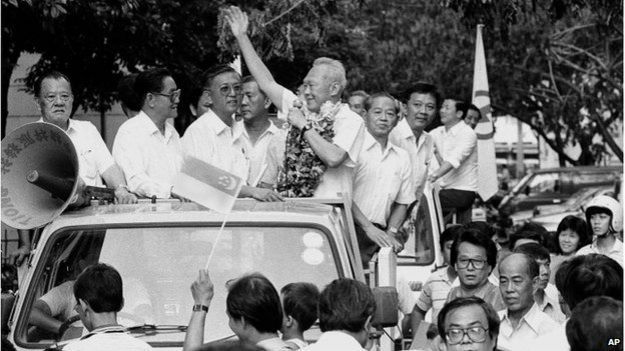
    Prime Minister Lee Kuan Yew thanks constituency after the election in Sept 1988

    Even as children, we were aware of the constant change, not just externally, with the nation’s skyline, its factories and rivers, but also internally. Campaigns spearheaded by Mr Lee’s government sought to micromanage our behaviour. From courtesy to anti-spitting campaigns, Singaporeans were taught from a young age how to be compliant.

    When we were older, we were told how many children we should have and even whom to marry. As graduates, you were encouraged to marry someone with the same level of education, to make real Mr Lee’s vision of social engineering and becoming a nation producing smarter babies.

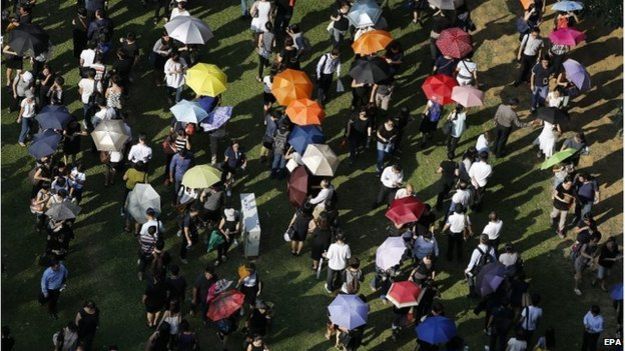
    Watching the thousands throng the streets – first to show their respects to his coffin at Parliament House and then to watch his funeral motorcade go by in a tropical downpour – made me think at first that here at work was the same thing: compliance, from a nation so accustomed to doing as he said. The alternative often meant being sued, or thrown into detention without trial. Most Singaporeans traded up personal freedoms for economic success.

    Queues outside parliament in Singapore (25 March 2015)

    But here at work was something more. Tears and emotions were high, not just in Singapore but for the many Singaporeans living overseas. My extended family, many of whom have emigrated to the US and Canada, spent days debating his legacy on our family group on WhatsApp. If he was having that impact on them, years after they left their country, imagine what sort of influence his death still wielded on many millions more.

    It’s hard to put in words the effect he had. For many, including myself, it was a love-hate relationship. Love for the immense transformation his governance brought to Singapore. How it’s now admired as a nation to be emulated by giants such as India, which has Singapore building a new city for it, and China, which had President Xi Jinping dispatching generals to live there to study its model of governance. Being Singaporean makes me hold my orange-red passport proud at immigration lines worldwide.

    But hate for the way his executed the transformation, depriving many of free speech, a two-party state, their native Chinese dialects and, if you were a man, the freedom to wear your hair long, get out of military conscription and love a member of the same sex. And then there’s the ban on chewing gum that many foreigners seem to delight in pointing out.

    Mr Lee’s influence spanned well over the 31 years that he actually governed. As a senior minister and then “minister mentor” – titles he took after standing down as prime minister in 1990 – his counsel was regularly sought by Singapore’s next generation of leaders, including the current leader, his son, Lee Hsien Loong.

    Such a cult of personality has been built around Lee Kuan Yew’s intelligence and vision that continuing on as a successful nation almost seems impossible without him.

    It’s made me nervous about the Singapore I shall find when I return, stepping through the comfortable gates of Changi Airport in a little over a week’s time. A Singapore without Lee Kuan Yew.


    Source: www.bbc.com