Author: Rilek1Corner

  • The Artist Behind The Golden Stairs: Is It Possible To Draw A Line Between Art And Vandalism?

    The Artist Behind The Golden Stairs: Is It Possible To Draw A Line Between Art And Vandalism?

    The artist Priyageetha Dia responded on her Facebook:

    Someone asked why would I do something stupid like that? Well yes, stupid it may seem to you. Was it done out of impulse? No. Is it because you Indian that’s why you like gold so much? *smacks forehead.

    This work has been on my mind for the past one month and I was definitely apprehensive on realising it until two days ago. The process was an invigorating one though I was apprehensive of the consequences I may face. At the end of the 5-hour long hushed deed, the intervention of the gold finally reverberated against the ever lifeless and grey architecture on the 20th floor of my block.

    My practice deals with spaces that negotiate concepts on the sacred, secular and the profane. As such, I am intrigued with spaces that I have inhabited over the course of 25 years as a HDB dweller and thus it has prompted me to intervene away from the household and into public spaces. But what constitutes public and private space? How does that apply along with the sacred etc.? And why gold? I would love to list down the conceptual reasoning of what the work is about but wouldn’t it make the work seem less interesting then?

    So, is it possible to draw a line between art and vandalism? I consider this work as art and not vandalism. Though one would say about the legal system and its regulations but I do believe I did not deface anything, what I did was to enhance the space and my surroundings. This work provokes. Provokes in all sense we are used to living the standard way of life, and all of a sudden something as glaring as gold negotiates the space. My work does not seek to obliterate a public space; vandalism in all sense has no respect for another individual.

    I do know the social responsibility of an artist (though I don’t consider myself an artist yet, cause it’s too much of an honorific term). I didn’t intend to please the public with my work but it was definitely a sense of satisfaction for me. After practising arts under the academy for almost 3 years, I needed to break away from that zone. What better way to make art and have it on display beyond the white cube.

    Source: Facebook

  • This Is How Islam Led The World With Women’s Rights

    This Is How Islam Led The World With Women’s Rights

    Islam gave women their basic rights centuries before the West did.

    Since International Women’s Day (March 8) is being celebrated this week, we decided to take a closer look at the “Muslim women are oppressed” narrative we hear so often. 

    But first some truths. Islamic law can be interpreted in a way that allows for child marriage, allots daughters half the inheritance of sons, considers a woman’s testimony in financial matters worth half that of a man’s…

    However, there is more to Islam than that, and there is more to Islam than the way people and governments choose to apply it.

    Here’s a look at the side of women’s rights in Islam that is often overlooked:

    1. Islam gave women their basic rights centuries before the West did

    “Women in 7th century Arabia had rights not extended to most women in the West till recent centuries over 1,000 years later,” writes Huffington Post’s Jim Garrison.

    Women in pre-Islamic Arabia were reportedly barred from basic human and civil rights. They were considered inferior to men, and therefore treated as property. Women had very little control over their marriages and could not inherit property.

    When Islam was introduced in the sixth century, women’s status improved substantially.

    Islamic law made the education of girls a sacred duty and gave women the right to own and inherit property. Islam also imposed women’s consent as a condition for legitimate marriage contracts.

    Islam was actually the first religion to give women rights of inheritance.

    Meanwhile, women in America and Europe were denied the right to own and manage property until the 18th century.

    2. Islam tackled female infanticide

    In the pre-Islam pagan society, it was the custom to bury alive unwanted female newborns. Islam put an end to the barbaric practice and forbade it. Plus, it condemns parents who are disappointed with the birth of female newborns, which is unfortunately still a common attitude in current Muslim and Arab societies.

    3. The Quran encourages women to learn and work

    Muslims believe that the first verses revealed to Prophet Muhammed were the first five verses in Surat Al-Alaq (“The Clot”), which orders people to seek knowledge.

    Seeking knowledge is thus obligatory for every Muslim, male and female.

    “It is the duty of every Muslim man and woman to seek knowledge,” the prophet is quoted as saying.

    It seems only fitting then that the University of Al Qarawiyyin in Morocco, the world’s oldest-standing universities, which has the world’s oldest library, was founded by a Muslim woman in the 850s.

    The Quran also encourages women to work and earn money by entitling them to fair pay.

    “…And their Lord responded to them, ‘Never will I allow to be lost the work of [any] worker among you, whether male or female; you are of one another’.”  [Quran 3:195]

    4. “For his day, the Prophet Muhammad was a feminist”

    “For his day, the Prophet Muhammad was a feminist,” writes Lisa Beyer in an article for Time magazine. By laying down the Islamic doctrine that dictates women’s rights, the prophet was arguably the first feminist in history.

    Countering the widespread exploitation of women, he ordered men to honor and respect them.

    In one of his last commands before his death, he kept repeating, “I command you to be kind and considerate to women.” In another hadith, he said, “It is only the generous in character who is good to women, and only the evil one who insults them.”

    He also frowned upon fathers who insult their daughters and favor their sons over them, saying the birth of a girl is a “blessing”.

    Known for treating them kindly and helping with house work, the prophet led by example in his relationships with his wives, many of whom were working women.

    He even decreed that women have a right to sexual satisfaction.

    5. Men and women are equal in Islamic duties

    Source: Pinterest
    There is no denying that Islam asserts gender roles by portraying men as providers and “maintainers of women“. But, when it comes to the fundamental pillars of Islam and spiritual duties and promised rewards, men and women are seen as equals.
    Islamic law generally does not discriminate between genders in the regulations pertaining to prayer, fasting, charity, pilgrimage, doing good deeds… It also promises all Muslims, men and women, similar rewards and punishments.

    “Whose acts righteously, whether male or female and is a believer, we will surely grant him a pure life; and We will surely bestow on such their reward according to the best of their work.” [Quran 16:9]

    6. The Quran describes marriage as companionship

    Source: Pinterest

    Several excerpts from the Quran describe the relationship between a man and his wife as one between partners and companions, refuting the misconception that Muslim women are their husbands’ servants.

    Muslim men are obliged to respect their wives and treat them with kindness no matter the circumstances.

    “Live with them (your wives) in kindness. For if you dislike them – perhaps you dislike a thing and Allah makes therein much good.”  [Quran 4:19]

    “And of His signs is that He created for you from yourselves mates that you may find tranquillity in them; and He placed between you affection and mercy. Indeed in that are signs for a people who give thought.” [Quran 30:21]

    7. Having multiple wives was first allowed for the sake of women

    Islam first allowed polygamy for the sake of widows and orphans who have no means of survival.

    The only Quranic verse that speaks about polygamy is believed to have been revealed after the Battle of Uhud, which led to the death of many Muslim men who left behind families in need of support.

    Islamic law allows men, unlike their female counterparts, to be wed to four spouses at a time. But, not so fast. People often forget that this is only permissible within a tight frame of conditions.

    The Quran clearly states that men can marry more than one woman if and only if he treats them fairly. “But if you fear that you will not be just, then [marry only] one,” Surat An-Nisaa (“The Women”) states

    But, the surah then decrees, “You will never be able to be equal between wives, even if you should strive to do so”. This makes Islam-approved polygamy near impossible to attain.

    8. Muslim women have the right to divorce

    In Islam, marriage is seen as a mutually-beneficial contract, in which a man and a woman agree to the terms of the marriage.

    While traditions do not endorse this practice, Muslim couples are free to sign a pre-nuptial agreement. In the agreement, a woman can dictate any terms and conditions she wishes for, just like in civil marriages.

    She can set the amount of money she would receive in the event of a divorce, the right to continue her education, the right to be the only wife…

    She can also stipulate the right to ask for a divorce herself because otherwise, a divorce generally cannot be completed without the husband’s approval.

    So, how did the status of women in the Muslim world spiral downhill?

    Source: Pinterest

    Well, we would need an entire book to answer that question, but here are some contributing factors:

    Fundamentalist interpretations of Quranic verses, which are sometimes taken out of context, as well as long-standing patriarchal, lie in the heart of the problem.

    The Quran can be seen distributing gender roles by depicting men as providers of the household and women as caregivers – as that was the social paradigm when the holy book was revealed.  This is mainly the reason behind the apparent discrimination between genders, when it comes to matters of inheritance, for instance.

    That distribution of gender roles has been exploited. Many men have hand-picked Islamic teachings and used them to assert their dominance over women, interpreting the Quran according to their own patriarchal interests. (Muslim scholars are mostly male – surprise, surprise.)

    Meanwhile, crucial Islamic teachings, such as “There is no compulsion in religion” and the laws pertaining to women’s rights, are often disregarded. 

    Plus, over the years, the line separating religion from customs and traditions has been blurred, as societal norms are often mistaken for religious doctrine.

    So, before bashing Islam for oppressing women, make sure to distinguish Islamic principles from norms and common practice.


    Source: Stepfeed

  • Islamic Prayer Practice Can Cut Lower Back Pain, Boost Elasticity In Joints

    Islamic Prayer Practice Can Cut Lower Back Pain, Boost Elasticity In Joints

    If done properly, Muslim prayer ritual can reduce lower back pain, say researchers.

    The complex physical movements of the Muslim prayer ritual can reduce lower back pain if performed regularly and properly, claims a recent research.

    The paper was published in the latest issue of the International Journal of Industrial and Systems Engineering.

    Five times a day, roughly 1.6 billion Muslims worldwide, bow, kneel, and place their foreheads to the ground in the direction of the holy city of Mecca, Saudi Arabia, as part of the Islamic prayer ritual, the Salat.

    The ritual is one of the five obligatory elements of the faith set forth by the holy book, the Qur’an.

    “One way to think about the movements is that they are similar to those of yoga or physical therapy intervention exercises used to treat low back pain,” said Professor and Systems Science and Industrial Engineering Department Chair Mohammad Khasawneh, who is one of the authors of “An ergonomic study of body motions during Muslim prayer using digital human modelling.”

    While the research focused specifically on Islamic prayer practices, similar movements are also found in Christian and Jewish prayer rituals along with yoga and physical therapy.

    Working with Khasawneh, an interfaith team of Assistant Professor Faisal Aqlan from the Department of Industrial Engineering at Penn State Behrend, Assistant Professor Abdulaziz Ahmed from the Business Department at the University of Minnesota Crookston, and Performance Improvement Consultant Wen Cao from the Department of Operational Performance Improvement at the Peninsula Regional Medical Center were all co-authors of the paper.

    All three are alumni of the Industrial and Systems Engineering doctoral program at Binghamton University.

    “Physical health is influenced by socio-economic, lifestyle and religious factors. Moreover, studies indicate that there is a strong association between prayer and vigilance about maintaining a physically healthy lifestyle,” said Khasawneh. “Prayer can eliminate physical stress and anxiety, while there is also research that indicates prayer rituals can be considered an effective clinical treatment of neuro-musculoskeletal dysfunction.”

    Researchers analysed statistics based on the movements of computer-generated digital human models of healthy Indian, Asian, and American men and women, and models with lower back pain.

    The group found that the bowing portion is the most stressful on the lower back, but for individuals with low back pain, using proper knee and back angles during the ritual can reduce pain. The angles are based on individual body shapes.

    “The maximum compression forces created during prayer postures is much lower than National Institute for Occupational Safety and Health (NIOSH) safety limits, and the movements can be safely considered a clinical treatment for low back pain, as it requires different movements of the human body on a regular basis,” Khasawneh said. “Based on the pain level, a combination of back and knee angles can be identified.”

    For those with back pain, maintaining exact prayer postures may not be possible. According to Islamic traditions and practices, if individuals cannot stand, they are allowed to pray seated or laying. If they are able to stand, they should maintain correct postures as much as they can.

    “The kneeling posture (sujud) increases the elasticity of joints. It is recommended for these individuals to spend more time in the kneeling posture,” Khasawneh said.

    According to the research team, using incorrect angles and movements can increase pain. The team also suggested that further study is needed for physically handicapped individuals, those with more extreme body types and women — especially pregnant women — to find the best movements for these groups. The group plans to further validate the findings with physical experiments using sensors and cameras to track the stresses on the individual body parts during the prayer ritual.


    Source: HindustanTimes

  • Public Prosecutor Will Not Appeal 4-Year Jail Sentence For Joshua Robinson: AGC

    Public Prosecutor Will Not Appeal 4-Year Jail Sentence For Joshua Robinson: AGC

    Following a “careful” review, the Public Prosecutor has decided not to appeal against the four-year jail term imposed on convicted sexual predator Joshua Robinson last week, noting that the punishment he got was broadly in line with relevant past cases’.

    In a statement on Wednesday (March 8), the Attorney-General’s Chambers (AGC) added that while some have called for caning to be imposed on Robinson, the offences he was charged with did not allow the court to do so.

    The AGC also said: “In discharging our duties, we do not differentiate between Singaporeans and non-Singaporeans.”

    The American mixed-martial arts instructor was sentenced to four years’ jail last week for a myriad offences, ranging from sexual penetration of two 15-year-olds to showing an obscene film to a six-year-old girl.

    Following his sentencing, the case attracted widespread public attention, with many questioning why Robinson was not punished more severely – including an online petition being started on Sunday calling for a harsher sentence. More than 26,000 people, including the father of the six-year-old girl affected, have signed the petition, as of Wednesday afternoon.

    In 2015, Robinson contacted a 15-year-old girl through social media repeatedly, and exchanged numbers with her. He instructed the girl to wear her school uniform during their first meeting, where they went to his apartment along Upper Circular Road. There, he filmed them engaging in sexual acts.

    After the girl made a police report, the police found 5,902 obscene films in Robinson’s apartment, of which 321 featured child pornography – the largest stash found on an individual. The children in these videos were between the ages of two and 16.

    In its statement, the AGC said that by getting Robinson, 39, to plead guilty instead of claim trial, his three young victims were spared the ordeal of having to testify in court.

    It had asked for four to five years’ jail to be imposed, after taking into account, among other things, “the fact that by securing a guilty plea, the three young victims would be spared the trauma of having to testify and be cross-examined in a trial”.

    The AGC also addressed public comments that Robinson should have been charged with rape, statutory rape or outrage of modesty, and be subject to caning. It explained that statutory rape only applies to victims who have not turned 14, which was not the case in Robinson’s offences. And because both girls had consented to these sexual acts, an offence of rape could not be pressed against Robinson.

    The most serious offence that Robinson had committed was sexual penetration of a minor under 16 years old, and that did not provide for caning, the AGC added.

    AGC said that it would be discussing with the Ministry of Law whether the relevant legislation should be reviewed to enhance sentencing for some of the offences.


    Source: Today

  • Nike Is Launching A Hijab Collection That Muslim Athletes Helped To Develop

    Nike Is Launching A Hijab Collection That Muslim Athletes Helped To Develop

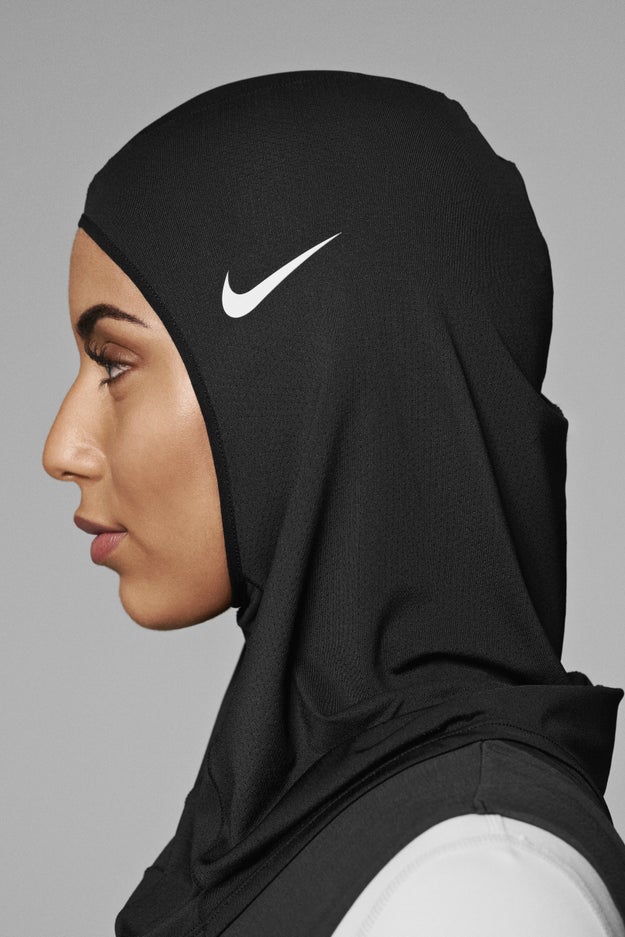
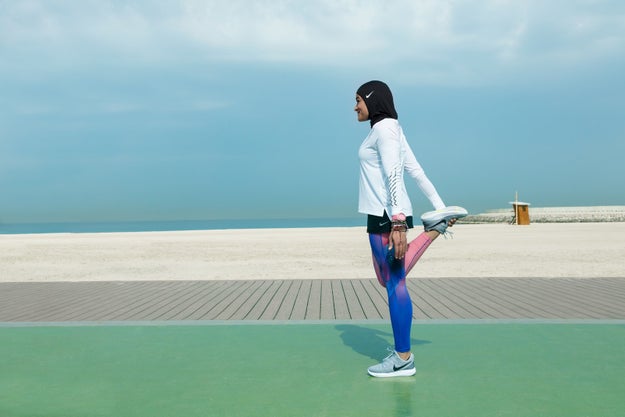
    Nike will soon sell a lightweight, polyester sports hijab called the “Nike Pro Hijab.”

    In a statement to BuzzFeed News, the company said that the Nike Pro Hijab is the result of about a year of work. Both professional and everyday hijab-wearing athletes helped to create the final product.

    Emirati figure skater and elite Nike athlete Zahra Lari.

    “The final, pull-on design is constructed from durable single-layer Nike Pro power mesh,” the company said. Nike called the mesh its “most breathable fabric.” The hijab will come in dark, neutral colors.

    "The final, pull-on design is constructed from durable single-layer Nike Pro power mesh," the company said. Nike called the mesh its "most breathable fabric." The hijab will come in dark, neutral colors.

    Nike

    On Twitter, many people reacted to the new product. “Nike finally joins the sports hijab world,” said this woman.

    Others were more skeptical of the sports hijab. This woman expressed concerns over the logo and the look.

    And someone else said that it wasn’t anything special.

    Slightly torn- Sport hijabs have been around 4 awhile & I can’t see anything special (expect the nike tick) about the design #NikeProHijab

    — Fardousa (@Fardousie)

    This person, however, was excited.

    Pumped for the Nike hijab

    — mar (@MariaAliaa)

    “It’s like all my dreams have come true,” another woman said.

    I audibly gasped when I read that @Nike was coming out with a sport hijab. It’s like all my dreams have come true.

    — Balsam (@bslam15)

    Nike said that the Pro Hijab will be available early next year.

    Nike said that the Pro Hijab will be available early next year.
    Nike
    Source: Buzzfeed

deneme bonusu