Category: Politik

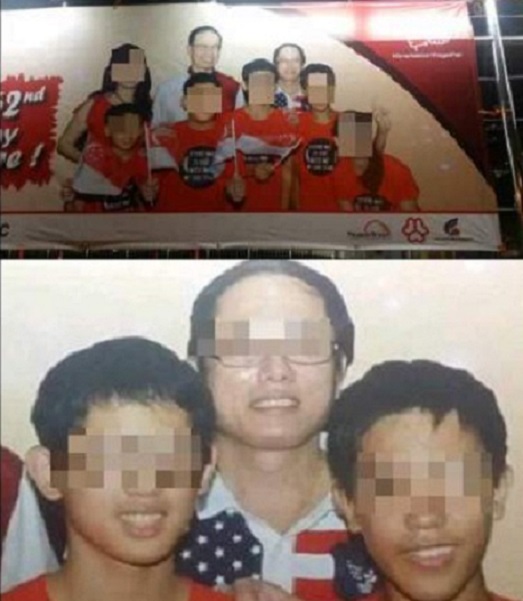
  • Man Wears American-Flag Polo While Taking National Day Photo With PAP MP?

    Man Wears American-Flag Polo While Taking National Day Photo With PAP MP?

    Dear All Singapore Stuff,

    Please see the attached photo. PAP is celebrating Singapore’s national day and US Independence Day in August.

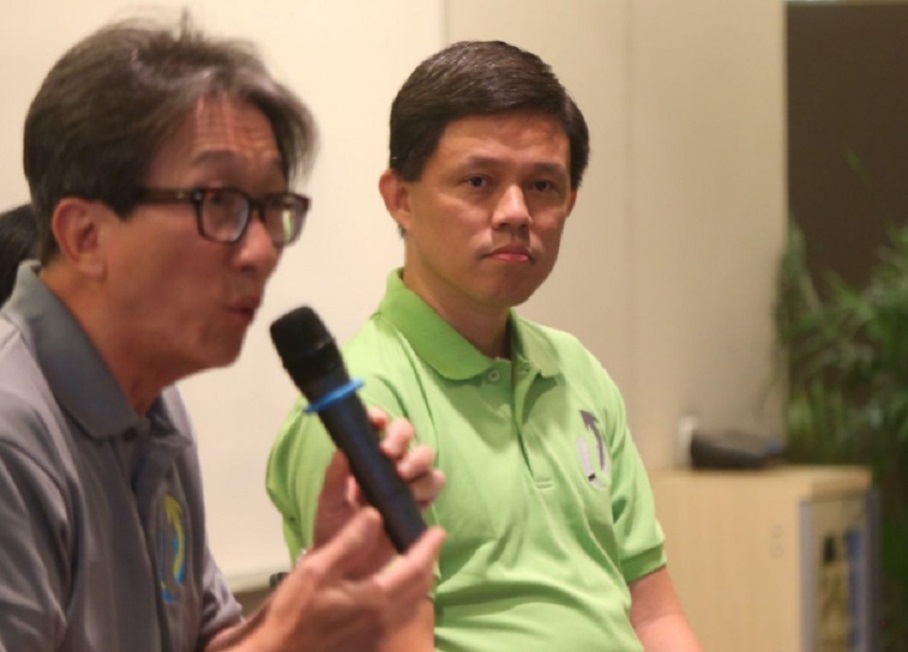
    The guy on the National Day banner next to the PAP MP is wearing a shirt with the USA flag.

    Grassroots leader forgot which flag is Singapore’s?


    Source: www.allsingaporestuff.com

  • SDP: Support For Unemployed – PAP Follows SDP’s Lead, Again

    SDP: Support For Unemployed – PAP Follows SDP’s Lead, Again

    The latest scheme adopted by the NTUC to provide professionals, managers, executives and technicians (PMETs) who are retrenched with financial assistance is a modified version of the SDP’s proposal launched 2010.

    The PAP’s idea, called Returner Work Trial, will assist employers to offer job training for the individuals who have been unemployed for at least two years. The trainee, who must be 30 and above, will receive

    • $1,500 per month from Workforce Singapore
    • $1,000 per month from the potential employer
    • a $2,500 allowance

    The payout period for trainees is limited to six months.

    Compare this to the SDP’s RESTART (Re-Employment Scheme and Temporary Assistance for the ReTrenched) programme where retrenched workers will receive:

    • 75% of last drawn salary (capped at median wage) for first six months
    • 50% for the second six months if still unemployed
    • 25% for the third six months if still unemployed

    The payout period is capped at 18 months and MOM will help match retrenched individuals with jobs. The job-seekers can only reject up to three job offers.

    Read also SDP proposes RESTART to support retrenched workers

    The NTUC’s idea is essentially an unemployment benefits scheme similar to RESTART but with the difference that under the Returner Worker Trial programme, a retrenched worker has to undergo training in order to get the financial support. There are many problems with the measure:

    One, it is restricted only to PMETs. There are many retrenched workers who are not PMETs. They also face the same hardships when laid-off.

    Two, the payout-training period lasts for only six months after which the employer has no obligation to offer the trainee a permanent job. This is especially salient as Singapore’s economy contracts with job vacancies continuing to fall.

    Three, how are retrenched workers expected to survive if they have to remain unemployed for two years before they qualify for the scheme? A study found that 50 percent of households have little or no savings due to the high cost of living to tide them through difficult times.

    In addition, why is the government using taxpayers’ money to subsidise businesses? Companies can use the scheme as a cheap source of labour. Also, will this not encourage companies to lay off workers and then profit by “training” others under the scheme at a state-subsidised rate?

    Given such loopholes, Temasek Holdings needs to state how many of its Government-linked companies are participating in the scheme and the government needs to tell the public how much these GLCs will stand to benefit from it.

    In the past, the PAP has also followed the SDP’s lead on minimum wage, universal healthcare, and employing Singaporeans first.


    Source: http://yoursdp.org

  • Halimah Yacob’s Candidacy Will Raise Questions About Her Independence & “Malayness”

    Halimah Yacob’s Candidacy Will Raise Questions About Her Independence & “Malayness”

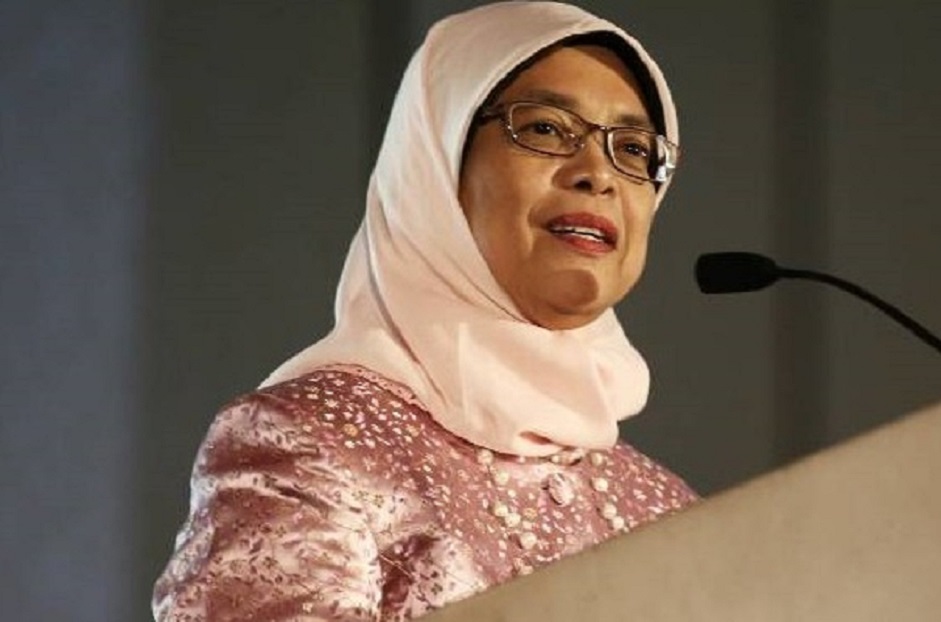
    The Speaker of Parliament, Halimah Yacob, should not run for the elected presidency, even if she is by law qualified. There are several reasons why Mdm Halimah’s candidacy would not be in the best interests of Singapore.

    But before we get into the specific arguments on this, let us recall what, fundamentally, the Elected President (EP) scheme was supposed to do.

    It is, basically, to be a check on the government of the day. Although still largely ceremonial in its functions, the EP is also endowed with various specific powers designed to hold the government to account.

    These powers include being the so-called second key to the nation’s financial reserves; having a say in the appointment of key members of statutory boards and public institutions; and the ability to instruct the CPIB to carry out investigations.

    The EP, it is to be noted, is advised by the Council of Presidential Advisers (CPA), whose members are experienced in various fields and industries.

    Mdm Halimah, as the Speaker of Parliament, qualifies under the Presidential Election Act to contest the elected presidency, even though she has little financial experience. This, some have pointed out, does not put her in good stead to oversee the financial reserves, which run into the hundreds of billions, and how the government spends these, which in itself is a complex matter.

    Although Mdm Halimah has some experience in handling public funds in her roles as a Member of Parliament for her constituency, and as a Minister of State previously, the elected presidency is an entirely different ball game altogether.

    Would she be able to understand the complexities of how the reserves are used and spent?

    The second reason why Mdm Halimah should not throw her hat into the ring in September is that even today, 28 July, she is still undecided if she would run in the elections which will take place in less than 2 months.

    One would have thought that anyone who is serious about taking on the highest office in the land would have given it much thought over an extended period of time, and would have already made up her or his mind at this point.

    And for someone who is a member of a political party, she would also be expected to resign from her party post and membership, so that there is some distance between her resignation from the party and her candidacy in the election.

    Remember that the EP is supposed to be politically neutral, and to stand above party and partisan politics.

    If Mdm Halimah decides to run for election, she would have to resign from the People’s Action Party (PAP) in very short notice, and almost immediately submit her name for the September contest.

    Former PAP MP Inderjit Singh was also apparently concerned about this, and wrote about this on his Facebook page on Friday:

    “While the constitution is open about having a current sitting government politician standing for the PE, some Singaporeans have expressed concerns on the prospects of a current government MP, still in parliament, resigning as an MP and immediately standing for the PE. The spirit of the Elected President is independence of office as intended by Mr Lee Kuan Yew when the idea was mooted. While I have no question about how each person will do his or her duty to serve the office they are elected to serve, public perception is also important. While Mr Ong Teng Cheong also did the same in 1993, I sense people are increasingly uncomfortable with this.”

    Given that Mdm Halimah has also been a PAP MP since 2001, it is questionable if she will be able to fulfill the independent role required of an EP.

    Can you suddenly resign from a party you have been with for decades and then claim to be independent of it, overnight? One may perhaps be able to do so technically, but it is not unreasonable to expect that emotionally and personally, this may not be the case.

    If, as would be expected, the PAP or its ministers, or any government-affiliated organisation (such as the NTUC), come out to endorse Mdm Halimah, it would further raise doubts about how independent she would be, if she needed the support of government ministers and organisations. Would she be able to be a check on them if she becomes the EP?

    The third reason why Mdm Halimah should not opt to run is that there have been questions raised about her “Malayness” to be a candidate in a Reserved Election for the Malay community.

    The significance of this first Reserved Election to elect a Malay president can not be understated. All candidates must be accepted as Malay, otherwise the office of the President loses its credibility and respect from the community and from Singaporeans in general.

    Questions about Mdm Halimah’s race were raised because her late father was an Indian-Muslim. Does that not make her an Indian and thus disqualified to run?

    While the law may in fact be on her side (for it gives the Community Committee the discretion to accept a candidate’s declaration of his or her race), there is also another pertinent question, as Inderjit Singh pointed out:

    “The concept of “Malayness” has also become a debatable issue. Questions about how Mendaki and SINDA classify who is a Malay and who is an Indian do not seem to be aligned with how a Malay or an Indian is defined for the purposes of a GE or a PE. For now, it is critical that the leaders of the Malay community and the government come out and make this position clear and hopefully this position will apply to all aspects of life in Singapore. I hope this can be resolved before the formal process of PE 2017 starts.”

    It is doubtful that such an intensely controversial issue would be resolved in a matter of weeks (before the election takes place). One suspects there will be even more debates, and perhaps even court challenges filed with regard to this.

    What is “Malay” and who is a Malay are now important questions given that different Government organisations have defined it differently, as some have pointed out.

    As president, the person must not be seen to have been treated differently from other ordinary Malays in society.

    It it thus of paramount importance that the question of what makes a “Malay”, in law, be set out clearly, and that the presidential candidates be held to these same standards and definitions.

    You cannot have Mendaki saying an Indian-Muslim does not qualify for its assistance schemes, and then say that an Indian-Muslim can contest in a Malay-only Reserved Election.

    And lastly, Mdm Halimah’s candidacy would leave her residents in Marsiling-Yew Tee without a minority-race MP to represent them. This would be an affront to the very idea of the Group Representation Constituency (GRC) system. Her Malay residents would be left without someone whom they could look to for help.

    Minister Chan Chun Sing has indicated that the Government will not call a by-election to elect a set of new MPs for Marsiling-Yew Tee if Mdm Halimah should leave to contest the presidential election.

    With all of the above unresolved issues and questions surrounding Mdm Halimah, it would be best if she does not contest the September polls. If she does contest and wins, it will leave the elected presidency opened to all sorts of criticisms.

    And for an institution which is supposed to be a symbol of unity for all Singaporeans, that would be most regrettable indeed.


    Source: https://publichouse.sg
  • Couple Finally Gets Baby After Trying For 11 Years, Wife Unfortunately Slips Into Coma Following Liver Infection

    Couple Finally Gets Baby After Trying For 11 Years, Wife Unfortunately Slips Into Coma Following Liver Infection

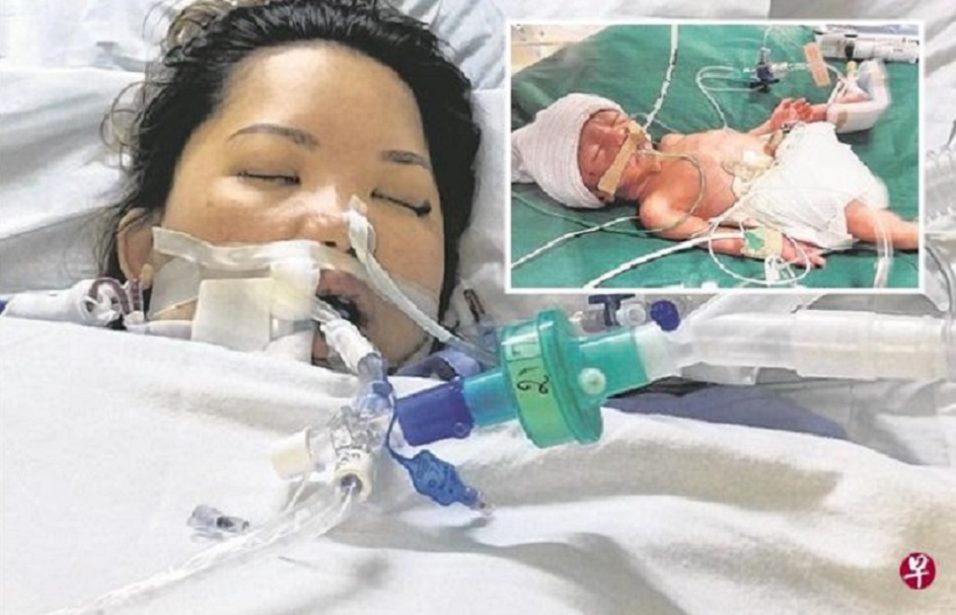
    A couple finally got their first child 11 years into their marriage, only for the new mother to slip into a coma after giving birth to her premature baby daughter.

    The 36-year-old woman had suddenly fallen ill last Tuesday (July 18) and developed a fever.

    She visited a Gynaecologist and the doctor discovered that her blood pressure was abnormally high, while the foetus’s heartbeat was slower than usual.

    She was immediately conveyed to KK Women’s and Children’s Hospital where she eventually gave birth, reports Lianhe Wanbao via Lianhe Zaobao.

    The baby was born premature and weighed only 800g, and is still warded in the Neonatal Intensive Care Unit (NICU).

    Fortunately, her conditions have stabilised.

    However, the same could not be said for the baby’s mother.

    The new mother was diagnosed with a bacteria infection, which led to a liver failure.

    He also revealed that although his sister suffered from Hepatitis B, she was very healthy before pregnancy.

    The sudden deterioration of her health came as a shock to the whole family.

    The victim now requires a liver transplant in order to stay alive.

    Now the family is worried about finding a suitable donor and raising the medical bills, the brother confessed.


    Source: http://stomp.straitstimes.com

  • Issues That Need To Be Addressed Fast Before The Formal PE 2017 Process Begins

    Issues That Need To Be Addressed Fast Before The Formal PE 2017 Process Begins

    PE 2017 by Former MP Inderjit Singh

    In less than 2 months, Singaporeans will get a new elected President. Unlike the past Presidential Elections (PE), the run up to this year’s PE has not been a smooth sailing one. Parliament passed a new ruling allowing for a Reserved Election. While many have questioned the wisdom of a reserved PE, Parliament has passed the law and this is our current system of how we will select our future Presidents.
    As the Head of State, the President must have the respect of all Singaporeans once he or she is elected (or appointed as in the past). After the new President has been elected in the reserved PE in September this year, I hope all Singaporeans will give that elected person the respect the office of the President of Singapore deserves.
    Many of us are saddened with the recent developments and comments from different quarters of society but I hope that we can put all these differences behind us. Once the new President is elected, we should all unite behind that person and focus on uniting the nation so that the respect accrued to the office of the President remains intact.
    To help that process, I feel that the following issues need to be addressed fast before we go into the formal PE 2017 process:

    1. For the purposes of effecting a reserved election, it is important to establish who our first elected president was Some feel that it is Mr Ong Teng Cheong. He was the first person who was formally elected to the office of President. Before him though, Mr Wee Kim Wee had exercised the powers of the elected president during his term, which was when the constitutional changes were made to allow for Singapore to have an elected President. The court will be deciding on this very soon, but I feel the policy makers could have avoided this question all together by paying more attention to this issue – the constitution could have said that the 5th election should be a reserved election and not the 6th. Nevertheless, once the courts decide, we have to move on.

    2. The concept of “Malayness” has also become a debatable issue. Questions about how Mendaki and SINDA classify who is a Malay and who is an Indian do not seem to be aligned with how a Malay or an Indian is defined for the purposes of a GE or a PE. For now, it is critical that the leaders of the Malay community and the government come out and make this position clear and hopefully this position will apply to all aspects of life in Singapore. I hope this can be resolved before the formal process of PE 2017 starts.

    3. This being the 1st ever reserved PE, many hope to see qualified Malays step forward and give Singaporeans an opportunity to choose their President. It is also very important that Singaporeans and the rest of the world see that we have enough qualified Malays in Singapore who meet the very stringent requirements set in the constitution. It will be a pity if we don’t have enough qualified candidates to choose from for the first ever reserved PE. So, I hope all those who meet the criteria, come forward for this wider call.

    4. While the constitution is open about having a current sitting government politician standing for the PE, some Singaporeans have expressed concerns on the prospects of a current government MP, still in parliament, resigning as an MP and immediately standing for the PE. The spirit of the Elected President is independence of office as intended by Mr Lee Kuan Yew when the idea was mooted. While I have no question about how each person will do his or her duty to serve the office they are elected to serve, public perception is also important. While Mr Ong Teng Cheong also did the same in 1993, I sense people are increasingly uncomfortable with this.

    As the Head of State, the President of Singapore holds the highest office and he or she must get the full respect of all Singaporeans. I hope the above issues are addressed before PE 2017 kicks off formally. It is good that Singaporeans are debating the issue of the reserved PE. My hope is that we can largely come to an understanding of the above 4 issues before we kick off PE 2017. And once our President has been elected, let’s all show respect for the President of Singapore and stand united as Singaporeans.


    Source: Inderjit Singh