Category: Sosial

  • Pioneer Estate Now A Ghost Town

    Pioneer Estate Now A Ghost Town

    Singapore’s first 10-storey flats, colloquially known as “chap lau chu” in Hokkien, are seven blocks of brown and beige-coloured flats in Commonwealth Drive.

    Built in the early 1960s, this pioneering “mini estate” introduced Singaporeans to the concept of a self-contained “public housing precinct” with several tall housing blocks next to a food centre.

    Decades later, the once-bustling neighbourhood lies vacant.

    After the area was earmarked for redevelopment in 2008, residents of blocks 74 to 80 and businesses cleared out by early last year.

    The abandoned estate has sat in limbo since, awaiting the wrecking ball which is expected to strike later this year.

    Entrances to the stairways of flats are gated and padlocked to keep away loiterers.

    An eerie silence hangs in the aisles of shuttered provision stores and the odd childcare centre or barber shop below the blocks.

    In the courtyard lies a worn-out playground and pavilion that were once a distraction to children and their elderly caregivers on many an afternoon.

    “It has an eerie vibe, especially when night falls and you see the leaves scattered all over the desolate streets,” said Mr Jason Seow, 45, a former Tanglin Halt resident who returned to photograph the place before it is torn down.

    As the nation relentlessly renews itself, more housing estates have been left deserted.

    These are curious places, caught in between yesterday and tomorrow, with everything intact but its inhabitants gone.

    Over the last decade, 19 projects have been completed under the Housing Board’s Selective En bloc Redevelopment Scheme. This means that residents in all these 19 areas have vacated their flats.

    However, the old blocks of flats in seven of these sites are either still in various stages of demolition or set aside for interim use or conservation today.

    The ghost town in Commonwealth Drive has become a spot for some to linger.

    On a warm weekday evening, two Chinese construction workers cut through the blocks to get groceries from the supermarket across the road.

    On the way back, they went to sit on the concrete floor at the fringe of Block 76, shelling peanuts and drinking rice wine.

    They later used a small sandy track that winds through the dense vegetation to get back to their nearby worksite.

    Security supervisor Tong, who declined to give his full name, found himself early for his night shift that same evening and sat down at a stone table for a rest.

    “This is a special place because there’s no one here and the quiet clears my mind,” said the 65-year-old.

    After 20 minutes, he left via another shortcut that office workers use to pass through the empty estate to get to Biopolis and Commonwealth MRT station.

    Hollowed-out neighbourhoods like these can also become hot spots for crime. In April, a researcher was slashed in the dim and derelict shortcut at night.

    Her employer, the Agency for Science, Technology and Research (A*Star), has advised staff against using the public footpath.

    Surveillance cameras have since been installed there by JTC Corporation. The Housing Board said it conducts inspections every day to “deter unauthorised entry into the vacated site”.

    The seven blocks are part of the authorities’ biggest housing redevelopment project to date, with 3,480 flats in 31 blocks in Tanglin Halt Road and Commonwealth Drive slated for demolition.

    Affected residents have the option of moving to new flats in the nearby Dawson estate.

    Residents said the abandoned estate’s destruction seems inevitable, given that its once-distinctive “10-storey” look is now overshadowed, literally, by modern skyscrapers with futuristic names such as Galaxis, Sandcrawler and Fusionopolis.

    Yet one stubborn presence continues to haunt the forlorn corridors – karung guni man Chua Thiam Seng, 62.
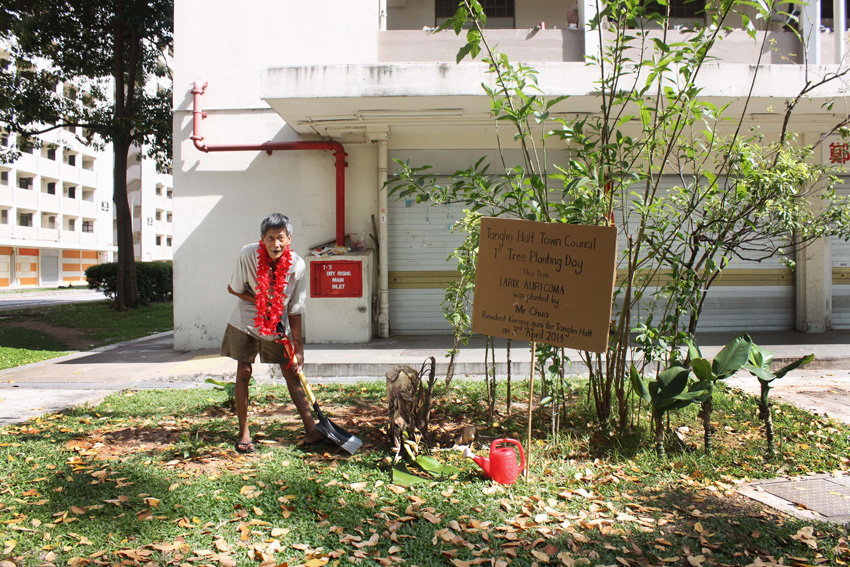
    The long passageways below the flats are strewn with cardboard boxes and cans that he collects from occupied flats and coffee shops across the road.

    “This is my office,” he said with a toothless grin. Mr Chua has been a rag-and-bone man in the neighbourhood for the past 20 years.

    He claims to have taken up HDB’s offer of a new flat nearby after the relocation exercise, but he still sleeps in a little corner on cardboard beneath his former block on most nights.

    He added that it was for convenience, but reporters have spotted him cleaning up at a nearby market many mornings.

    The bachelor reminisced about the old days when the close-knit community would gather in coffee shops or outside the lottery shop to exchange gossip.

    He lamented: “They don’t construct flats like these any more and though my neighbours have moved nearby, they are not as close as before.”


    Source: http://news.asiaone.com

  • Malaysia Arrests 10 Suspected Of ISIS Links

    Malaysia Arrests 10 Suspected Of ISIS Links

    KUALA LUMPUR – Malaysian police on Thursday said they had arrested and were investigating 10 Malaysians suspected of links to Islamic State, among them six members of the country’s security forces.

    Although the Southeast Asian country has not seen any significant militant attacks, it has arrested nearly 100 citizens this year on suspicion of links to Islamic State. Authorities have identified 39 Malaysians in Syria and Iraq.

    “They are suspected to be involved in activities to promote the Islamic State ideology,” police chief Khalid Abu Bakar said in a statement announcing the arrests.

    These activities ranged from raising funds for the movement to recruiting Malaysians and planning to buy weapons for an attack in Malaysia, he added, but gave no details.

    The suspects, who included two women and two civil servants, were arrested following an operation launched by the police anti-terrorism unit in the capital, Kuala Lumpur, and five Malaysian states, the statement added.

    A police spokeswoman did not immediately respond to telephone calls seeking comment.

    Malaysian militants have used Facebook and other social media sites to lure recruits, attracting thousands of followers online.

    Recruits now include young women and families, with domestic news reporting that a family of four had traveled to Syria, while a Malaysian female doctor’s posts on Facebook on her life as a militant’s wife in Syria have attracted wide attention.


    Source: www.todayonline.com

  • Netizens: If SAF Soldiers Do Crowd Control During Major Tran Disruptions, Who Defend Singapore?

    Netizens: If SAF Soldiers Do Crowd Control During Major Tran Disruptions, Who Defend Singapore?

    Stomper Vincent shares his disapproval over plans to deploy soldiers from the Singapore Armed Forces (SAF) to help manage crowds during massive train breakdowns.

    A report from the Straits Times earlier today (Aug 21) stated that the Land Transport Authority (LTA) is beefing up its contingency plans for in the event of large-scale rail disruptions.

    Soldiers will be roped in as marshals to give directions to stricken commuters.

    The Defence Ministry also confirmed the move, saying that the SAF will work with LTA in the event of a major disruption, “while maintaining our primary responsibility to safeguard our security environment”.

    Expressing his opinions about this new move, Stomper Vincent wrote in an email to Stomp:

    “This news has created unhappiness for many Singaporeans and many have shared it to express concern.

    “I hope Mindef can see this and will not approve soldiers to be deployed during major MRT breakdowns.

    “I thought these public transport companies are listed and profit-driven?

    “Military personnel are meant for defending Singapore, not for marshaling during train disruptions!

    “This is a private company’s disaster. Not a natural and national disaster like floods, forest fires etc.

    “How can a private company activate soldiers?”

    The Stomper added that soldiers are funded by tax payers’ money and should not be deployed to manage problems of a private company.

    Vincent is not the only one with such sentiments. Readers of The Straits Times report have also left comments expressing their disapproval of the plan.

    David Lee wrote, “SMRT is a profit-making operation, are they going to pay for the services rendered by the soldiers?”

    颜树芬 added that the only way the plan would work is if it was executed by a non-profit driven organisation.


    Source: http://singaporeseen.stomp.com.sg

  • Soldiers Will Be Roped In To Assist In Major Train Disruptions

    Soldiers Will Be Roped In To Assist In Major Train Disruptions

    Soldiers will be roped in as marshals to give directions to stricken commuters in the event of a massive train breakdown, The Straits Times has learnt.

    The Land Transport Authority (LTA), which is beefing up its contingency plans, has approached the Singapore Armed Forces (SAF) to explore deploying the men in green to give directions and manage crowds. They will be tapped only during large-scale disruptions.

    LTA said that personnel from the police, Public Transport Security Command (Transcom) and the Singapore Civil Defence Force are already helping LTA and the public transport operators in managing such incidents.

    An LTA spokesman told The Straits Times that it “will also work with other agencies like the Defence Ministry (Mindef) to provide additional manpower resources if necessary”.

    When contacted, Mindef confirmed the move, saying that SAF will work with LTA in the event of a major disruption, “while maintaining our primary responsibility to safeguard our security environment”.

    The latest move comes on the back of a spate of major incidents involving Singapore’s rail system.

    The most recent was the massive July 7 breakdown of the North-South and East-West MRT lines, which affected some 250,000 commuters during the peak hour.

    When trains broke down around 7pm, there were accounts of people not managing to reach home until close to midnight. Some walked all the way.

    A review was conducted in the wake of the incident, said Senior Minister of State for Transport Josephine Teo in Parliament on Monday.

    It was found that the contingency plans of rail operator SMRT were “not adequate” to handle the scale of the breakdown, she added.

    As a result, trunk bus services calling at MRT stations hit by delays or breakdowns will be ramped up to provide alternative travel options for commuters, said Mrs Teo.

    Transport expert Park Byung Joon said that tapping on the military during massive disruptions makes sense, as soldiers can be called up and deployed at short notice and “can channel commuters to the right places as quickly as possible”.

    The adjunct associate professor at SIM University said using the military as “an alternative backup manpower” during such incidents is not unheard of.

    He pointed out that some special force troops in the South Korean army learn how to operate trains, to ensure train services continue in the event of a strike by train drivers.

    Alex Yam, deputy chairman of the Government Parliamentary Committee for Defence and Foreign Affairs, said deploying SAF personnel at MRT stations is not entirely new as soldiers are already put in key installations like Jurong Island and Changi Airport to conduct patrols.

    They also have experience in crowd control during major national events like the National Day Parade.

    Mr Yam added: “Transcom already has a sizeable pool of officers, so activating military men will not be the first course of action. It is a last resort.”


    Source: http://news.asiaone.com

  • Man Reports Purchasing Gelatin-Injected Shrimp From Shanghai Market

    Man Reports Purchasing Gelatin-Injected Shrimp From Shanghai Market

    A shopper in Shanghai was one of the unfortunate souls to recently report finding his freshly purchased shrimp stuffed with…blobs of gelatin.

    According to local newspapers, the man brought home and peeled open his market-bought shrimp only to discover the translucent, jelly-like substance spilling out from its body.

    Last month, we reported that a buyer made a similarly horrifying discovery after picking up some shrimp at a market in Wenzhou.

    It’s believed that because shrimp tend to shrivel up after defrosting, some market owners pump them with gelatin to make them look more plump and fresh. Injecting them with the additives can increase their weight by 20 to 30 percent.

    Gelatin can be safely consumed, but some have speculated that industrial glue may be added to the shrimp, which could be harmful.

    Reporters suggest that buyers closely inspect fresh shrimp at markets to detect any unusual “bulging” action. You’ve been warned, Shanghai shoppers. Look at the disgusting pictures below and keep your eyes…wait…peeled.

    more-gelatin-shrimp.jpeg

    more-gelatin-shrimp2.jpeg

    more-gelatin-shrimp3.jpeg

    more-gelatin-shrimp4.jpeg


    Source: http://shanghaiist.com

deneme bonusu