Blog

  • English Should Be Used As Medium Of Instruction In Malaysian Schools

    English Should Be Used As Medium Of Instruction In Malaysian Schools

    MY colleague received a press statement sent by a very high-ranking official of a government department recently. It was personally written in English by the official and sent by WhatsApp to ensure it was speedily delivered.

    The only snag was that his command of the language was so horrendous that my colleague had to suggest to him, politely, that he might want to stick to Bahasa Malaysia to ensure accurate reporting on our part. He got the message. A new version was eventual­ly sent.

    Then, there are also the vice-chancellors of a few public universities who face the same language problem despite having spent much time in overseas universities to pursue their post-graduate studies.

    We have also met Malaysian diplomats who cannot carry out a proper conversation in flawless English and we know some of them even shy away from social functions, which is a shame as this where they can pick up nuggets of information for their intelligence reports.

    A few generations, yes, a few generations, are paying the price – unable to speak and write in proper English – because of our education system.

    At best, they may have some semblance of communication English, but without the proper foundations in grammar, many are unable to even string a sentence together correctly.

    Because English is just a subject, there is hardly any opportunity to use and practise the language on a regular and extensive basis within the school system.

    That’s how low we have sunk. Forget about the occasional use of some Latin words to make the language more refined, if not, more classy. Getting through the basics is tough enough.

    It is no surprise, therefore, that they really struggle when they reach tertiary level where much of the information is in English.

    And even upon graduation, many employers are reluctant to hire them when they cannot function properly in an environment where the working language is English.

    Controversial MP Datuk Bung Mokhtar became the butt of every joke on social media when he introduced a hashtag ­#earthquack for his postings on the earthquake situa­tion in his home state.

    Well, we also can see that some of our Chinese politicians, from both sides of the political divide, struggle with English, judging by some of the postings they make on Facebook.

    Every now and then, we have reports about bad English in an English examination paper. We have more or less gotten used to the fact that the English in many of our official websites are littered with mistakes.

    It doesn’t seem to bother our politicians and decision makers one bit, as they will simply shrug off calls to allow English as a medium of instruction in our education system.

    Why should they be worried as many of them are able to send off their children to boarding schools overseas at a young age? After all, the only ones that would bear the consequences would be the students in the rural areas.

    The Ruler of Johor, Sultan Ibrahim Ibni Almarhum Sultan Iskandar, recently suggested that English be made a medium of instruction – he didn’t say make English THE medium of instruction.

    The reality is that English, as a medium of instruction, is already available but it is restricted only to private and international schools, mostly in urban areas.

    And despite the high fees charged, more urban parents are opting to send their children to such schools because they simply want their children to be proficient in this international language.

    The urban-rural divide is accentuated because while children in the rural areas are sometimes teased for using English, it is perfectly normal for English to be used at home in middle-class Malaysia.

    And with greater exposure to the language, the urban children do have an edge over those in the rural areas.

    But it doesn’t have to be this way. As his Royal Highness the Sultan of Johor said, these politicians are using nationalism and race to champion communal rights and the Malay language at the expense of the English language.

    They are doing so to protect their interests and political positions. Unfortunately, many seem to buy into their agendas.

    We must also be clear that the lack of proficiency in English cuts across all races.

    Many Chinese parents send their children to Chinese schools at the primary level because they want their children to be able to speak and write basic Chinese as they eye the growing economic power of China.

    Many shy away from the national schools because there is a strong perception that these schools have turned more religious in character with a single race dominant in the overall attendance.

    The national schools that many of us from my generation and earlier grew up in, where English was the medium of instruction, were different as all races were well represented.

    But in our current situation, many Chinese parents also find that sending their children to the Chinese primary schools does not help their children have a good command of English either.

    The English proficiency of the majority of Chinese teenagers, because of their background in Chinese schools, is just as bad as their counterparts in the rural schools.

    They live in the Chinese world, watching Taiwanese and Hong Kong movies, with little interest in the real world.

    Their worldview is shaped pretty one-­dimensionally and because of the environment they grew up in, they are unlikely to have real friends from those of other races.

    Many of us in our 50s have been lucky – we were probably the last batch of the English-medium schools where we sat for the Malaysia Certificate of Education (MCE) and the Higher School Certificate (HSC) examinations.

    The English-medium schools were neutral grounds as students of all races attended such schools and the best friendships were forged there.

    We had real friends from all races because we were growing up together for at least 10 years in the schools. It was not functional friendship at work, but real bonding as we studied and played together.

    I feel really sorry for many Malaysian kids who do not have friends outside their own race as they are not be able to shape their thinking in a more open way.

    So, when a hot issue comes up in the country, especially those involving race and religion, they are not able to see things from another perspective.

    Like many, I also worry about the future of Malaysia and our children, as the performance of our schools continues to falter. Beyond our concerns over language skills, we should be even more worried about the quality of our education.

    Our ranking in Science and Mathematics is already reportedly low, although our politicians question its accuracy. But the reality is that many of us are no longer surprised by such trends.

    Our politicians will continue to tell us that all is well and fine in our schools, and that we have little influence to change anything. Some of us may believe that to be so.

    But if we really care for the country, we should not be afraid to propose radical changes for the sake of our future generations.

    Education is for all and it is totally selfish if we only think of our own interests while the majority are stuck in a system which does not empower them to reach for the stars.

    The views expressed are entirely the writer’s own.


    Source: www.thestar.com.my

  • Johor’s Crown Prince Explains Source Of Wealth

    Johor’s Crown Prince Explains Source Of Wealth

    Assalamualaikum w.b.t

    I am aware that this is the official website of Johor football, not a political nor religious website. However I wish to take this opportunity to educate and inform the rakyat of Johor and every Malaysian.

    Recently I noticed several negative and misinformed comments from some individuals about pictures of my boat which was uploaded by JOHOR Southern Tigers.

    There have always been several quarters who questioned the issue of the rakyat’s money. I therefore wish to use this space to give the correct and concise information which can be treated as useful knowledge in understanding the Johor royalty.

    Johor was established in 1885 with its own government and constitution even before the formation of the Federal Government in 1957. In addition, the Johor Military Forces was established in 1886.

    With regards to the rakyat’s monies which is questioned by these misinformed individuals, I am making this statement today so that Johoreans may read and understand so that they can inform future generations.

    For everyone’s information, the Johor royalty had once breached the state constitution in 1899 when DYMM Almarhum Sultan Ibrahim ibni Almarhum Sultan Abu Bakar had rejected his salary as Sultan which was allocated by the Johor state government at that time. The funds were thus channelled to a trust fund now known as Yayasan Iskandar, whereby Almarhum then decreed:


    As Ruler of this state, I should not take my rakyat’s monies

    Therefore the objective of that trust is for the state government to assist the Johor rakyat where needed.

    Till today, Yayasan Iskandar is used for funding education, Haj pilgrimages, upgrading facilities at religious schools etc.

    All proceeds and income of the Johor royalty is derived from rubber and oil palm estates since the time of DYMM Almarhum Sultan Ibrahim till today, which is now managed by MADOS.

    I don’t need to disclose how much zakat that has been paid by DYMM Tuanku and myself every year. I am raising this issue since there are some people who are ignorant, disillusioned and incapable of accepting the truth.

    All allowances allocated to me by the Johor government since I was appointed as the Raja Muda till today has been channelled to Yayasan Iskandar and whatever I have now are gifts from my own father.

    This information is mainly for giving a brief summary of the history of Johor royalty.

    Once again, to those misinformed individuals, before making any sweeping statements, please do your research and get your facts correct first rather than embarrass yourselves later.

    I am not worried as I have never taken anyone’s money.

    ‘Don’t envy my smile, it took a lot of tears to earn it.

    Don’t envy my love, it took a lot of pain to grow it,

    Don’t envy my life, I’ve gone through so much to appreciate it.

    HRH Brigadier General Tunku Ismail Ibni Sultan Ibrahim, Tunku Mahkota Johor


    Source: http://greatermalaysia.com

  • Alfian Sa’at: Government Can Do Much More For The Poor

    Alfian Sa’at: Government Can Do Much More For The Poor

    Thank you for all the Ramadan well-wishes. One of the things I like about fasting is the sense of self-mastery over desire (something which is shared with the ascetic aspects of many other religions.) Yet another is this reminder that not having food or water for half a day—or longer—is a lived reality for many people around the world. It’s made me think a lot about the poor in Singapore too, and the verse in the Quran that says:

    “Charity is for the poor who have been restricted in Allah’s cause, unable to move about in the land, seeking work or trade. An ignorant person would think them self-sufficient because of their modesty, that they are free from want. But you will know them by their characteristic sign. They do not beg persistently, or at all. And whatever you spend of good – indeed, Allah is knowing of it.” – Surah Al-Baqarah, Chapter 2, Verse 273

    A recent survey commissioned by Mendaki revealed that two-thirds of low-income Malay-Muslim families do not seek help from social services despite being eligible for them. The researchers noted that though a main issue was lack of awareness of available schemes (and also the sheer volume of forms they need to fill) many among the needy also feared the stigma associated with ‘begging for help’. Because ‘welfare’ is so often articulated as a ‘burden to the state’, rather than a redistributive strategy included in the budget, those who should receive it become hesitant. Who wants to be a burden to anyone? It robs you of your dignity. This is distressing news indeed because apparently there are people in Singapore who, even in struggling conditions, think that there are others who are more destitute than they are and more deserving of welfare.

    “They do not beg persistently, or at all.”

    I’ve often felt frustrated that the government has been reluctant to define an official poverty line, on the pretext that those who are found to live above it might ‘miss out’ on assistance. But seriously, when two-thirds are not getting the help they need to get out of the poverty trap then it seems to me that the real problem is under-utilisation, NOT wanton abuse of the system. The problem with not having an official poverty line is that the poor remain invisible, even to themselves. How can the poor evaluate whether they really need help when they’re not given something to measure themselves against? At which point should they start realising that it’s beyond their capacity to cope—when three meals are reduced to two, when the loansharks start knocking, when chronic illnesses become catastrophic?

    Welfare in Singapore has always been predicated on an inherent mistrust of those who might develop a ‘crutch mentality’. The ‘many helping hands’ are also intrusive ones, frisking bodies, pointing fingers at television sets and smartphones as welfare liabilities (even if they were gifts or hand-me-downs). There’s also a eugenic, Darwinian taint to it, where those who fall behind are seen as those on whom supposedly scarce resources should not be ‘wasted on’. It’s all very pithy to say that you’re providing a trampoline rather than a safety net but what kind of disapproving looks are you giving those in free fall? Something needs to change, and I hope the political parties make this part of their platform for the next elections. In the meantime, some pantuns on the rich and poor:

    1) Kalau beli buah berangan,
    Jangan lupa buah kana;
    Orang kaya jangan diangan,
    Orang miskin jangan dihina.

    If you buy chestnuts,
    Don’t forget to buy Chinese white olives;
    The rich should not be envied,
    The poor should not be despised.

    2) Dari teluk pergi ke pekan,
    Singgah bermalam di Batu Lima;
    Sekalian makhluk Tuhan jadikan,
    Kaya miskin dipandang sama.

    From the bay one journeys to the town,
    Spending a night at Batu Lima;
    All beings are created by God,
    The rich and poor are equal in His eyes.

    3) Baju kebaya disulam kelimkan,
    Dipakai mari dara berdandan;
    Miskin kaya jangan bezakan,
    Budi jadi satu ujian.

    The kebaya is embroidered with silver,
    And worn by fashionable maidens;
    The poor and the rich are not to be distinguished,
    The real test lies in their good deeds.

    4) Kalau tuan merendam telur,
    Jangan terlupa telur yang masin;
    Kalau tuan sudah masyhur,
    Jangan lupa keluarga yang miskin.

    If you find yourself soaking eggs,
    Don’t forget to soak the salted ones;
    If you find yourself surrounded by wealth,
    Don’t forget those families who are poor.


    Source: Alfian Sa’at

  • SAF Finally Accepts Malay Muslim Soldiers Into Armour Formation

    SAF Finally Accepts Malay Muslim Soldiers Into Armour Formation

    Dear editor

    I came across a series of photos posted by The Singapore Army Facebook page and I am glad to see a Malay soldier PTE Mohammad Jumadi who was awarded the best matador gunner in 42 Singapore Armoured Regiment (42SAR).

    Finally, our Malay brothers are accepted in the Armour formation.

    For the uninitiated, the Singapore Armour formation do not have Malay soldiers since its inception in 1968 for unspoken reasons. The formation uses armoured vehicles such as tanks and armoured carriers to spearhead advance movements and hold key objectives during times of war. From what I heard from my enciks, there were discomfort in the region after the AMX-13 tanks were first revealed during National Day Parade in 1969 but it was a source of pride among Singaporeans and assuring for those who chose to stay in the young nation. Our leaders then don’t have a choice, Singapore was a punching bag and her survival was at stake.

    But Singapore is turning 50 this year and she was built on the foundation of mutual trust, respect and harmony among difference races. Singaporeans are highly educated, well-travelled and most are able to understand Singapore’s stability doesn’t come easy. With social media, Singaporeans could see the mistrust among different races in first world liberal nations where white cops held bias against non-whites.

    I cannot deny there was mistrust towards Malays in the very early years of the SAF. It is impossible for me to understand the sense of injustice, discrimination and prejudice my Malay friends felt when they realized they were barred from certain “more sensitive” roles in the armed forces. I am a minority so sometimes I do feel some discrimination in the society but I never felt discriminated in the SAF because I’ve seen Indian Colonels and Sikh BGs around.

    Except for the very tiny segment of the Malay community (Thank to the misguided JI, ISIS and terrorism sympathizers), I am 100% certain our Malay Singaporeans are loyal to Singapore and they will put the country above blood ties, religious ties and fight to their death to defend the country like any Singaporeans would.

    Sanjay A

    Source: www.allsingaporestuff.com

  • Senarai 10 Negara Terkaya Di Dunia

    Senarai 10 Negara Terkaya Di Dunia

    Tabung Kewangan Antarabangsa (IMF) adalah sebuah organisasi antarabangsa yang menyelia sistem kewangan dunia mengikut polisi makroekonomi sesebuah negara.

    IMF mengambil kira kadar pertukaran asing dan imbangan pembayaran sesebuah negara semasa menentukan keluaran dalam negara kasar (KDNK).

    Kadar kekayaan sesebuah negara itu boleh diukur menerusi KDNK yang merangkumi pendekatan produk, pendapatan dan perbelanjaan.

    Berdasarkan data perbandingan populasi yang diperoleh daripada IMF pada 15 Jun 2015, ketahui 10 negara yang dianggap paling kaya di dunia.

    10 – Hong Kong

    Semenjak tahun 70-an, Hong Kong beransur menjadi penghubung kepada dunia dan negara China. Selama beberapa dekad, negara yang mempunyai populasi 7 juta orang ini berkembang menjadi pusat dagangan paling popular di dunia.

    Cukai yang rendah dan sistem perdagangan bebas menjadikan Hong Kong masyhur sebagai hab perdagangan utama global serta pusat kewangan paling penting selepas New York dan London.

    9 – Switzerland

    Laporan Daya Saing Global (GCR) menyatakan Switzerland sebagai yang negara yang paling berdaya saing di dunia. Sebahagian besar ekonomi negara yang ditubuhkan pada tahun 1300 ini dipacu oleh industri berkaitan bahan kimia, farmaseutikal dan kesihatan, mesin dan lain-lain.

    Selain itu, pelbagai jenama bertaraf dunia berasal dari Switzerland seperti Nestlé, Swatch, Adecco, Zurich Financial Services, Credit Suisse dan lain-lain.

    8 – San Marino

    Negara Eropah ini kurang mendapat perhatian dunia. Terpencil dikelilingi Itali, struktur ekonomi San Marino sebahagian besar bergantung pada sektor kewangan, perindustrian, perkhidmatan dan pelancongan.

    San Marino mempunyai keadaan ekonomi yang sangat stabil dan kadar pengangguran antara terendah di benua Eropah. Satu-satunya negara di dunia di mana jumlah kenderaan melebihi penduduk.

    7 – Emiriah Arab Bersatu

    Emiriah Arab Bersatu (UAE) adalah sebuah negara persekutuan merangkumi tujuh emiriah iaitu Abu Dhabi, Ajman, Dubai, Fujairah, Ras al-Khaimah, Sharjah dan Umm al-Quwain.

    Presiden pertama UAE, Sheikh Zayed menyelia pembangunan negara lantas memacu hasil minyak untuk penjagaan kesihatan, pendidikan dan infrastruktur.

    Petroleum dan gas asli menyumbang kepada kekayaan UAE. Simpanan petrol dan gas aslinya masing-masing adalah yang ketujuh dan ke-17 terbesar di dunia.

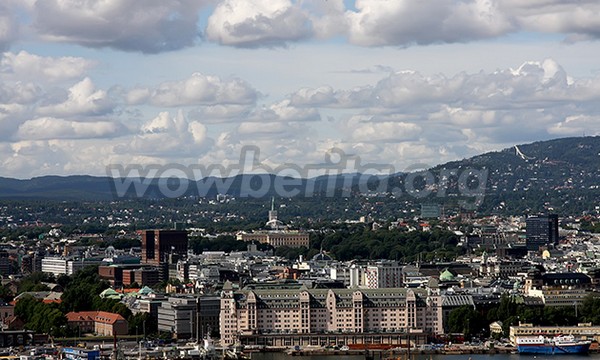
    6 – Norway

    Norway merupakan salah sebuah negara dengan kerajaan tertua di dunia. Ia ditubuhkan sekitar 1,100 tahun lalu dan sehingga kini mengekalkan pemerintahan monarki.

    Norway kaya dengan bekalan petroleum, gas asli, mineral, kayu balak, makanan laut, air tawar dan kuasa hidro. Industri petroleum sahaja menyumbang sekitar satu perempat daripada keluaran dalam negara kasar negara.

    5 – Kuwait

    Meskipun mempunyai jumlah penduduk seramai 4.1 juta, hanya 1.2 juta adalah warga Kuwait manakala 2.8 juta yang lainnya adalah ekspatriat. Bank Dunia mengiktiraf Kuwait sebagai sebuah negara dengan ekonomi yang berpendapatan tinggi.

    Petroleum sahaja menyumbang hampir separuh dari keluaran dalam negara kasar. Petroleum dan baja merupakan dua sektor utama yang memonopoli ekonomi Kuwait. Mata wangnya, iaitu Dinar adalah unit mata wang dengan nilai paling tinggi di dunia.

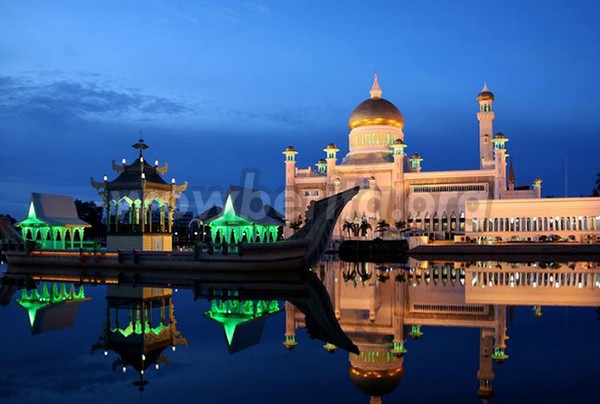
    4 – Brunei

    Pertumbuhan ekonomi sekitar tahun 1990-an hingga 2000, membawa perubahan kepada Brunei sehingga menjadi sebuah negara perindustrian. Purata peningkatannya adalah 56 peratus bagi tahun 1999 hingga 2008 sahaja.

    Sektor petroleum dan gas asli menjana kekayaan negara yang mencapai kemerdekaan dari United Kingdom pada 1 Januari 1984 ini. IMF turut menyatakan bahawa hutang Brunei berada di kadar kosong peratus daripada KDNK negaranya.

    3 – Singapura

    Selain menjadi salah satu hab perdagangan utama dunia, Singapura merupakan pusat kewangan keempat terbesar dan salah satu daripada dua pelabuhan kontena paling sibuk di dunia.

    Ekonomi global Singapura yang pelbagai tertumpu pada sektor perdagangan, terutamanya perkilangan yang menyumbang kira-kira 30 peratus daripada KDNK Singapura.

    Negara yang terletak di selatan Semenanjung Malaysia ini juga menduduki kedudukan yang tinggi bagi taraf hidup, pendidikan, penjagaan kesihatan serta daya saing ekonomi.

    2 – Luxembourg

    Walaupun dilihat sebagai sebuah negara yang kecil dan dilitupi hutan Ardennes yang padat, ekonomi maju Luxembourg berjaya meletakkan negara Eropah ini di tangga kedua terkaya di dunia.

    Ekonomi stabil dan berpendapatan tinggi Luxembourg didominasi oleh perindustrian besi sehingga 1960-an. Sejak beberapa dekad lalu, sektor kewangan mula mengambil alih sehingga menjadikan Luxembourg pusat pelaburan kedua terbesar di dunia selepas Amerika Syarikat.

    1 – Qatar

    Negara yang terletak di semenanjung Arab ini muncul sebagai negara terkaya dengan hasil keluaran dalam negara kasar tertinggi di dunia. Penduduk Qatar tidak perlu membayar cukai pendapatan kerana taraf kehidupan yang tinggi.

    Negara berpendapatan tinggi ini mempunyai ekonomi yang maju disokong oleh simpanan gas asli ketiga terbesar di dunia. Selain itu simpanan minyaknya melebihi 25 bilion tong. Pada tahun 2012 sahaja, simpanan minyak Qatar menyumbang lebih 13 peratus daripada sumber keperluan global.


    Source: http://wowberita.org

deneme bonusu