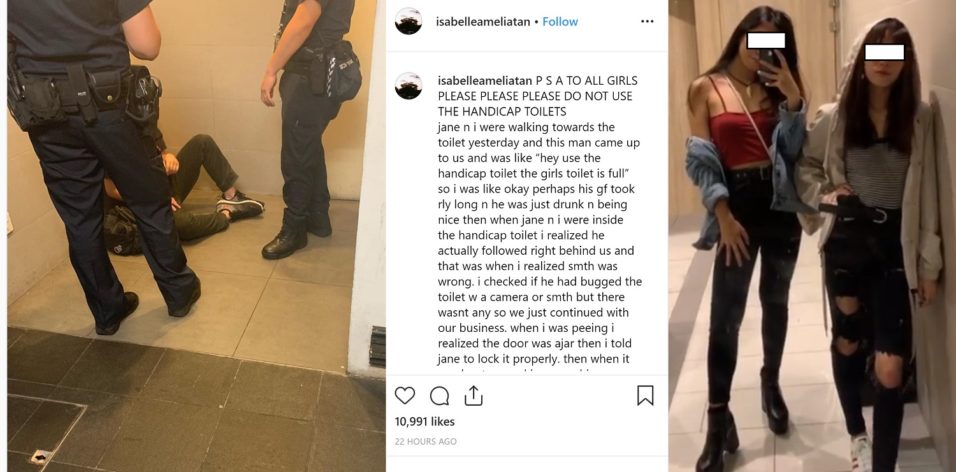
In a public service announcement made on instagram, a local girl who was on a night out reported her encounter with a suspicious man who tried to break into the handicap toilet she was in while she was in a tipsy state.
Luckily for her, she had the company of a friend to help her and she had the wits and bravery to force the door close and called the police on the pervert. Apparently, the pervert had tried to unlock the door with a 20 cent coin while she and her friend were inside using the toilet. If not for her situational awareness, they could have been molested or at worse sexually assaulted late at night.
Her final word of advice for all: “GIRLS PLEASE PROTECT YOURSELF AND YOUR FRIENDS AND ALWAYS BE CAUTIOUS OF YOUR SURROUNDINGS EVEN WHEN YOU’RE WASTED AF!”
To all our friends out there, protect yourselves and take the appropriate precaution for yourself. Try not to put yourself in a potentially dangerous situation lah
Appeal for Singaporean Muslim Women to Exercise their Freedom to Wear the Hijab (in Arabic) or Tudung (in Malay) at Work
Recently the Irish Police has announced it will follow in the footsteps of its Scottish and Northern Ireland counterparts by allowing it’s Muslim Women Officers to wear the hijab while on duty. This is line with that adopted by police services such as the Police Northern Ireland (PSNI), Police Scotland, New Zealand Police, NYPD, and other police services in the UK, Australia and Canada. (https://www.irishlegal.com/…/muslim-garda-to-be-allowed-to-…).
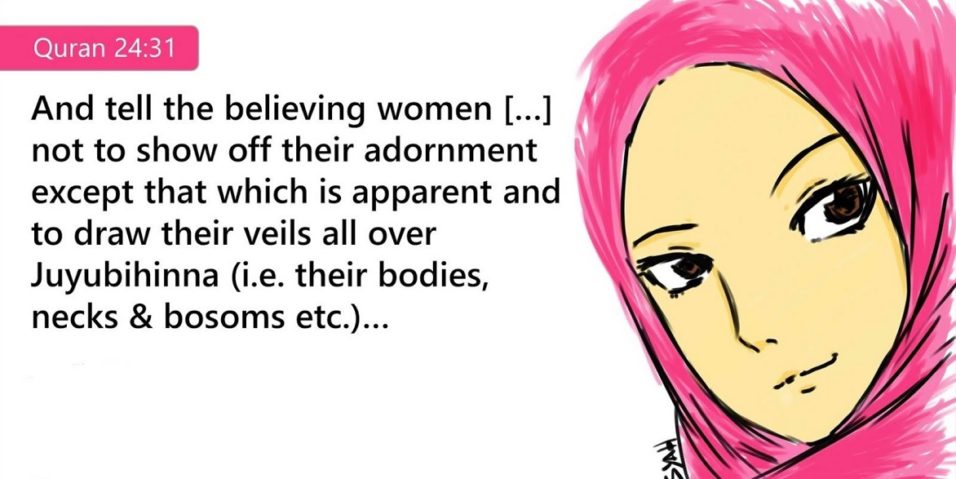
The central reference points for the Islamic code of dressing are the Quran, the Hadiths which is a report of Prophet Muhammad’s (peace be upon him) sayings and the Sunna (normative examples set by Prophet Muhammad’s (peace be upon him) life. The references to head coverings found in the Hadiths, the Sunna, and the Quran, in particular, are believed to form the basis for the hijab or tudung being regarded as an integral part of a Muslim woman’s attire. (Reference: The Holy Quran Chapter 33 Verse 59: https://quran.com/33/59 and Chapter 24 Verse 31 https://quran.com/24/31)
From my research, I have found that wearing the headscarf as part of practicing hijab or dressing modestly has become more common among Malay Muslim women in Singapore now compared, for example, to the 1950s and 1960s. This development occurred in line with the global Islamic Renaissance and revival in the 1970s.
Today, as the photo of our Head of State, President Halimah Yacob, wearing the hijab hang in all public sector offices, one question being asked by the community at large is when will Malay-Muslim women in public service frontline roles, like police officers and nurses, be freely allowed to wear hijabs at work in Singapore.
The local Muslim community has been informed by the Government from time to time that they understood the community’s perspective on the tudung and that the Government’s position has not been static, hence the community needs to be patient. However, it would seem that there is still much progress to be made on this issue. Nevertheless, hijab-wearing women are generally accepted in the workplace, as can be seen in many offices around Singapore. Nevertheless, anecdotal evidence suggests that the hijab is not accepted in many lines of work, including nursing, hospitality, and uniformed groups such as police, civil defence, and armed forces. In the case of nursing, this may create a strange contradiction where female Muslim doctors are permitted the hijab whereas their counterparts in nursing are not.
The call for greater acceptance of the hijab in the workplace is not a rallying cry for the Islamisation of Singapore. Muslims by and large live in harmony with non-Muslim neighbours, colleagues, and peers. Greater recognition of the hijab would, in fact, encourage better integration among Singapore through a better understanding of the beliefs and practices of different communities. Acceptance of the hijab would also increase employment by encouraging greater participation of Muslim women in the workforce, without forcing them to choose between practicing their religion and earning a livelihood.
In conclusion, I was reminded recently and moved by a young lady’s appeal that if Singapore is truly the multireligious and multicultural nation that we claim to be and if we were to be true to the words in our Singapore pledge, then perhaps our society today would be a better place and the workplace would be less discriminatory against a harmless woman in a headscarf who has similar goals and aspirations as any other regular Singaporean. Furthermore, a Muslim woman should be allowed to exercise her freedom to practice her faith (as enshrined in the constitution) and to don the headscarf at work if she so chooses.
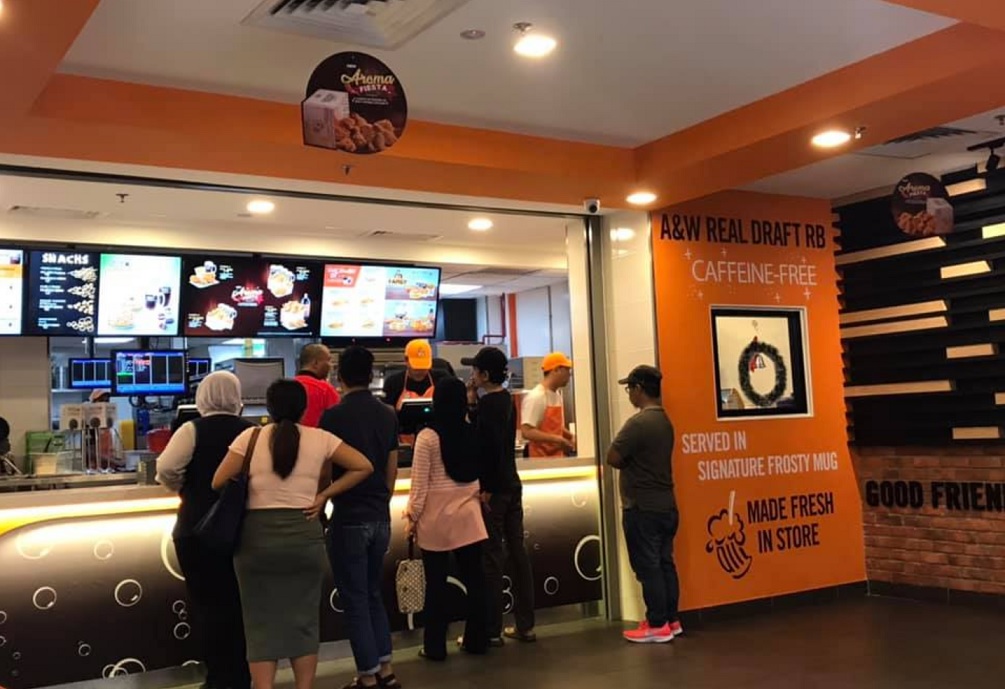
Yes, again the ‘Halal Not Halal’ issue is baccccccccck and the TRENDING restaurant that everyone is talking about now is A&W Singapore.
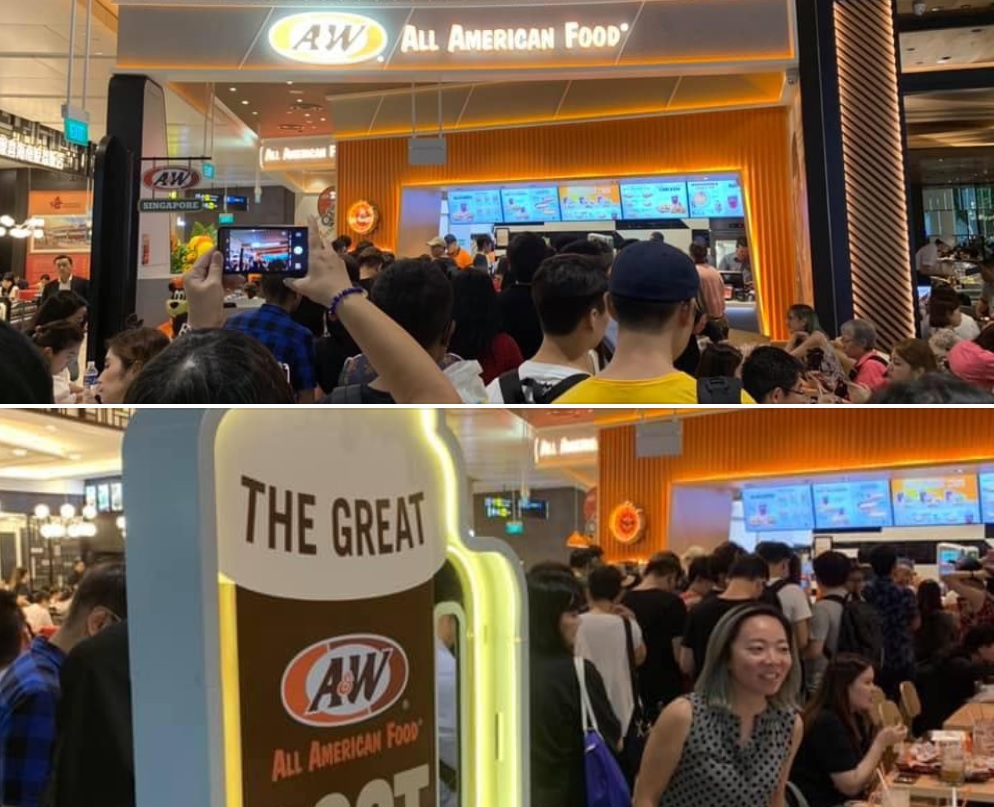
“We gave up. The queue was 1 hour.”
Said one of the kiasu patrons of A&W on its first day reopening in Singapore after they have been gone for a long time. Other than A&W, many flocked over to Jewel Changi Airport over the weekend to see the news attractions especially the waterfall.
But what is the hype eh about this A&W, because in JB the outlets are lengang (slow business). (:
Photo of an outlet in JB
So, apart from the tak boleh rilek crowd that die-die confirm plus chop cannot eat on other days (other than the opening day) or wait it out a few days/weeks, the issue of HALAL CERTIFICATION surfaced. Not surprising la.. Singaporeans.
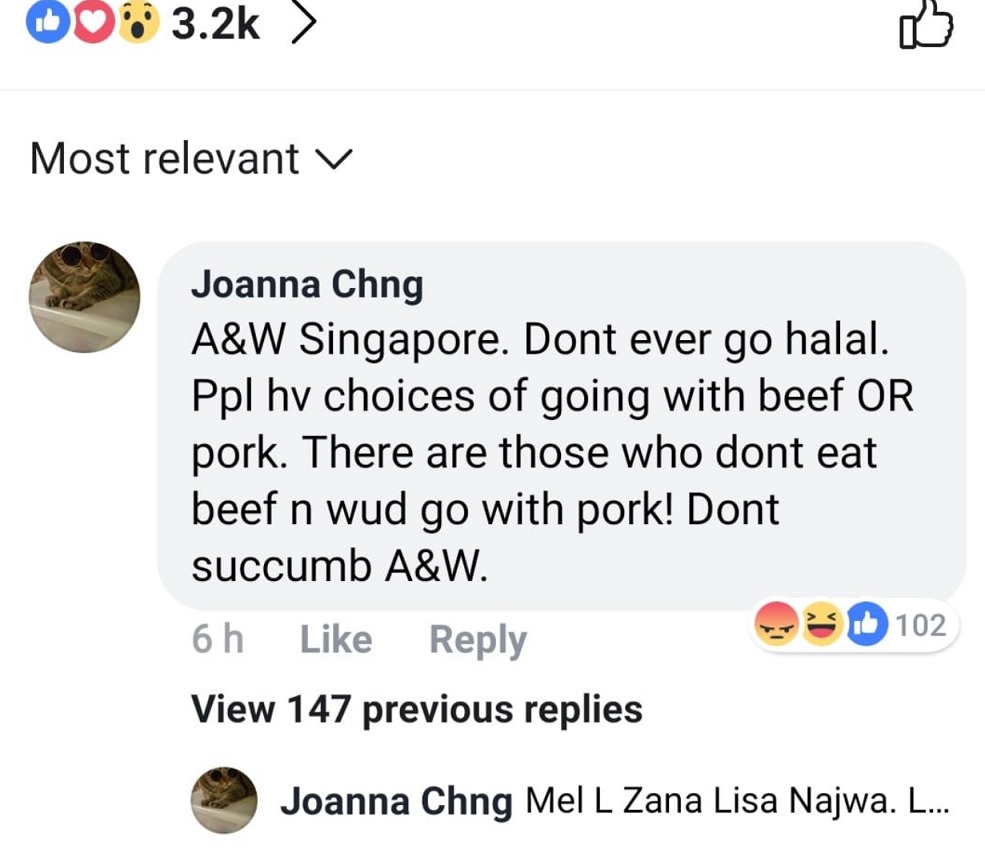
Screenshot taken from Facebook
This ah gerl say don’t make A&W Singapore become halal certified. Her argument is that people ONLY have a choice to eat beef or pork, so if someone don’t eat beef they need to eat the pork instead. #bodohpehstatement #racistmuch
“Dekni tk makan Babi,dia makan Taik Babi.”
Oops. Not we say one siol. Someone who replied to her said that. Padan muka you.
Anyway, A&W Singapore saved the day when they instantaneously responded the following to Singaporeans’ squabble about ‘Halal Not Halal’ issue.
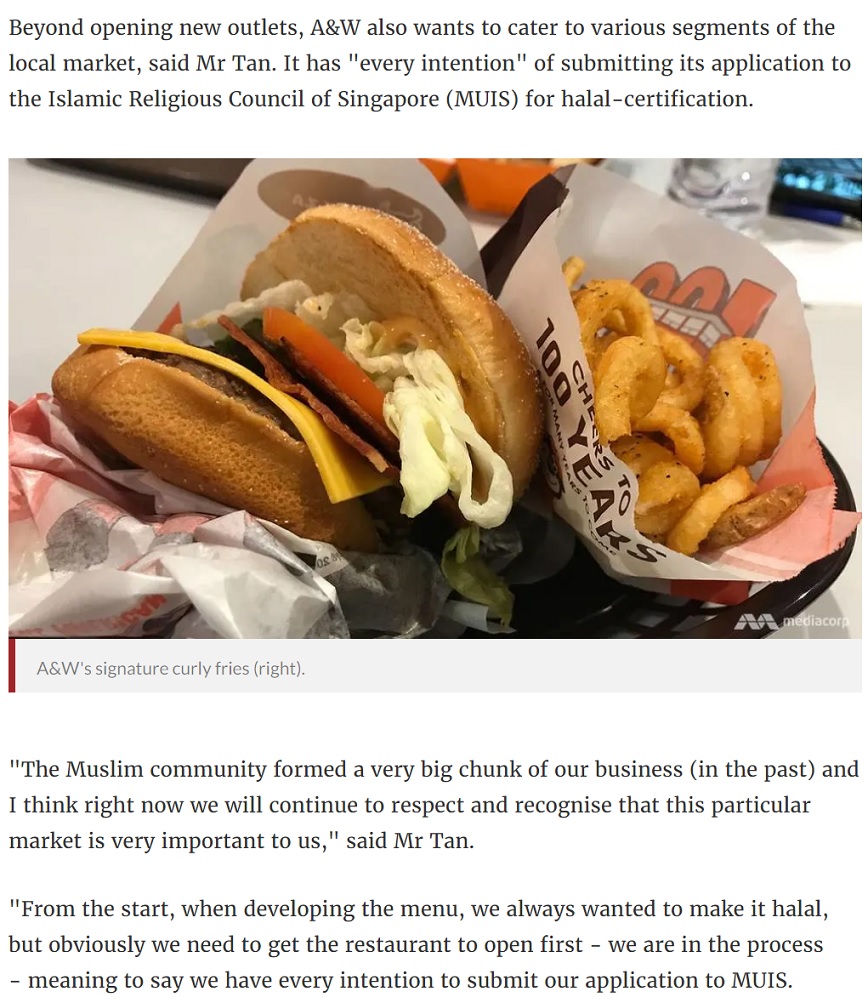
Beyond opening new outlets, A&W also wants to cater to various segments of the local market, said Mr Tan. It has “every intention” of submitting its application to the Islamic Religious Council of Singapore (MUIS) for halal-certification.
“The Muslim community formed a very big chunk of our business (in the past) and I think right now we will continue to respect and recognise that this particular market is very important to us,” said Mr Tan.
“From the start, when developing the menu, we always wanted to make it halal, but obviously we need to get the restaurant to open first – we are in the process – meaning to say we have every intention to submit our application to MUIS.
“We’re hoping that the crowd will ease out a bit and then we will get them to come in (and do an audit),” said Mr Tan.
“Right now, we would like consumers to know that it’s a Muslim friendly menu, no pork no lard, and as soon as we can find the time to submit our application to MUIS, we will do so immediately.”
Photo from CNA
Wohoo! Definitely great news for us Muslims! Thanks to A&W.
A&W has been halal in the past and will always continue to be halal to cater for the Muslim community in Singapore.
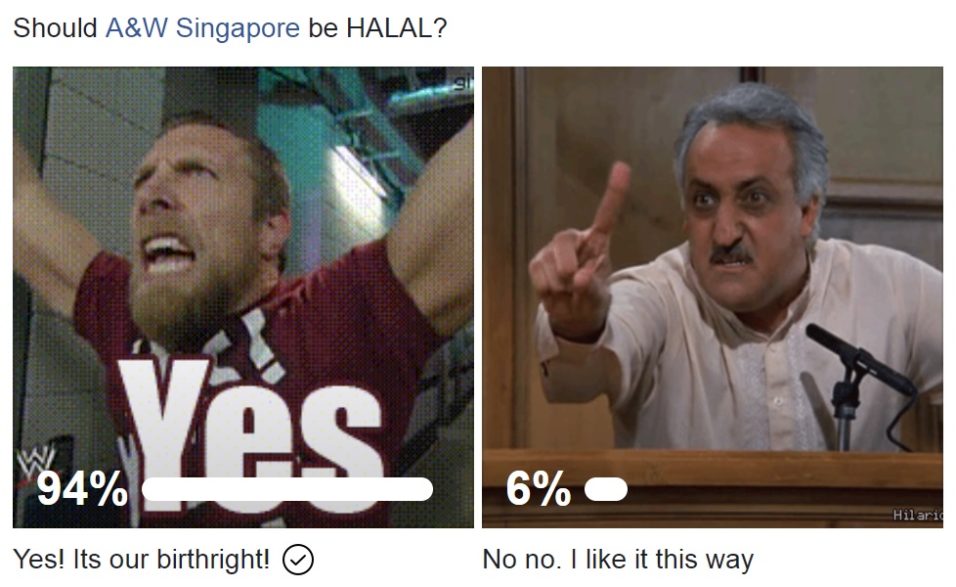
Btw, 94% responded YES to a poll asking if A&W should be halal.
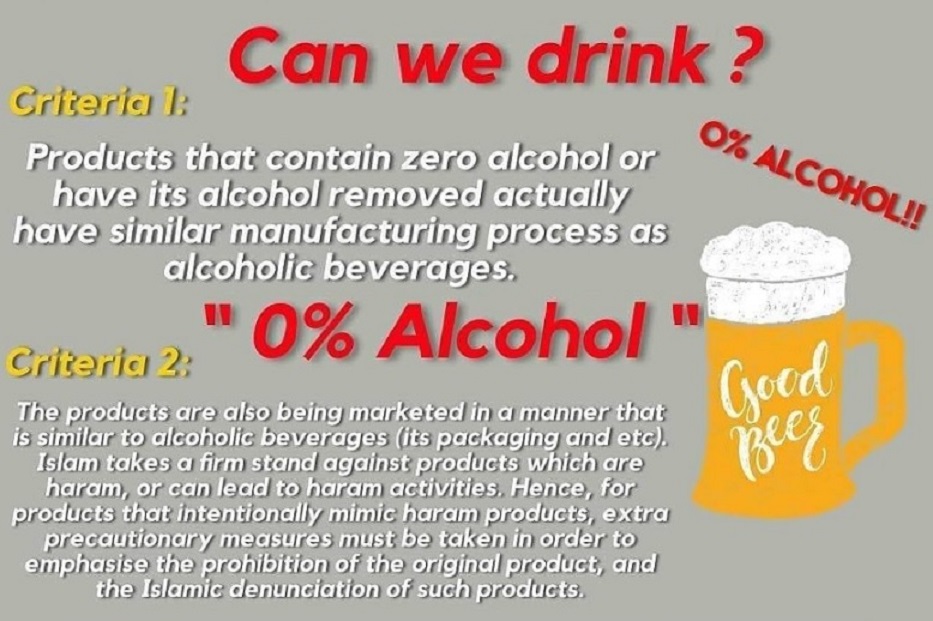
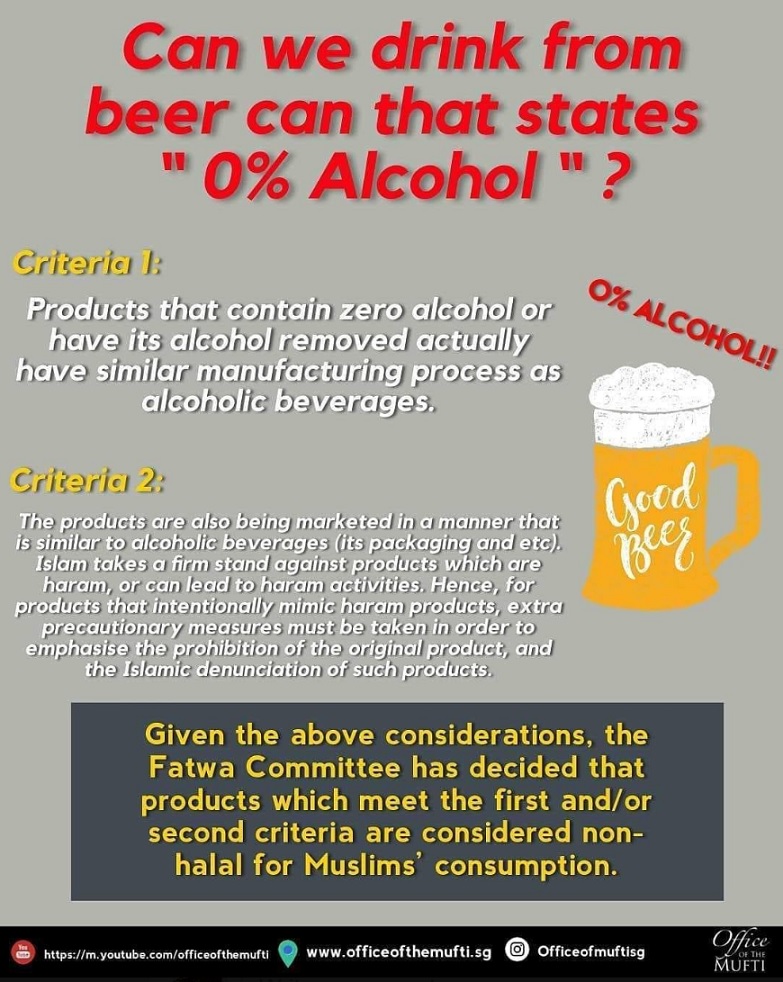
Can Muslims drink “0% alcohol” beer? The answer is NO. It is not permissible if it meets either or both the criteria below.
1. The process of making the drink is similar to the process done to make alcoholic drinks.
(Explanation: Products that contain zero alcohol or have its alcohol removed actually have similar manufacturing process as alcoholic beverages.)
2. The product is marketed in a similar way to how alcoholic drinks are marketed.
(Explanation: The products are also being marketed in a manner that is similar to alcoholic beverages – its packaging and etc. Islam takes a firm stand against products which are haram, or can lead to haram activities. Hence, for products that intentionally mimic haram products, extra precautionary measures must be taken in order to emphasize the prohibition of the original product, and the Islamic denunciation of such products.)
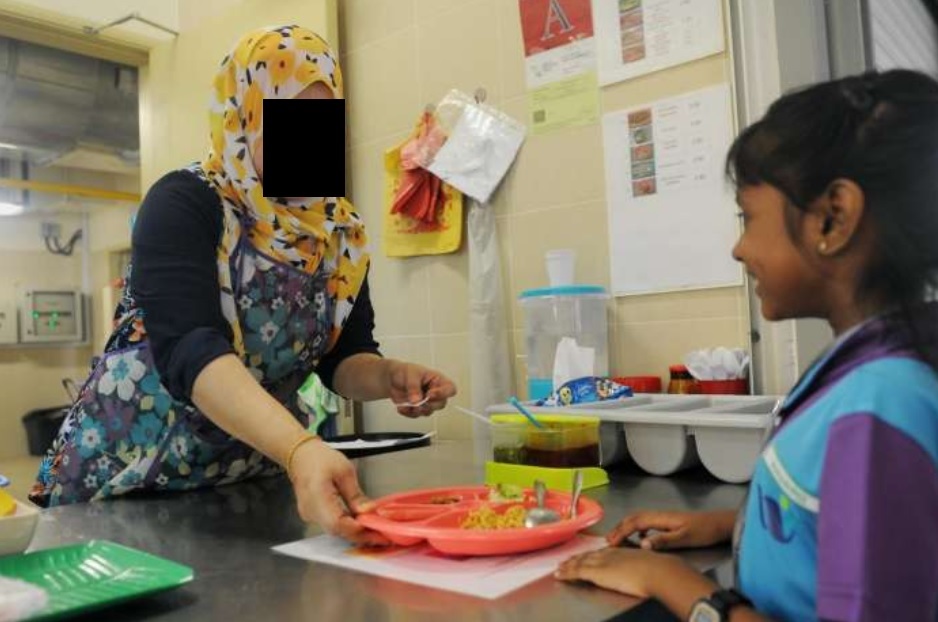
After Singaporean woman, Atikah Amalina, who goes by the handle @thetudungtraveller, shared with the public of her experience with microaggression due to being Malay and wearing a tudung, a similar experience was shared by another lady named Ezura Al-Barakbah.
Like Atikah whom a driver assumed worked in the canteen in Google, Ezura was stereotyped as a “kakak canteen who is uneducated and knows nothing but cooking.” Some even questioned how she got invited to Pesta Perdana and whether she religiously queued up at Mediacorp in order to get her hands on the tickets.
This was her post in full,
I know how it feels.
They stereotype me as kakak canteen who is uneducated and knows nothing but cooking.
So when they saw Medic Kid on TV then somemore got the cheek to say, ooh i thought you are a fulltime kitchen help.😢
And asked me how come you got invited to Pesta Perdana ah?
Is it you go Mediacorp queue up for the tickets ah😅
I dont care about what others may think about me.
All i know is i want to help the school and cook for the kids.
It takes a huge village to raise a kid ok!!!
I dont care if you look down on me pushing my trolley cart, wearing instant tudung and makeup less.
Coz at the end of the day I loove cooking for the kids and arranged my busy schedule just to make time to cook for them
Hey even though if I am just a kakak canteen in your eyes,
A canteen cook is more knowledgable than you ok!!
Must know costing, accounts, marketing be it for groceries or marketing on social media
The stereotypes of a Malay lady wearing a hijab.. what else have you encountered?