Blog

  • Top 10 Highest Paying Jobs In Singapore

    Top 10 Highest Paying Jobs In Singapore

    “Choose a job you love, and you will never have to work a day in your life.” —  some guy on the internet who may or may not be Confucius.

    Well, thanks maybe-Confucius, but not all of us have the luxury of being paid to do what we enjoy.

    For some people (okay, most people), money is what they look for in our job. Because money is more important that any form of job satisfaction.

    Which is why we need lists like these. We’ve checked out the Ministry of Manpower’soccupational wage table last updated in June 2014. Source for your next career move here:

    10. Commodities Derivatives Broker (Median Monthly Wage: $10,000)

    leo-wolf-of-wall-street

    Source

    A commodity broker traditionally buys and sells goods such as oil, grains, or even coffee. A commodities derivatives broker, on the other hand, trades a variety of assets, such as shares and bonds. Potential employers include investment banks, financial clearing houses, and even international stock exchanges.

    With great power comes great responsibility. Accordingly, this job comes with Spider-Man levels of stress and responsibility. Commodity brokers also often have to work long hours, but it’s all good, because opportunities for promotion are aplenty, along with good salaries, and high bonuses. Just be prepared to slog it out for a least a while.

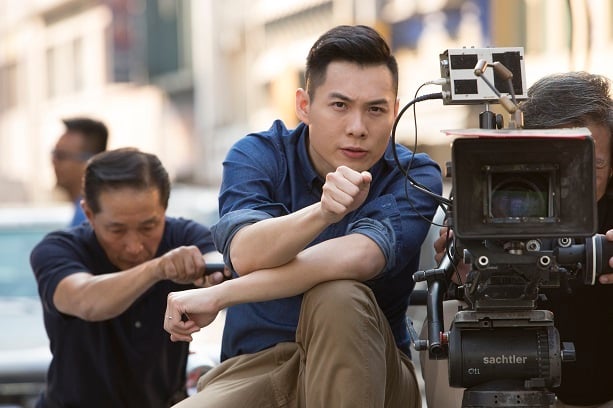
    9. Company Director ($11,800)
    Anthony-Chen-TigerBeer_Singapore_09032014_HKStreet_-354
    Source

    This is probably one of the harder jobs to just pick up. A company director refers to individuals who have been either voted or appointed to a board of directors, and is responsible for the design and execution of the company’s corporate policy.

    Directors do not have to originally be employees of the company, and can sit on more than one board at any time. Which means these people pick up their salary from two or three different places. Pretty cool right.

    8. General Practitioner / Physician ($12,547)

    drhouseoops

    Source

    Turns out that guy you always go to for MCs is doing very well for himself, thank you very much. No such thing as Monday Blues for GPs, as they welcome lines of people queuing up for that precious slip of work-prevention paper.

    Being a doctor isn’t really that difficult. All you need are top notch grades to enter medical school (at least all As), minimum of five years of undergraduate study (along with enough money to fund said education), and be accredited with the relevant bodies before actually being able to whip out that trusty stethoscope and pump-action blood pressure monitor.

    7. Chief Operating Officer (COO) / General Manager ($13,135)

    nick_fury_director_of_s_h_i_e_l_d_wallpaper_by_anyayuy-d7arv3u

    Source

    A COO is typically the second-in-command to the Chief Executive Officer, and is in charge of day-to-day operations. A General Manager is responsible for managing profits and costs of the company. We’re not quite sure why these two rather different job scopes are bundled together.

    But we expect individuals who have the opportunity to rise to either position to have the ability, experience, and gumption to fulfill their roles with aplomb. Experience pays.

    6. University Lecturer ($13,684)
    tumblr_inline_mla31nLw791qz4rgp

    Source

    We have to admit, this one caught us a little by surprise. Who would have thought university lecturing is such a viable form of income? Turns out relentless research and occasionally ticking off the resident smart mouth is worth the trouble. Of course, lecturers come in many forms. The lucky students get the ones who actually want to teach over doing research.

    Potential university lecturers are typically required to have a Masters in their chosen field, but a Bachelor’s Degree may sometimes suffice.

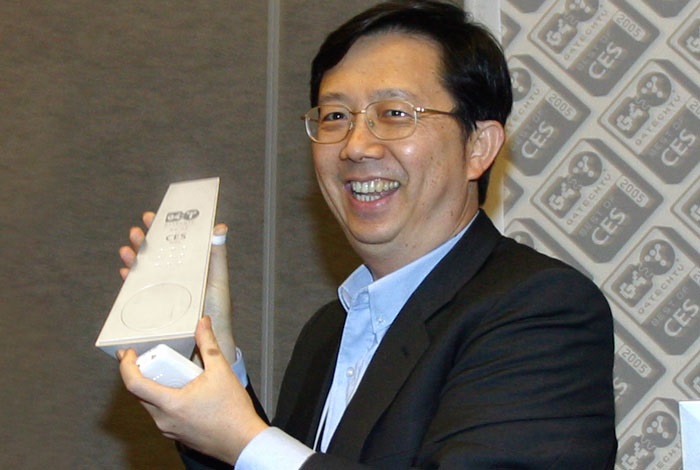
    5. Chief Executive Officer (CEO) / Managing Director ($17,962)
    s09

    Source

    That’s right, the head honcho in most conglomerates comes in at only fifth in the list. Of course, the pay structure for CEOs can range wildly depending on company size, but being a CEO seems like a pretty safe bet to earn some serious moolah. Holders of an MBA generally have an advantage, but possessing a Master’s in the related industry is also useful.

    A CEO’s responsibilities are defined by the board, but should possess some level of leadership qualities, foresight, and be an effective communicator. Interested individuals may want to check out WikiHow’s guide to be a CEO, but we’re pretty sure this tutorial is hardly exhaustive.

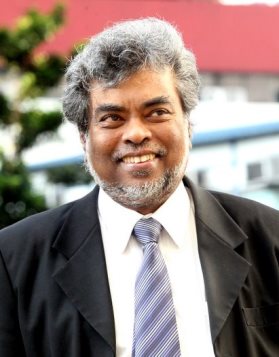
    4. Advocate / Solicitor ($18,333)
    Subhas_Anandan_lawyer

    Source

    Unlike in other countries, lawyers in Singapore are part of what is known as a fused profession, where they are able to perform the duties of both an advocate or solicitor. An advocate speaks on behalf (“advocates”) of a client, and presents arguments and cases in the place of the client. A solicitor, on the other hand, are trained in all areas of the law.

    We’re pretty sure TV’s favourite occupation is also one of the coolest, if only because you get to cut off somebody in the middle of their sentence with a loud “OBJECTION” and getting to use words like “subpoena” and “impermissible”. Also, hot paralegals are a thing. Probably.

    Lawyers who are neither advocates nor solicitors are unfortunately not included in this entry, and can expect to bring home less than their colleagues.

    3. Specialist Medical Practitioner ($23,085)
    1487759_792642510761771_638116745_o

    Source

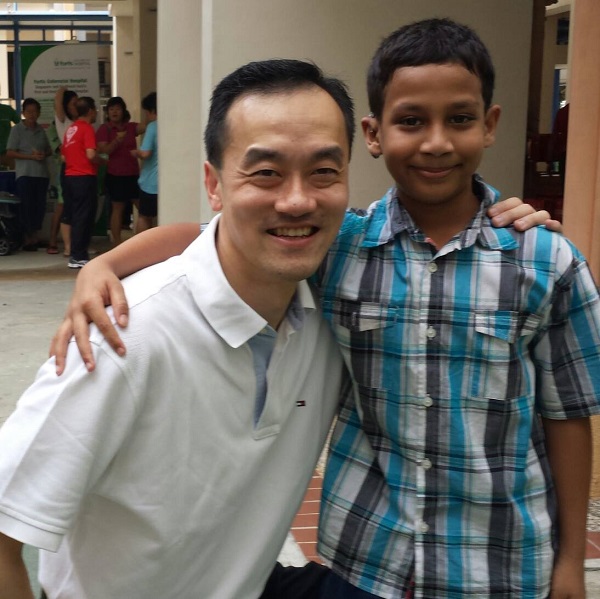
    There’s a reason why those specialists charge so much just to look at. They have spent ridiculous amounts of time to get to that tiny white office and large lab coat. After medical school — which takes a minimum  of five years — hopefuls have to further their education and undergo a multi-year residency in their chosen field before being able to register in Singapore as a specialist. The entire process can take anything from seven to nine years.

    If you’re lucky, you might become known as the ‘son of Punggol’!

    2. Minister ($91,666)
    HdnNy

    Source

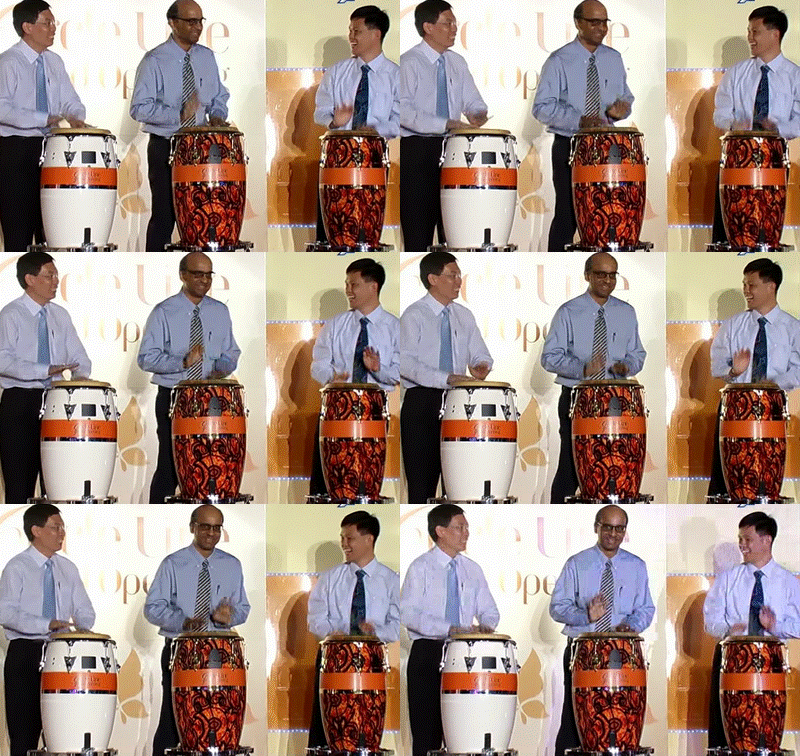
    The gap between the top two paying positions and the rest is HUGE – a whopping $70,000.

    One sure-fire way to be a minister is to sign on with either the Army, Navy, or Air Force. Don’t believe us? Let’s take a look at current ministers who were once served in the military.

    • Brigadier General Tan Chuan-Jin : Minister for Manpower
    • Rear-Admiral Lui Tuck Yew (Former Chief of Navy): Minister for Transport
    • Rear-Admiral Teo Chee Hean (Former Chief of Navy): Deputy Prime Minister, Co-ordinating Minister for National Security, Minister of Home Affairs
    • Major General Chan Chun Sing (Former Chief of Army): Minister for Social and Family Development

    4 ministers of a 17-member Cabinet is actually a pretty decent ratio. Of course, just because they previously held high positions in fatigues doesn’t mean they’re actually competent ministers. We’ll just let you decide.

    Getting into higher positions can in the military can also lead to better job prospects in Government-linked organizations as well. Just ask SMRT CEO Desmond Kuek (Former Chief of Defence Force) and S-League CEO Lim Chin (Former Chief of Artillery).

    1. Prime Minister ($183,333)
    060603-N-0696M-382

    Source

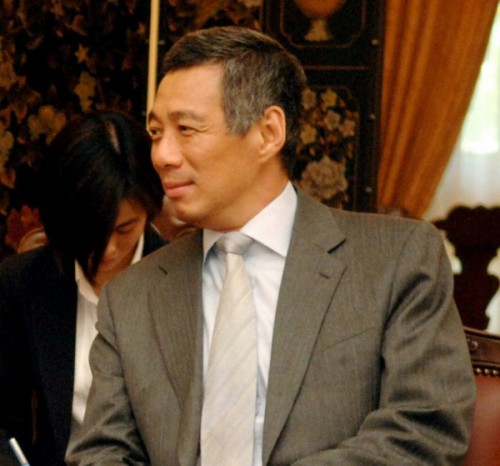
    With an annual salary of $2.2 million, Singapore’s Prime Minister (PM) comfortably eclipses the combined salaries of the next 5 highest paid world leaders, including US President Barack Obama. This works out to a monthly salary of about $183,333, which means the PM can buy a BTO flat every two months.

    Also, current Prime Minister Lee Hsien Loong happens to be a former Brigadier General in the Singapore Army, and is yet another soldier who made the jump to politics.

    Haters of the PM’s high salary should note that he actually accepted a 36% pay cut in 2012, so he’s actually working hard on it ok.

    At the end of the day, we’d all probably prefer doing something we enjoy. Unfortunately, not all of us have the opportunity to do so. Maybe the one thing that we actually enjoy is popping bubble wrap. How can that possibly be monetised? And so, banking is the natural option instead. Monetary or family constraints can force some to opt for that soul-sucking, higher-paying gig. Perfectly understandable. All we ask for is that this year, think less about the money, and more about the ones you’re earning the money for.


    Source: http://mustsharenews.com

  • Pelajar Madrasah Al Arabiah Al Islamiah Nurul Iffah Baharudin Cemerlang Di Peringkat GCE ‘O’

    Pelajar Madrasah Al Arabiah Al Islamiah Nurul Iffah Baharudin Cemerlang Di Peringkat GCE ‘O’

    LIMA tahun lalu, Nurul Iffah Baharudin muncul sebagai pelajar terbaik Madrasah Al-Arabiah Al-Islamiah bagi Peperiksaan Tamat Sekolah Rendah (PSLE) dengan agregat 244 mata.

    Tahun ini, beliau mengulangi pencapaian cemerlangnya dengan menjadi pelajar terbaik madrasahnya bagi Peperiksaan Sijil Am Pelajaran (GCE) Peringkat ‘O’.

    Anak sulung lima beradik itu meraih gred enam mata bagi L1R4 (untuk kemasukan ke politeknik) dengan lapan kepujian.

    Nurul Iffah, 16 tahun, mendapat gred A1 bagi Matematik, Bahasa Arab, Sains Gabungan, Bahasa Melayu dan Pengetahuan Agama Islam (IRK) serta gred A2 bagi Bahasa Inggeris, Matematik Tambahan dan Geografi.

    Keputusan cemerlang itu adalah hasil ketekunannya mengulang kaji pelajaran selama tiga jam setiap malam bukan setakat dari awal tahun lalu malah dari sejak memulakan pengajian di sekolah menengah.

    “Saya pastikan saya mengulang kaji pelajaran secara konsisten.

    “Saya akan pastikan saya belajar setiap hari dari 7 hingga 10 malam. Saya akan turut mengikut jadual pembelajaran ini pada hujung minggu kecuali jika saya tiada di rumah,” kata anak pasangan pembantu juruukur dan suri rumah itu.

    Nurul Iffah, yang mendapat tempat pertama di dalam kelas bagi setiap peperiksaan sejak menengah satu berkata beliau tidak meletak apa-apa sasaran bagi peperiksaannya namun berharap melakukan yang terbaik agar dapat memasuki politeknik.

    Beliau ingin melanjutkan pengajian dalam bidang perakaunan atau sains kerana meminati Matematik dan Sains.

    Nurul Iffah, yang mengikuti kelas tuisyen bagi mata pelajaran Bahasa Arab, berkata ramai orang, terutama ibu bapanya, menjangka beliau akan mengulangi kejayaan yang diraih dalam PSLE dan muncul sebagai pelajar terbaik madrasahnya sekali lagi.

    “Tahun lalu, pelajar terbaik dari Madrasah Al-Arabiah Al-Islamiah, yang juga pelajar madrasah paling cemerlang, mendapat gred A1 dalam lapan mata pelajaran. Ibu bapa saya menggalakkan saya cuba mendapat keputusan serupa. Saya tidak berasa tertekan sebaliknya menganggap ia satu motivasi,” katanya.

    Nurul Iffah kini bekerja sebagai pembantu guru tadika sementara menunggu keputusan kemasukan ke politeknik.

    Beliau bercita-cita menjadi guru sekolah menengah dan mengajar mata pelajaran Matematik atau Sains kelak.


    Source: http://beritaharian.sg

  • MUIS Dan PERGAS: Nabi Muhammad SAW Harus Dijadikan Kayu Ukur Dalam Reaksi Kepada Insiden Charlie Hebdo

    MUIS Dan PERGAS: Nabi Muhammad SAW Harus Dijadikan Kayu Ukur Dalam Reaksi Kepada Insiden Charlie Hebdo

    PEMERINTAH tidak akan membenarkan pengedaran penerbitan yang memaparkan karikatur Nabi Muhammad saw seperti yang dilakukan malajah satira mingguan, Charlie Hebdo, mahupun apa sahaja kandungan sensitif dari segi agama.

    Ini ditegaskan Penguasa Pembangunan Media (MDA).

    Dalam pada itu, Menteri Bertanggungjawab bagi E`hwal Masyarakat Islam, semasa bertemu media Jumaat lalu, akur bahawa umumnya masyarakat Islam setempat berasa tersinggung dengan tindakan majalah Charlie Hebdo, namun mereka memahami perlunya bertindak secara rasional.

    Sehubungan dengan itu, Pejabat Mufti dan Persatuan Ulama dan Guru-Guru Agama Islam Singapura (Pergas) turut suarakan rasa kesal terhadap tindakan mempersenda agama, namun mengingatkan umat Islam agar dalam memberikan reaksi kepada insiden Charlie Hebdo, Rasulullah saw semestinya menjadi kayu ukur kita.

    Rasulullah ketika dikasari membalasnya dengan hemah dan berhikmah sehingga beliau dihormati.


    Source: http://beritaharian.sg

  • Brazil And Netherlands Recall Ambassadors From Indonesia As Their Citizens

    Brazil And Netherlands Recall Ambassadors From Indonesia As Their Citizens

    Brazil and the Netherlands recalled their ambassadors from Indonesia and expressed fury Sunday after Jakarta defied their pleas and executed two of their citizens along with four other drug offenders.

    The other convicts to face a firing squad were from Vietnam, Malawi, Nigeria and Indonesia. The six were the first people executed under new President Joko Widodo.

    Indonesia has tough anti-drugs laws and Widodo, who took office in October, has disappointed rights activists by voicing support for capital punishment despite his image as a reformist.

    He defended the executions, saying drugs ruin lives.

    A spokesman for Brazilian President Dilma Rousseff said she was “distressed and outraged” after Indonesia ignored her last-ditch pleas and put to death Marco Archer Cardoso Moreira, who was convicted of smuggling cocaine into Indonesia in 2004.

    “Using the death penalty, which is increasingly rejected by the international community, seriously affects relations between our countries,” the spokesman said in a statement.

    The Brazilian ambassador to Jakarta was being recalled for consultations, the spokesman added.

    Meanwhile Dutch Foreign Minister Bert Koenders said the Netherlands had also recalled its ambassador over the execution of Dutchman Ang Kiem Soei, and in a statement described all six deaths as “terribly sad”.

    “My heart goes out to their families, for whom this marks a dramatic end to years of uncertainty,” Koenders said. “The Netherlands remains opposed to the death penalty.”

    Dutch King Willem-Alexander and Prime Minister Mark Rutte had been in contact with the Indonesian president about the matter, he said, and the government had done “all in its power” to try to halt the execution.

    – In line with law –

    Widodo on Sunday defended the death penalty in a Facebook post.

    “The war against the drug mafia should not be half-hearted measures, because drugs have really ruined the good life of the drug users and their families,” he said.

    “There is no happiness in life to be gained from drug abuse. The country must be present and fight with drug syndicates head-on,” he added.

    “A healthy Indonesia is Indonesia without drugs.”

    All the prisoners, who had been sentenced to death between 2000 and 2011, were executed shortly after midnight, the attorney general’s office said.

    The 53-year-old Brazilian, who was caught with drugs stashed in the frame of his paraglider at Jakarta airport, and the 62-year-old Dutchman were executed on Nusakambangan Island, home to a high-security prison, off the main island of Java.

    A Nigerian, Daniel Enemuo; Namaona Denis, from Malawi; and an Indonesian woman, Rani Andriani, were executed at the same location.

    The sixth convict, Vietnamese woman Tran Thi Bich Hanh, was executed in the Boyolali district in central Java.

    They were all caught attempting to smuggle narcotics apart from the Dutchman, who was sentenced to death for operating a huge factory producing the drug ecstasy.

    All had their appeals to the president for clemency rejected last month.

    Vietnamese foreign ministry spokesman Le Hai Binh said Hanoi had asked Indonesia “to ensure Vietnamese citizens’ legal rights and consider reducing their sentences in a humanitarian way” since Hanh’s arrest in 2011. But it was unclear whether they had asked for her sentence to be commuted.

    Vietnam also uses the death penalty for drug offences and has sentenced dozens of foreigners over such crimes, although it has been decades since a foreign national was executed in the communist country.

    Jakarta had an unofficial moratorium on executions for several years from 2008 but resumed capital punishment again in 2013. There were no executions last year.

    Widodo, known by his nickname Jokowi, has taken a particularly hard line towards people on death row for narcotics offences, insisting they will not receive a presidential pardon since Indonesia is facing an “emergency” over drug use.

    Following Sunday’s executions, the number of people on death row for drugs-related offences stood at 60, around half of whom are foreigners, said a spokesman for the national narcotics agency.

    Widodo’s tough stance has sparked concern for other foreigners sentenced to death, particularly two Australians who were part of the “Bali Nine” group caught trying to smuggle heroin out of Indonesia in 2005.

    One of the pair, Myuran Sukumaran, also had his clemency appeal rejected last month but authorities say he will be executed with fellow Australian Andrew Chan as they committed their crime together.

    Chan is still awaiting the outcome of his clemency appeal.

    Also on death row is British grandmother Lindsay Sandiford. She was sentenced to death in 2013 after being caught trying to smuggle cocaine into Bali.


    Source: https://sg.news.yahoo.com

  • Grace Fu: Income Gap To Close With Tightening Of Foreign Labour Entry

    Grace Fu: Income Gap To Close With Tightening Of Foreign Labour Entry

    The income disparity between blue-collar jobs and higher-paying ones will decrease in future with the tightening of Singapore’s foreign-worker policies, said Minister in the Prime Minister’s Office Grace Fu yesterday in a community dialogue.

    Citing the example of Australia, where plumbers are the highest-paid workers over weekends, Ms Fu said Singapore “is going to be like that because we are not going to have so many work-pass holders to come in (to) do construction or plumbing jobs”.

    She added: “So if you have skills like this, you’re going to demand better pay and that’s really the future of Singapore, where the disparity is not as great as now. What would be blue-collar jobs will get better pay.”

    Ms Fu was speaking to residents and students while on a ministerial community visit to Tampines East.

    During a 70-minute dialogue, questions about foreign labour, the integration of immigrants here and opportunities for Singaporeans dominated proceedings.

    The starting point of Singapore’s policies on foreign labour is the interest and benefit of Singaporeans, said Ms Fu, who is Second Minister for the Environment and Water Resources as well as Foreign Affairs.

    Singapore has to be economically attractive, remaining open, so companies will continue to invest here and provide jobs and options for locals, she noted.

    While the Government is creating more education opportunities for Singaporeans — through the setting up of the Singapore University of Technology and Design as well as the Singapore Institute of Technology, for example — the bigger question is whether a university degree trains people appropriately for jobs here.

    Through initiatives such as SkillsFuture, the Government is encouraging students to pick up skills that are relevant to the jobs out there and ensuring opportunities to upgrade as they go.

    “(If) you deepen your skills, you can become an expert and there are very well-paying jobs waiting for us,” she said.

    Two student participants noted that social tension and unhappiness could arise between Singaporeans and foreigners here, as shown by the outcry that followed a Filipino nurse’s recent online remarks calling Singaporeans “loosers” (losers) in their country.

    Ms Fu urged Singaporeans to take a firm stand against insensitive comments made by a minority, but remain calm, cool-headed and united.

    There are black sheep among both Singaporeans and foreigners who make insensitive comments about others, she added.

    However, other fault lines, such as those along race and religion, may also surface. “Our position is that we must, first of all, be sensitive to one another. There’s a certain limit when we talk about freedom of speech. You have to take into consideration (the relationship among different races and religions) in Singapore, so be careful when you make the remarks,” she said.

    Asked whether there were people who had left after taking up Singapore citizenship, Ms Fu said the number is “very low” and has been stable for a long time.

    New citizens may come to Singapore for economic opportunities — as did many immigrants in the early days — but many become “valuable, really good Singapore citizens who put their heart and soul in this place”, she said, urging Singaporeans to give them a chance.

    The Government has also raised the requirements for one to be considered for citizenship, added Ms Fu.

    Asked after the dialogue about issues being raised on foreigners, Ms Fu told reporters those are perennial issues that merit the reiteration of mutual respect when incidents arise and said she was glad the youth are taking interest in such issues.


    Source: www.todayonline.com

deneme bonusu