Blog

  • Is The Hijab Being Turned Into Everything It Stands Against?

    Is The Hijab Being Turned Into Everything It Stands Against?

    As a hijab wearing Muslim woman, it pleases me to see hijabis getting recognition. Companies have noticed Muslim women’s presence and have started catering to their modest fashion needs. For example, Nike recently came out with a line suitable for Muslim women and those that wish to dress in conservative sports gear. It even includes a head piece with the classic Nike logo.

    Uniqlo, a Japanese clothing brand, has also just released a collection of headscarves. Even designer companies, such as Dolce and Gabbana, have come out with floral printed hijabs and abayas for Muslim women to wear. Brands like DKNY and H&M have previously come out with Ramadan modest clothing collections.

    Understandably, many Muslims are welcoming these companies’ moves. Why not? It is a sign that we are being acknowledged as consumerists. Companies have discovered a niche in the market from social media where hijab fashion bloggers have created a platform for themselves and are using apps, in particular Instagram, to showcase modest fashion. Some of the most popular ‘hijabi fashionistas’ have up to two million followers. These Muslim women have gone beyond fashion and into beauty; there are now thousands of hijab wearing women across the world creating makeup tutorials on how to achieve the perfect winged eyeliner.

    However, with the good comes the bad. Are hijabis turning the hijab into everything it stands against?

    Aside from the hijab representing modesty, it represents liberation; a stand against objectification and sexualisation. When a woman covers herself, she compels people to judge her on the basis of her character and her actions; not the way she looks. A hijab is not merely a scarf but a way to free oneself from societies that tell women that their worth is determined by their appearance.

    But have we Muslim women succumbed to idealistic beauty standards, and have we simply made the headscarf a fashion trend; an accessory rather than our identity as followers of the Islamic faith? It seems as though we have now submitted to society’s beauty demands that we had been resisting since the beginning of Islam. We are now following all the latest trends and styles; the only difference is that we have a scarf wrapped around our heads. The hijab is in the process of being commercialised and multinational companies are capitalising from it.

    Companies should not stop catering to Muslim women’s clothing needs. After years of not being recognised as consumers, we are now spoilt for choice. However, as Muslim women, we should remember exactly what the hijab symbolises and do it justice, and not allow our appearances to define who we are or let fashion engulf us.


    By Priya Jasmin Begum


    Source: Huffingtonpost

  • Indonesia Will Continue To Send Maids Abroad

    Indonesia Will Continue To Send Maids Abroad

    Indonesia said Monday (March 20) it would continue to send domestic helpers overseas, in an about-turn welcomed by campaigners who said it would help prevent women falling prey to human trafficking.

    Thousands of Indonesian women travel to places like Hong Kong, Singapore, Taiwan and Malaysia every year to become maids, attracted by promises of higher salaries despite reports of widespread abuses and near slave-like living conditions.

    Jakarta had previously said it would stop sending maids overseas from this year, on the grounds of protecting the women, sparking concerns it would push more poor Indonesians desperate for jobs into illegal migration.

    However a senior official at the Manpower Ministry told the Thomson Reuters Foundation that Jakarta would not go ahead with the ban but it has been in talks with countries to ensure Indonesian maids are treated in a “humane” way.

    “We are not stopping Indonesians going overseas to become domestic workers but we want better protection for them,” said Mr Soes Hindharno, director for the protection and placement of Indonesian migrant workers abroad.

    He said this includes preventing what he called “multi-tasking work” by Indonesian maids to reduce exploitation.

    “If they are housekeepers, they are housekeepers – they clean, cook and iron. If they are babysitters, they are babysitters – you can’t ask a babysitter to bathe your dog.”

    Currently, Indonesian women who work as maids abroad are required to stay at the home of their employer, handling tasks from cleaning to looking after children or the elderly – a rule activists say making them vulnerable to abuse.

    Migrant activists welcomed the decision, but said more needed to be done to combat human trafficking including ensuring women aware of their rights when leaving for work overseas.

    “It is a basic right to go abroad to work. If the government stops this, we will only see more human trafficking cases,” said Mr Mulyadi, a co-founder of rights group Migrant Care, who like many Indonesian goes by one name.

    Indonesia since 2015 has banned women from going to 21 Middle Eastern countries following a series of abuse cases but high-demand for maids has encouraged traffickers to find ways around the curbs.

    Mr Hindharno said the Middle East ban would stay in place.

    Domestic helpers make up more than a third of the six million Indonesian working abroad.


    Source: Today

  • Science Backs Islam’s Logic Of Eating Halal Meat Instead Of Haram

    Science Backs Islam’s Logic Of Eating Halal Meat Instead Of Haram

    Islam, considered to be the perfect religion, has always provided reasons for the dos and don’ts in its properties. Just as science backs Islam’s logic of declaring pig haram and how praying 5 times a day helps a person stay healthier, there is also a specious logic behind eating halal meat (where the animal is slaughtered) instead of chopping its head off directly, which makes it haram.

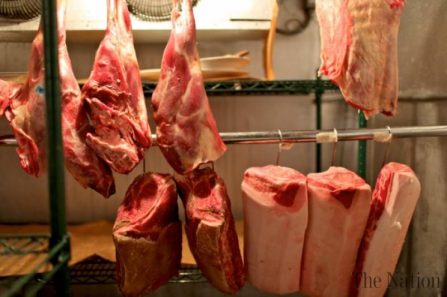
    Source: thenation.com

    Source: thenation.com

    Muslims all over the world abstain from eating meat that has been slaughtered in a haram manner, or through mechanical slaughter. Here’s how science backs the logic with proper reasoning.

    WHAT MAKES MEAT HALAL OR HARAM?

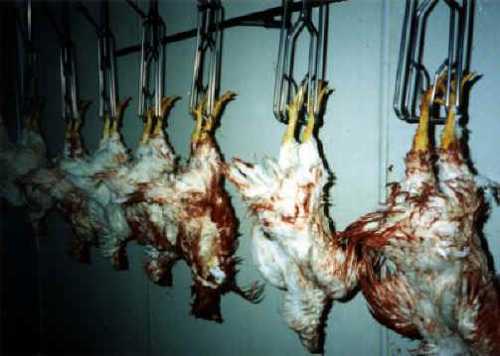
    Haram slaughter

    Source: Muslimvillage.com

    The blood that does not drain out of the animal’s body, contaminated the meat completely, be it in a chicken, cow or a goat. This clotted blood ruins the freshness of the meat and becomes the cause for multiple illnesses when the humans eat it.

    The butchers, who slaughter the animal in a haram way, which is also known as the ‘Jhatka’ – chop the head off the animal completely, especially a chicken. This results in discretion of the brain and heart; which makes the heart stops pumping and beating blood in a jiffy. With no driving force left to push the blood out of the body, the blood stagnates in the veins and arteries, contaminating the blood and causing it to affect the meat.

    Science proves that blood is the most capable medium of bacterial growth. This contaminated meat makes the human body more vulnerable to infections and considerable pain in the joints, due to the rising uric acid level in the blood.

    WHY MUSLIMS PREFER HALAL MEAT AND ITS PROPER WAY

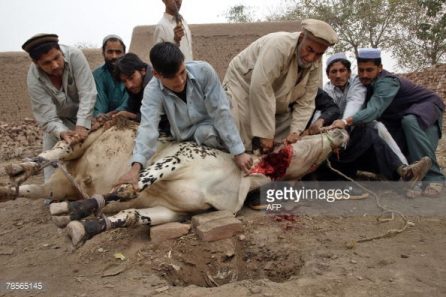
    Halal slaughter

    Source: gettyimages.com

    Muslim butchers who serve Halal meat do not chop the animals head off. Instead, the main jugular vein of the animal is cut, which holds the venous blood in high pressure. Due to the cut, the blood is directed out of the animal’s body, which is connected to the atrium of the heart without any irregularity.

    This method of slaughtering the animal preserves the link between heart and brain of the animal, allowing the animal to breathe out naturally. With this method, the heart keeps pumping until all the blood from the body is drained out and only meat is left, without any contamination, leaving the meat pure and Halal.

    THE FAMOUS QUESTION OF WHY FISH IS CONSIDERED HALAL WITHOUT BEING SLAUGHTERED

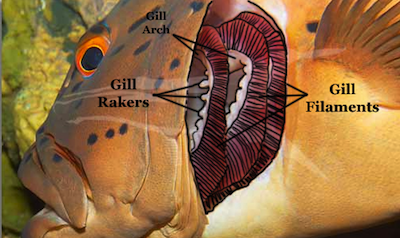
    Epiglottis of fish

    Source: shmoop.com

    Many non-Muslims have asked this question, that why the fish has been declared Halal without being slaughtered. The answer too, lies in science.

    Allah Almighty created everything in perfect balance. The moment the fish is taken out of the water, the entire blood of the fish redirects and moves into a part called the epiglottis, which is in its mouth – draining the blood from the whole body and leaving the meat pure and Halal.

    Thus, Science too backs Islam’s logic of heating Halal meat instead of Haram.

    BY: S.K PAKISTAN


    Source: Parhlo

  • Noreen Jastina, 14 Tahun, Dilapor Hilang, Orang Ramai Dirayu Beri Maklumat

    Noreen Jastina, 14 Tahun, Dilapor Hilang, Orang Ramai Dirayu Beri Maklumat

    Polis merayu kepada orang ramai supaya tampil memberikan maklumat tentang Noreen Jastina Abdullah, 14 tahun, yang dilaporkan hilang.

    Polis hari ini (20 Mac) menyatakan remaja itu kali terakhir dilihat di Alexandra Road pada 10 Mac 2017 sekitar 2.00 petang.

    Noreen ketika itu memakai baju kemeja T berwarna biru dengan seluar pendek berwarna hitam.

    Sesiapa yang mempunyai maklumat tentang Noreen diminta menghubungi talian hotline polis di 1800-255-0000 atau secara online di www.police.gov.sg/iwitness.

    Semua maklumat akan dirahsiakan.

    Source: Beritamediacorp

  • Jangan Malu Kelihatan Miskin, Tapi Malulah Sekiranya Berpura-pura Kaya

    Jangan Malu Kelihatan Miskin, Tapi Malulah Sekiranya Berpura-pura Kaya

    Mampu membeli bukan bermaksud kita harus membeli. Beberapa kali kawan-kawan isteri saya menawarkan beg dan baju-baju mahal. Isteri saya hanya tersenyum dan menggeleng. “Beg dan baju saya masih elok dan belum rosak, dan barang-barang itu terlalu mahal buat saya” kata isteri saya. Dan isteri saya tidak malu kelihatan miskin.

    Saya biasanya makan di warung rojak di kota Bandung kalau mebeli barang-barang untuk perniagaan saya dan sering berbual dengan salah seorang penjaga tempat lempat kereta di sana sehingga dia kenal dengan saya.

    Pada tahun 2005, saya adalah seorang perunding kewangan untk projek Bank Dunia dan saya mulai merancang untuk membuka perniagaan dengan kawan saya. Tiada orang yang peduli dengan status profesi saya pada waktu itu. Mereka hanya tahu saya memandu lori kecil dan kadang-kadang menggunakan pengangkutan awam. Ramai orang yang menganggap saya bekerja sebagai seorang pemandu. Dan saya tidak malu kelihatan miskin.

    Jangan merasa malu kelihatan miskin, tapi malulah jika kita berpura-pura kaya.

    Salah satu modal untuk menjadi usahawan adalah jangan malu terlihat miskin. Saya mempunyai seorang kawan yang mempunyai jawatan yang baik di sebuah bank. Dia sering bergurau ingin meletakkan jawatan dan menjadi seorang usahawan tapi lapan tahun sudah berlalu dan dia masih bekerja di bank itu, walaupun gurauannya masih tetap sama. Ini disebabkan dia tidak mahu melangkah keluar dari zon selesanya. Untuk menjadi usahawan kita akan banyak berkira dan itu akan membuat kita kelihatan miskin dan susah.

    Menjadi seorang usahawan itu kadang-kadang kita harus tebal muka, tebal hati, dan tebal tekad. Rumusan mudah untuk menjadi usahawan adalah membeli lebih murah dan menjual lebih mahal. Ramai di antara kita sering menggunakan alasan menunggu modal apabila ingin memulakan langkah untuk menjadi usahawan. Padahal rumusan itu sangat mudah, kita lah yang sering membuatnya rumit.

    Sewaktu Rasulullah berhijrah ke Madinah, Abdurrahman bin Auf, dipersaudarakan dengan seorang Ansar bernama Sa’ad bin Rabi’. Sa’ad kemudian menawarkan separuh hartanya kepada Abdurrahman bin auf sebagai perwujudan rasa cinta terhadap saudar barunya. Namun beliau menolak dan hanya meminta ditunjukkan jalan ke pasar untuk memulakan perniagaan.

    Jadi, modal bukanlah alasan untuk menjadi usahawan. Dan janganlah malu kelihatan miskin, tapi malulah ketika kita berpura-pura kaya. Sayang sekali, terlihat lebih ramai yang berpura-pura kaya.


    Source: Ohmymedia