Tag: 100% Halal

  • CEO Of A&W Says Outlets In Singapore Will Be Halal-Certified To Cater To Muslims

    CEO Of A&W Says Outlets In Singapore Will Be Halal-Certified To Cater To Muslims

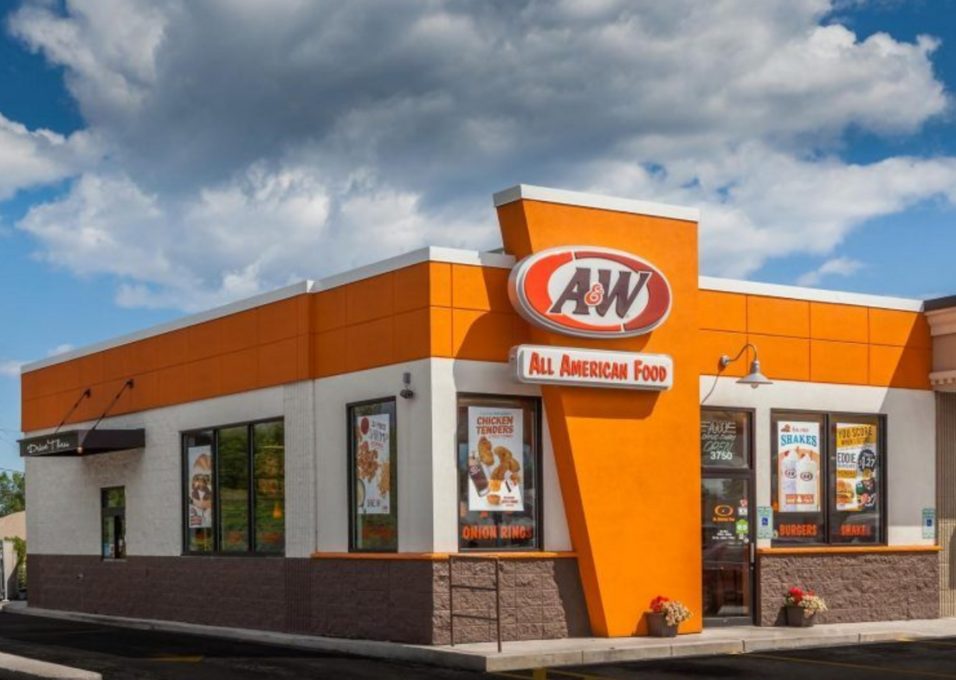
    After confirming the return of the A&W fast food chain to Singapore in 2018, Yahoo Lifestyle Singapore followed up with President and CEO Kevin Bazner to share more details about the comeback, including the source of supplies, possible Halal certifications and why it took 15 years to return.

    “Our beef patties will be 100% sourced from Australia. Our fresh chicken supply will predominantly be sourced in the region and prepared locally. Other ingredients, where possible, will be sourced locally,” said Bazner in an email on Friday (7 July).

    When asked if outlets in Singapore will be Halal-certified to cater to Muslims in the country, he said, “Yes, absolutely.”

    Bazner was in charge of A&W’s international division back in 1988, during which he lived in Kuala Lumpur, Malaysia with his family for seven years. The American company was acquired by Yum! Brands in 2003, the same year all Singapore outlets were shut.

    More than 10 years later, A&W is set to return to the foodie nation. But what took it so long?

    “We have been discussing A&W Restaurants’ return to Singapore since 2011, when A&W Restaurants Inc took over ownership from Yum! Brands. Given the popularity of A&W Restaurants brand and its signature products, coupled with rising demand from local consumers, we knew we had to give the Singapore market another shot,” said Bazner, who went on to talk about how Singaporeans themselves had played a big part in the brand’s return.

    President and CEO of A&W Restaurants, Inc. (Photo: A&W)

    President and CEO of A&W Restaurants, Inc. (Photo: A&W)

    “A&W Restaurants receives daily requests via social media and other channels to bring the brand back to Singapore. To put this into perspective, hundreds of requests from potential franchisees are recorded each year,” he said.

    As Yahoo Lifestyle Singapore reported on Tuesday (4 July), A&W has already set up its international corporate office in Singapore in 2016, and is currently looking for a space for its flagship outlet, which will serve as an international training ground for staff in the region.

    “While we cannot confirm a specific area right now, we will make another announcement as soon as we can,” said Bazner, who also hinted that “key neighbourhood towns and regions as well as commercial malls and the Central Business District” are among some of the locations they are looking into. A&W’s first outlet in Singapore will be its flagship outlet owned by the company itself and not a franchise.

    Craving for root beer floats and coney dogs? A&W confirms return to Singapore in 2018 (Photo: A&W multimedia)

    Craving for root beer floats and coney dogs? A&W confirms a return to Singapore in 2018 (Photo: A&W)

    What else can Singaporeans expect from A&W’s return?

    Bazner assured that Singaporeans can definitely look forward to the usual fan favourites, such as fried chicken, burgers, Coney Dogs, waffle ice cream, curly fries, and “freshly-made” root beer served in frosty mugs.

    “But this is not just it… there will also be new innovation on the menu, which we will be ready to share closer to the first store opening,” he said.

    While A&W has already made plans to launch in Singapore during the second half of 2018, “this will largely depend on the suitability of store sites and resources”, according to Bazner.


    Source: Yahoo Lifestyle Singapore

  • The Expanding Halal Economic Pie

    The Expanding Halal Economic Pie

    Sixty million yen (S$700,000) and six months: that’s what TFK Corporation recently spent on renovating a kitchen in Tokyo’s busy Narita airport and preparing it for halal certification.

    The prize for its pains? A chance to grab a bigger slice of the lucrative and burgeoning Muslim travel market.

    TFK, the Japanese unit of Singapore inflight food catering group Sats, had been supplying halal meals to the Narita Airport Authority for transit passengers since December.

    But it had done so without halal certification, which provides an added layer of reassurance for Muslim diners.

    Muslims now represent nearly a quarter of the world’s seven billion people, and the value of Muslim tourism globally is expected to balloon to US$192 billion (S$245 billion) by 2020, from US$126 billion last year, according to figures cited by TFK.

    Yet many countries that Muslims are eager to visit may not have offerings that can meet their needs, such as prayer rooms and halal food options.

    More than two-thirds of Muslims travelling overseas for leisure say their most important requirement is halal food, noted TFK president Makoto Fukada.

    “As Muslim visitors to Japan are expected to reach one million a year by 2020 – tripling the 2013 level – the availability of certified halal food will be of great importance to meet the needs of these travellers,” Mr Fukada added.

    The potential of the global Muslim tourism industry has not gone unnoticed in Singapore, where companies can capitalise on their familiarity with Muslim customs to tap these opportunities.

    One such firm is CrescentRating, which caters to Muslim travel needs. It was set up in 2008 when founder Fazal Bahardeen noticed a lack of such services while on business trips for his former job at a multinational firm.

    Mr Fazal, 51, decided to strike out on his own to educate the hospitality industry about the “huge opportunity” in the Muslim travel market and to help Muslim travellers make educated choices.

    CrescentRating offers research, consultancy and training services on Muslim travel. It also issues reports on the global industry and has created a rating system for the “halal friendliness” of travel and hospitality services, based on their availability of halal food and prayer information, among other things.

    Last year, Mr Fazal launched travel website HalalTrip to help Muslim travellers put together a comprehensive itinerary – including flights, hotels and tour packages – for their needs.

    “There are three key outbound Muslim travel markets in this space: the Gulf countries, Southeast Asia and Western Europe,” he told The Straits Times.

    Tourists from these areas are keen to visit countries that may not be familiar with Muslim traditions, such as Japan and South Korea, he added.

    More Muslims are holidaying in Japan these days after visa rules were recently relaxed for tourists from countries including Malaysia and Thailand. Japan is also planning to do away with visa requirements for Indonesian tourists.

    Singaporean Raudaa Razak, a Muslim who works in Tokyo teaching English, said she quickly realised the lack of halal food outlets when she recently moved to the country. For one thing, most Japanese eateries serve alcohol, making it impossible for them to obtain halal certification, she said.

    Singapore firms can aid countries like Japan in understanding and meeting Muslim travel requirements, said trade agency IE Singapore, which helped Mr Fazal gain a foothold in Japan and clinch a consultancy project with the Fukuoka government.

    Describing Muslim travellers as “the largest under-served niche market for the tourism industry”, IE Singapore’s regional director for North Asia Pacific, Mr Lee Hoi Leong, said multi- ethnic Singapore has “an innate capability to cater to the lifestyle of the Muslim community in a Muslim-minority country”.

    It also helps that Singapore’s halal certification, established in 1978, builds trust in halal food products, Mr Lee said.

    TFK’s halal certification was awarded by Warees Halal, a division of Warees Investments, which in turn is wholly owned by the Islamic Religious Council of Singapore (Muis).

    “In such a large economy like Japan, Warees Halal can empower Muslims globally to continue to keep up with their lifestyle,” said Mr Zaini Osman, chief executive officer of Warees Investments.

    He said Warees Halal also aims to be a “springboard for more Singaporean Muslim or halal certified companies to venture into such economies”.

    By: Fiona Chan

    Source: business.asiaone.com

  • The Fabulous Baker Boy is NOT Halal Certified

    Credit: Concerned R1C Reader Tinily
    Credit: Concerned R1C Reader Tinily
    Credit: Concerned R1C Reader
    Credit: Concerned R1C Reader Tinily
    Credit: facebook.com/Thefabbakerboy
    Credit: facebook.com/Thefabbakerboy


    The owner of The Fabulous Baker Boy has announced that the restaurant has never been halal. We would like to applaud TFBB for making it clear to customers that the restaurant serve alcoholic beverages on their premises, and some of the food served contain alcohol. It shows that they care about their customers.

    For those who do not know, The Fabulous Baker Boy is a renowned restaurant owned by Muslim siblings Juwanda Hassim and his sister Hanita Hassim.

    We heard really good reviews about the food and desserts (yums*), and we do not deny that we are sad because we do not get to try them. Hopefully in future TFBB will consider making the restaurant 100% halal certified by MUIS. Sure many more Muslims will show support to another halal joint.

    Photos contributed by R1C reader Tinily


    EDITOR’S NOTE

    Thank you Tinily for the photos and informing the readers of Rilek1Corner that the restaurant is not 100% halal certified. Sharing is caring 🙂

    We wish to inform everyone that the consumption of halal food is an individual responsibility. Whether you want to eat halal or not, it is ultimately your choice. No one should fault the business owners regarding their decision to obtain halal certification from MUIS/SMCCI or decide not to go halal at all. 

    However, it is important for all business owners like TFBB to make it very clear that the food served is halal certified or the restaurant as a whole is 100% halal certified. This is to avoid confusion and cause unnecessary distress to old and prospective customers.

    Muslims can patronise an establishment that is not Halal-certified as long as they are confident and can ensure that the food has been prepared according to the Islamic Law.  

    ‘Halal-certified’ refers to products which have been endorsed as Halal by a credible Islamic body (third-party certification). Often times, Halal certification involves a series of steps including ingredient verification, inspection/audit and approval by committee. In general, all Halal-certified products are Halal, but not all Halal products are Halal-certified. 

    If you have any questions regarding halal certification, please contact MUIS: 

    Halal Certification Strategic Unit
    Majlis Ugama Islam Singapura
    Singapore Islamic Hub
    273 Braddell Road
    Singapore 579702

    Tel: (65) 6359 1199
    Fax: (65) 6259 4733
    Email: [email protected]

    Click here for more information on MUIS Halal Certification.

    Click here for listings of Halal establishments in Singapore.

    Click here for more information on SMCCI 100% Muslim-Owned F&B Establishment

    READ MORE ON HALAL RELATED ARTICLES

    letters to R1C