Tag: bisexual

  • Hue And Cry Over Pink Dot Event Shows Discrimination Exists

    Hue And Cry Over Pink Dot Event Shows Discrimination Exists

    The letter writer Ho Lay Ping (“Don’t equate difference in opinion with discrimination”, June 20) said that because the Pink Dot event is allowed to continue, it shows that “discrimination does not exist”.

    A minority community which faces no discrimination would not spark calls to have its event advertising material reported to the police on the basis of it being “divisive and polarising”.

    The general tone of Facebook groups such as “We are against Pinkdot in Singapore” also makes the writer’s claim of tolerance and lack of discrimination nothing short of disingenuous.

    Her comments that our government ministers may have religious affiliations and “that the majority of Singaporeans follow a religion” hint at laying out who has the authority of being the moral majority to steer our society.

    Our pluralistic society comprises multiple ethnicities, creeds and religions, and protecting our lesbian, gay, bisexual and transgender (LGBT) minority community is not that great a stretch.

    It is unhelpful to society if our reaction to something we find discomforting is to make police reports instead of having a reasonable and adult conversation.

    We can be better than this.


    Source: www.todayonline.com

  • Robin Costume Among Those Confiscated During Raid Of Gay Party In Jakarta

    Robin Costume Among Those Confiscated During Raid Of Gay Party In Jakarta

    JAKARTA • Indonesian police have detained 141 men who were allegedly holding a gay party at a sauna, an official said yesterday, the latest sign of a backlash against homosexuals in the Muslim-majority country.

    Officers had on Sunday night raided a building in the capital Jakarta, called Atlantis, that houses a sauna and a gym, and halted an event they said was called “The Wild One”.

    “Our officers did an undercover investigation and raided the place on Sunday,” said senior detective Nasriadi, who goes by one name.

    Homosexuality and gay sex are legal everywhere in Indonesia except in conservative Aceh province, but Mr Nasriadi said that 10 of those arrested in the Jakarta raid could be charged under Indonesia’s tough anti-pornography laws.

    The 10 men include the alleged organisers of the event as well as those suspected of being prostitutes and striptease dancers. Those found guilty of breaking the laws face up to 10 years in jail.

    The others detained are still being questioned by police as potential witnesses in the case, the detective said.


    Source: www.straitstimes.com

  • Drunk Ah Peck Step Gay, Harasses Handsome Mat Saleh On MRT Because He Thinks Mat Saleh ‘Signal’ Him

    Drunk Ah Peck Step Gay, Harasses Handsome Mat Saleh On MRT Because He Thinks Mat Saleh ‘Signal’ Him

    Hey Singapore friends: just a heads up, this guy physically assaulted me on the MRT, so if you ever see him, be on your guard. I was with a friend and he approached me–drunk–and said he was gay, and that he wanted to fuck me. He said, “I know you’re gay, so let’s fuck.”

    This went on for several minutes and I tried to politely diffuse the situation, but then he began to yell at my friend when she intervened; I wouldn’t let this stand, and started to become angry myself. He threatened her, and some other people on the train intervened (several were filming). He touched me, and I told him not to, and I briefly lost my temper–after that he slapped me on the side of the head. He kept going on and on, and when a woman tried to take his picture, he attempted to kick her phone out of her hand. When my friend and I got off at our stop, he got off as well, but we managed to evade him and leave the station without him following us.

    For those of you that don’t know: I’m not gay (not that it should matter). However, I don’t exactly fit the “masculine” mold of society, so oftentimes I am mistaken as queer–on several occasions around the world, for example, I’ve caught flak for carrying a “man purse.” On a personal level, this is why I need feminism: so I can be confident in myself and not feel like I have to fulfill any gender role assigned to me. However, I do appreciate that women probably have to deal with this shit (or at least the threat of it) on a fairly regular basis.


    I wish I’d said thank you to the train people who took a stand and put themselves between me and this man, but I was too rattled to muster it (at least I could thank my friend, who had the good sense to make a video). I wish I’d sat in a different train car, and the whole situation could’ve been avoided. Was it the V-neck I was wearing? My ripped skinny jeans? I probably should have held my temper, but that’s not my character. Could I have found a way to peacefully diffuse the whole situation? It’s obviously not my fault but, somehow, a part of me is convinced it was.


    Source: Joe DeMarini

  • Alfian Sa’at: If Muslim Women Want To Wear Tudung, Respect Their Choices

    Alfian Sa’at: If Muslim Women Want To Wear Tudung, Respect Their Choices

    Are we not sick already of the way certain issues are debated in Parliament? The raising of the perennial ‘tudung issue’ has become some kind of weird tussle for legitimacy–as representative of minority rights– between WP MP Faisal Manap and PAP MP Masagos Zulkifli. Masagos seems to be an advocate for closed-door, behind-the-scenes deliberations, which is another name for elite governance. (Who gets invited to these sessions? How do we know that the supposedly representative committee that is assembled is not a rigged public?) Faisal believes that public debate is important, and seems to have more faith in ordinary Singaporeans being able to think through an issue that involves religious freedom, secularism and occupational requirements.

    Of course, in all the rhetoric about how an issue is ‘sensitive’ or ‘divisive’, one avoids addressing the issue altogether. So let’s start from the beginning. Some Muslim women wear the hijab in public. It is important to note that this does not only consist of a head-covering but also clothes which conceal the whole body with the exception of the face and hands. This is an important point because any modification of uniforms to accommodate the hijab will mean introducing long sleeves and long pants to replace short sleeves and skirts.

    Why do they wear the hijab in public? If you live in the US and watch nothing but Fox News, you would think that it is because they were pressured to do so by their brothers and fathers, who believe that a woman’s modesty is a commodity to be perpetually guarded. But if you live in Singapore, you will know that there is a high degree of autonomy practised by those Muslim women who choose to wear a hijab. And two of the reasons often cited might be counterintuitive to those who think of the hijab as some kind of patriarchal constraint: comfort and freedom.

    ‘Comfort’ does not only mean physical comfort, but also the psychological and spiritual comfort that one feels by doing something which one thinks is consonant with one’s religious teachings. (And here we must also make space for women who are equally comfortable with *not* wearing the hijab, because they don’t think it is dissonant with religious teachings.) And ‘freedom’ is often freedom from the kinds of gazes and judgments that seek to objectify a woman’s body—from the way her hair is styled, to the tanlines on her shoulders, to the hair on her arms or legs. It is a way, for some people, of unplugging from pernicious body standards, or a gentle request that one is evaluated on the basis of something other than mere appearance.

    The picture is of course a lot more complex than above. Why is it that young, single women wearing the hijab can sometimes signal that they are suitable prospects in the marriage market, or at least advertise for the kinds of partners they seek? (Clue: not the abang-abang havoc.) And why do some hijab-wearing women wear make-up if the aim is to deflect male attention? An answer would be: because they are not nuns. The interesting thing about the hijab is that it occupies a space of reconciliation between the clerical and the worldly. We associate the wearing of headdresses with those who have taken clerical vows, such as nuns with their wimples. Veiling is often a strategy to retreat from the social and secular, and to concentrate on self-cultivation.

    The hijab then affords a compromise between a spiritual turning-inward and a projection of a public self, and in a sense speaks of that lack of distinction, in Islam, between a ‘person of God’ and a ‘person of the world’. (Something outsiders sometimes have difficulty understanding, when many religions have a separation between the clergy and lay believers). And this is why this particular religious garb also manifests itself as fashion, in an explosion of colour and styles.

    There have been concerns about how the wearing of the hijab was never as widespread ‘in the past’, and how its ubiquitousness is hence a sign of growing conservatism, and even worse, separatism. Well, in that past, a woman’s place was believed to be the domestic sphere, where husbands were supposed to be sole breadwinners and women were expected to stay at home and raise children. However, over time, more women were receiving education and entering the workforce in larger numbers than before, in working environments often far from their homes.

    In that navigation between traditional gender roles and modern economic pressures, the hijab afforded some women an unprecedented measure of mobility. Rather than being a manifestation of conservatism, the hijab was these women’s answer to conservatism, a response to the voices of elders insisting that the home is the only safe place for women, their fears about ‘improper’ interactions in work environments. It was a form of negotiation with modernity and again, a way of being free. While the primary reason often cited by women for wearing the hijab is a religious one, it’s also useful to look at its sociological dimensions.

    I realise only too acutely that I stand accused of speaking on behalf of women who wear the hijab. (And I apologise if it’s yet another tiresome case of men seeming like authorities on what women want to wear.) The choice to wear (or not wear) it is a deeply personal one, and there is something coarse about subjecting such choices to any form of scrutiny. But I really feel that we need to counter those prevalent modes of thinking that sees the hijab as a tool of patriarchal oppression, or as segregationist rejection of mainstream clothing norms, or as fierce assertion of a resurgent Islamic identity.

    There are women among our fellow citizens who choose to wear the hijab when they are out in public, or in their working environments. It makes them feel comfortable, secure, peaceful and at ease with themselves. What can we do, as a multicultural, multireligious society, to respect that choice and ensure their wellbeing?


    Source: Alfian Sa’at
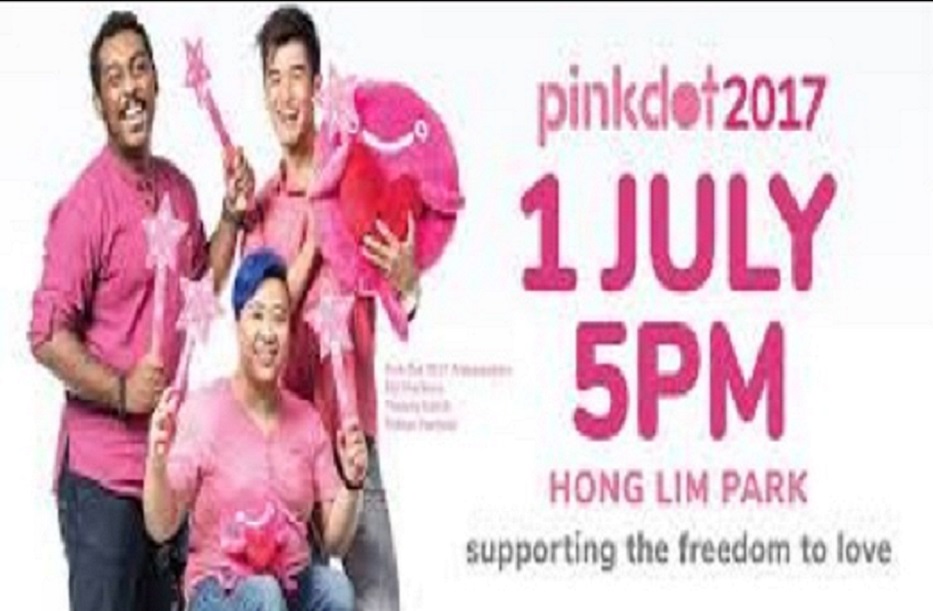
  • GLBT Voices Singapore: Muslim Community’s Uproar Over Tudung Issue Is Ironic

    GLBT Voices Singapore: Muslim Community’s Uproar Over Tudung Issue Is Ironic

    This latest ‘noise’ over the tudung issue is rather ironic, given that the Muslim community is up in arms over being shut down and denied their rights to a religious piece of clothing, which may in turn hinder their choices when it comes to employment.

    So they are complaining again basically that their economic rights are not protected when it comes to Muslim women who choose to practise their religion.

    But they have no regrets fighting for the continued discrimination of gay citizens in Singapore, some of whom are also fellow Muslims, as long S377A fits their religious narrative. Talk about cherry picking one’s rights.

    At the end of the day, religion is a choice. And the tudung is not even mandatory within that religion. And they kick up such a fuss over it, to the point of threatening social cohesion. But being gay is who we are, and not a choice regardless of what bugots.

    Ah the delicious irony.


    Source: GLBT Voices Singapore