Tag: Budget 2015

  • Singaporeans First Party’s Chance Encounter With DPM Tharman Shanmugaratnam In Taman Jurong

    Singaporeans First Party’s Chance Encounter With DPM Tharman Shanmugaratnam In Taman Jurong

    When Mature People Meet….. Collaboration Becomes Possible

    The walkabout at Taman Jurong Market and Food Centre on Sunday saw SingFirst achieving several “firsts”. This is what we mean:

    1. First walkabout when we met a minister making his round at the same location

    DSC_9553

    DSC_9551

    2. First attempt in getting the members and supporters to take public transport to the walkabout location

    DSC_9488

    DSC_9498

    DSC_9500

    DSC_9484

    3. First largest turn out by our members and supporters

    DSC_96434. First ever longest walkabout route

    DSC_95095. First ever most photo requests by members of the public with our chairman and secretary general

    DSC_9497

    DSC_9637DSC_9636DSC_9624Taking the public transport to the location was our first attempt in building the bond and rapport between the members and supporters. This arrangement also allowed us to gain exposure and to publicise our party name. Everyone was enthusiastic and admitted that it was indeed a refreshing idea.

    This walkabout was by far the largest turn out by our member and supporters. A total of 25 of us gathered at Lakeside MRT before making our way to Taman Jurong Market and Food Centre. SingFirst is encouraged by the great support by our members! It goes to show that we are growing in terms of membership.

    As the market and food centre occupies 3 storeys with several units on each floor, it made its way into our record book for the longest walkabout route. Apart from the market and food centre, we also seized the opportunity to visit the nearby flea market. We were pleasantly surprised that many patrons at the market and food centre immediately recognized our chairman, Dr Ang Yong Guan and secretary general, Mr Tan Jee Say. We were even more surprised when several of them came up to the duo and asked for their pictures to be taken together.

    The most pleasant encounter during this walkabout was the chance meeting with the finance minister, Mr Tharman Shanmugaratnam. He too was at the food centre greeting the residents. He was pleasant and greeted us with warm smiles and handshakes. We suggested having a photo together and he agreed without any hesitation. That wasn’t the end of our encounter with him. While taking a break from the walkabout at a nearby coffee shop, he came to us and said that the coffee shop has the cheapest food in the area.

    DSC_9647

    From this walkabout, we would like to highlight some interesting points from the residents and our brief meeting with Mr Tharman Shanmugaratnam:

    • The residents recognized that there is a need for a political change in Singapore. They are also curious who will be the candidates for SingFirst and whether we are up to the mark to take on the ruling party in the next election. Many still bear the scars from the memory of the 1960s and 1970s during the tussle between Barisan Socialis and the PAP.

    DSC_9545

    DSC_9597

    • They are sincere in their response when approached. The residents either stand up to greet or putting away their utensils to have a brief word with us. They also hope that SingFirst is able to do more to help the citizens.

    DSC_9615

    DSC_9573

    • They hope to see in the coming election younger candidates with a credible party running for the public office and who can take on the PAP.
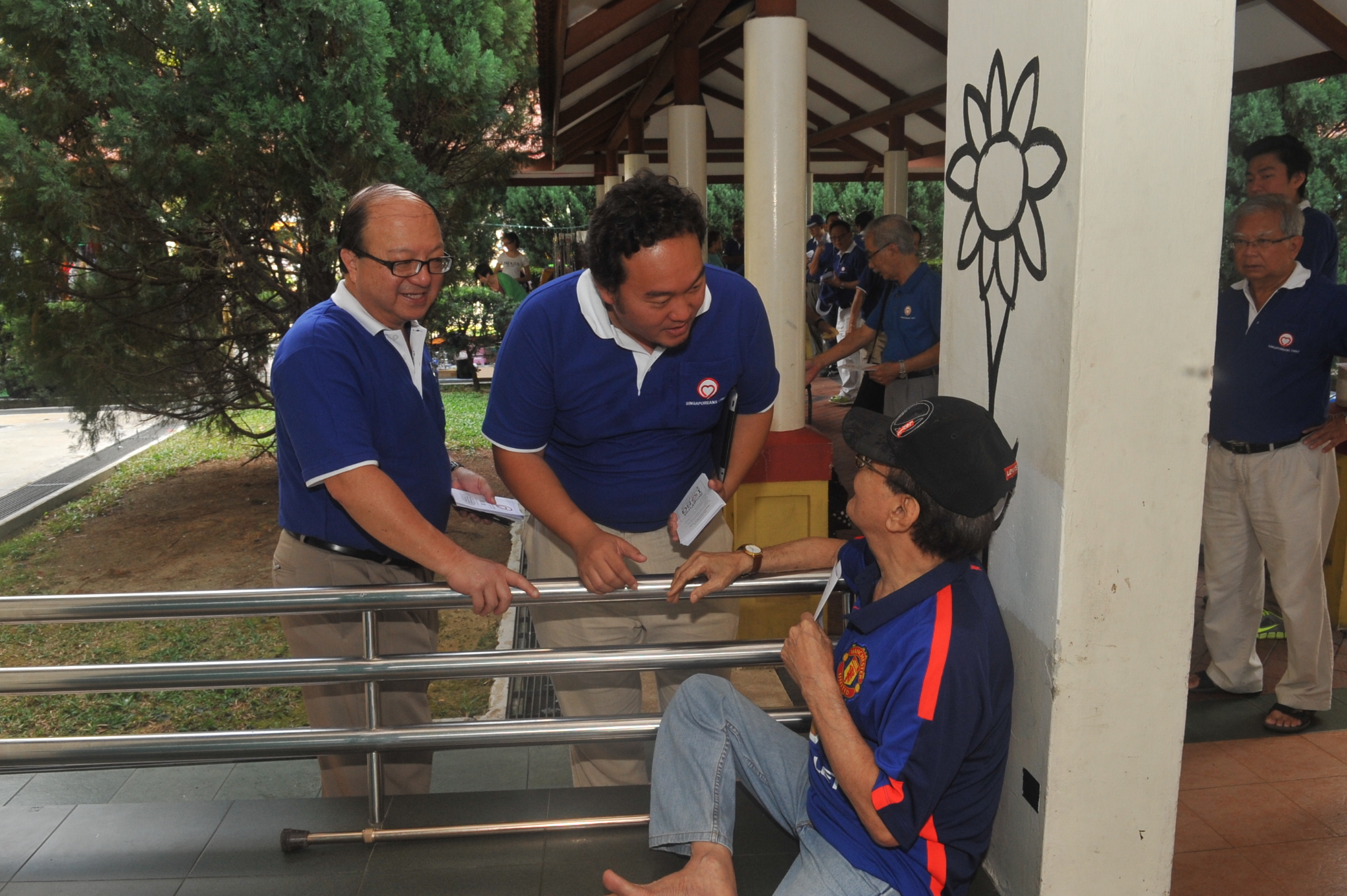
    DSC_9629

    DSC_9519

    • MPs need to speak their language from the ground to represent them in parliament. They hope the MPs truly understand their plight.

    DSC_9588

    • There is no need for scholars to stand for elections or be MPs. They just need someone who is able to understand their concerns and have a heart to feel and fill their needs. The Punggol East by-election is a good example where a caring candidate won despite a four-corner fight.

    DSC_9566

    DSC_9583

    DSC_9602

    • The SingFirst logo is being etched into the minds of the Singaporeans. One elderly man said he recognized the logo because it resembles an ice cream brand.

    3

    Mr Tharman’s encounter was an encouraging one as he is so open. SingFirst hopes to see more of such PAP politicians to engage alternative parties. Only with such openness can we then build a better Singapore and move Singapore forward.
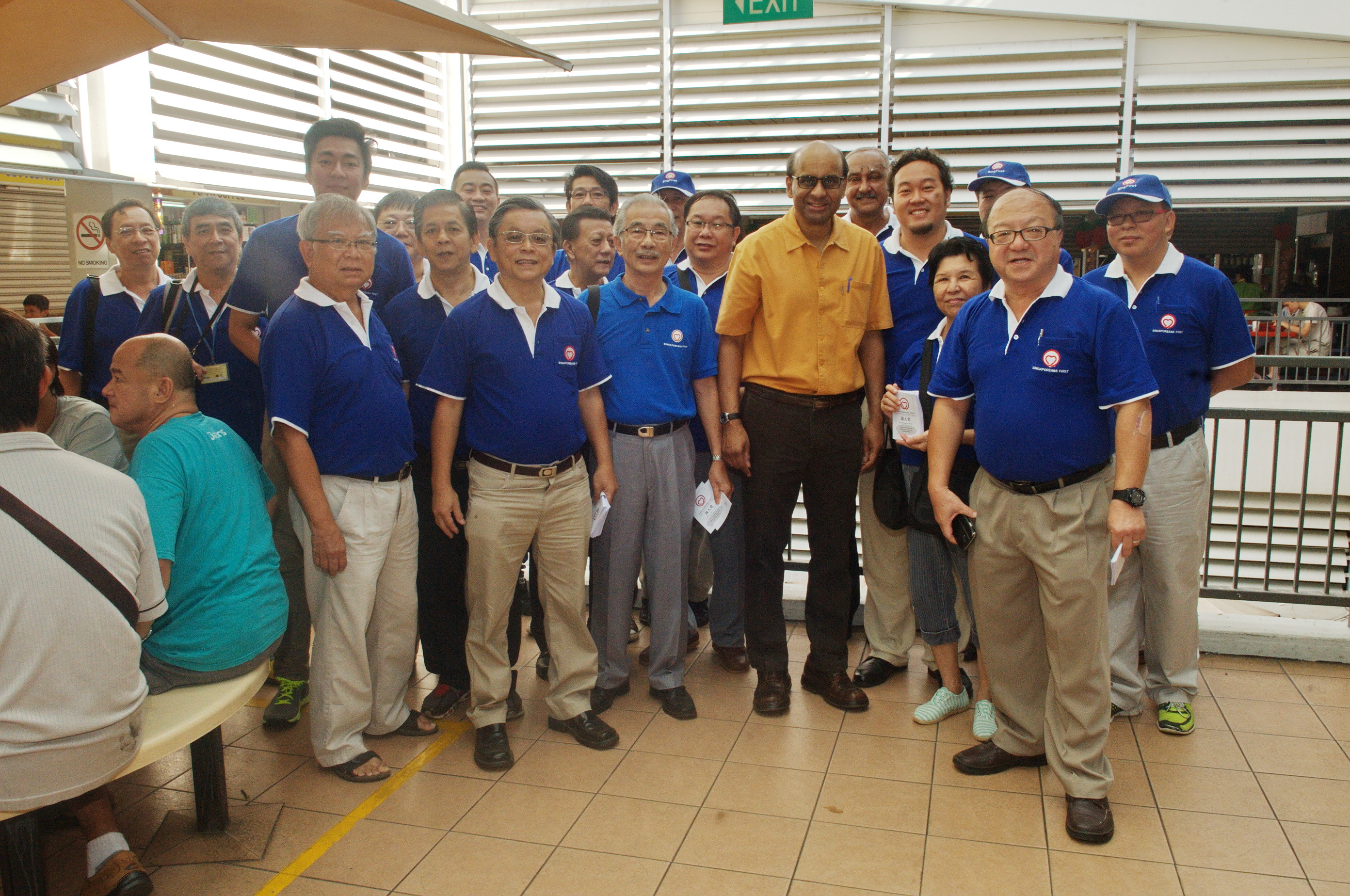
    DSC_9555e

    Taman Jurong walkabout was a new milestone set for SingFirst. We hope we will set a higher benchmark and be fortunate enough to meet more ministers or MPs in our future visits to the various GRCs.


    Source: http://singfirst.org

  • SDP: Government Less Elitist, But System Still Far From Fair And Sustainable

    SDP: Government Less Elitist, But System Still Far From Fair And Sustainable

    By raising income tax rates for the top 5 per cent and setting up the Silver Support Scheme to give payouts to the lower-income elderly, Budget 2015 has shifted the Government to a “less extreme elitist position”, said the Singapore Democratic Party (SDP) in a statement responding to the Budget today (Feb 25).

    But while measures to aid the “poor and weak” are welcome, Singapore is still far from a fair and sustainable system, the party said.

    The shift in the Government’s policies have come about not because of a change in the People’s Action Party’s ideology, but because of electoral pressure, the SDP said. “In the meantime, the ruling party continues to ignore the critical issues such as minimum wage, universal healthcare and retention of our CPF savings,” they added.

    Adding it was imperative for Singaporeans to support the SDP in the next General Election, the party said it plans to campaign on policies which include raising taxes on the top 1 per cent earners in Singapore to pay for financial assistance. “This Budget is a clear demonstration of how a competent, constructive and compassionate opposition like the SDP benefits Singaporeans,” they said.


    Source: www.todayonline.com

  • Experts: GST Set To Increase To Pay For Social Spending

    Experts: GST Set To Increase To Pay For Social Spending

    While the Government has raised income tax rates for top earners in Singapore for a more progressive tax system, taxes paid by a broader swathe of Singaporeans, such as the Goods and Services Tax (GST), will probably go up in the coming years to pay for social spending, said tax experts and economists.

    The GST could go up after next year to 9 or 10 per cent, in line with the Asia-Pacific average. Other taxes the Government could raise include consumption taxes, stamp duties and property taxes, they said.

    On Tuesday, Finance Minister Tharman Shanmugaratnam had dispelled the notion that the Government had adopted a “Robin Hood” strategy for this year’s Budget by taxing the rich more to give to the poor. He said the bulk of the spending is for the common interest and not one particular group.

    “This is our society… We need to take collective responsibility,” said Mr Tharman, who is also Deputy Prime Minister, on a televised forum on Channel 5.

    PricewaterhouseCoopers tax partner Koh Soo How said Mr Tharman’s words signal a continued shift towards a “broad-based” system that reaps revenue from indirect taxes such as the GST. Noting the Government had committed not to raise the GST for five years during the 2011 General Election, he said any hike would probably take place in 2016 or 2017.

    On the other hand, Ernst & Young Solutions head of tax Chung-Sim Siew Moon does not expect a hike in the GST before 2020. “The minister has indicated that the revenue measures that have been put in place will be sufficient for the increased planning needs until the end of the decade,” she noted.

    The GST contributes the second largest share, after corporate income taxes, to Singapore’s total operating revenue, contributing about 16.5 per cent in Financial Year 2014.

    Taxes such as the GST, which are collected from the domestic population, can be raised without affecting Singapore’s international standing in terms of tax competitiveness, Mr Koh said. He noted that many countries, including the United Kingdom, Malaysia and countries in the European Union, are also gradually increasing tax revenue from indirect taxes. Indirect taxes include consumption taxes such as duties on alcohol, tobacco and petrol.

    Mr Koh added: “Tools such as GST vouchers are in place for the Government to make adjustments to alleviate the burden on low-income taxpayers.”

    KPMG Singapore head of tax Tay Hong Beng also pointed out that consumers have a degree of choice as to whether to consume and pay consumption taxes.

    Experts also expected the current income tax rates to hold. Noting that only about 30 per cent of all Singapore residents pay income tax, Mr Tay said increasing the tax burden on a minority of taxpayers “might not be the fairest way forward”.

    “Taking the concept of ‘collective responsibility’ further, the best option remains to grow the Singapore economy. A growing economy directly increases the takings from taxation without the need for excessively high tax rates,” he said.

    Mr Koh from PwC pointed out that raising the top marginal rate of personal income tax beyond the 22 per cent announced during Monday’s Budget statement may hurt Singapore’s competitiveness.

    In line with the global shift from direct to indirect taxation, Mr Tharman on Monday also announced an increase in petrol duties. Duties on tobacco, alcohol and gambling were also raised last year, with alcohol taking the steepest hike of 25 per cent.

    Nanyang Technological University economist and Assistant Professor Walter Theseira said taxpayers can expect to pay more in the medium and long term, with higher-income earners contributing a larger share. The proceeds can fund social initiatives to help the unemployed, and support medical expenses and retirement provisions for middle- and lower-income groups.

    “It is fair that we all are asked to pay a bit more to fund them, although of course in general the more fortunate amongst us should contribute a larger share,” said Asst Prof Theseira.


    Source: www.channelnewsasia.com

  • Standard & Poor Provides Singapore Unsolicited AAA Rating

    Standard & Poor Provides Singapore Unsolicited AAA Rating

    Standard & Poor’s Ratings Services said today that Singapore’s 2015 budget continues to show the strength of the government’s institutional and governance effectiveness. This factor is a key support for their sovereign credit rating on Singapore (unsolicited ratings AAA/Stable/A-1+; axAAA/axA-1+).

    “The Singapore budget focuses on longer-term fiscal challenges even as it addresses the immediate capacity constraints in transport and health services, areas that will see significant increases in spending,” said Standard & Poor’s credit analyst Yee Farn Phua.

    Policies announced in the Singapore dollar S$68.2 billion budget aim to boost the country’s economic growth potential, retrain Singaporean workers, and ensure increased funding to meet the needs of Singapore’s aging population. Investments in these areas significantly outsize the S$705 million transfers to households. These measures should help maintain Singapore’s credit strengths even as the population ages at one of the fastest rates in Asia.

    After accounting for revenue not reported as part of the Singapore budget, S&P estimates that the general government account will remain in surplus over the fiscal years ending March 2015 and March 2016. The government projects a budget deficit of S$6.7 billion (1.7 per cent of GDP) in the fiscal year ending March 2016 after a nearly balanced budget in the current fiscal year.


    Source: www.businesstimes.com.sg

  • CASE: Petrol Companies Profiteering From Petrol Tax Implementation

    CASE: Petrol Companies Profiteering From Petrol Tax Implementation

    The consumer watchdog here has accused some petrol companies of profiteering, after petrol prices across the island were raised yesterday by up to S$0.25 for a litre of 98-octane grade petrol and as much as S$0.18 for 95-octane grade petrol — a day after it was announced in the Budget statement that petrol duty rates would be increased with immediate effect.

    Noting that some of the petrol prices were raised beyond the levels of the duty hike, Mr Seah Seng Choon, executive director of the Consumers Association of Singapore (CASE), said it was understandable for the petrol companies to increase prices following the levy hike. But he pointed out: “They should not increase more than what the tax requires them to and if they do that, they are profiteering from the situation.”

    As of last night, a litre of 98-octane-grade petrol at Shell cost S$2.28 — S$0.25 more than on Monday. Other brands also adjusted their prices, with Caltex, Esso and Singapore Petroleum Company (SPC) charging S$2.25, S$2.23 and S$2.20, respectively. The increment ranged between S$0.17 and S$0.21 for the three brands.

    For 95-octane-grade petrol, which is most popular with drivers, Shell raised the price by S$0.18 to S$2.04 per litre. The other three brands raised their prices to S$2.01 or S$2.02 — with the increases ranging between S$0.12 and S$0.16.

    “(The) pump price adjustments reflect the increase in petrol duties as announced in the 2015 Budget,” said a spokesperson from Chevron, which owns the Caltex brand. The other brands could not be reached for comment by press time.

    Deputy Prime Minister and Finance Minister Tharman Shanmugaratnam announced on Monday that petrol duty rates would increase by S$0.20 to S$0.64 per litre for the premium grade and by S$0.15 to S$0.56 per litre for the intermediate grade. To cushion the impact of the hike, motorists would be given a one-off road tax rebate for a year. Mr Tharman noted that with falling oil prices, pump prices after the duty hikes would remain lower than the levels in the past two-and-a-half years.

    Salesman Andrew Koh, 58, welcomed the road tax rebate, but felt it was not enough to mitigate the higher petrol prices. “I was happy when crude oil prices started falling … But now, all the drivers are going to suffer from the increase in levy and petrol prices,” he said.

    Yesterday, Mr Tharman said the taxes related to vehicle ownership and usage would have to be adjusted from time to time, to create a greener environment. Adding that the previous adjustment to petrol levies was done a dozen years ago, he said it was better to raise duties when oil prices are falling, compared with the opposite situation. It was also unlikely the duty hikes would filter down to overall consumer prices as commercial vehicles use diesel, he said. As for middle-income families who own cars, Mr Tharman said other measures in the Budget could alleviate the cost of living.


    Source: www.todayonline.com