Tag: Catholic

  • Hue And Cry Over Pink Dot Event Shows Discrimination Exists

    Hue And Cry Over Pink Dot Event Shows Discrimination Exists

    The letter writer Ho Lay Ping (“Don’t equate difference in opinion with discrimination”, June 20) said that because the Pink Dot event is allowed to continue, it shows that “discrimination does not exist”.

    A minority community which faces no discrimination would not spark calls to have its event advertising material reported to the police on the basis of it being “divisive and polarising”.

    The general tone of Facebook groups such as “We are against Pinkdot in Singapore” also makes the writer’s claim of tolerance and lack of discrimination nothing short of disingenuous.

    Her comments that our government ministers may have religious affiliations and “that the majority of Singaporeans follow a religion” hint at laying out who has the authority of being the moral majority to steer our society.

    Our pluralistic society comprises multiple ethnicities, creeds and religions, and protecting our lesbian, gay, bisexual and transgender (LGBT) minority community is not that great a stretch.

    It is unhelpful to society if our reaction to something we find discomforting is to make police reports instead of having a reasonable and adult conversation.

    We can be better than this.


    Source: www.todayonline.com

  • Commentary: Inter-Racial Marriages Nothing Special, Until I Met Those Facing Challenges

    Commentary: Inter-Racial Marriages Nothing Special, Until I Met Those Facing Challenges

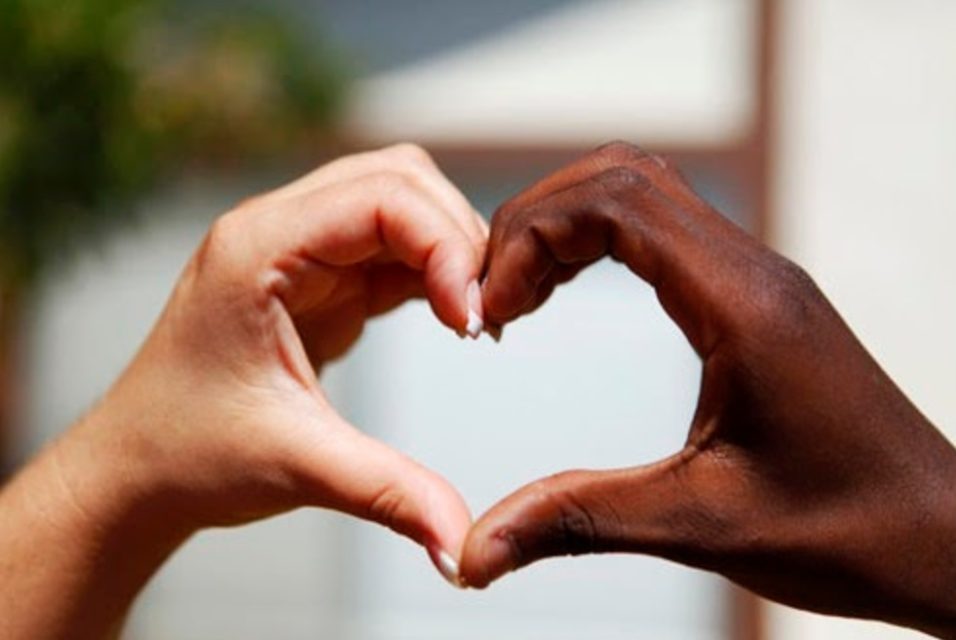
    My own inter-ethnic relationship has been obstacle-free, writes Kane Cunico, but a documentary on mixed marriages has spurred others to share with me the struggles they face in gaining acceptance.


    SINGAPORE: Sàam gu ma, sei gu ma, baat gu che, sahp suk – Cantonese words I would have never imagined myself learning by heart, had I not married my ethnically Chinese wife whose dad’s side of the family is from Ipoh, Malaysia.

    Respectively, they mean this:

    Sàam gu ma: My father-in-law’s third oldest sister.

    Sei gu ma: My father-in-law’s fourth oldest sister.

    Baat gu je: The eighth sibling in the family and my father-in-law’s younger sister.

    Sahp suk:  The tenth sibling and my father-in-law’s younger brother.

    In my Indian-Eurasian household, which feels neither very Indian nor very Eurasian, we just call them aunty (insert name) and uncle (insert name).

    I have always been indifferent to my cultural roots, flippant to a point. I wouldn’t consider myself religious, but I am constantly open and curious about other people’s heritage.

    The same goes for my wife, who identifies herself as a third-culture kid.

    We both were fortunate to have parents who were willing to break their own cultural and religious traditions for their children, and compromise on a wedding that made everyone happy. Even while dating, race or religion never became an issue. I would call us rather happy-go-lucky.

    But the recent On The Red Dot series, Love Is (Colour) Blind, prompted me to reflect on just how lucky perhaps we were. The documentary profiled three mixed-race couples who spoke about the ups and downs of their relationships, from gaining family acceptance to bringing up their mixed-heritage children.

    In response, hundreds of netizens have commented on Facebook, eager to share their own experiences in inter-ethnic marriages. I was heartened to see all those different races and religions coming together – it was like those United Colors of Benetton ads I wished the world could be more like.

    Watch: The story of Martin and Esther

    But on the flip side, friends and not a few commentators on Facebook have asked: “Why is this even a story? Why talk about this? What’s the big deal? Inter-racial marriages have been around for a long time. Why single it out?”

    And in a way, they were right. I had never before seen it as a problem.

    WE’VE HAD IT EASY

    Yet in talking to some of those who wrote on our Facebook page, and re-watching the episodes, it struck me – my wife and I have had it easy, relationship wise.

    The same can’t be said of Facebook writer Hui Jing Ong. A Singaporean Chinese who is Buddhist, she married an Indian national who is Sikh. They have two children.

    In a telephone interview, she told me: “My parents are divorced, but my father until now cannot accept our marriage or children. He’s kind of a racist. My mum says as long as I’m happy, she’s okay with it.”

    Hui Jong Ong with her husband, Gurdev Singh, have two children. (Photo: Hui Jing Ong) 

    Another Facebook user, Jasmine Jay, had dated her husband-to-be for four years. He is Malaysian, Malay and Muslim, and she is Singaporean, Sikh and Catholic.

    Three and a half years ago, when she became pregnant, they decided to tie the knot. For three months, both deliberated on who should convert. They ultimately decided neither should. His family snubbed their wedding.

    “Even my mum said no to the wedding. But since the birth of our daughter, his family have accepted us,” said Jasmine in a phone interview.

    She added: “Today we have two children. I have a younger son and we both agreed the children will be Catholic.”

    Despite the continuing struggles, both have found happiness where their relationship once floundered in a quagmire of disapproval.

    Last year, 4,142 marriages in Singapore involved couples of different races, making up 21.5 per cent of all marriages for the year. In 2005, inter-ethnic marriages made up just 14.9 per cent.

    So mixed marriages may be becoming normalised; but many couples still face familial and societal obstacles to make it work.

    Watch: The story of Simon and Veronica

    Friends of ours in inter-racial relationships have had to try hard to win over their culturally traditional in-laws-to-be, who were worried about what others in their community might say or think.

    And such cultural conservatism isn’t just confined to our parents’ generation. Some young couples my wife and I meet have no qualms telling us that they wouldn’t want their children dating someone of another race.

    A recent survey by Channel NewsAsia, in partnership with the Institute of Policy Studies, reflects some of these response. The survey found that fewer than one in four Chinese respondents were accepting of a non-Chinese marrying into the family; while fewer than half of Indian respondents indicated acceptance of a non-Indian into their family, according to the survey.

    WHEN CHILDREN COME INTO THE PICTURE

    For newlyweds like my wife and me, who are looking forward to having children, we know we cannot keep taking a laissez-faire approach to our mixed marriage.

    At some point, matters of race and religion will come up, and perhaps these may actually turn out to be issues for both sets of parents, as Jasmine learnt.

    “Managing families – that is still a challenge,” said the 23-year-old stay-at-home mother and trained nurse.

    “So many awkward moments. How you spend your festivities and whose religion you follow. You will argue about what cultural name the child will have. Should it be Indian or Malay in our case? And what religion will the child practice?” she added.

    Jasmine Jay with her husband, Abdul Rahim, daughter Raphaela 3, and son Rayden, 6 months. (Photo: Jasmine Jay)

    “To be honest, it is tough, but my husband and I, only because we are quite neutral with race and religion, we told our parents to leave the decision to us. So we gave the children neutral names. There is no “daughter of” to follow my Indian heritage, and no “bin or binte” to follow his Malay heritage.

    “But the beauty is that they get to be a part of both our cultural and religious practices and festivities,” said Jasmine.

    “So just follow your heart and fight for your right, and hopefully, both sides can still remain a strong family.”

    Watch: The story of Norsham and Anne

    Another Facebook user, Hazre Salim, told me it’s really about planning far ahead.

    A Malay Muslim, he married a Chinese Buddhist about two years ago after they dated for a year. Hazre, a secondary school educator, was upfront about how religion was important to him. With her full understanding, they both pre-empted their parents very early on in their relationship.

    “I knew first and foremost there were going to be challenges: Parents, friends, religion. But we had supportive parents,” the 35-year-old said.

    “There will be instances where we cannot solve the problem straight away. Children will definitely be an issue; we will face it when it comes.

    “But we both believe that when two people get together and have faith and trust in each other, it will work out,” said Hazre, adding that when they cannot resolve matters on their own, “we go to our parents and figure it out”.

    Hazre Salim and Nur Iviana Tham sought the approval of their parents early on. (Photo: Hazre Salim)

    Hazre’s and Jasmine’s advice are timely. My wife and I will soon have to decide which religion our child will be a part of, and what second language they should learn at school.

    What race do we categorise our children under, when their ancestral tapestry has Italian, Indian, Chinese and Peranakan heritage woven into it?

    These are questions we do not have the answers to yet. But we are fortunate and optimistic.

    Fortunate, to be in a place where inter-ethnic marriages are fast becoming normalised, if they aren’t already; and where strangers, who have shared their stories online, are willing to give us the perspective we need.

    Optimistic, that our families, made up of a suks, gu mas, aunties, uncles, mums, dads, mamas and grandmas, are around to hopefully be as open as they have always been with two happy-go-lucky and culturally impartial children.


    Source: CNA

  • Why A Devout Catholic Is Fasting During Ramadan

    Why A Devout Catholic Is Fasting During Ramadan

    As the executive director of Interfaith Worker Justice, a national organization that builds power with workers through faith-rooted organizing and advocacy, my faith and values are what ground me and call me to do this work. I’m Catholic and feel deeply connected to my faith, which has been a constant presence in my life, and is the core to who I am.

    I know that the joy, hope and love I feel within my faith is no different from the joy, hope and love others experience within their own faith tradition. I feel this way because we share a set of common core values, such as respect, dignity, dedication, sacrifice and love.

    It is because of these shared values that I’ve decided to join my Muslim friends as they fast from sunup to sundown during this holy month of Ramadan. I also join them in embracing the blessings one receives during such an important time of fasting, charity, prayer and introspection.

    Fasting during Ramadan is not just about fasting from food but also from the things that can take us away from being our best selves, such as gossip, insults, lies, negativity & disrespect for others. Ramadan helps us look inward by challenging and encouraging us to be better people, by being more conscious and aware of our place in the world and how we relate to those around us.

    In my Catholic tradition I have fasted many times and have seen the benefits of choosing to go without in order to focus on what’s inside. Fasting helps make space for other things to come into greater focus, such as a deeper connection with those less fortunate, a greater emphasis on my relationship with God and being more disciplined about the choices I make.

    Similarly, fasting during Ramadan is as much about filling ourselves with prayer, empathy and love as it is about fasting from the things that separate us from our true nature. It is through Ramadan’s intentional sacrifice of food that we are fed an abundant spiritual buffet.

    Ramadan also gives us an opportunity to be more charitable to others. But it’s more than just about giving alms to the poor — it’s about broadening our awareness and understanding of the systems that make and keep them poor. More importantly, it is about deepening our connection with those less fortunate.

    We practice real empathy and compassion by reaching out and seeking to understand why people struggle, and acting on it. “Why are they hungry?” “Why are they homeless?” By asking these questions we also challenge ourselves to think of what we can do: “How can I do the most good for the most people?” “How do I impact the real problem and make ongoing change happen?”

    Fasting and Prayer

    As someone once told me; “Fasting without prayer is just going hungry.” How true! Many Muslims pray fives times a day, and especially during Ramadan. Prayer feeds the soul and helps sustain the meaning behind the fast.

    Several years ago, I was walking through the Minneapolis airport and saw a young airport worker go into a corner and pull out a small rug to pray. He wasn’t trying to draw attention to himself, but he caught my eye anyway. I was moved by his act of devotion, discipline and love. I then asked myself, “Why don’t I do that?” “Is my faith enough of a priority that I go out of my way to pray to make room for it?” Inspired by the young Muslim man’s public display of faith and prayer, I began to pray the Chaplet of the Divine Mercy at 3 p.m everyday, regardless of where I was. Now I also include my morning prayers, Rosary and evening prayers each day. The young man’s powerful example has inspired and challenged me to deepen my own faith and be a better Catholic.

    It is through sharing experiences and practices that we discover we have more in common than we have differences. One of the many values that we have in common is a shared sense of respect for workers and the value of the work they produce. Across faith traditions, the teachings are clear: respect workers and treat them fairly, as we would want to be treated, or even better. Kind of sounds like a golden rule doesn’t it? For good reason, as we all do better when we all do better.

    So as I begin Ramadan in honor of the values that it represents, I am filled with humility and gratitude for this blessed opportunity to deepen my relationship with God and those around me. It will give me chance to turn down the noise and focus on what’s most important in my life and once again, help me to be a better Catholic.


    Source: www.huffingtonpost.com

  • 10 Catholic Priests In Spain Charged Over Sexual Abuse Of Teenage Altar Boy

    10 Catholic Priests In Spain Charged Over Sexual Abuse Of Teenage Altar Boy

    A Spanish judge charged 10 Catholic priests over the alleged sexual abuse of a teenage altar boy, court papers showed Wednesday, in a case in which Pope Francis intervened.

    Their accuser, now aged 25, says he was raped and made to perform sex acts with priests at a villa with a swimming pool, according to a written ruling by the judge in the southern city of Granada.

    It is the latest in a series of paedophilia scandals involving members of the Catholic Church, and the biggest such legal case known so far in Spain.

    Judge Antonio Moreno formally accused 10 priests and two lay people of sexually abusing the boy or being complicit in such acts from 2004 to 2007.

    The victim alleges “continuous sexual abuse by a group of priests of the diocese of Granada, from 2004 when he was 14 to 2007 when he was 17.”

    The young man said he became an altar boy at the age of seven at the church presided by the leader of the group and was later invited to houses run by the priests.

    The lead priest made the boy give him massages, which led to a series of acts of sexual abuse, the ruling said.

    The victim said the group’s leader told him he had a promising career as a priest ahead of him and chided him for resisting, according to the ruling. It said the priest described himself as being like a father to the boy.

    The young man, identified in the ruling as a member of the Catholic institution Opus Dei, now suffers anxiety and is undergoing psychological treatment, it said.

    It is the most serious such case ever in Spain “in terms of the numbers of abusers and the system of abuse,” said Jose Manuel Vidal, head of religious news website Religion Digital, which first reported the affair.

    “They set up a kind of sect within the church itself.”

    – Pope steps in –

    The case was opened in early November and the judge had ordered investigations to be kept secret until he issued the ruling indicting the suspects. He has yet to rule whether some of the alleged deeds happened too long ago to be tried.

    Pope Francis revealed after the case was launched that he had ordered a Church investigation when the unidentified man wrote a letter telling him of the abuse.

    “I called the person and I told him, ‘Go to the bishop tomorrow,’ and then I wrote to the bishop and told him to start an investigation,” Francis told reporters on November 25.

    The Argentine pontiff said the case cause him “very great pain, but the truth is the truth and we should not hide it.”

    At least one other person now aged 44 has also accused one of the priests of abuse in the early 1990s.

    The Archdiocese of Granada said in mid-November that it had suspended a number of priests pending the court probe.

    The Archbishop of Granada Francisco Javier Martinez and several other priests prostrated themselves on the floor of the city’s cathedral during a mass in November in a gesture of apology to victims of abuse.

    Pope Francis has taken a tough stance on clerical child abuse since taking over in 2013 from Benedict XVI.

    But a victims’ support group, the Survivors Network of those Abused by Priests, said the pope should be tougher.

    “The judge in the case has made it clear that covering up child rape is a despicable crime,” it said in a statement on Wednesday reacting to the Granada ruling.

    “Pope Francis should send the message that this behaviour is not going to be tolerated in his Church by immediately firing Granada’s Archbishop.”


    Source: https://sg.news.yahoo.com

  • Pope: Free Speech Should Not Involve Insults On Others’ Faith

    Pope: Free Speech Should Not Involve Insults On Others’ Faith

    ABOARD THE PAPAL PLANE (AP) — Pope Francis said Thursday there are limits to freedom of speech, especially when it insults or ridicules someone’s faith.

    Francis spoke about the Paris terror attacks while en route to the Philippines, defending free speech as not only a fundamental human right but a duty to speak one’s mind for the sake of the common good.

    But he said there were limits.

    By way of example, he referred to Alberto Gasbarri, who organizes papal trips and was standing by his side aboard the papal plane.

    “If my good friend Dr. Gasbarri says a curse word against my mother, he can expect a punch,” Francis said half-jokingly, throwing a mock punch his way. “It’s normal. You cannot provoke. You cannot insult the faith of others. You cannot make fun of the faith of others.”

    His pretend punch aside, Francis by no means said the violent attack on Charlie Hebdo was justified. Quite the opposite: He said such horrific violence in God’s name couldn’t be justified and was an “aberration.” But he said a reaction of some sort was to be expected.

    Many people around the world have defended the right of satirical magazine Charlie Hebdo to publish inflammatory cartoons of the Prophet Muhammed in the wake of the massacre by Islamic extremists at its Paris offices and subsequent attack on a kosher supermarket in which three gunmen killed 17 people.

    Others, though, have noted that in virtually all societies, freedom of speech has its limits, from laws against Holocaust denial to racially motivated hate speech.

    Recently the Vatican and four prominent French imams issued a joint declaration that, while denouncing the Paris attacks, urged the media to treat religions with respect.

    Francis, who has called on Muslim leaders in particular to speak out against Islamic extremism, went a step further Thursday when asked by a French journalist about whether there were limits when freedom of expression meets freedom of religion.

    “There are so many people who speak badly about religions or other religions, who make fun of them, who make a game out of the religions of others,” he said. “They are provocateurs. And what happens to them is what would happen to Dr. Gasbarri if he says a curse word against my mother. There is a limit.”

    In the wake of the Paris attacks, the Vatican has sought to downplay reports that it is a potential target for Islamic extremists, saying it is being vigilant but has received no specific threat.

    Francis said he was concerned primarily for the safety of the faithful who come to see him in droves, and said he had spoken to Vatican security officials who are taking “prudent and secure measures.”

    “I am worried, but you know I have a defect: a good dose of carelessness. I’m careless about these things,” he said. But he admitted that in his prayers, he had asked that if something were to happen to him that “it doesn’t hurt, because I’m not very courageous when it comes to pain. I’m very timid.”

    He added, “I’m in God’s hands.”


    Source: https://sg.news.yahoo.com