Tag: Chinese

  • Angry Netizens Deleting Meituan En Masse After Delivery App Introduces Separate Boxes For Halal Food

    Angry Netizens Deleting Meituan En Masse After Delivery App Introduces Separate Boxes For Halal Food

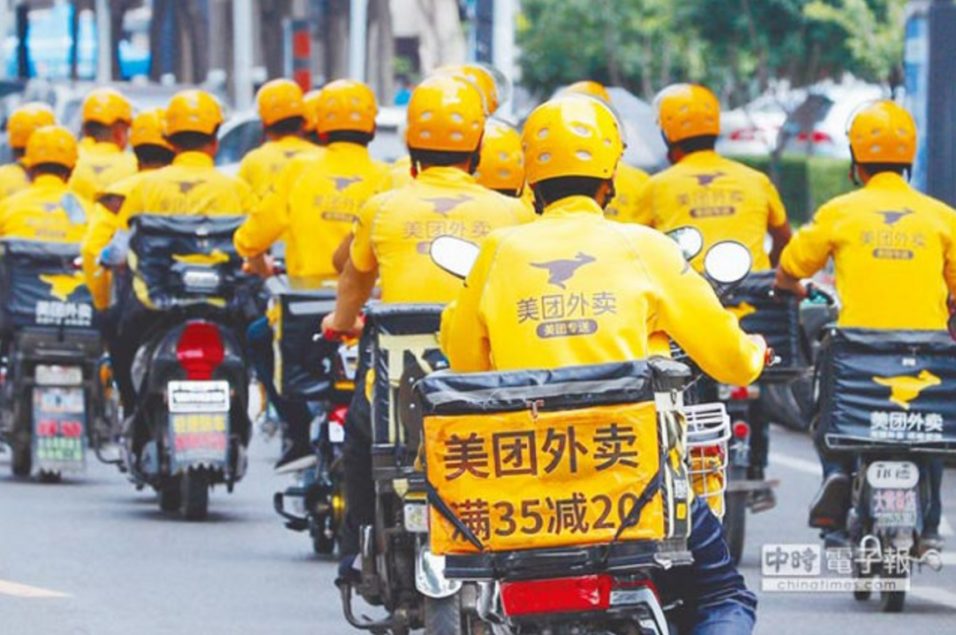
    Popular food delivery app Meituan has stirred up controversy online after announcing that it will begin offering separate logistics infrastructure for halal food, causing Chinese netizens to condemn the company for “discriminating against” non-Muslims while also worrying about the “rise of Islam” in their country.

    Meituan couriers on bikes will now be armed with two delivery boxes, a normal one for non-halal food and a smaller one for halal food, the company announced recently, a change that many netizens apparently see as discriminatory, vowing that they will delete the app en masse.

    One Weibo thread on the controversial topic currently counts nearly 50,000 comments. “Meituan is really acting outside natural morality,” reads the top comment with more than 18,000 likes. Meanwhile, other Weibo users have more specifically charged the company with discriminating against Han people, wondering why separate delivery boxes are not also offered for them or for Buddhists or for people with other religious beliefs which affect their diet. “I don’t like to eat lamb, can I have my own separate delivery box as well?” asked another Weibo user.

    “Meituan delivers both halal food and non-halal food. That really isn’t proper or harmonious. In order to safeguard the sanctity of minority food, we non-halal diners should start using Ele.me [another popular delivery app] instead. That way Muslims will have their own halal app,” argued another netizen, joining calls online to boycott Meituan and delete the company’s app.

    Others have voiced their dissatisfaction with the policy change in different ways. For instance, Twitter user @kitmention points out one netizen who asked Meituan on Weibo to: “Please put my pork soup in your halal-only delivery box.”

    meituan_halal3.jpg

    Meanwhile, some netizens have wondered who exactly is discriminating against whom in this matter. In one popular post, a Weibo user asks “Have anyone’s rights been hurt?” by this logistics change, adding that if you believe that Muslims are really unfairly forcing you to accommodate to their religious beliefs, then are you not also committing the same sin by raising a fuss and calling for a boycott over this issue?

    In response to this argument, another Weibo user has argued that, in fact, separate boxes mean increased delivery costs that will be borne by all customers, not just halal ones, so the change will have direct consequences on the app’s users. And, as for the negative societal effects of such a policy, the netizen worried about how continuing to cater to religious customs could lead to problems down the road, arguing that consumers should be free to vote with their wallets to support or not support Meituan’s new halal boxes.

    More broadly, the controversy over halal delivery boxes appears to have reawakened ethnic fears among Chinese netizens against Muslims. A post by one female business owner on “rising Islamization,” which includes screenshots of a rather Islamophobic story, has gone viral on Weibo with nearly 40,000 shares. The comments below the post are filled with netizens condemning Islam and cautioning their Han brothers and (especially) sisters to be careful about the creeping influence of Islamic culture.

    Founded in 2010 and headquartered in Beijing, Meituan started life as a group buying website that emerged in the wake of the Groupon craze. It merged with restaurant reviews app Dianping in 2015 to form Meituan-Dianping, which now claims to be the world’s largest on-demand delivery platform, receiving up to 10 million orders every day.


    Source: http://shanghaiist.com
  • PAP Supporter: Halimah Yacob Shouldn’t Contest Presidency

    PAP Supporter: Halimah Yacob Shouldn’t Contest Presidency

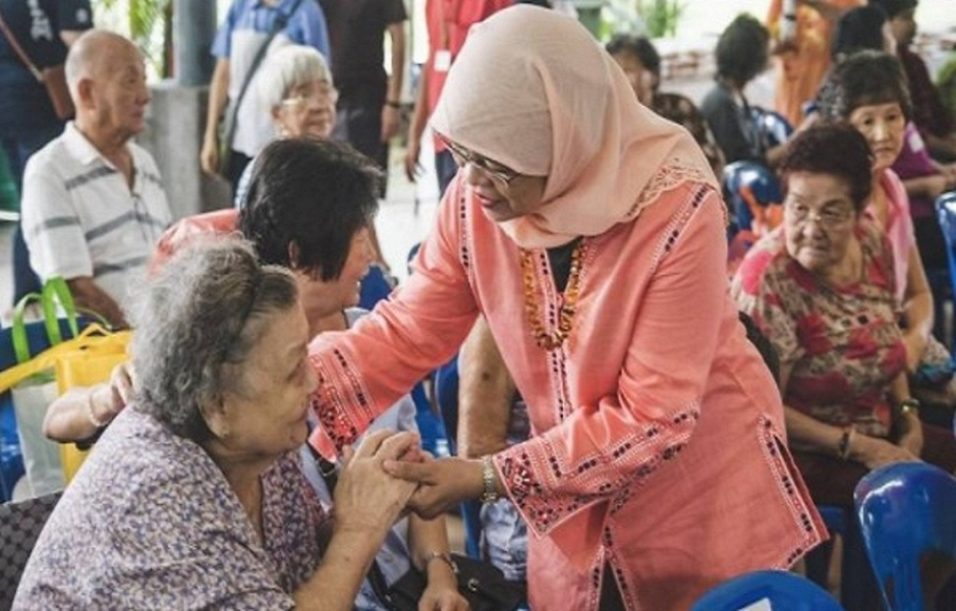
    By all accounts, Madam Halimah Yacob is a warm, compassionate and humble person, and a popular MP; she is well-loved by her constituents. Madam Halimah has also carried out her duties as Speaker of Parliament with dignity, as the first female Speaker of Parliament in Singapore’s history.

    However, I feel she should not run for the office of Elected President.

    Firstly, she has been elected not only as a Member of Parliament, but as the all-important minority candidate of Marsiling-Yew Tee GRC. She owes a duty to those who elected her to stay on and fulfil her responsibilities as MP. It would also call the whole raison d’être of the GRC into question, if it is left without a minority representative. The role of Speaker of Parliament is also a vey important one. It shouldn’t be resigned from lightly.

    Secondly, although the position of Speaker is equivalent to a Minister in protocol, it surely isn’t in responsibility. One reason for raising the criteria for private sector candidates (chief executive role in a 500m company) was to benchmark it to the responsibilities of a Minister, who has to manage huge billion dollar budgets and hundreds to thousands of civil servants. The Speaker of Parliament has no such equivalent responsibility. It would thus detract from the credibility of recent changes to private sector eligibility criteria, if a former Speaker were deemed to have the necessary skill-sets to guard our financial reserves.

    Madam Halimah is already a highly respected MP. She has already cemented her place in history as being the first female Speaker of Parliament. Her services are arguably more needed amongst the constituents she loves, and who love her in return.

    I do hope Madam Halimah will seriously consider whether to run for EP, as she is doing, and decide eventually not to.


    Source: Calvin Cheng

  • How Can Indian-Muslim Halimah Yacob Run For EP Reserved For Malay Community?

    How Can Indian-Muslim Halimah Yacob Run For EP Reserved For Malay Community?

    Yesterday (1 Jun), ST published a news report stating that PAP MP and Speaker of Parliament, Halimah Yacob, is widely considered a front runner for the forthcoming Presidential Election.

    It will be the first election reserved for candidates from the Malay community, following a recent review of the constitution.

    According to the amended Singapore Constituion Section 19B, the Presidential Election will be reserved for a community if none of its members has held office of President for 5 or more consecutive terms.

    “19B (1) An election for the office of President is reserved for a community if no person belonging to that community has held the office of President for any of the 5 most recent terms of office of the President.”

    Sub-Section (6) defines a community:

    “(6) In this Article, “community” means —
    (a) the Chinese community;
    (b) the Malay community; or
    (c) the Indian or other minority communities;

    ‘person belonging to the Chinese community’ means any person who considers himself to be a member of the Chinese community and who is generally accepted as a member of the Chinese community by that community;
    ‘person belonging to the Malay community’ means any person, whether of the Malay race or otherwise, who considers himself to be a member of the Malay community and who is generally accepted as a member of the Malay community by that community;
    ‘person belonging to the Indian or other minority communities’ means any person of Indian origin who considers himself to be a member of the Indian community and who is generally accepted as a member of the Indian community by that community, or any person who belongs to any minority community other than the Malay or Indian community;”

    Now, notice that in the case of Malay community, there is an addition clause added – “whether of the Malay race or otherwise”.

    In other words, you don’t have to be a person of Malay race to be considered part of the Malay community. Persons of other race can also be considered part of the Malay community, presumably as long as he or she is a Muslim.

    Halimah is an Indian Muslim

    Take Mdm Halimah for example, she is actually not a Malay as her father is of Indian origin.

    This was disclosed in an ST article in 2013 when Halimah was selected to be the new Speaker of Parliament after the former one, Michael Palmer, resigned from politics due to his marital affair with a PA woman.
    ST did a write-up to feature Halimah (‘A strong advocate for workers, women and minorities‘, Jan 2013):

    In the article, it mentioned: “Her (Halimah’s) Indian-Muslim father was a watchman who died when she was eight years old.”

    In fact, news of Halimah becoming Singapore’s first woman speaker also made its way to India. The Hindu described her as an “Indian-origin politician” (‘Indian-origin politician to be Singapore’s first woman speaker‘):

    So, what all this means is that in the coming Presidential Election which is reserved for the Malay community, a non-Malay person who is a Muslim can also contest.

    If Halimah, an Indian Muslim qualifies as part of the Malay community, then a Chinese Muslim, for example, can qualify too.


    Source: Facebook


    Source: www.theindependent.sg

  • Alfian Sa’at: Everyday Racism, So Casual And Commonplace To Its Perpetrators That It Doesn’t Register As Racism

    Alfian Sa’at: Everyday Racism, So Casual And Commonplace To Its Perpetrators That It Doesn’t Register As Racism

    I keep hearing from some people that ‘minorities can be racist too’. There is a rather prevalent idea that a member of a minority who gives an account of racism is seen as trying to gain some kind of moral superiority over a member of the majority. People get defensive when the racial grievance is seen as fossilising positions–the minorities as perpetual victims; the majority, oppressors by default.

    There are many accounts by people who say how they’ve been on the receiving end of racism. But I don’t see that many accounts by people on the ‘giving end’. (This paucity is natural; we want others to think well of us.) And here I want to bring in the idea of everyday racism, which does not have to be driven by malice, which can arise through ignorance, negligence, and thoughtlessness; which is so casual and commonplace to its perpetrators that it doesn’t even register as racism.

    So I’ll start, because I think accounts like this might shift the discussion a little. When I was still in primary school and my sister in kindergarten, I used to tease my sister that one of her classmates, R, was her boyfriend. She was at an age when having a boyfriend was Something Disgusting, not just because boys were gross but because we were a conservative Muslim household where the kids were told to cover their eyes whenever a kissing scene came on TV. I would repeat R’s name, turning it into a song, just to torment my sister, and she would tearfully run to my mother to complain.

    R was an Indian boy.

    There were many boys in her class. I wasn’t close enough with anyone to pick out the weird one or the annoying one. I picked out the one whom I thought would offend my sister the most. But how did I know it would annoy her? What if, by picking him, I was actually sending her the message that this was the worst of the lot? On account of nothing more than his race?

    I am ashamed to recount this. I did not bully the boy directly, it was my sister who was bullied, but just because the boy was unaware of how I had picked and marked him does not mean what I did was any less despicable. The next question to ask is why did I not pick out a Chinese boy?

    Because even at that age I was aware of some kind of pecking order, where the Chinese were at the top. Their large numbers told me this, the fact that they were my principal, most of my teachers, the doctor who did my check-up. At home someone might occasionally say something racist about the Chinese, but it was different from saying something racist about the Indians. For the Chinese, we could detect the grain of resentment in our voices, the envy at their position in society. But never contempt. It was impossible to have contempt for those whom you knew were above you. No, contempt was reserved for those we thought were lower than us.

    And here I think, was that what some Indians thought of us too? “The majority might look down on us, but at least we have the Malays to look down on. Look at them, with their PSLE scores and their drug addicts and their divorce rates, at least we’ve got quite a lot of our own in the Cabinet. We can hold our heads up a little higher.” And maybe that’s what the different minorities do; climb over each other, tussling for the best view of the top—or perhaps the best spot where the top can notice us.

    And there is no way to dislodge the top. The ‘racial balance’ will not allow for it. Given this kind of arrangement, I am often skeptical that ‘reverse racism’—that of minorities against the majority—has the same kinds of effects as that of its opposite. Yes, there is hurt both ways. But one of the directions comes with additional harm.

    When I was in Secondary School, I got quite agitated by a series of jokes my Chinese friends were making (“What do you call a Malay guy in a BMW? -The chauffeur. What do you call a Malay guy in a shirt and tie? -The defendant.”) And so I pulled out one of those things I’d overheard at home: “Well at least we wash our behinds, unlike you”. After a momentary pause, one of my friends started expressing his disgust that I would touch my behind with my bare hands. Another one joined in. I was outnumbered. You can try ‘reversing’ the see-saw but the heavier guy still wins.

    Not that I didn’t continue trying to retaliate. My Indian friends taught me the word ‘munjen’, meaning ‘yellow’, to refer to the Chinese. But what negative value did yellow skin have in our national culture? It certainly didn’t have the same force as ‘black-black’. What about stereotypes? ‘The Chinese are kiasu’. Oh, but that gave them a competitive edge. ‘They love gambling’. What was wrong with that? The country has two casinos. ‘Chinese features are unattractive’. And they could point out to the cover of any magazine to disprove you. Call us unattractive and what can we reach out for in our defence?

    My friend once told me this story. He was observing Children’s Day in a Primary School in Malaysia. Each student was asked to bring some food to class. My friend was quite poor, but he still managed to bring a packet of peanuts. A girl had brought some Indian sweets, wrapped in banana leaf and newspaper. Everyone was supposed to exchange their foodstuffs. When the teacher saw the girl’s package, she said, “What’s that? So dirty!” The whole class joined in, a chorus of yucks and eews.

    Nobody tried the girl’s sweets. My friend had wanted to, but didn’t because he was still self-conscious about his peanuts. (And how he regrets it until today; how he wishes he had tried just one sweet.) Throughout what must have been a terrible ordeal for a ten-year-old girl, my friend noticed how she had kept a half-smile on her face, eating her sweets quietly. Our moral imagination must follow her home. Did she throw away the sweets and tell her mother that everyone in school had liked them? Or did she come home and then blame her mother for making her feel the pain of her difference on a day that was meant for celebration?

    Whenever I see people discuss racism it frustrates me when it devolves into jargon: ‘social justice warriors’, ‘virtue signalling’, ‘identity politics’, ‘political correctness’. As if racism was just another kind of ‘ism’ to be dissected, as if its consequences were merely hypothetical. Whenever these discussions tilt into the abstract, I remind myself that the girl in the story is real. I remember how I teared up when I first heard the story. You can say that ‘facts are not feelings’ but you cannot deny that her feelings are real. There will be more girls like her, carrying the same ball of pain in them, if we don’t learn to see ourselves in the jeering faces of her classmates.


    Source: Alfian Sa’at

  • Police Question Actor Shrey Bhargava After Reports Lodged Over Viral FB Post

    Police Question Actor Shrey Bhargava After Reports Lodged Over Viral FB Post

    Freelance actor Shrey Bhargava – whose Facebook post on his experience auditioning for local film Ah Boys To Men 4 (ABTM4) had gone viral and sparked widespread debate – had been questioned by the police over reports lodged concerning him.

    In response to TODAY’s queries, the 21-year-old confirmed that he met with officers at the Tanglin Police Division on Wednesday (May 31) and was questioned on “the intentions behind (his) post”, among other things.

    He said: “Yes, I was called by the (police) for questioning. I was informed there that there were police reports made. I was not informed for what or by whom, that was kept confidential.”

    Mr Bhargava said the police told him “not to worry about anything as I had done nothing wrong”, but also advised him to “be cautious about what I post online as people may misinterpret me and my intentions to my detriment”. He was also advised to contact the police if hate speech and abusive comments against him worsen.

    “The Investigation Officer and I agreed that I am absolutely against racial violence of any sort and, instead, was only seeking a healthy and productive discussion for the betterment of Singapore’s media landscape and society. Specifically, I wanted Singaporeans to engage in dialogue regarding the inclusion of minorities in the media, as well as to tackle the issue of casual racism in order to create a more inclusive and harmonious Singapore,” he said.

    ABTM4 will be jointly produced by J Team Productions and MM2 Entertainment, and directed by Jack Neo.

    Approached by the media, J Team Productions had issued a statement saying that the casting director was testing Mr Bhargava on his “versatility” as an actor, and had asked him to perform the scene in various ways, including one as a “full blown Indian man”.

    However, Mr Bhargava disputed this: “This is not true. I was asked to do the scene only twice. The first time I did without direction. The second time, I did after being given the direction ‘be more Indian’ and to do it again as a ‘full-blown Indian man’… The J Team’s statement has misrepresented the facts… It has painted me in a damaging and deceptive light. It seems as though I over-reacted, or worse, that I lied.”

    Contrary to its claims, the J Team had failed to test for versatility, Mr Bhargava argued. “Instead, they defined for me what being Indian ought to mean and that is the crux of the matter… What did they mean by “Be more Indian”? Do they have a premeditated idea of what it means?… And why is being ‘more Indian’ supposed to be ‘funny’,” he questioned.


    Source: www.todayonline.com