Tag: dating

  • The Lives They Live: She Fell For Her Man After Marriage

    The Lives They Live: She Fell For Her Man After Marriage

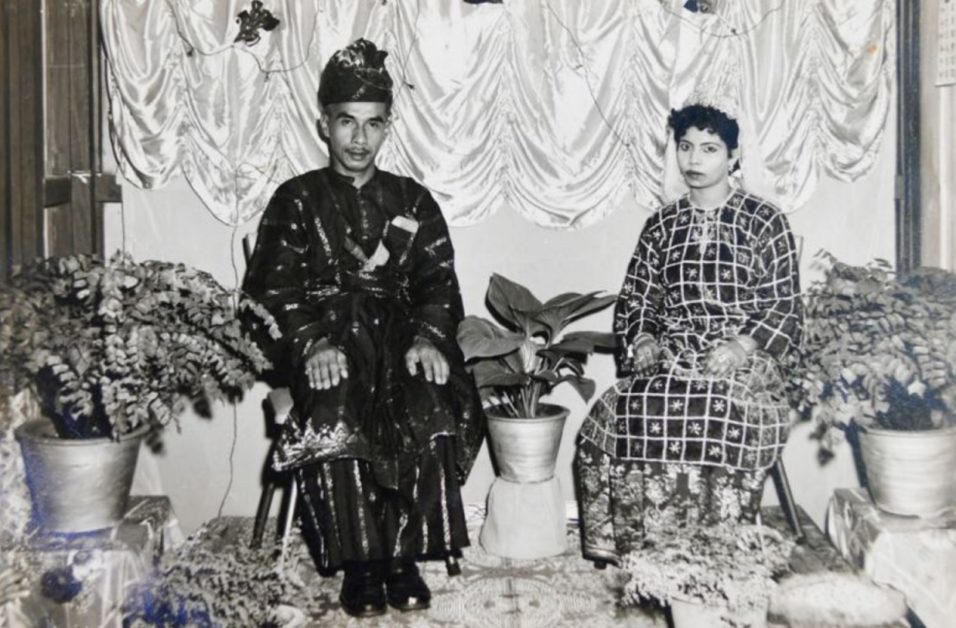
    In 1961, Madam Zulaika Mohamad Osman agreed to marry a man she had never met.

    She was 21.

    He was double her age, at 41 – a widower with one daughter.

    The matchmaker was a Chinese neighbour of hers, who worked with Mr Ismail Awang in the same construction company.

    Madam Zulaika, who has never gone to school, said in Malay: “My neighbour told me my husband was a good man and he would make a good husband and father. I said ‘yes’ immediately as I trusted my neighbour as he was like family to me.”

    Arranged marriages were the norm in those days, the 77-year-old said, and it did not occur to her that she should try to get to know her suitor before saying “I do”.

    So she said “yes” to the big question – without even knowing what her groom looked like or dating to see if they were compatible.

    About a month after she agreed to the match, Mr Ismail, a storeman, went to her home to propose marriage through her elders and the couple met for the first time.

    She was so nervous during that first meeting that she grabbed a relative’s baby to cover her face when he asked to see her.

    And she spent the rest of his visit hiding in the kitchen.

    They did not speak at all.

    “When I saw my husband for the first time, there were no feelings (of love). The feelings came later,” she said. “What struck me was that his hair was white. Even his eyebrows were white.”

    Three months later, they held their wedding ceremony.

    Match-made unions were the norm in Singapore back then, noted sociologist Mathew Mathews. The practice died out as a growing number of women became educated, joined the workforce and sought to make their own choices in life, he said. However, in pre-independence Singapore, educational and employment opportunities for women were limited and being match-made by one’s parents or relatives was the norm. Besides, everyone was expected to get married and start a family, said the senior research fellow at the Institute of Policy Studies.

    “There was also a greater expectation to follow parental wishes and one of the parents’ roles was to help ensure a good marriage match for their children,” he said.

    “Arranged marriages have always been associated with growing in love, rather than falling into love. Today’s notions of marriage differ considerably – people often don’t enter into marriage unless they fall in love.”

    Indeed, Madam Zulaika and Mr Ismail grew into love. Both shared common experiences, having suffered the loss of loved ones.

    She was an orphan. Her mother died of tuberculosis when she was just five. Her father, who did maintenance work in a market, died of a heart attack when she was in her teens. The second of six children, she started earning her own keep by washing clothes for others when she turned eight or nine.

    He was just as bereft, having lost his first wife and two children to various illnesses. He was left with just one daughter.

    After marriage, Mr Ismail became a hands-on husband and father, who helped around the house.

    This was unlike Madam Zulaika’s experience with other men.

    Growing up, all the men she saw left the chores and child-rearing to the women but not her husband. He changed diapers, bathed the children and helped with housework.

    “He also treated my family very well. He was very kind and would always help others. He was also a very gentle person,” she said.

    After a few months of matrimony, she found herself falling for his kindness and gentleness.

    He was ever ready to open his wallet and even his house to those in need. For example, he bought groceries for a relative whose husband abandoned her so that she would not go hungry. Relatives who needed temporary shelter were always welcome at their three-room flat in MacPherson.

    But Mr Ismail died suddenly of a heart attack after 17 years of marriage. He was 58 years old.

    The first few years after his death were the toughest. The couple have six children – two sons and four daughters. Their youngest child was only nine then.

    Madam Zulaika, who had worked throughout her marriage as a cleaner, continued to do so and only stopped in her late 40s when her children were all grown up.

    Today, five of her six children are married – and as a reflection of the times, all married for love. None of them went for arranged unions.

    This is a relief for Madam Zulaika who said she did not have to worry about her children’s marriages as they found spouses on their own.

    The youngest child, Ms Saleemah Ismail, 48, who is single and works in a charity, said of her parents’ marriage: “My parents had a great marriage and we grew up in a loving and nurturing home.”

    Madam Zulaika is now a grandmother to 11 and has three great grandchildren.

    “I miss my late husband and his gentleness. But my children love me the way that he loved me and so I don’t feel any missing holes in my life,” she said. “I feel we were destined to be together. I feel very lucky to have married him.”


    Source: http://www.straitstimes.com

  • Speed Dating Goes Halal In Malaysia

    Speed Dating Goes Halal In Malaysia

    Dressed in a headscarf and full-length robe, 24 year-old Nurnadille Edlena takes notes intently as the man before her introduces himself.

    The two are at Halal Speed Dating, a new matchmaking event in Kuala Lumpur that is helping Malaysian Muslims find partners in a largely conservative society where courtship is frowned upon and marriages are often arranged.

    The dating service is halal, meaning permissible under Islamic law, as it is practiced with an Islamic twist: women speed daters must be chaperoned by a wali, or guardian until she gets married and who grants her the permission to do so.

    “I brought my parents as they are the best people who can guide me to find someone,” said Nurnadille.

    “I’m focusing on finding someone who can willingly accept me for who I am.”

    Malaysia is a largely moderate Muslim country, where Islam is the official religion and ethnic Malay Muslims make up two thirds of the 30 million people.

    Many young Malaysians meet as young people do in many places, including through the dating app Tinder and on Facebook, but dating is complicated for young Muslims in Malaysia, where public displays of affection and intimacy before marriage is strictly disapproved of.

    Halal Speed Dating’s founders say most of their clients hope to find a spouse. A client can shortlist up to three possible partners but can only negotiate marriage with one at a time, in accordance with Islamic rules.

    “Halal Speed Dating is the anti-Tinder,” co-founders Zuhri Yuhyi, 34, and Norhayati Ismail, 41, said in a release, referring to the U.S.-based dating app that has gained a reputation for free and easy match-making.

    “Instead of casual hookups, Halal Speed Dating is about dignified and chaperoned meet-ups with the intention of marriage. In fact, we do not condone the modern dating that is commonly practiced.”

    They say their system can prevent what they see as the social ills of premarital sex and adultery, which they believe are fostered by apps like Tinder.

    Norhayati say it is not just Muslims who are interested in their system and making inquires.

    “I can tell people are looking for something new,” she said.

    The founders have organized the event twice in Kuala Lumpur. The first time in May when about 80 people joined, and the second time last week with 60 hopefuls.

    About 2,300 people have signed up to attend a session, most of them urban professionals between the ages of 25 to 35.

    Mohamad Fauzan, 26, who helps to run his family business in Kuala Lumpur, halal speed dating provides another option in his quest to find true love.

    “I’ve done online dating and gone on blind dates, but in our religion, going halal is the better thing to do. It’s better to first get the permission of the parents, but I’m open to all options,” he said.


    Source: www.reuters.com

  • FT From Britain Shamed By Local Girl For Being A Pervert On Dating Website

    FT From Britain Shamed By Local Girl For Being A Pervert On Dating Website

    Dear All Singapore Stuff,

    A perverted Caucasian foreigner working in Singapore, in NUS, was exposed by a girl whom he tried to date. Rather than waste time on indirect approaches like most Singaporean men, he directly told her that he needed to have sex with her because his penis was hard. Should he arrested for sexual harassment?

    For details and screenshots, please find them here:
    http://forums.hardwarezone.com.sg/eat-drink-man-woman-16/%5Bgpgt%5D-horny-amdk-living-sg-got-shamed-sinkie-girl-who-rejected-him-5186870.html


    Source: www.allsingaporestuff.com


  • Mature Singapore Women Prefer Men Who Are More Than 10 Years Younger

    Mature Singapore Women Prefer Men Who Are More Than 10 Years Younger

    Popular mobile dating app Paktor released new data indicating that there is literally no expiration to love. With a 20% surge in app usage in the two weeks leading up to Singles Awareness Day, also known as Valentines’ Day for you lucky couples, both men and women are taking matchmaking into their own hands.

    Not your typical love story

    Words out there in Singapore is that the older man has to go looking for his younger blushing bride. However, age does not seem to be a factor on Paktor. While Paktor’s most users fall within 18 – 35 years old, there has been a steady growth of mature users on the app. Within the last 3 months, mature women tend to match with younger men, with an average age gap of 11 years. As for mature males, they also tend to match with younger females with an average 12 year age gap.

    “Mobile dating is no longer just a young person’s option as we have seen a growing percentage of mature users who have embraced our model of meeting new people and making genuine connections,” says Joseph Phua, Co-Founder and Chief Executive Officer for Paktor.

    Image Credit: Paktor

    Women invest more time online than men

    Behind its cool blue icon, there lies over 1.5 million users in Southeast Asia, with Singapore being one of the most active markets in the region. Surprising statistics shared by Paktor has shown that women in particular tend to spend 20% more time on Paktor compared to men with a general average of almost 13 hours a month per user.

    Swiping across your mobile screen could be considered passive according to the majority of men’s dating advice; hence one would not be surprised if local men were going back to conventional blind dates offline after an online conversation turns stale. In comparison, local women just do what they do best: swipe and wait.

    As a female Paktor user, I do think the dating app is addictive. With greater autonomy over my choice of potential dates, I cannot help but attempt to scrutinize the entirety of the other person’s profile before unlatching any doors.

    Another reason is perhaps women are just using Paktor to pass their time. More often than not, I find myself casually swiping across both male and female photographs during my downtime away from work. Stuck with only a blank wall and computer screen as my best friends, the mobile dating app gives me a glimpse of what could be.

    This sometimes happens. (Image Credit: www.quickmeme.com)

    Online dating now a norm?

    Regardless of duration spent on online dating apps, Paktor has enabled over 40 million matches to date in the entire Southeast Asia region. This could indicate a rising comfort level with online dating with the advent of such apps.

    Phua says, “Most importantly for the industry is that these results from Singapore show how mature the industry is becoming here as more people realise the effectiveness and ease of using technology to meet new people.”

    No doubt there is still a looming cloud of concern of being recognised by a stranger off the street only to realise we’ve been texting every night till 1am. But I think after the initial surprise wears off, it would be nice to meet up face-to-face to officially welcome them into my social life.

    For those who have yet to embrace this modern-day matchmaking method, I daresay just go for it.

    *Article first appeared on Vulcan Post.


    Source: https://sg.news.yahoo.com

  • Singaporeans Less Open to Inter-Racial Dating

    Singaporeans Less Open to Inter-Racial Dating

    SINGAPORE – Despite interracial marriages being on the rise here, most Singaporeans still prefer dating within their own race, data from a major dating agency here has shown.

    Last year, 20.9 per cent of marriages registered here involved couples of different races, up from 20.7 per cent in 2012.

    But of the almost 1,000 Singaporean members of dating agency Lunch Actually, 92.5 per cent would rather not date people of other ethnicities.

    This is a higher proportion than 89.6 per cent of the agency’s members in Hong Kong, and 76.6 per cent of those in Malaysia.

    Altogether, the data analysed was from close to 3,000 of the agency’s members in the three territories. It takes into consideration the clients’ first preferences for their ideal partner.

    Lunch Actually CEO Violet Lim, 34, theorises the results may be because most of the agency’s Singaporean clientele are Chinese.

    “Social conditioning and family expectations may lead to them to prefer to date other Chinese people first,” she said. “It’s not necessarily that they’re not open to dating other races, but the people who join our dating agency are generally looking to settle down and have to think about factors such as finding somebody their family might approve of.

    “It’s important to realise there is a difference between a person’s first dating preferences and the person they actually end up being compatible with.”

    Of the 996 clients surveyed in Singapore, 488 women and 462 men were Chinese.

    The data was analysed by data analytics company Qlik using its app called Qlik Sense. Qlik then worked with Lunch Actually to combine the app with the agency’s data into a new app, which generates graphs and charts that show such dating trends. This new app, The Ideal Partner, can be downloaded for free from http://www.qlik.com/datingtrends.

    Other results produced by the new app also showed more “traditional preferences” among the singles surveyed in all three territories, Ms Lim said.

    For instance, men across all age ranges showed a preference for women in their 20s. While younger women preferred men aged 30 to 35, older women aged 45 to 50 seemed more inclined towards younger men aged 25 to 35.

    Close to 80 per cent of the men surveyed did not want to date divorcees, and 93.8 per cent preferred not to date people who already have children. Women were more open on this front, with 33.5 per cent willing to date divorcees and 12.9 per cent willing to date those with children.

    Ms Lim hopes to use the data to understand her clientele better and to help them manage their expectations.

    “People are wired to look for certain things in their ideal partners,” she said. “If we share this data with them, they might realise some expectations are unrealistic and consider being more open about who they are willing to go out with.”

    The next step will be to analyse how closely the clients’ visions of their ideal partners correspond to the people they are matched with.

    Qlik Sense can be adapted to analyse other sets of data. Qlik Asia’s vice president Terry Smagh, 38, said: “The ability to take data such as these survey statistics from Lunch Actually and drop it into Qlik Sense for visual analysis is something that many businesses, including small and medium enterprises in singapore, will find valuable.”


    Source: www.straitstimes.com